You can minimize wine stains by rinsing your mouth with water immediately after drinking to disrupt pigment bonding. Wait at least 30 minutes before brushing, since wine’s acidity temporarily softens enamel. Pair wine with fiber-rich foods like celery or spinach to mechanically scrub teeth and stimulate saliva production. For long-term prevention, use whitening toothpaste twice weekly and maintain consistent flossing. Every tip covered below builds a stronger, more complete defense against wine-induced discoloration.
Key Takeaways
- Rinse your mouth with water for 10–15 seconds immediately after drinking wine to disrupt pigments before they bond to enamel.
- Wait at least 30 minutes after drinking wine before brushing to avoid damaging acid-softened enamel.
- Eat fiber-rich, crunchy foods like celery or spinach alongside wine to mechanically scrub teeth and stimulate saliva.
- Use whitening toothpaste twice weekly, pairing it with daily flossing to target pigments trapped between teeth.
- See a dentist if discoloration persists after four weeks, as professional treatments like KöR deliver faster, deeper results.
Why Wine Stains Teeth So Fast
Wine stains teeth quickly because its chemical composition attacks enamel on multiple fronts simultaneously.
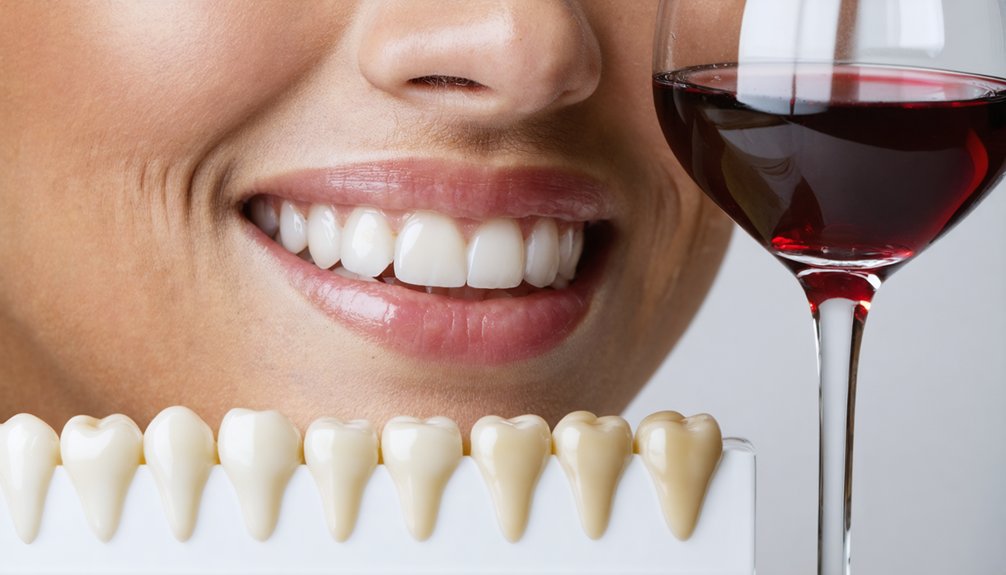
Red wine contains chromogens, highly pigmented molecules that bond aggressively to tooth surfaces. Tannins amplify wine pigmentation by acting as adhesives, binding chromogens directly to enamel proteins.
Simultaneously, acids in wine trigger enamel erosion, softening your tooth surface and opening microscopic pores that absorb pigments even faster.
White wine compounds the problem by increasing surface acidity without delivering visible staining, making your teeth more vulnerable before you even reach for red.
You’re fundamentally exposing softened, porous enamel to a concentrated pigment-delivery system with every sip.
Understanding this mechanism gives you the control to intervene strategically, rather than simply reacting to discoloration after it’s already embedded.
Rinse Your Mouth Immediately After Wine
The moment you finish your last sip, rinsing your mouth with plain water is one of the most effective and immediate interventions you can take against wine staining. A vigorous mouth rinse lasting 10–15 seconds disrupts wine pigments before they chemically bond to enamel surfaces.
This simple action also neutralizes residual acids that compromise enamel health, reducing your vulnerability to deeper pigment penetration over time. For maximum stain prevention, swish water between sips rather than waiting until the end of the session.
The longer pigments remain in contact with tooth surfaces, the harder removal becomes. Keep a glass of water beside your wine glass throughout the evening, treating it as a tactical tool rather than an afterthought.
The Best Foods to Eat While Drinking Wine
Rinsing with water handles the liquid side of stain prevention, but what you eat alongside your wine plays an equally targeted role.
Fiber rich snacks like spinach, broccoli, and celery stimulate saliva production, which continuously neutralizes acid and clears tannins from your enamel. Crunchy vegetables such as carrots mechanically scrub tooth surfaces as you chew, reducing pigment accumulation between sips.
Crunchy vegetables don’t just satisfy hunger — they actively scrub pigment from enamel while you snack.
Pair your wine with cheese or other calcium-rich foods before your first glass. That calcium coating creates a physical barrier that resists pigment absorption.
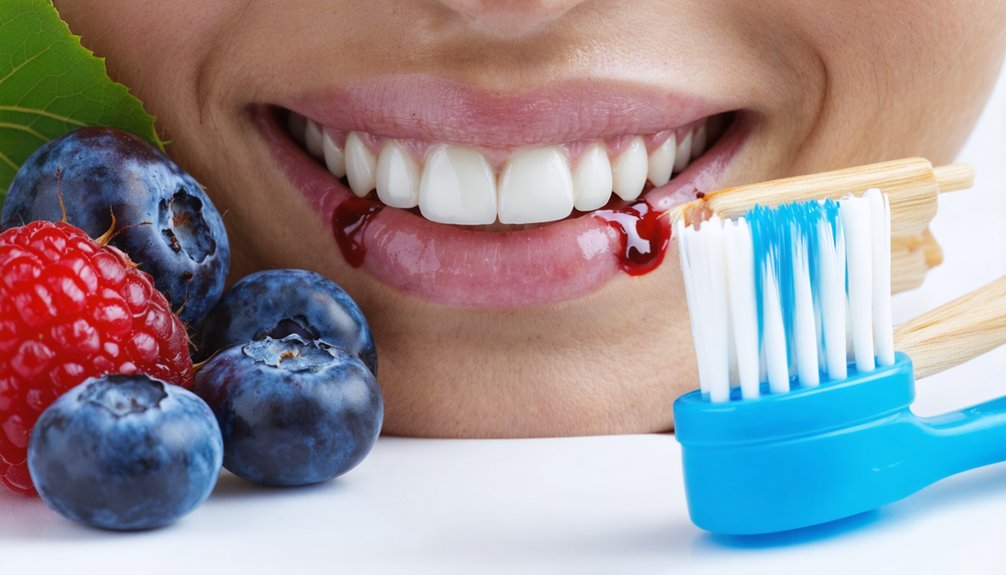
Avoid combining wine with dark berries or heavy sauces, as those combinations accelerate staining. Strategic food selection isn’t incidental — it’s a deliberate, layer-by-layer defense that works alongside your rinsing habits to keep discoloration from taking hold.
Should You Brush Your Teeth Right After Wine?
After finishing a glass of wine, you shouldn’t reach for your toothbrush right away.
The acids in wine temporarily soften your enamel, making it vulnerable to abrasive damage from brushing.
Wait at least 30 minutes to allow your saliva to neutralize the acids and your enamel to recalcify before brushing.
Wait Before Brushing
Although it may seem logical to brush your teeth immediately after drinking wine, doing so can actually damage your enamel. Wine’s acidity impact temporarily softens enamel, making it vulnerable to abrasion.
Brushing too soon disrupts enamel remineralization, accelerating erosion rather than preventing stains.
Follow this controlled approach:
- Rinse immediately with plain water for 10–15 seconds to neutralize acids and remove surface pigments.
- Wait 30 minutes after your last sip to allow saliva to restore pH balance.
- Let remineralization occur naturally as saliva redeposits calcium and phosphate onto softened enamel.
- Brush for 2 minutes using fluoride toothpaste after the waiting period to safely remove residual wine pigments without enamel damage.
Acid Softens Enamel
Wine’s acidity temporarily softens your enamel, creating a critical window where brushing can cause more harm than good. When you drink wine, the acid lowers your mouth’s pH, triggering acid erosion that leaves enamel in a weakened, pliable state.
Brushing during this window accelerates mineral loss rather than removing stains. To protect enamel health, wait at least 30 minutes before picking up your toothbrush. During that window, rinse vigorously with plain water to neutralize residual acids and restore pH balance.
Your saliva naturally remineralizes softened enamel over time, so let that process work before introducing abrasive brushing. Skipping this wait period compounds damage with every glass you consume, making long-term whitening considerably harder to achieve and maintain.
Timing Protects Teeth
Brushing immediately after wine does more harm than good, so timing your oral hygiene routine correctly is essential for protecting enamel and achieving long-term whitening results.
Wine acidity temporarily softens tooth enamel, making abrasive brushing destructive rather than beneficial. Strategic timing gives saliva production the opportunity to neutralize acids and recalcify enamel naturally.
- Wait 30 minutes after your last sip before brushing to allow saliva production to restore enamel hardness.
- Rinse with water immediately to flush staining pigments and reduce wine acidity without damaging softened surfaces.
- Brush beforehand as a preventive measure to eliminate plaque that traps staining pigments.
- Combine proper oral hygiene timing with smart dietary choices to maximize stain removal and long-term enamel protection.
Daily Habits That Prevent Wine Teeth Long-Term
Preventing wine stains long-term comes down to the daily habits you build around oral hygiene and lifestyle choices.
Prioritize daily flossing to clear plaque that traps pigments between teeth. Maintain consistent hydration habits to sustain saliva flow, your mouth’s natural acid buffer. Boost calcium intake through dairy or fortified foods to reinforce enamel protection before exposure occurs.
Daily flossing, hydration, and calcium intake build the foundation for lasting enamel protection against wine stains.
Make smart snack choices by reaching for crunchy vegetables or cheese during wine sessions to mechanically clean surfaces and neutralize acidity. Limit red wine frequency and explore wine alternatives like white wine spritzers to reduce cumulative pigment exposure.
Switch to an electric toothbrush for superior plaque removal, and brush twice daily using fluoride toothpaste to maintain a stain-resistant surface year-round.
Easy Home Remedies for Wine-Stained Teeth
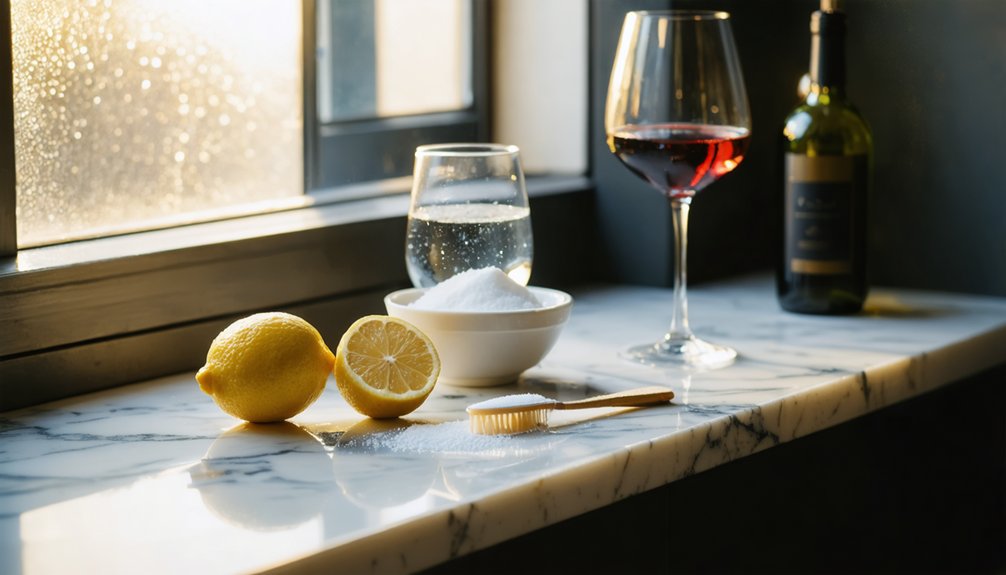
When wine stains settle onto your enamel, a handful of targeted home remedies can lift surface discoloration without requiring a dental visit.
These natural solutions integrate seamlessly into your existing oral care routine while prioritizing enamel protection.
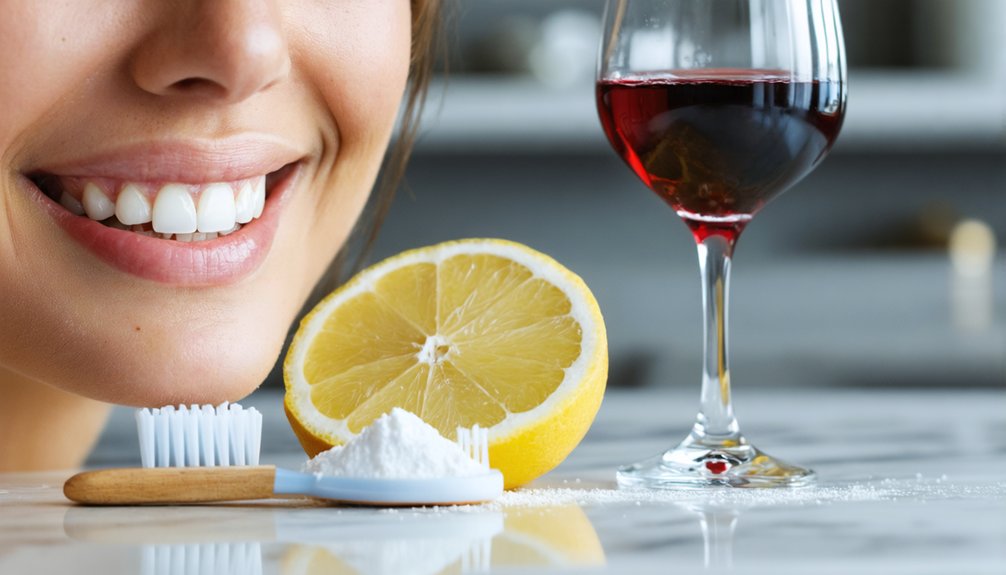
- Baking soda & hydrogen peroxide paste: Combine one tablespoon baking soda with two tablespoons of 3% hydrogen peroxide, apply for 2 minutes, then rinse. Limit use to twice weekly.
- Strawberry paste: Mash fresh strawberries and apply for 5 minutes to activate natural enzymes that break down stain molecules.
- Hydrogen peroxide rinse: Dilute 3% hydrogen peroxide equally with water and swish for stain prevention without abrasion.
- Charcoal powder: Apply activated charcoal powder on a damp toothbrush for 2 minutes to absorb surface pigments, supporting ongoing dental hygiene goals.
Does Whitening Toothpaste Remove Wine Stains?
While home remedies like baking soda paste and activated charcoal offer targeted stain removal, whitening toothpaste provides a more sustainable, daily-use alternative for managing wine-induced discoloration.
Whitening toothpaste offers a sustainable, daily alternative to home remedies for tackling wine-induced tooth discoloration.
Its whitening effectiveness depends heavily on toothpaste ingredients, particularly mild abrasives like hydrated silica and chemical agents like hydrogen peroxide or sodium tripolyphosphate, which break down and polish away surface pigments.
You’ll get the best results by using whitening toothpaste twice weekly rather than daily, reducing the risk of enamel erosion while maintaining visible brightness.
Avoid brushing immediately after wine consumption; wait 30 minutes to allow enamel to recalcify.
Pair whitening toothpaste with consistent flossing to target pigments trapped between teeth.
For deeper staining, supplement with professional treatments to achieve results beyond what daily toothpaste alone can deliver.
When to See Your Dentist About Wine Stains
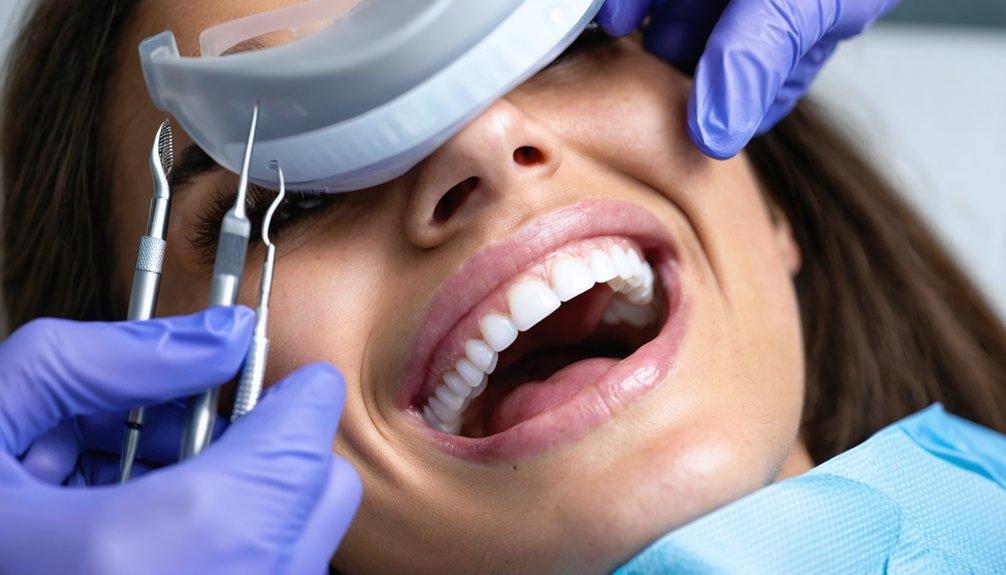
Home remedies and whitening toothpaste handle surface-level wine stains effectively, but they can’t address every degree of discoloration. When stain severity exceeds what at-home treatment options can correct, professional intervention becomes necessary.
Schedule a dental appointment when you notice:
- Persistent gray or brown discoloration that doesn’t respond after four weeks of consistent whitening toothpaste use.
- Uneven staining between teeth indicating pigment has penetrated enamel at varying depths requiring professional-grade treatment.
- Sensitivity accompanying discoloration suggesting acid erosion has compromised enamel integrity alongside staining.
- Visible tartar buildup trapping wine pigments along the gumline that brushing and flossing can’t dislodge.
Request in-office whitening systems like KöR or Opalescence, or ask about custom tray options for ongoing maintenance between professional cleanings.
Professional Treatments for Wine-Stained Teeth
Professional dental treatments deliver results that no home remedy or whitening toothpaste can replicate, especially when wine stains have penetrated beyond the enamel surface.
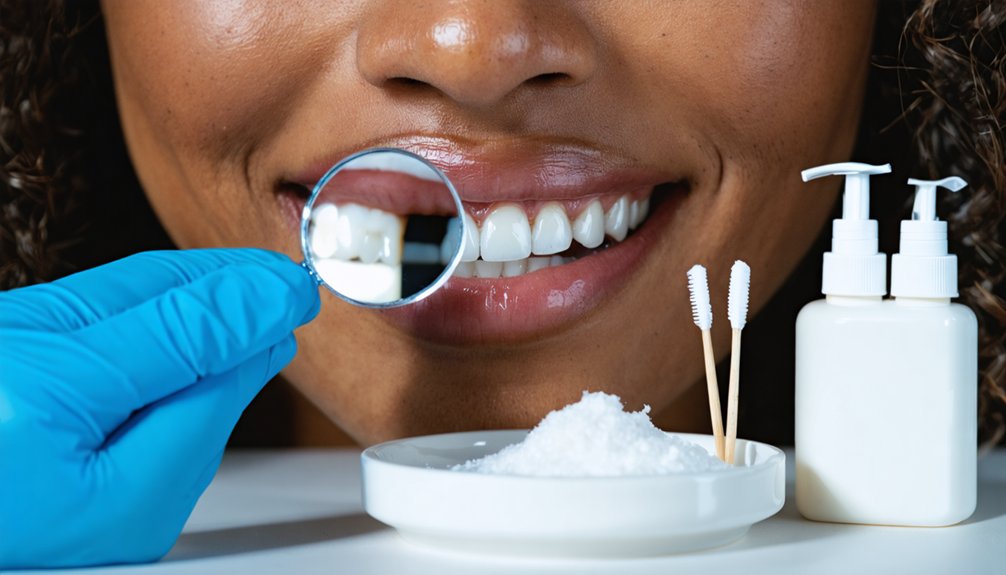
During dental consultations, your dentist evaluates stain depth and recommends targeted interventions based on your enamel condition.
In-office professional whitening systems like KöR or Opalescence use high-concentration peroxide gels activated by specialized light or heat, breaking down deeply embedded pigments efficiently.
You’ll see measurable results within a single session. Custom-fit whitening trays with prescription-strength gels allow you to maintain brightness between visits.
Request fluoride treatments during checkups to strengthen enamel and reduce pigment penetration.
Schedule professional cleanings every six months to eliminate tartar that traps wine pigments.
Taking this structured approach keeps discoloration from compounding and preserves your results long-term.
Best At-Home Tools for Preventing Wine Stains
Equipping yourself with the right at-home tools makes a measurable difference in preventing wine stains before they set into enamel.
Strategic wine stain prevention starts with having the correct tools in your routine.
- Electric toothbrush – The Oral-B iO Series 9 removes plaque more effectively than manual brushing, reducing stain adhesion.
- Custom whitening trays – Use with touch-up whitening gels monthly to maintain brightness between professional visits.
- Reusable straw – Directs wine away from front teeth, minimizing direct pigment contact.
- Fluoride mouthwash – Strengthens enamel after exposure, increasing resistance to acid erosion and pigment penetration.
These at-home tools work systematically, giving you precise control over your enamel’s defense against cumulative wine discoloration.
Frequently Asked Questions
Can Certain Wine Glass Shapes Reduce Contact With Front Teeth?
Yes, glass design directly affects tooth exposure. You’ll reduce front-tooth contact by choosing narrow-rimmed or tulip-shaped glasses, which direct wine toward the back of your mouth, minimizing pigment interaction with visible enamel surfaces.
Does Drinking Wine Through a Metal Straw Affect Tooth Staining?
Yes, you’re basically a wine scientist now! Metal straw benefits include redirecting wine away from front teeth, minimizing wine consumption effects on enamel. You’ll reduce staining contact considerably while maintaining your sophisticated, completely non-ridiculous drinking aesthetic.
Are Some Red Wine Varieties Less Likely to Stain Teeth?
Yes, lighter red wine varieties like Pinot Noir cause less teeth staining than Cabernet Sauvignon or Merlot. You’ll minimize pigment exposure by choosing lower-tannin, less deeply pigmented red wine varieties when possible.
Can Chewing Gum After Wine Help Reduce Staining on Teeth?
Saliva production increases 10x when chewing gum. You’ll boost your dental hygiene by choosing a sugar-free gum flavor post-wine, as it stimulates saliva flow that actively neutralizes acids and washes away stain-causing pigments effectively.
Does the Temperature of Wine Impact How Quickly Stains Develop?
Yes, warmer wine accelerates staining—it opens your enamel pores, intensifying wine acidity and tannin levels absorption. You’ll notice faster discoloration, so chilling your wine slightly gives you greater control over pigment penetration and stain development.
References
- https://thepsdentalstudio.com/how-to-remove-coffee-and-wine-stains-from-teeth/
- https://crest.com/en-us/oral-care-tips/how-to-prevent-and-get-rid-of-red-wine-teeth-stains
- https://smilepointdental.ca/teeth-whitening-for-wine-lovers/
- https://www.mydentaloffice.com/natural-whitening-remedies-for-coffee-and-wine/
- https://aedit.com/aedition/how-to-treat-prevent-wine-stained-teeth
- https://www.youtube.com/watch?v=egPAy7gg9E8
- https://www.encore-dentistry.com/blog/2025/12/11/toasting-to-a-brighter-smile-how-to-avoid-red-wine-stains-for-the-holidays-teeth-whitening/
- https://www.dentaly.org/us/teeth-whitening/wine-stain-teeth/
- https://www.mondaygrazianidds.com/teeth-whitening-tips-wine-lovers-charleston/
- https://www.youtube.com/watch?v=th1MX0Q6gI0