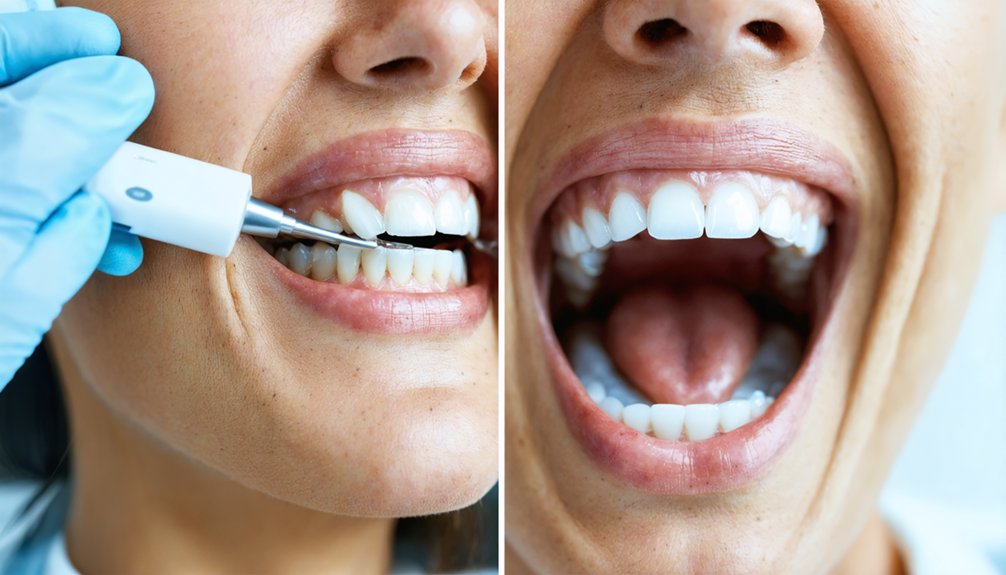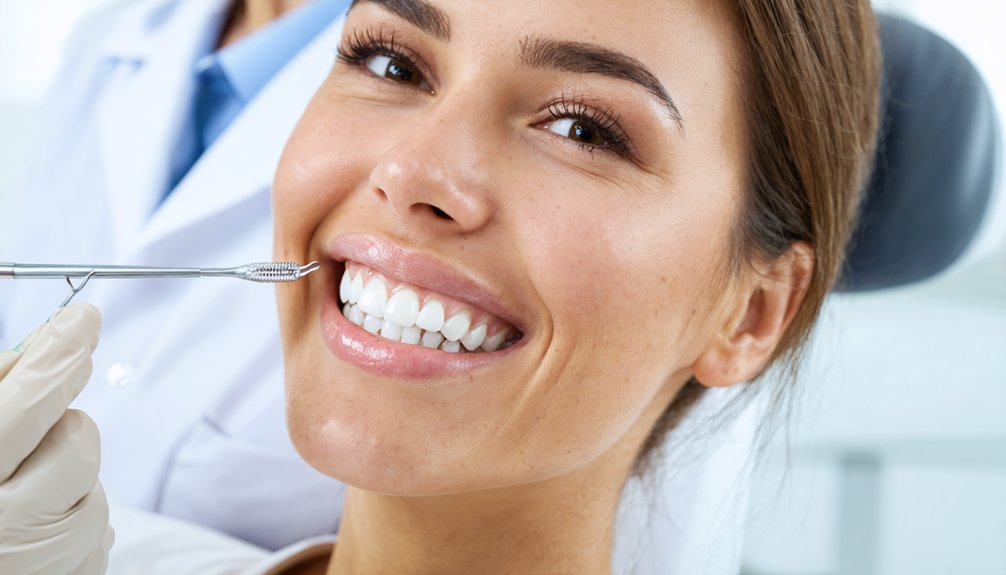
To maximize the benefits of professional teeth whitening, you’ll need to follow a strategic approach before, during, and after treatment. Your dentist uses 25–40% hydrogen peroxide formulations that eliminate both surface and intrinsic stains in a single 30–90-minute session—results no at-home kit can match. Post-treatment, avoid stain-causing foods for 48 hours, use desensitizing toothpaste, and schedule regular cleanings to preserve your results. Keep exploring to uncover every stage of the process in detail.
Key Takeaways
- Professional whitening uses 25-40% hydrogen peroxide to eliminate deep stains, delivering visible multi-shade improvements in just 30-90 minutes.
- Dentists customize treatment plans based on enamel thickness, sensitivity levels, and stain types to ensure optimal, predictable results.
- Protective barriers shield gums during treatment, while light or laser activation enhances the effectiveness of the bleaching agent.
- Avoid coffee, tea, red wine, and dark sauces for 48 hours post-treatment to preserve whitening results effectively.
- Consistent brushing, flossing, regular dental cleanings, and mindful dietary choices help maintain and prolong professional whitening results long-term.
Why Professional Teeth Whitening Outperforms At-Home Kits
When comparing professional teeth whitening to at-home kits, the differences in efficacy are substantial. Dentists use 25-40% hydrogen peroxide or carbamide peroxide concentrations, penetrating enamel deeply to eliminate both surface and intrinsic stains. Over-the-counter products simply can’t match this potency.
You’ll also benefit from personalized treatment protocols. Before whitening begins, your dentist evaluates enamel thickness, discoloration causes, and teeth sensitivity levels, eliminating guesswork entirely. This precision dispels common whitening myths suggesting all treatments deliver identical results.
Professional procedures deliver visible, multi-shade improvements within a single 30-90 minute session, whereas at-home kits require weeks of repeated applications.
You’re getting controlled, evidence-backed results rather than inconsistent outcomes. The data consistently supports professional whitening as the superior, more efficient choice.
What Actually Happens During a Professional Whitening Session?
When you arrive for a professional whitening session, your dentist first conducts a thorough oral health assessment, examining enamel thickness, stain types, and any existing dental work to customize your treatment plan.
Before applying the bleaching agent, your provider carefully places protective barriers over your gums, lips, and soft tissues to prevent irritation from the high-concentration peroxide solution.
Your dentist then applies a 25–40% hydrogen peroxide or carbamide peroxide gel directly to your teeth, often activating it with a specialized light or laser to accelerate the bleaching process and maximize stain penetration within a single 30–90 minute session.
Initial Oral Health Assessment
Before any whitening agent touches your teeth, your dentist conducts a thorough oral health assessment to establish a treatment baseline. This evaluation directly determines your oral health benefits and guarantees enamel thickness supports safe bleaching concentrations.
- Cavity and gum disease screening — Active decay or periodontal issues disqualify you from immediate treatment.
- Enamel thickness measurement — Thin enamel increases sensitivity risk and dictates peroxide concentration limits.
- Stain classification — Extrinsic versus intrinsic stains respond differently to bleaching agents, shaping your protocol.
- Existing restorations inventory — Crowns, veneers, and bonding don’t respond to whitening, requiring strategic planning.
Your dentist documents findings, photographs your current shade, and builds a precise treatment plan — giving you complete clarity before the procedure begins.
Applying Protective Barriers
Once the assessment is complete, your dentist applies several protective barriers before introducing any bleaching agent to your teeth. A rubber dam or specialized gum shield isolates your soft tissues, while a lip retractor keeps your mouth open comfortably throughout the procedure.
Protective gel is then applied to your gum line, shielding delicate tissue from high-concentration hydrogen peroxide exposure.
These precautions aren’t optional—they’re clinically essential. Without them, concentrated bleaching agents can cause chemical burns, gum irritation, and heightened sensitivity.
By establishing these safeguards first, your dentist maintains precise control over where the agent contacts your enamel.
This structured approach directly supports your treatment comfort, minimizing adverse reactions while allowing the whitening agent to work efficiently on targeted tooth surfaces only.
Bleaching Agent Activation Process
With protective barriers secured, your dentist applies a high-concentration hydrogen peroxide gel—typically 25–40%—directly to your tooth surfaces.
These professional-grade bleaching agents penetrate enamel deeply, targeting both surface and intrinsic stains through controlled oxidation.
Activation techniques accelerate this chemical process, maximizing efficiency within a single session:
- Light or laser activation — Specialized light energizes the bleaching agents, accelerating oxygen release into enamel.
- Heat application — Controlled warmth intensifies the oxidation reaction without compromising tissue integrity.
- Timed intervals — Gel sits for 15–20 minutes per cycle, with dentists reapplying fresh solution as needed.
- Progress monitoring — Your dentist evaluates shade changes throughout, adjusting exposure time to achieve precise, uniform results.
This structured process delivers measurable whitening in under 90 minutes.
How Dentists Customize Professional Teeth Whitening for Your Smile
Professional teeth whitening isn’t a one-size-fits-all procedure—dentists conduct a thorough oral health evaluation to assess enamel thickness, identify discoloration causes, and determine your sensitivity levels before selecting an appropriate treatment protocol.
Professional teeth whitening starts with a thorough oral evaluation—because your enamel, sensitivity, and discoloration causes matter.
This custom treatment guarantees your specific stain types, existing dental restorations, and desired whitening outcomes directly inform every clinical decision made.
A tailored approach accounts for variables that over-the-counter products completely ignore. Your dentist factors in intrinsic versus extrinsic staining, adjusts bleaching agent concentration accordingly, and performs professional cleaning beforehand to eliminate plaque and tartar interference.
This preparation optimizes whitening agent penetration and assures uniform color enhancement. You’re not guessing—you’re receiving a precisely calibrated procedure designed around your unique dental profile for controlled, predictable results.
Why the Bleaching Agents Used in Offices Work Better
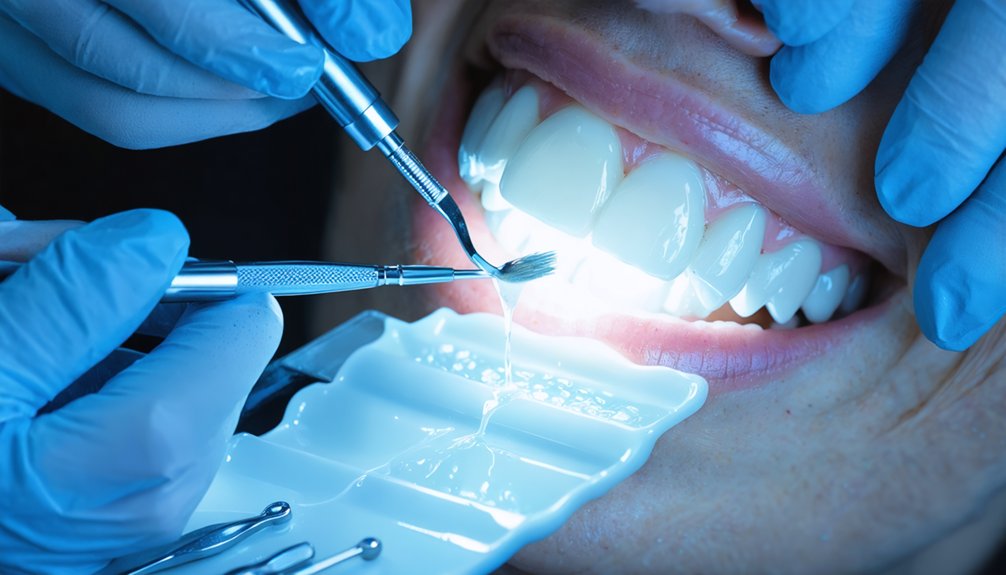
The bleaching agents your dentist uses aren’t comparable to anything available on a pharmacy shelf.
Professional formulations contain 25–40% hydrogen peroxide or carbamide peroxide, delivering superior bleaching effectiveness that over-the-counter products simply can’t match.
Deeper enamel penetration means both surface and intrinsic stains are eliminated, not just masked.
Here’s what separates professional agents from retail options:
- Concentration levels reach up to 40% hydrogen peroxide versus 10% or less in store-bought kits.
- Enamel penetration targets embedded stains that whitening toothpastes never reach.
- Research-backed formulations demonstrate results several shades whiter than at-home alternatives.
- Controlled application by your dentist guarantees maximum bleaching effectiveness without compromising enamel integrity.
You’re not guessing — you’re getting precision.
How to Make Your Professional Teeth Whitening Results Last
Once your dentist completes your whitening treatment, you’ll need to follow specific post-treatment care tips to preserve your results for up to a year or more.
You should avoid stain-causing foods and beverages—such as coffee, red wine, and dark berries—particularly within the first 48 hours, when your enamel remains most porous and susceptible to discoloration.
Adhering to your dentist’s personalized maintenance guidance directly determines how long your brighter smile lasts.
Post-Treatment Care Tips
After investing in professional teeth whitening, protecting your results requires consistent, targeted care. Managing post-treatment sensitivity and maintaining ideal oral hygiene directly determines how long your brighter smile lasts.
- Avoid staining foods and beverages — coffee, tea, red wine, and dark sauces compromise whitening within days of treatment.
- Use desensitizing toothpaste — post-treatment sensitivity management requires fluoride-based formulas that strengthen enamel and reduce nerve irritation.
- Maintain ideal oral hygiene — brush twice daily, floss consistently, and rinse with an alcohol-free mouthwash to prevent new stain buildup.
- Schedule regular professional cleanings — routine cleanings remove surface stains before they penetrate enamel, extending your results up to a year or longer.
Controlling these variables preserves your investment and sustains uniform, lasting whitening outcomes.
Avoiding Stain-Causing Foods
Protecting your whitening results starts with controlling what you consume. Your dietary choices directly influence how long your results last.
Avoid dark-pigmented foods and beverages—coffee, red wine, tea, berries, and tomato-based sauces—during the first 48 hours post-treatment, when enamel remains most porous and vulnerable to staining.
Stain prevention requires consistent discipline beyond this initial window. Limit ongoing consumption of chromogenic substances, and use a straw when drinking pigmented beverages to minimize enamel contact.
Rinse with water immediately after consuming staining foods to reduce residue accumulation. Your dentist’s personalized dietary guidance aligns with your specific whitening outcomes, helping you maintain brightness longer.
Strategic dietary management isn’t optional—it’s essential to preserving the investment you’ve made in your smile.
Which Foods and Behaviors Stain Teeth After Whitening?
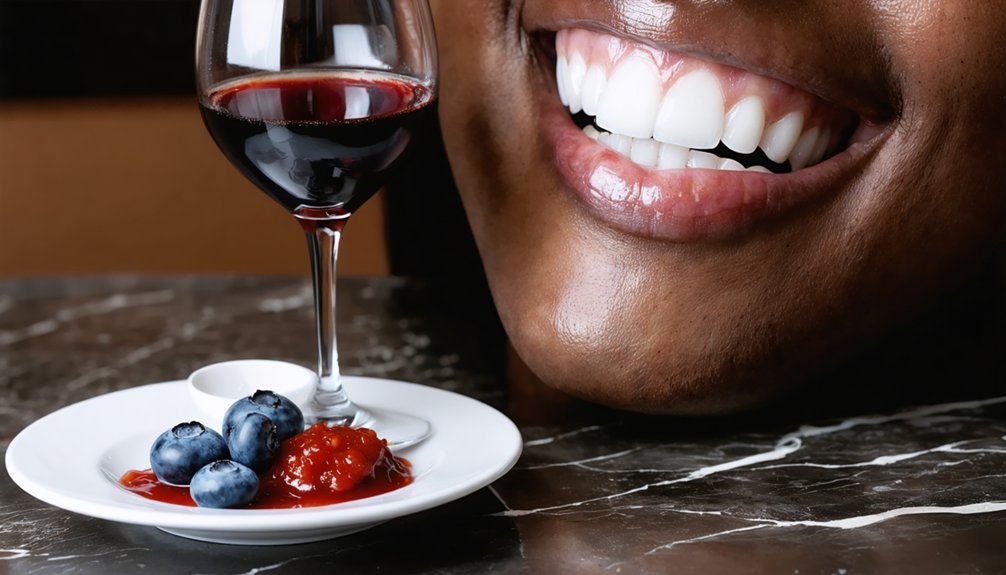
Maintaining your whitening results depends heavily on understanding which foods and behaviors accelerate discoloration.
Stain prevention starts with recognizing that your enamel remains porous immediately post-treatment, making dietary choices critical during this window.
Avoid these primary culprits:
- Chromogenic beverages — Coffee, tea, red wine, and dark sodas deposit pigments directly onto enamel surfaces.
- Deeply pigmented foods — Berries, tomato-based sauces, soy sauce, and balsamic vinegar accelerate surface staining notably.
- Tobacco use — Smoking or chewing tobacco introduces tar and nicotine, causing rapid, deep discoloration that resists future whitening.
- Poor oral hygiene habits — Skipping brushing after meals allows staining compounds to bond with enamel, compromising your results faster.
Control these variables consistently, and you’ll extend your whitening investment greatly.
Frequently Asked Questions
Can Professional Whitening Damage or Weaken Existing Dental Crowns or Veneers?
Professional whitening won’t damage crown integrity or veneer safety, as bleaching agents don’t alter restorations. However, you’ll notice they won’t whiten like natural teeth, so your dentist customizes treatment to guarantee uniform aesthetic results.
How Soon After Whitening Can I Resume Wearing Clear Aligners?
You can resume wearing your clear aligners 24–48 hours after whitening. This whitening timing lets sensitivity subside and enamel remineralize. Prioritizing proper aligner care during this window guarantees you’re protecting both your results and oral health effectively.
Is Professional Teeth Whitening Covered Under Standard Dental Insurance Plans?
Most plans don’t cover professional teeth whitening, as insurance coverage typically excludes cosmetic procedures. You’ll likely pay treatment costs out-of-pocket, so confirm with your provider and ask your dentist about financing options.
Are There Age Restrictions for Undergoing Professional Teeth Whitening Treatments?
Yes, age restrictions apply. Dentists typically don’t recommend professional whitening until you’ve reached adulthood, as teen eligibility depends on full dental maturity. Safety guidelines require your dentist to assess enamel development before approving any whitening treatment.
Can Teeth Whitening Treatments Cause Permanent Sensitivity or Long-Term Nerve Damage?
Professional whitening doesn’t cause permanent sensitivity or long-term nerve damage. Your dentist’s sensitivity management protocols protect nerve health throughout treatment. They’ll monitor your response and adjust application, ensuring controlled, evidence-based results that minimize transient discomfort effectively.
References
- https://valleycreekdentalcare.com/blog/the-benefits-of-professional-teeth-whitening-a-comprehensive-guide
- https://www.loudfamilydentistry.com/blog/professional-teeth-whitening-benefits-and-what-to-expect-during-treatment
- https://www.myfirstdental.com/7-proven-benefits-of-professional-teeth-whitening-in-somerville/
- https://www.smilerotunda.com/blog/the-benefits-of-professional-teeth-whitening-for-summer-events
- https://greenfamilydental.com/5-great-benefits-of-professional-teeth-whitening/
- http://www.allgoodfamilydental.com/Contact/Blog/entryid/6/3-things-you-should-know-about-professional-teeth-whitening
- https://www.yourdentistryguide.com/professional-whitening/
- https://theenglewooddentist.com/articles/11300/health-benefits-professional-teeth-whitening/
- https://treeddental.com/how-professional-teeth-whitening-in-garland-can-boost-your-confidence/
- https://www.cedarbrookdental.com/articles/professional-teeth-whitening-is-it-right-for-you