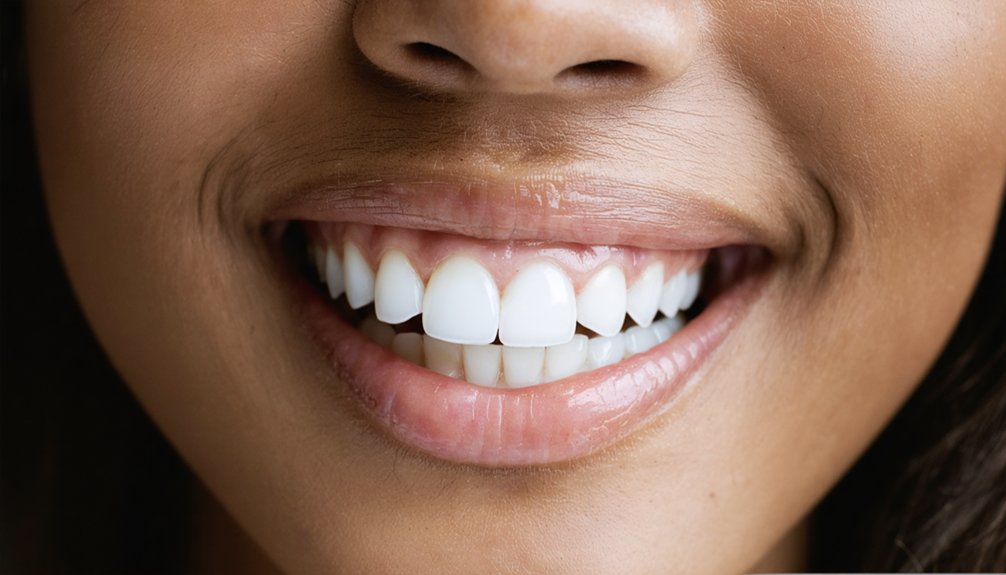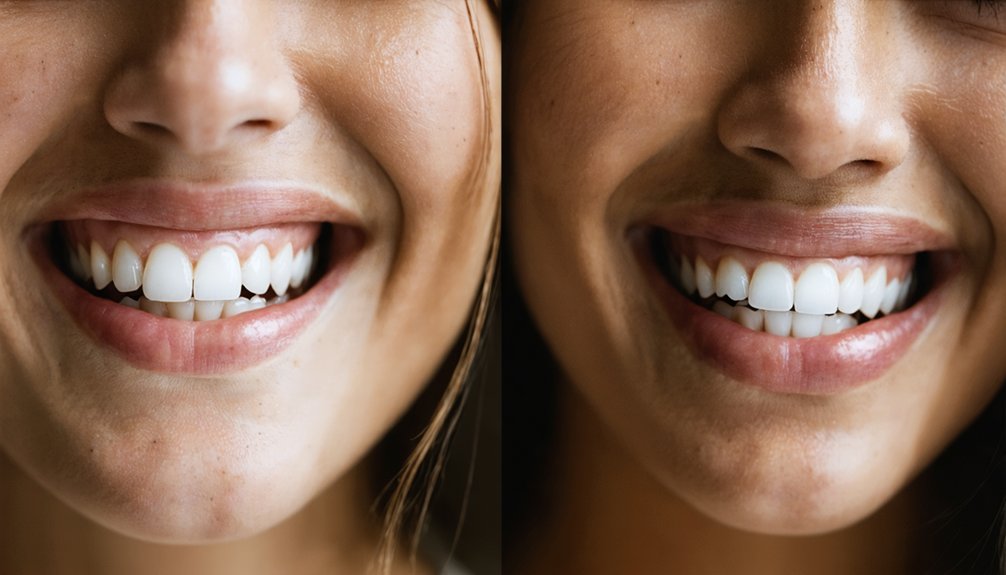
Teeth whitening does more than brighten your smile — it boosts your confidence, enhances your appearance, and even supports better oral health. Professional treatments can lighten teeth up to 10 shades in a single session, with results lasting one to three years. Whether you’re dealing with surface stains or deeper discoloration, the right whitening approach makes a real difference. Keep exploring to discover everything you need to know about maximizing your results.
Key Takeaways
- Teeth whitening boosts self-confidence by improving self-image, leading to more frequent smiling and greater openness in social interactions.
- Professional whitening can lighten teeth up to 10 shades in one session, delivering dramatic, immediate results.
- Whitening reverses age-related discoloration, enhancing facial vibrancy and creating a more youthful, attractive appearance.
- Professional treatments support oral health by removing plaque and tartar, reducing risks of cavities and gum disease.
- Whitening results last one to three years with proper maintenance, including limiting staining foods and regular dental cleanings.
The Real Link Between Teeth Whitening and Self-Confidence
Confidence shapes how you present yourself to the world, and your smile plays a bigger role in that than you might think. Discolored teeth often trigger self-consciousness, causing you to suppress your smile in social and professional settings.
Your smile shapes how the world sees you — and how you see yourself.
Teeth whitening directly addresses this by delivering a measurable self-image boost that influences how you carry yourself daily.
Research consistently shows that patients who whiten their teeth smile more freely, engage more openly, and experience improved emotional well-being.
You’re not just changing your tooth color — you’re reshaping your self-perception. That shift affects your interactions, your opportunities, and your overall outlook.
When you feel better about your smile, you project greater assurance in every environment you enter.
How Teeth Whitening Can Make You Look Younger
Your smile ages alongside the rest of you, and discoloration is one of the earliest visible signs of that process. Enamel darkens over time, and stains from coffee, tea, and food accelerate that decline.
Teeth whitening gives you direct control over reversing it through smile rejuvenation.
Here’s what whitening targets to restore your youthful glow:
- Age-related enamel darkening — whitening compensates for natural pigment accumulation
- Food and beverage stains — removes deeply embedded discoloration that dulls your smile
- Overall facial appearance — brighter teeth make your entire look seem more vibrant and attractive
This non-invasive procedure delivers measurable results without surgery, restoring visible youth efficiently and on your terms.
The Oral Health Benefits of Professional Teeth Whitening
Professional teeth whitening does more than brighten your smile—it actively supports your oral health. During treatment, your dentist performs plaque removal and eliminates tartar buildup, directly reducing your cavity and gum disease risk.
This bacterial reduction creates a cleaner oral environment, strengthening your gum health and lowering harmful debris accumulation.
Professional dental care also reinforces stronger maintenance habits. When you invest in your smile, you’re more likely to commit to consistent oral hygiene routines between appointments.
Your dentist typically recommends treatment frequency every six to twelve months, ensuring your teeth and gums stay effectively protected.
These combined effects contribute to your overall wellness beyond aesthetics. Controlling your dental care proactively means you’re addressing potential oral health threats before they escalate into costly, complex problems.
How Whiter Teeth Change the Way People See You
Your smile is often the first thing others notice about you, and research shows that whiter teeth make you appear more attractive, intelligent, and approachable within seconds of meeting someone.
When you smile confidently, you build social trust faster, encouraging others to engage more openly with you in both personal and professional settings.
That increased confidence in your appearance can directly attract new opportunities, from landing a job to strengthening relationships, by signaling that you take pride in your presentation.
First Impressions Matter Most
Whether you realize it or not, people form lasting impressions within seconds of meeting you—and your smile plays a central role in that snap judgment. A whiter smile gives you measurable control over how others perceive you from the start.
Research consistently shows that whiter teeth create a lasting impact across three critical areas:
- Attractiveness – You’re perceived as more physically appealing and approachable.
- Intelligence – A bright smile signals competence and professionalism in workplace settings.
- Friendliness – You appear more sociable, encouraging stronger personal and professional connections.
First impressions aren’t reversible—you don’t get a second chance. By addressing discoloration professionally, you’re actively managing how the world receives you, turning a simple cosmetic decision into a strategic social advantage.
Smiling Builds Social Trust
Beyond shaping first impressions, a confident smile actively builds trust over time. When you smile freely, others perceive you as approachable, sincere, and reliable.
That smile impact extends beyond surface-level attraction—it signals openness and emotional security, qualities that strengthen both personal and professional relationships.
Research confirms that trust building happens faster when your smile feels natural and uninhibited. Whiter teeth remove the self-consciousness that causes you to suppress your smile, allowing authentic connection to develop.
You communicate more openly, engage more confidently, and project the kind of credibility others respond to instinctively.
Teeth whitening gives you direct control over how you’re perceived socially. By investing in your smile, you’re not just improving aesthetics—you’re strategically enhancing your ability to connect, influence, and build lasting trust.
Confidence Attracts Opportunities
Confidence is one of the most powerful signals you can broadcast in social and professional settings—and your smile plays a central role in how it’s received.
Whiter teeth function as concrete confidence boosters, shifting how others perceive and respond to you. Cultivating an opportunity mindset starts with controlling how you present yourself.
Research confirms that a brighter smile directly influences:
- Job interviews – Candidates with confident smiles are perceived as more competent and hireable.
- Professional networking – Approachability increases, opening doors to meaningful connections.
- Personal relationships – First impressions improve, accelerating trust and rapport.
You control your appearance, and teeth whitening delivers measurable, visible results that translate into tangible advantages across every high-stakes interaction you encounter.
Which Types of Stains Respond Best to Whitening?
When considering teeth whitening, the type of stain you have largely determines how well the treatment will work for you.
Extrinsic surface stains — caused by coffee, tea, wine, or tobacco — respond most effectively to whitening agents since they sit on the enamel’s outer layer.
Intrinsic discoloration, which originates deeper within the tooth structure, is more resistant and may require more intensive or specialized treatment to achieve noticeable results.
Extrinsic Surface Stains
Extrinsic surface stains, those affecting the outer layer of enamel, respond best to professional whitening treatments. These extrinsic stains develop from daily habits and environmental exposure. Surface treatments effectively target and eliminate these discolorations, restoring your smile’s natural brightness.
The most responsive stain types include:
- Food and beverage stains – Coffee, tea, red wine, and dark-colored foods deposit chromogens directly onto enamel surfaces.
- Tobacco stains – Nicotine and tar compounds penetrate the outer enamel layer, creating stubborn yellow-brown discoloration.
- Poor oral hygiene stains – Accumulated plaque and tartar create surface deposits that attract and retain pigmented particles.
You’ll achieve ideal results by addressing these stains early, before they penetrate deeper enamel layers and become considerably harder to treat.
Intrinsic Deep Discoloration
Unlike surface stains, intrinsic discoloration originates within the dentin layer beneath your enamel, making it considerably more resistant to standard whitening treatments.
These deep stains develop from intrinsic factors including trauma, excessive fluoride exposure during tooth development, certain medications like tetracycline, or natural aging processes that darken dentin over time.
Because intrinsic discoloration sits beneath your enamel’s surface, over-the-counter products rarely penetrate deeply enough to produce meaningful results.
Professional-grade whitening treatments, however, utilize higher-concentration bleaching agents that can reach these stubborn deep stains more effectively.
Your dentist may recommend extended treatment protocols or multiple sessions to achieve noticeable improvement.
Understanding whether your discoloration stems from intrinsic factors helps you make informed decisions about which whitening approach will deliver the results you’re actually seeking.
Professional Whitening vs. Home Kits: What Gets Real Results?
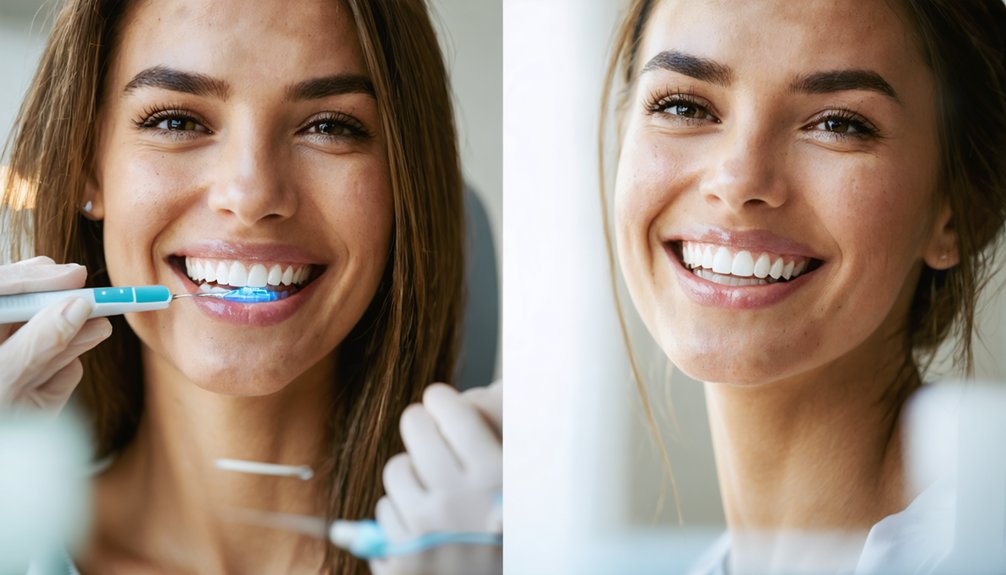
How do professional whitening treatments stack up against home kits? The difference is significant, and you’ll want to understand what each delivers before deciding.
Professional treatments give you:
- Speed and intensity — Achieve up to 10 shades brighter in a single session using high-concentration agents and LED technology, far outpacing home kits.
- Controlled safety — A dentist supervises every step, minimizing safety concerns like gum irritation or enamel sensitivity that home kits often trigger without guidance.
- Customized precision — Treatments are tailored to your specific discoloration level, ensuring ideal results rather than generic, one-size-fits-all solutions.
Home kits offer convenience but deliver slower, less dramatic outcomes.
If you’re serious about controlling your results, professional whitening isn’t just better — it’s the smarter, more reliable choice.
How Fast Can Professional Teeth Whitening Work?
If you’ve ever wondered how quickly professional teeth whitening can transform your smile, the answer might surprise you.
Unlike home kits that take weeks to show gradual results, professional treatments can lighten your teeth up to eight to ten shades in a single one-hour session.
Advanced techniques, including LED light technology and high-concentration whitening agents, allow your dentist to deliver dramatic, immediate results that home products simply can’t match.
Professional Whitening Speed Explained
Professional teeth whitening works remarkably fast, achieving up to eight to ten shades brighter in a single one-hour session.
Advanced professional techniques, including LED technology, accelerate results that home kits take weeks to deliver.
Here’s what you can expect:
- Speed: One session produces dramatic, measurable results within 60 minutes.
- Whitening safety: Dentist supervision minimizes sensitivity and gum irritation, with any side effects resolving within 24-48 hours.
- Precision: Customized, higher-concentration whitening agents target your specific discoloration effectively.
You’re not waiting weeks for gradual changes—you’re walking out with a visibly transformed smile the same day.
Professional care gives you complete control over outcomes, ensuring maximum brightness while protecting your oral health throughout the entire process.
Advanced Techniques Deliver Results
When it comes to advanced techniques, LED light technology stands at the forefront, accelerating the chemical activation of whitening agents to deliver results in a fraction of the time traditional methods require.
These whitening innovations allow your dentist to achieve up to ten shades brighter in a single session, giving you precise control over your desired outcome.
LED technology intensifies the bleaching process by energizing the peroxide-based agents applied directly to your enamel, maximizing penetration and effectiveness.
Unlike conventional approaches that demand weeks of at-home application, these clinical-grade systems compress that timeline into roughly one hour.
You’ll leave the chair with measurable, dramatic improvement—no guesswork, no prolonged waiting.
Professional supervision guarantees the process remains controlled, minimizing sensitivity risks while consistently delivering the targeted results you’re after.
One Session, Dramatic Transformation
A single professional whitening session can brighten your teeth by up to ten shades in approximately one hour. This teeth transformation delivers instant brightness that over-the-counter products simply can’t match.
You’re in control of your results from start to finish.
Professional treatment provides three key advantages:
- Speed – Achieve dramatic whitening in one appointment versus weeks of home treatments.
- Precision – Dentist-supervised sessions customize concentration levels to your specific needs.
- Safety – Professional oversight minimizes sensitivity, with any side effects resolving within 24-48 hours.
You don’t need to invest weeks waiting for gradual changes. One carefully managed session delivers measurable, clinical-grade results immediately.
For mild yellowing cases, noticeable brightening occurs within just 30 minutes.
Does Teeth Whitening Cause Sensitivity?
Many people wonder whether teeth whitening causes sensitivity — and the short answer is yes, it can, but it’s typically temporary.
During professional whitening, high-concentration agents temporarily open enamel pores, exposing nerve endings. This causes mild-to-moderate sensitivity concerns that usually resolve within 24–48 hours.
Your dentist controls the process, minimizing risks through proper application techniques and protective barriers for your gums.
If you have naturally sensitive teeth, discuss treatment alternatives beforehand, such as lower-concentration formulas or desensitizing gels applied pre-treatment.
Unlike at-home kits, professional supervision guarantees your comfort and safety throughout the procedure.
Any discomfort you experience is short-lived and manageable. Understanding this upfront helps you make an informed, confident decision about pursuing whiter teeth without unnecessary apprehension.
How Long Do Teeth Whitening Results Last?
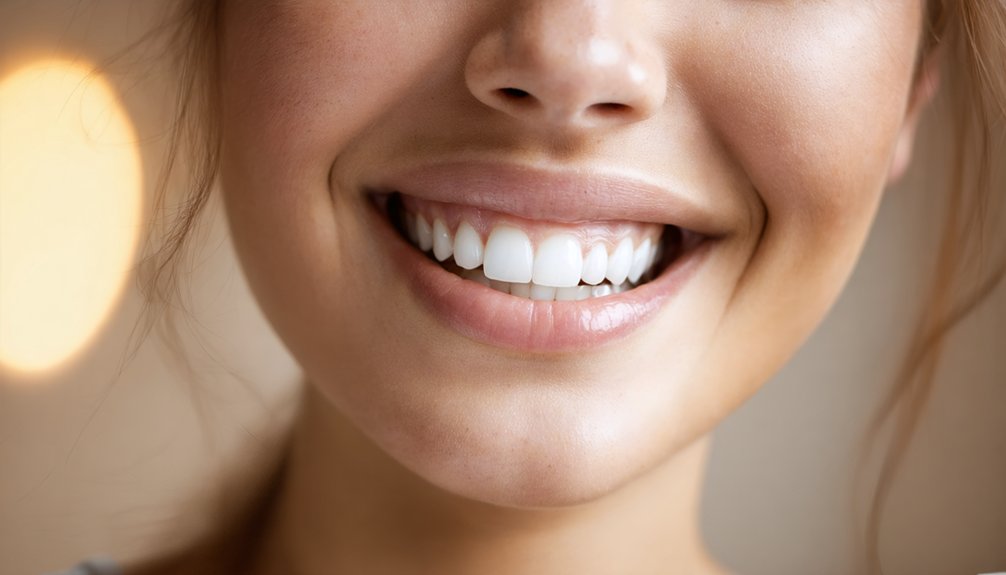
Once you’ve addressed sensitivity concerns, the next logical question becomes how long your results will actually last.
Teeth whitening longevity typically ranges from one to three years, depending entirely on your habits and maintenance consistency.
Three maintenance tips that directly control your results:
- Schedule tartar removal every 6–12 months to prevent stain-accelerating buildup from compromising your investment.
- Limit staining agents like coffee, tea, and red wine, or rinse immediately after consuming them.
- Use whitening toothpaste periodically to sustain brightness between professional treatments.
You’re not powerless against discoloration.
By actively managing these variables, you extend your results considerably.
Professional treatments deliver the strongest foundation, but your daily decisions ultimately determine how long that brightness holds.
Is Professional Teeth Whitening Worth the Cost?
Whether professional whitening justifies its price depends on what you’re comparing it against. Home kits take weeks to deliver moderate results, while professional treatment options can brighten your teeth up to ten shades in a single session. That’s a significant difference in both speed and outcome.
From a cost effectiveness standpoint, professional whitening delivers supervised, customized treatment using higher-concentration agents, minimizing risks like gum sensitivity or irritation. Side effects typically resolve within 24 to 48 hours.
Results can last over a year with proper maintenance, including tartar removal every six to twelve months.
When you factor in precision, safety, and dramatic results, professional whitening offers measurable value that over-the-counter alternatives simply can’t match. You’re paying for control, reliability, and outcomes you can actually see.
Frequently Asked Questions
Can Teeth Whitening Treatments Be Combined With Other Cosmetic Dental Procedures?
Yes, you can combine teeth whitening with other cosmetic enhancements like veneers or bonding. These combination treatments let you maximize your smile transformation, addressing discoloration, chips, and gaps simultaneously for extensive, dramatic results tailored to your specific goals.
Are There Any Dietary Restrictions to Follow Immediately After Teeth Whitening?
Like a freshly painted wall, your teeth need protection post-treatment. You’ll want to avoid dark foods and drinks to maximize whitening longevity. Following these dietary restrictions guarantees ideal post-treatment care results.
Is Teeth Whitening Safe for Pregnant or Breastfeeding Women?
You should avoid teeth whitening safety risks during pregnancy or breastfeeding. As a precaution, dentists recommend pregnancy precautions by postponing treatments until after this period, since whitening agents’ effects on fetal development aren’t fully established.
Can People With Dental Restorations Like Crowns Benefit From Whitening?
While restorations won’t whiten, your natural teeth can still benefit. Whitening effectiveness varies by restoration types—crowns and veneers remain unchanged, but brightening surrounding teeth creates a more balanced, confident smile you’ll love.
At What Age Is Professional Teeth Whitening Considered Appropriate for Teenagers?
Professional teeth whitening’s generally considered appropriate once you’ve reached 14-16 years old, after permanent teeth fully erupt. Teenage dental care requires careful evaluation of whitening safety concerns, so you’ll want your dentist’s approval first.
References
- https://www.hmfamilydentistry.com/blog/5-surprising-benefits-of-teeth-whitening-beyond-aesthetics/
- https://www.stadiumfamilydentistryannarbor.com/7-surprising-benefits-of-teeth-whitening-you-need-to-know/
- https://oakhillsdentistry.com/the-benefits-of-teeth-whitening-you-might-not-have-thought-of/
- https://www.hunimed.eu/news/benefits-teeth-whitening-2/
- https://www.modernagedentistry.com/blog/the-10-best-reasons-to-have-your-teeth-professionally-whitened
- https://www.aspendental.com/dental-services/cosmetic-dentistry/teeth-whitening/
- https://www.hopkinsmedicine.org/health/treatment-tests-and-therapies/teeth-whitening
- https://pmc.ncbi.nlm.nih.gov/articles/PMC4058574/
- https://mysagedental.com/why-teeth-whitening-is-more-than-just-aesthetic-health-benefits-explained/