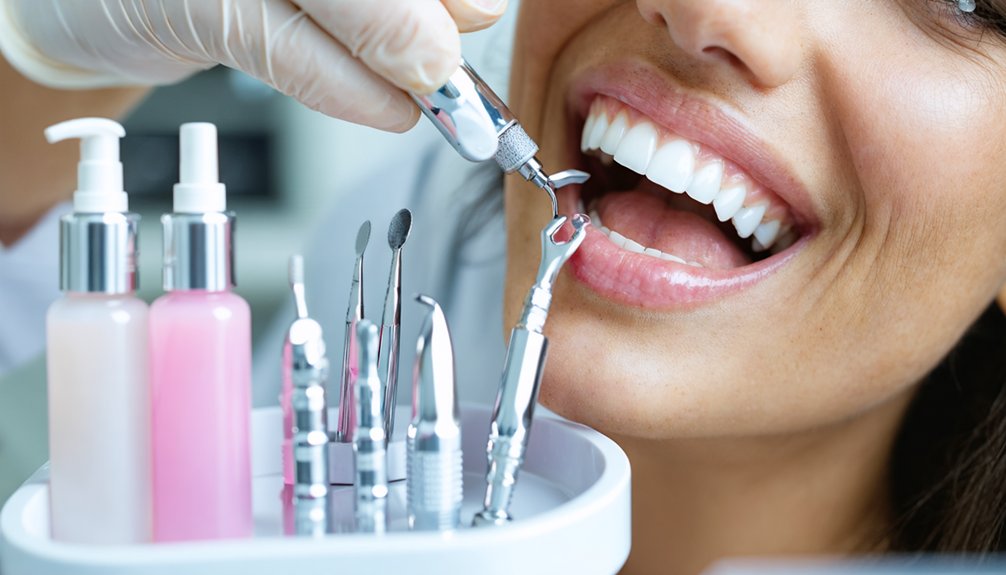
Maintaining teeth whitening results on a budget comes down to consistent daily habits. You’ll want to brush twice daily with a whitening toothpaste, floss regularly, and rinse with water after consuming staining foods or drinks like coffee and red wine. Over-the-counter whitening strips with the ADA Seal of Acceptance offer cost-effective maintenance. Replacing your toothbrush every three months also makes a measurable difference. The strategies ahead break down exactly how to protect your investment long-term.
Key Takeaways
- Brush twice daily with whitening toothpaste containing hydrogen peroxide and floss daily to maintain results without expensive treatments.
- Over-the-counter whitening strips and gels with the ADA Seal of Acceptance offer effective, affordable stain removal.
- Rinse your mouth with water after consuming staining foods or beverages like coffee and red wine to minimize discoloration.
- Use baking soda mixed with hydrogen peroxide two to three times weekly as a cost-effective, mild abrasive remedy.
- Schedule professional cleanings every six months and time over-the-counter whitening treatments afterward to maximize product effectiveness.
Why Your Whitening Results Fade Faster Than They Should
Even after a successful whitening treatment, your results can fade within weeks if certain habits go unchecked. Staining agents like coffee, red wine, and tobacco penetrate enamel rapidly, accelerating discoloration beyond what most people expect.
One of the most persistent whitening myths is that results are permanent — they aren’t. Without consistent dietary management and oral hygiene, brightness diminishes quickly.
Enamel health directly influences how long whitening lasts. Weakened or porous enamel absorbs pigments faster, making it harder to maintain results.
Skipping daily brushing, neglecting flossing, and missing routine dental cleanings compound the problem considerably. You’re not just fighting stains — you’re fighting preventable habits that undermine your investment.
Identifying and correcting these behaviors immediately gives you far greater control over sustaining your whitening outcomes.
Daily Habits That Keep Your Teeth Whiter Longer
Your daily habits directly determine how long your whitening results last, starting with what you eat and drink.
Avoiding staining agents like coffee, red wine, and dark berries—while incorporating crunchy produce like apples and carrots—reduces surface discoloration between whitening treatments.
Pairing smart dietary choices with twice-daily brushing using peroxide-based whitening toothpaste and affordable over-the-counter products like whitening strips keeps your results consistent without significant cost.
Smart Dietary Choices Matter
What you eat and drink daily plays a direct role in how long your whitening results last. Staining foods and beverages like coffee, red wine, and dark berries accelerate discoloration and compromise your investment.
Understanding dietary impacts lets you make smarter, preventative choices that extend your results without additional costs.
Rinse your mouth with water immediately after consuming staining items to minimize surface absorption. Incorporate crunchy fruits and vegetables like apples, carrots, and celery into your diet, as they naturally scrub enamel during chewing.
Limiting tobacco use also prevents long-term yellowing that’s difficult and expensive to reverse.
You don’t need to eliminate every staining food, but controlling frequency and following up with rinsing gives you measurable, lasting protection over your whitening results.
Consistent Oral Hygiene Routines
While dietary choices limit new staining from the outside, your daily oral hygiene routine determines how effectively you remove what does accumulate.
Routine challenges derail even motivated people, but consistency benefits compound over time, producing measurable brightness.
Follow these evidence-backed habits daily:
- Brush twice daily with whitening toothpaste containing hydrogen peroxide or mild abrasives, following ADA-recommended techniques.
- Floss daily to eliminate plaque and food particles that harden into stain-trapping tartar between teeth.
- Replace your toothbrush every three months, because worn bristles clean ineffectively and silently undermine your results.
You’re not maintaining a smile—you’re protecting an investment.
Each brushing session either defends or surrenders your whitening results. Control belongs entirely to your daily discipline.
Budget-Friendly Whitening Products
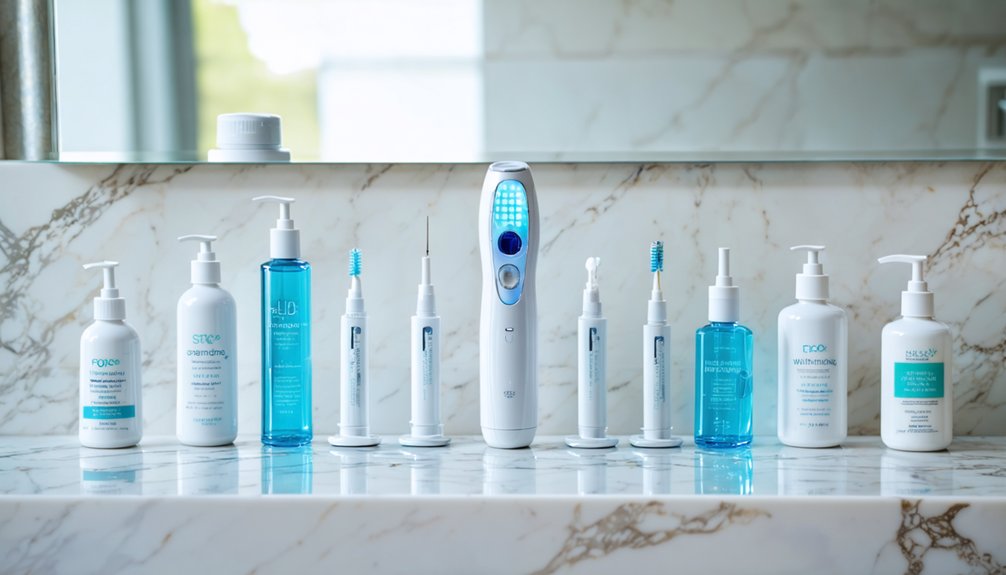
Keeping your whitening results doesn’t require expensive professional treatments between dental visits. Over-the-counter options deliver clinically supported outcomes at a fraction of the cost.
Whitening strips and budget-friendly kits ranging from $20 to $50 gradually remove surface stains through peroxide-based formulas. Effective gels with hydrogen peroxide, applied via prefilled trays like Opalescence Go, maintain brightness with just 15 to 20 minutes of daily use over five to ten days.
Select products carrying the ADA Seal of Acceptance, priced between $25 and $65, to confirm both safety and efficacy. If you experience sensitivity, lower-strength carbamide peroxide formulas at 10 to 16% concentration used overnight reduce discomfort while still producing results.
Consistent product use extends your whitening outcomes up to four months.
Natural Teeth Whitening Remedies Worth Trying First
Before spending money on commercial products, you can try two cost-effective natural remedies that support whitening maintenance.
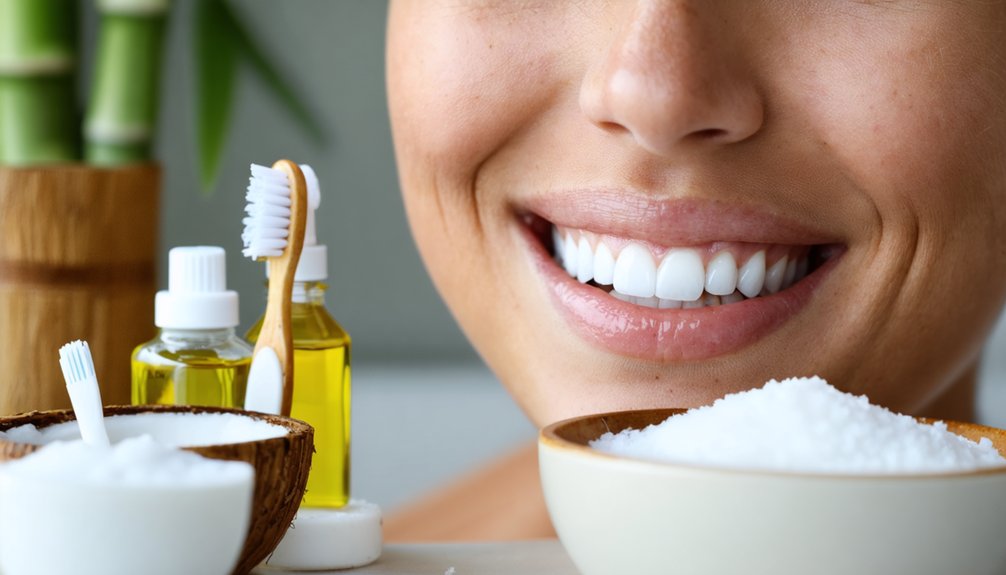
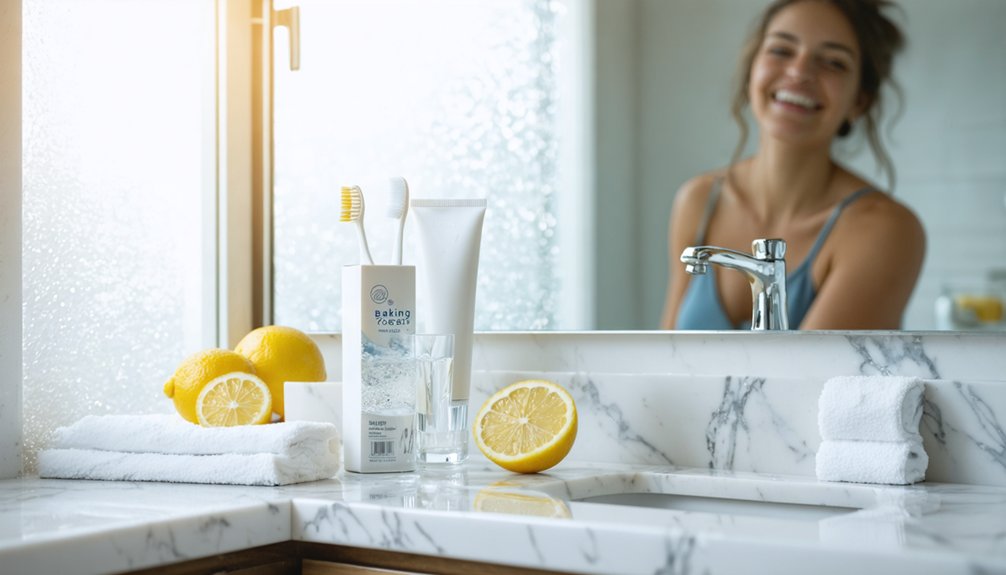
Baking soda mixed with hydrogen peroxide acts as a mild abrasive and antibacterial agent, removing surface stains for under $5.
Oil pulling with coconut oil, practiced daily by swishing for several minutes, offers gradual whitening benefits while reducing harmful oral bacteria.
Baking Soda Benefits
Baking soda’s mild abrasive properties make it one of the most clinically supported natural options for surface stain removal, and it costs less than $5 to get started.
As a natural abrasive, it mechanically disrupts surface stains without damaging enamel when used correctly. Incorporate it into your routine strategically:
- Control discoloration early by mixing baking soda with hydrogen peroxide before stains penetrate deeper enamel layers.
- Protect your investment in teeth whitening by using it 2-3 times weekly alongside your regular toothpaste.
- Prevent costly interventions by addressing surface buildup before professional treatment becomes necessary.
Results are gradual and modest, but consistent use delivers measurable brightness improvement.
You’re taking a proactive, evidence-backed step toward maintaining a whiter smile affordably.
Oil Pulling Basics
While baking soda works mechanically to lift surface stains, oil pulling takes a different approach—using fat-soluble compounds to bind and remove oral bacteria and debris. Among oil pulling techniques, swishing one tablespoon of coconut oil for 10–15 minutes before brushing is the most practiced method.
Coconut oil benefits your oral environment through lauric acid, which carries antimicrobial properties that reduce bacteria contributing to plaque buildup and surface discoloration.
You’ll want to spit the oil into a trash bin—not the sink—to prevent pipe clogging, then rinse thoroughly with water before brushing.
Evidence supporting dramatic whitening from oil pulling remains limited, so treat it as a complementary maintenance habit rather than a primary whitening strategy.
Practiced consistently several times weekly, it supports the cleaner oral baseline that helps your whitening results last longer.
Budget Whitening Products That Actually Deliver Results
Several budget-friendly whitening products deliver clinically meaningful results without straining your wallet. You don’t need expensive professional treatments to maintain a noticeably brighter smile.
Affordable kits and effective strips containing peroxide-based gels remove surface stains gradually while minimizing sensitivity when used correctly.
Peroxide-based gels in affordable strips and kits gradually erase surface stains while keeping sensitivity comfortably low.
Prioritize products carrying the ADA Seal of Acceptance, priced between $25 and $65, ensuring both safety and efficacy. Consider these clinically supported options:
- Whitening strips ($20–$50) produce results lasting up to four months with consistent use
- Prefilled trays like Opalescence Go combine potassium nitrate with whitening agents, protecting enamel during treatment
- Whitening toothpastes with hydrogen peroxide offer affordable, long-term brightness maintenance
Following product instructions precisely prevents sensitivity and maximizes outcomes, giving you measurable control over your whitening results.
How Professional Cleanings Extend Your Whitening Results
Professional cleanings form the foundation that makes every whitening effort more effective and longer-lasting.
Plaque and tartar accumulation create surfaces where stains bond more aggressively, undermining any whitening product you apply at home. By leveraging professional expertise, you eliminate these deposits before they compromise your results.
Cleaning frequency matters greatly. Most dental associations recommend scheduling cleanings every six months, though stain-prone individuals benefit from quarterly visits.
Timing your over-the-counter whitening treatments immediately after a professional cleaning maximizes product penetration and effectiveness.
You’re also protecting your investment by consulting your dentist before starting any whitening regimen, particularly if cavities or enamel damage exist.
Without that clinical foundation, whitening products can cause sensitivity and deliver inconsistent results. Control your outcomes by prioritizing professional cleanings first.
Your 4-Step Daily Routine for a Lasting White Smile
Building on the clinical foundation that professional cleanings provide, your daily habits determine whether whitening results last weeks or months. Execute this four-step routine consistently:
- Brush twice daily with hydrogen peroxide toothpaste, managing teeth sensitivity by limiting whitening frequency to recommended intervals.
- Floss daily to eliminate plaque before it mineralizes into stain-trapping tartar.
- Rinse immediately after consuming coffee, wine, or dark berries to neutralize surface staining acids.
Your fourth step is dietary discipline. Choose crunchy vegetables like carrots and celery, which mechanically cleanse enamel during consumption.
Crunch your way to cleaner enamel—carrots and celery naturally scrub teeth while you eat.
Replace your toothbrush every three months to maintain mechanical efficiency.
You control how long your results last. Consistency, not intensity, drives sustained brightness. Skipping even one component compromises the entire system’s effectiveness.
Frequently Asked Questions
Can Tobacco Use Permanently Stain Teeth Beyond Whitening Treatment’s Reach?
Like Dorian Gray’s portrait, tobacco’s stains can reach irreversible depths. Yes, prolonged use causes permanent discoloration beyond stain removal treatments. You’d benefit from tobacco alternatives to reclaim control over your whitening outcomes effectively.
How Long Do Whitening Strip Results Typically Last With Proper Care?
With proper care, you’ll maintain whitening strip longevity for up to four months. Consistently brush, avoid staining foods, and rinse after consuming them to keep maintaining results effectively within your proactive, budget-conscious whitening routine.
Is Carbamide Peroxide Safe for Overnight Use on Sensitive Teeth?
Yes, you can safely use lower-strength carbamide peroxide (10-16%) for overnight application. It’s clinically recommended for sensitivity management, as its slower release minimizes irritation, giving you controlled, effective whitening results while protecting vulnerable tooth surfaces.
Should I Visit a Dentist Before Using Whitening Products on Cavities?
“Better safe than sorry” — you should consult your dentist before pursuing whitening options. Cavity treatment must come first, as peroxide-based products can worsen decay, cause sensitivity, and compromise your oral health outcomes greatly.
What Ada-Approved Whitening Products Offer the Best Safety Guarantees?
You’ll find ADA Seal products priced $25–$65 offer strong product ingredient safety guarantees. Check whitening gel reviews for peroxide-based options, ensuring you’re choosing clinically validated, effective formulas that protect enamel while delivering controlled, evidence-backed whitening results.
References
- https://www.ultrawhiteclinic.com/post/whats-the-best-and-most-affordable-way-to-whiten-teeth
- https://www.smilesbylorino.com/how-to-keep-your-teeth-white-without-breaking-the-bank/
- https://crest.com/en-us/oral-care-tips/teeth-whitening/affordable-cheap-teeth-whitening-options
- https://www.southtempledental.com/blog/3-teeth-whitening-methods-for-every-budget
- https://www.aarp.org/health/conditions-treatments/teeth-whitening/
- https://www.colgate.com/en-us/oral-health/teeth-whitening/cheap-teeth-whitening-tricks
- https://www.healthline.com/nutrition/whiten-teeth-naturally