Protecting your gums during teeth whitening starts before you ever open the gel. Address any existing gum disease or recession first, then use custom-fitted trays to eliminate gaps where gel can migrate onto tissue. Apply petroleum jelly along your gumline as an added barrier. If gel does contact your gums, wipe it away immediately with a dry Q-tip and rinse with lukewarm saltwater. There’s more to each of these strategies than meets the eye.
Key Takeaways
- Apply petroleum jelly along the gumline before whitening to create a protective barrier against gel contact.
- Use custom-fitted trays to minimize gel overflow and prevent direct chemical exposure to gum tissue.
- Wipe away any gel touching gums immediately using a dry Q-tip to reduce chemical exposure duration.
- Use desensitizing toothpaste containing potassium nitrate two weeks before whitening to strengthen gum and tooth resilience.
- Rinse thoroughly with lukewarm saltwater after treatment to neutralize residual chemicals and support gum recovery.
Prep Your Gums Before You Start Whitening Treatment
Before beginning any whitening treatment, address existing gum disease, recession, or inflammation—these conditions amplify chemical sensitivity and increase tissue damage risk.
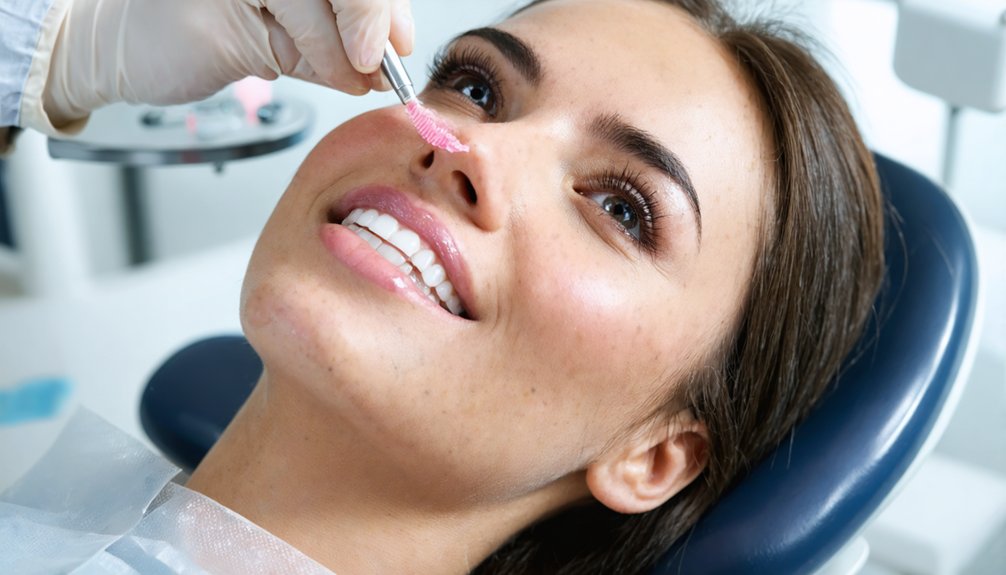
Your pre treatment tips should include a professional dental evaluation to confirm gum health before applying any peroxide-based agents.
A professional dental evaluation confirms gum health before any peroxide-based whitening agent is applied.
Know your gel’s concentration. Higher-strength formulas demand healthier baseline tissue.
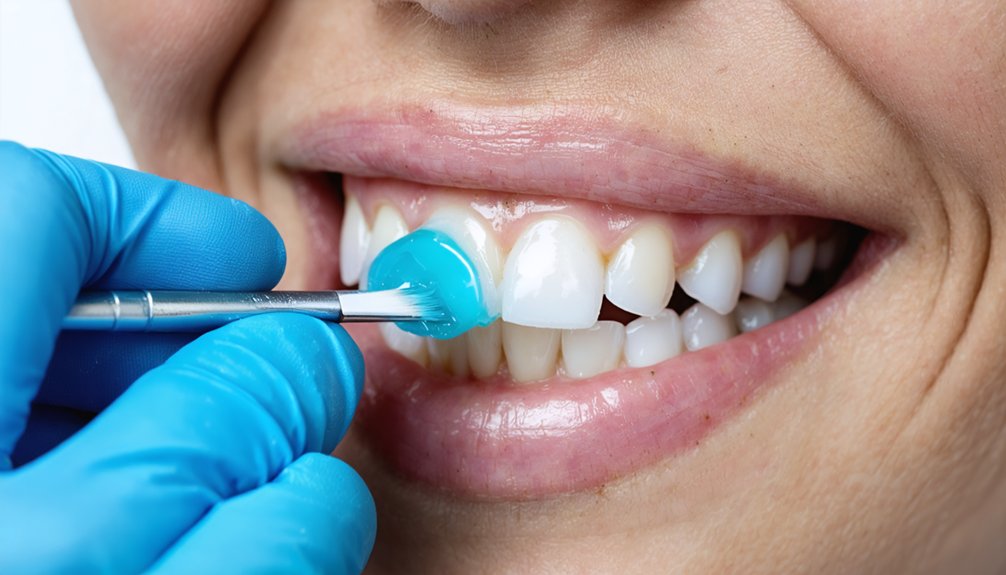
Apply a thin layer of petroleum jelly along your gumline as a protective barrier prior to tray insertion.
Stay consistently hydrated—adequate hydration flushes residual gel and maintains gum moisture throughout treatment.
If you’re experiencing sensitivity, switch to desensitizing toothpaste two weeks before starting.
Controlling these variables upfront puts you in a stronger position, minimizing reactive tissue damage rather than managing it after it occurs.
Use Custom-Fitted Trays to Keep Gel Off Your Gums
Custom-fitted trays are the most effective mechanical barrier between whitening gel and your gingival tissue. Unlike stock trays, they’re molded precisely to your dental arch, eliminating gaps where gel migrates onto soft tissue.
Understanding custom tray benefits means recognizing that a precise fit requires less gel volume per application, directly reducing overflow risk.
When applying gel, controlled gel application techniques matter. Load only a small dot into each tooth compartment—never fill the tray completely. Excess product has nowhere to go except onto your gums, causing chemical irritation or burns.
If you’re using custom trays correctly, you maintain full control over gel placement and exposure duration. This precision separates effective whitening from treatments that damage the gingival tissue you’re working to protect.
What to Do When Whitening Gel Gets on Your Gums
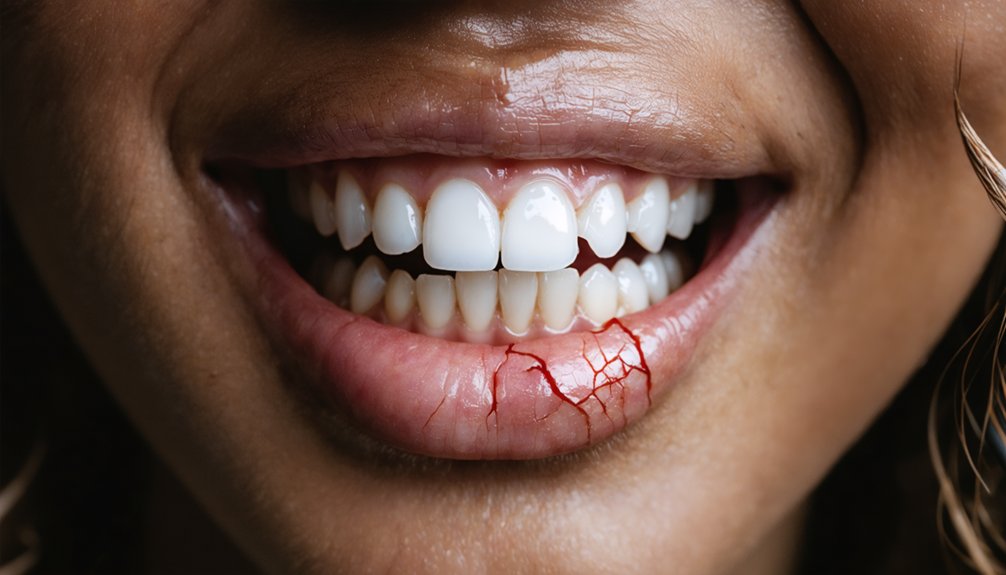
Even with custom-fitted trays properly loaded, gel contact with gingival tissue can still occur. Applying immediate gel removal techniques minimizes chemical exposure duration and reduces tissue damage severity. You’ll need to act fast.
Follow these irritation relief methods precisely:
- Wipe immediately using a dry Q-tip to physically remove gel from affected gingival tissue.
- Rinse thoroughly with lukewarm saltwater to neutralize residual chemical contact.
- Discontinue treatment if white patches or inflammation appear, allowing tissue recovery within days.
- Switch to sensitivity toothpaste containing potassium nitrate to reduce post-exposure inflammation.
You control the outcome by responding quickly. Delayed action extends chemical contact time, increasing irritation severity and potential tissue compromise. Speed determines recovery.
Frequently Asked Questions
How Do Professional Gingival Barriers Protect Gums During Whitening Treatments?
Like a shield, gingival barriers harden under light, sealing your gums from chemicals. They maximize gingival barrier effectiveness, ensuring whitening treatment safety by blocking direct gel contact with soft tissues, preventing burns.
What Oral Hygiene Routine Should I Follow While Undergoing Teeth Whitening?
Maintain consistent home care by brushing twice daily with fluoride toothpaste, flossing daily, and using non-alcoholic mouthwash. Avoid brushing immediately post-whitening, and adjust whitening frequency if gum inflammation persists. Switch to sensitivity toothpaste to control irritation.
Can Overfilling Whitening Trays Cause Permanent Damage to My Gum Tissue?
Overfilling whitening trays typically won’t cause permanent damage, but you’ll risk recurring gum sensitivity factors like inflammation and chemical burns. Make whitening tray adjustments by reducing gel amounts to prevent prolonged tissue contact and irritation.
Should I Treat Existing Gum Disease Before Starting a Whitening Procedure?
Yes, you should address gum disease before whitening. Active periodontal inflammation increases chemical sensitivity, worsening tissue damage. Explore treatment options with your dentist first—controlled gum health guarantees whitening agents won’t exacerbate existing conditions or compromise your results.
What Concentration of Whitening Gel Is Safest for Sensitive Gum Tissue?
For sensitive gum tissue, you’ll want lower-concentration whitening gel types, typically 10-16% carbamide peroxide. These formulations support sensitivity reduction while minimizing chemical irritation. Consult your dentist to determine the precise percentage suited for your specific gingival condition.
References
- https://sportingsmiles.com/teeth-whitening-protecting-your-gums-from-injury/
- https://www.paradisevalleydental.com/what-cosmetic-dentists-use-to-protect-gums-during-whitening/
- https://myvibedentistry.com/how-to-whiten-your-teeth-without-damaging-your-gums/
- https://www.drcradduck.com/how-modern-teeth-whitening-techniques-protect-your-gums/
- https://www.drbobsdentalcare.com/can-teeth-whitening-damage-gums/
- https://valleycreekdentalcare.com/blog/preventing-gum-irritation-teeth-whitening-expert-tips-for-a-safe-experience
- https://www.tndentistryaz.com/blog/how-teeth-whitening-can-impact-your-gums-what-tempe-residents-should-know/
- https://www.colgate.com/en-us/oral-health/teeth-whitening/burned-gums-from-teeth-whitening–what-you-need-to-know
- https://mypremiumdental.com/how-to-avoid-sensitivity-during-teeth-whitening-treatments/