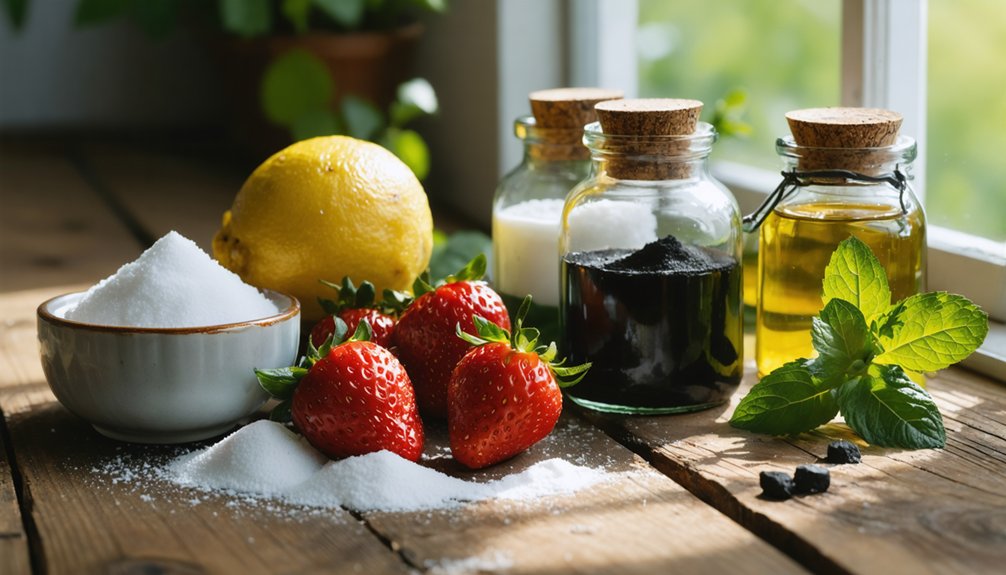
You can brighten yellow teeth naturally using remedies like baking soda, coconut oil pulling, and malic acid from strawberries, but results depend on what’s actually causing your discoloration. Surface stains from coffee, tea, or smoking respond well to these approaches, while medication-induced or age-related yellowing runs deeper and won’t fully respond to home treatments. Consistency matters more than intensity, and overuse can erode enamel. The sections ahead break down exactly which remedy works for which stain type.
Key Takeaways
- Baking soda gently exfoliates surface stains, while hydrogen peroxide boosts whitening; use this combination once or twice weekly.
- Strawberries contain malic acid that dissolves surface stains, offering a simple, natural brightening solution.
- Oil pulling with coconut oil breaks down stain-causing bacteria, gradually improving tooth color with consistent use.
- Apple cider vinegar rinses help combat bacterial yellowing, but use sparingly to protect enamel.
- Drinking water after meals rinses away stain-causing residue, while limiting coffee, tea, and wine prevents further discoloration.
Why Teeth Turn Yellow and What Natural Whitening Can Actually Fix
Before reaching for a home remedy, it’s worth understanding why your teeth have yellowed in the first place, because not all discoloration responds the same way.
Several factors cause discoloration: dietary factors like coffee, tea, and wine stain enamel over time, while aging effects gradually thin protective layers.
Poor oral hygiene accelerates buildup, and smoking habits deposit stubborn tar-based stains that penetrate deeply.
Medication impacts, particularly from tetracycline or antihistamines, can alter tooth color internally.
Genetic predisposition also determines your natural enamel thickness and baseline shade.
Here’s the critical distinction: natural remedies effectively address surface stains.
They can’t reverse intrinsic discoloration from medications, genetics, or significant enamel erosion.
If your yellowing stems from those deeper causes, you’ll need professional intervention, not a kitchen-based solution.
Matching the Right Natural Remedy to Your Stain Type
Once you’ve identified what’s causing your tooth discoloration, choosing the right remedy becomes far more straightforward.
Different stain types respond to different natural ingredients, so remedy effectiveness depends heavily on matching treatment to discoloration causes.
Not all natural whitening remedies work the same—effectiveness hinges on correctly identifying and matching treatment to your specific stain type.
Surface stains from dietary choices like coffee or tea respond well to baking soda, malic acid from strawberries, or oil pulling.
These options support whitening goals without compromising enamel health when you respect treatment frequency guidelines.
Bacterial yellowing benefits most from coconut oil pulling or apple cider vinegar rinses, given their antibacterial properties.
Lifestyle impacts, including smoking or poor oral hygiene, require consistent, multi-method approaches rather than singular fixes.
You shouldn’t expect intrinsic discoloration to respond to any natural remedy—those cases require professional intervention.
Baking Soda and Hydrogen Peroxide: The Paste That Actually Works
When it comes to at-home whitening, few combinations outperform the baking soda and hydrogen peroxide paste. These effective ingredients deliver measurable stain removal through complementary mechanisms. Baking soda’s baking benefits include gentle abrasion that exfoliates surface discoloration, while hydrogen properties provide mild bleaching action that penetrates deeper stains.
Together, they offer natural alternatives to costly professional treatments.
To apply this DIY solution, mix half a teaspoon of baking soda with a few hydrogen peroxide drops until a paste forms. Use gentle techniques, brushing carefully for one to two minutes, then rinse thoroughly.
Prioritizing enamel safety means limiting whitening frequency to once or twice weekly—overuse erodes protective enamel. Incorporate this into your oral hygiene routine strategically, and you’ll maintain control over your results without unnecessary risk.
Oil Pulling With Coconut Oil for Gradual Daily Whitening
If you’re looking for a gentle, daily whitening habit, oil pulling with coconut oil offers a low-risk option you can incorporate into your morning routine.
You’ll swish one tablespoon of coconut oil for 10–15 minutes, allowing its lauric acid to break down bacteria responsible for surface discoloration.
While results are gradual rather than dramatic, consistent practice can reduce plaque buildup and support overall oral health without damaging your enamel.
Daily Oil Pulling Benefits
Oil pulling with coconut oil is one of the oldest natural oral care practices, and it offers a gentle, chemical-free approach to gradually whitening your teeth.
When you incorporate proper oil pulling techniques into your daily routine, you’re actively using lauric acid — a key compound in coconut oil — to break down bacteria responsible for yellow staining and plaque buildup.
Swish one tablespoon for 10–15 minutes, then spit, rinse, and brush normally. Among the most practical coconut oil benefits is its safety for daily use, unlike abrasive alternatives that risk enamel damage over time.
However, don’t expect overnight results; consistent practice over weeks yields measurable improvements.
You’re choosing a method backed by ancient tradition and emerging research supporting its antibacterial and oral health advantages.
Coconut Oil Whitening Process
Understanding how coconut oil actually whitens your teeth helps you use the method more effectively and set realistic expectations.
Coconut oil benefits your oral health primarily through lauric acid, which breaks down bacteria responsible for yellow surface stains and plaque buildup.
To maximize oil pulling techniques, swish one tablespoon of coconut oil vigorously through your teeth for 10–15 minutes.
Don’t swallow it—the oil accumulates bacteria throughout the process. Spit into a trash bin, not your drain, then rinse thoroughly with water before brushing normally.
Results develop gradually over consistent daily use, not overnight.
While this method won’t reverse deep enamel discoloration, it meaningfully reduces surface staining and supports healthier gum tissue without exposing your mouth to harsh chemical agents.
Strawberries and Baking Soda: The Weekly Fruit-Based Fix
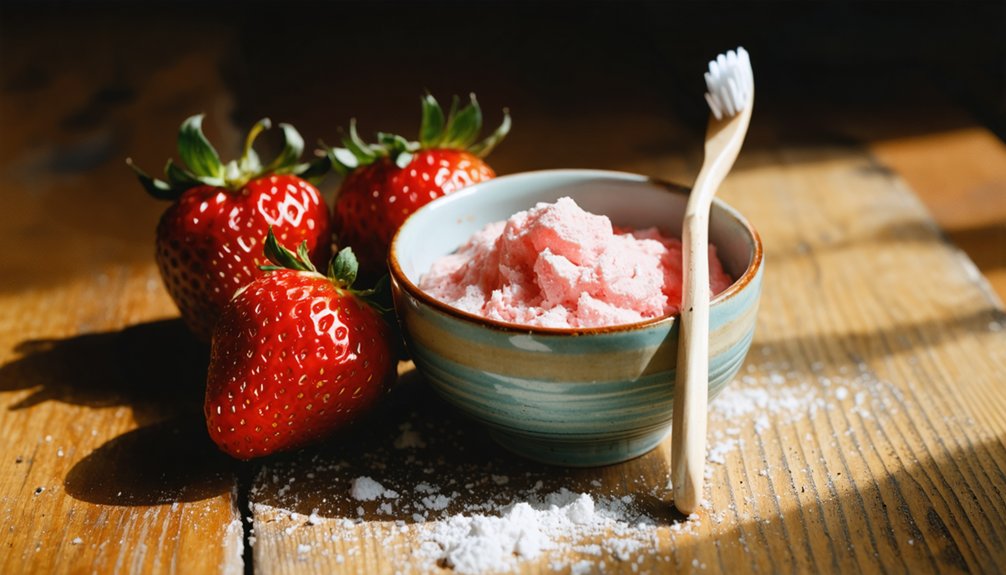
Among the gentler fruit-based whitening methods, the strawberry and baking soda combination stands out as a practical weekly treatment.
Strawberry benefits stem from malic acid, which dissolves surface discoloration effectively. Baking soda synergy enhances this process through gentle exfoliation, lifting stains your toothbrush alone can’t remove.
Malic acid in strawberries dissolves surface stains while baking soda exfoliates the discoloration your toothbrush leaves behind.
To apply, mash one ripe strawberry with half a teaspoon of baking soda. Using a toothbrush or your finger, spread the mixture across your teeth and leave it on for five to ten minutes. Rinse thoroughly, then brush with your regular toothpaste.
Limit this treatment to once weekly. Overuse risks enamel erosion due to prolonged acid exposure.
When used correctly, you’ll achieve gradual brightening without introducing harsh chemical agents into your oral care routine.
Apple Cider Vinegar Rinse Done the Right Way
Apple cider vinegar can brighten your teeth, but you must dilute it properly—mix one part vinegar with four parts water before swishing it for no more than 60 seconds.
Its acetic acid is corrosive in concentrated form, so skipping dilution risks stripping your enamel permanently.
After rinsing, flush your mouth thoroughly with plain water to neutralize residual acid and protect your tooth enamel from prolonged exposure.
Proper Dilution Ratios
Getting the dilution ratio right is critical when using apple cider vinegar as a mouth rinse, since its high acidity can erode tooth enamel if you apply it incorrectly. Understanding dilution importance protects your enamel while still delivering results.
Stick to safe ratios: one part vinegar to four parts water — never less.
Here’s what’s at stake when you skip proper dilution:
- Enamel erosion becomes irreversible, leaving teeth permanently weakened and sensitive.
- Increased cavity risk develops when acid repeatedly contacts unprotected tooth surfaces.
- Gum irritation escalates quickly, causing discomfort that discourages consistent oral care.
Measure carefully every time. Don’t estimate. Your enamel doesn’t regenerate once it’s gone, so precision here isn’t optional — it’s essential for protecting the results you’re working toward.
Protecting Enamel Afterward
Once you’ve finished swishing, protecting your enamel becomes your immediate priority. Rinse your mouth thoroughly with plain water immediately after using apple cider vinegar. This step neutralizes residual acidity before it continues eroding your enamel’s mineral structure.
For stronger post whitening care, wait at least 30 minutes before brushing. Brushing acid-softened enamel accelerates wear rather than preventing it. Instead, drink water to flush remaining acidity naturally.
Incorporate enamel strengthening habits by using fluoride toothpaste daily, which actively remineralizes weakened surfaces. Consuming dairy or calcium-rich foods after treatment also supports mineral replenishment.
Never exceed the recommended frequency with acidic remedies. Overuse compounds damage faster than visible whitening develops. You control the outcome by respecting these protective steps consistently.
Orange Peel, Turmeric, and Lemon Juice as Quick Surface Polishes
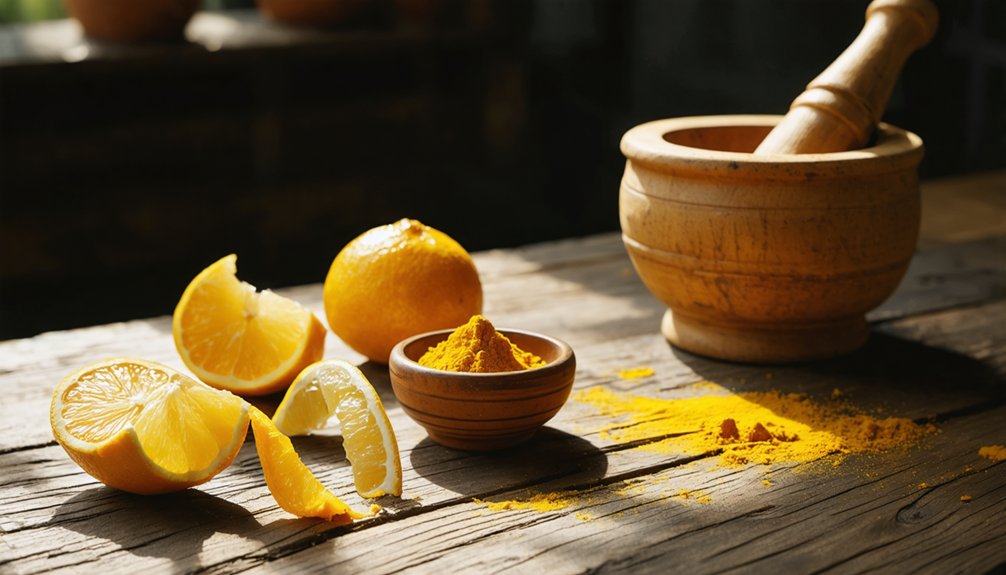
When it comes to quick surface polishes, orange peel, turmeric, and lemon juice each offer distinct whitening mechanisms worth understanding before you use them.
Orange peel benefits come from limonene and vitamin C, which gently polish enamel without abrasives.
Turmeric properties include antimicrobial compounds that lift surface discoloration when applied briefly on a wet brush.
Lemon juice effectiveness relies on citric acid dissolving stains, though its acidity demands strict caution.
Use these natural whitening alternatives carefully:
- Rub orange peel for 1–2 minutes—then brush immediately to clear residue
- Apply turmeric for no longer than 2 minutes to prevent staining gums
- Limit lemon juice to once weekly, always diluted, protecting your enamel from erosion
Control your application frequency; overuse reverses your progress.
Daily Habits That Protect Your Natural Whitening Results
Protecting your natural whitening results depends less on what you apply and more on the daily habits you maintain between treatments.
Use fluoride toothpaste twice daily to strengthen enamel and prevent new staining. Regular flossing removes plaque buildup that discolors tooth surfaces over time.
Prioritize hydration habits—drinking water consistently rinses stain-causing residue after meals. Avoiding stains means limiting coffee, tea, and red wine, or rinsing immediately after consuming them.
Practice mindful snacking by choosing crunchy vegetables over sugary, acidic options. Reduce acidic drinks like soda and citrus juice, which erode enamel and accelerate discoloration.
Commit to smoking cessation, since tobacco is among the most aggressive causes of deep staining.
Schedule dental checkups every six months to monitor enamel health and catch early staining before it worsens.
Frequently Asked Questions
Can Natural Whitening Remedies Safely Whiten Dental Veneers or Crowns?
No, you shouldn’t use natural whitening remedies on veneers or crowns. These restorations don’t respond to bleaching agents. For proper veneer care and crown maintenance, you’ll want to consult your dentist to avoid damaging costly dental work.
How Long Before a Special Event Should I Start Natural Whitening?
Perfectly Plan your event preparation with these timing tips: start natural whitening 4–6 weeks before your special occasion. You’ll allow gradual, safe results while avoiding last-minute sensitivity or enamel irritation that could compromise your smile’s comfort.
Are These Natural Remedies Safe to Use During Pregnancy or Breastfeeding?
You shouldn’t assume natural ingredients are automatically safe during pregnancy or breastfeeding. Safety concerns remain valid, so you’d be wise to consult your healthcare provider before trying any of these remedies to protect you and your baby.
Can Children or Teenagers Safely Use These Home Whitening Methods?
You shouldn’t use these methods on children due to age considerations and sensitivity concerns. Their developing enamel’s more vulnerable to damage. For teenagers, consult a dentist first before attempting any home whitening remedy to guarantee safety.
Do Natural Remedies Work on Teeth With Deep Internal Discoloration or Medication Stains?
Natural remedies won’t effectively treat deep internal discoloration causes like medication stains. You’ll need professional treatment options, as surface-level solutions can’t reach intrinsic staining. Consult your dentist for safe, targeted interventions that’ll deliver real results.
References
- https://www.suncreekdental.com/our-practice/blog/how-to-remove-yellow-stains-from-teeth-naturally/
- https://alvarezdentistry.com/remove-yellow-stains-from-my-teeth-naturally-at-home/
- https://downtowndentalsyracuse.com/whiten-yellow-teeth-fast-at-home/
- https://mytoothhq.com/6-simple-ways-to-naturally-whiten-your-teeth-at-home/
- https://kesslerdental.net/blog/ways-to-whiten-teeth-naturally-at-home/
- https://www.mydentaloffice.com/10-home-remedies-for-whiter-teeth-that-actually-work/
- https://www.dentalwellnesscamarillo.com/naturally-whiten-yellow-teeth-tips-for-a-brighter-smile/
- https://www.mouthhealthy.org/all-topics-a-z/natural-teeth-whitening
- https://www.pleasantfamilydentistry.com/blog/6-natural-ways-to-whiten-your-teeth