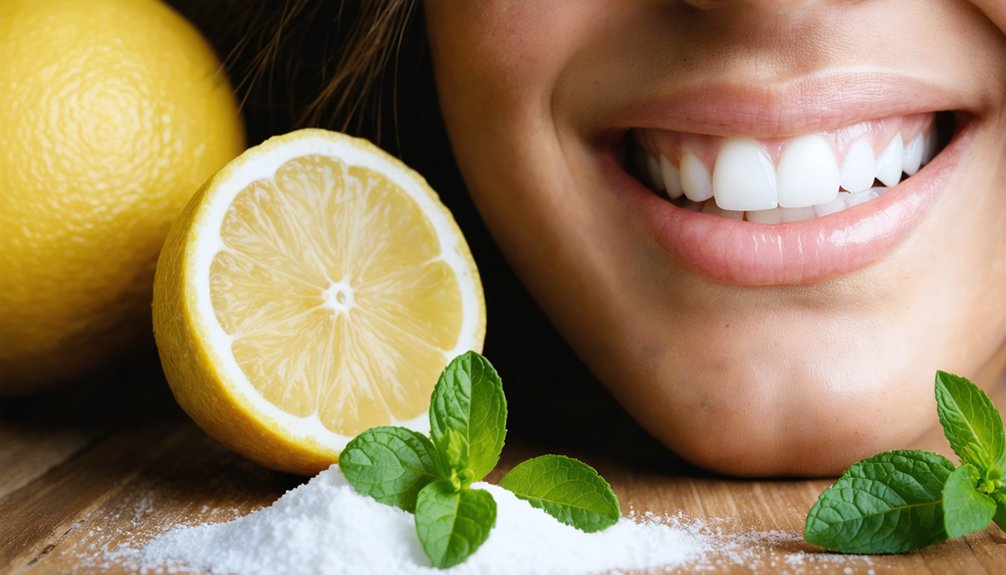
You can remove dark spots on your teeth naturally by using mild abrasives like baking soda mixed with hydrogen peroxide to polish surface stains off enamel. Oil pulling with coconut oil reduces plaque buildup, while diluted apple cider vinegar helps break down discoloration. Limiting chromogenic foods like coffee, tea, and red wine prevents further staining. Each method targets extrinsic stains differently, and understanding which approach suits your specific situation makes all the difference.
Key Takeaways
- Brush gently with a baking soda and hydrogen peroxide paste 2-3 times weekly to polish away surface stains effectively.
- Oil pulling with one tablespoon of coconut oil for 15-20 minutes reduces plaque buildup that contributes to dark spots.
- Limit coffee, tea, red wine, and tobacco use, as these accelerate dark spot formation on enamel.
- Diluted apple cider vinegar swished for one minute, 2-3 times weekly, can help reduce surface discoloration safely.
- Persistent dark spots may indicate deeper issues; consult a dentist for professional treatments like microabrasion or composite bonding.
What Causes Dark Spots on Teeth?
Dark spots on teeth develop from a combination of extrinsic and intrinsic factors that alter enamel color or penetrate deeper tooth structures.
Extrinsic causes include chromogenic foods, coffee, tea, red wine, tobacco, and poor oral hygiene habits that allow plaque and tartar accumulation. These surface-level stains directly compromise tooth enamel health by embedding pigments within the enamel’s porous surface.
Intrinsic factors originate within the tooth itself. Trauma, excessive fluoride exposure during development, certain antibiotics like tetracycline, and tooth decay can permanently alter dentin or enamel coloration from the inside out.
You can manage both categories effectively by identifying your specific triggers early.
Applying consistent oral hygiene tips—brushing twice daily, flossing, and limiting staining agents—significantly reduces your risk of dark spot progression.
Foods and Drinks That Make Dark Spots Worse
Your daily food and drink choices directly accelerate dark spot formation on your teeth.
Coffee, tea, red wine, and dark-colored berries contain chromogens that bind to enamel, while tobacco and high-sugar foods introduce tar and bacterial acids that deepen discoloration.
You’ll worsen existing stains markedly if you don’t limit these exposures and maintain consistent oral hygiene habits.
Staining Beverages To Avoid
Certain foods and drinks accelerate dark spot formation by introducing chromogens—highly pigmented compounds—that bind to tooth enamel.
Staining beverages like coffee, tea, and red wine contain tannins that intensify chromogen adhesion to enamel surfaces.
Dark sodas and grape juice deliver both acid and pigment simultaneously, compounding enamel vulnerability.
For effective dark spot prevention, you’ll need to limit these beverages or use a straw to minimize direct contact with teeth.
Rinse your mouth with water immediately after consuming any staining beverage—don’t wait.
Avoid brushing within 30 to 60 minutes post-consumption, as softened enamel is more susceptible to abrasion.
Tobacco products introduce tar that penetrates enamel pores deeply, making stains considerably harder to reverse through natural methods.
Foods That Discolor Teeth
Beverages aren’t the only culprits—solid foods carry the same stain-forming potential through identical chromogen and acid mechanisms.
Dark berries like blueberries, blackberries, and pomegranates deposit chromogens directly onto enamel.
Soy sauce, balsamic vinegar, and tomato-based sauces combine acidity with deep pigmentation, accelerating discoloration.
Sugary foods fuel bacterial growth, producing acids that erode enamel and increase stain absorption—directly compromising your dental hygiene.
Citrus fruits soften enamel through prolonged acid exposure, leaving surfaces more vulnerable to pigment penetration.
Artificially colored candies and processed snacks introduce synthetic dyes that bond stubbornly to enamel.
Protecting your oral health requires identifying and limiting these dietary triggers systematically.
Rinse with water immediately after consuming high-chromogen or acidic foods to reduce contact time and minimize cumulative staining damage.
Tobacco And Sugar Effects
Two substances stand out as the most aggressive accelerants of dental dark spots: tobacco and refined sugar.
Tobacco effects on enamel are immediate and cumulative. Tar and nicotine penetrate enamel pores deeply, producing stubborn brown and black discoloration that standard brushing can’t reverse. You’re fundamentally embedding pigment directly into your tooth structure with every use.
Sugar impact operates differently but delivers equal damage. Refined sugar feeds oral bacteria, accelerating acid production that softens enamel and creates porous surfaces that absorb stains more readily.
Plaque accumulation from sugar consumption also darkens over time, forming visible spots along the gumline and between teeth.
If you’re serious about eliminating dark spots, eliminating tobacco entirely and drastically reducing refined sugar intake are non-negotiable first steps.
How Baking Soda Removes Dark Spots on Teeth
Baking soda works as a mild abrasive that mechanically polishes surface stains off your enamel without harsh chemical exposure.
To apply it correctly, you mix equal parts baking soda and water into a paste, then brush gently with a soft-bristled toothbrush for one to two minutes before rinsing thoroughly.
You should limit use to a few times per week, as daily application risks gradual enamel erosion over time.
Baking Soda Polishing Mechanism
Polishing away dark spots starts with understanding how baking soda’s chemical structure works against surface stains. Sodium bicarbonate particles are mildly abrasive, physically disrupting chromogen bonds embedded in enamel without aggressive grinding. This controlled mechanical action preserves enamel safety while targeting discoloration directly.
Baking soda works through these mechanisms:
- Micro-abrasive particles scrub stain molecules off the enamel surface
- Its alkaline pH neutralizes acids that accelerate stain absorption
- Low hardness rating prevents scratching or structural enamel damage
- Consistent application disrupts plaque biofilm that traps dark pigments
- Water-soluble particles rinse cleanly, leaving no residue behind
You’re using a compound that delivers measurable results without compromising tooth integrity.
Applied correctly a few times weekly, baking soda gives you precise, evidence-supported control over surface stain removal.
Proper Application Techniques
Applying baking soda correctly determines whether you get consistent stain reduction or inadvertent enamel wear.
Mix equal parts baking soda and water to form a homemade toothpaste with a smooth, workable consistency. Apply the paste directly onto a soft-bristled toothbrush, not your finger, to maintain controlled pressure distribution.
Brush using gentle circular motions for one to two minutes, targeting darkened areas without aggressive scrubbing. Rinse thoroughly with water afterward to eliminate residual alkalinity.
Enamel protection depends entirely on frequency control — limit applications to two or three times per week. Daily use strips protective enamel layers incrementally, increasing sensitivity and stain absorption over time.
Consistent, measured application produces gradual surface stain removal without compromising structural tooth integrity.
Safe Usage Frequency
Frequency determines whether baking soda works as a controlled stain-removal agent or a source of cumulative enamel damage. For effective natural whitening without structural compromise, you must regulate exposure carefully. Overuse accelerates enamel wear, increasing sensitivity and stain absorption over time.
Follow these evidence-based frequency guidelines for enamel protection:
- Apply baking soda paste two to three times per week maximum
- Space applications at least 48 hours apart to allow enamel recovery
- Limit each session to one to two minutes of active brushing
- Discontinue immediately if tooth sensitivity develops between sessions
- Reassess usage every four weeks to monitor enamel response
Consistent moderation outperforms aggressive daily application. You control outcomes by treating baking soda as a periodic intervention rather than a daily substitute for fluoride toothpaste.
Use Hydrogen Peroxide to Break Down Dark Spots
Hydrogen peroxide breaks down dark spots on teeth through a mild oxidizing reaction that targets pigmented compounds in the enamel.
When combined with baking soda, one of the most effective gentle abrasives available, it creates a paste that delivers both chemical and mechanical action against surface stains. This combination supports natural whitening without requiring professional-grade treatments.
To use it, mix a small amount of baking soda with hydrogen peroxide until a paste forms. Brush gently for one to two minutes, then rinse thoroughly.
Limit this treatment to two or three times per week to prevent enamel erosion. Stop immediately if you experience sensitivity. Consistency within safe frequency parameters produces measurable results over time.
Salt, Sesame Seeds, and Charcoal as Natural Tooth Abrasives
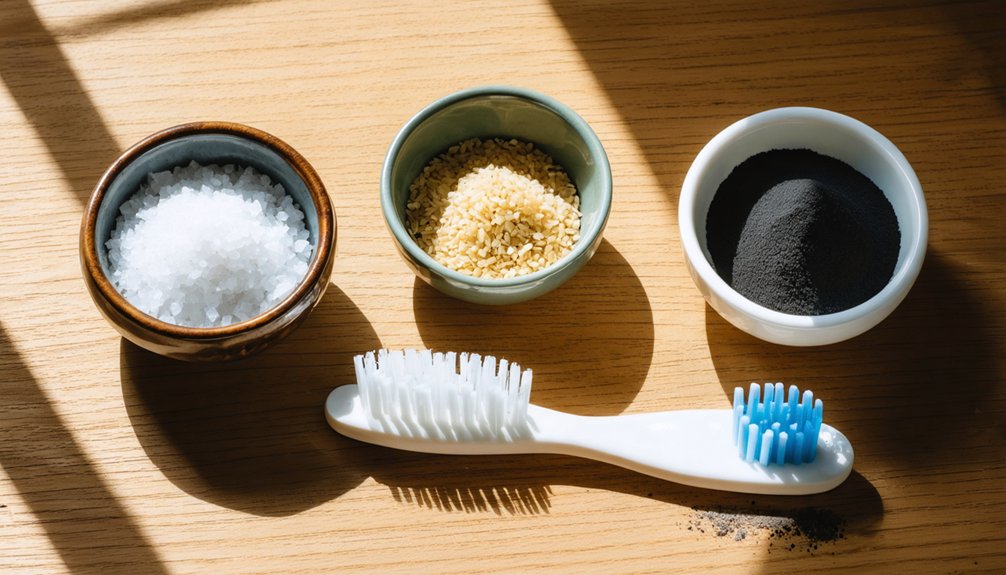
Three natural abrasives—salt, sesame seeds, and activated charcoal—offer mechanical stain removal through distinct physical actions on the enamel surface. Each delivers targeted teeth polishing without synthetic chemicals, making them effective home remedies for dark spot reduction.
- Sprinkle fine salt onto your toothbrush for gentle cleaning and surface stain removal.
- Chew sesame seeds directly to scrub plaque through natural abrasive friction.
- Brush activated charcoal powder onto stained areas for 3 to 4 minutes for ideal charcoal applications.
- Rinse thoroughly after each treatment to remove residual particles.
- Limit use to several times weekly to protect enamel integrity.
These natural abrasives support oral health when used moderately. Salt benefits include antimicrobial action, sesame seeds stimulate saliva production, and charcoal adsorbs surface chromogens.
Consistent application strengthens your dental care routine without compromising enamel structure.
Does Oil Pulling Actually Clear Dark Spots on Teeth?
When you swish one tablespoon of coconut oil in your mouth for 15 to 20 minutes, the oil binds to bacterial membranes and mechanically lifts plaque from tooth surfaces through a process called emulsification.
You’ll find that by reducing plaque accumulation, oil pulling addresses one of the primary contributors to dark spot formation.
However, its effectiveness is limited to surface-level bacterial deposits, meaning it won’t reverse intrinsic discoloration or deeply embedded stains without complementary oral hygiene practices.
Oil Pulling Mechanism Explained
Oil pulling works by swishing a tablespoon of coconut oil through your teeth and gums for 15 to 20 minutes, during which the oil mechanically dislodges plaque and oral bacteria from tooth surfaces.
This ancient Ayurvedic oral hygiene practice supports cleaner teeth when combined with consistent brushing.
The mechanism targets surface-level contributors to dark spots through:
- Emulsifying bacterial membranes that accumulate as plaque
- Reducing microbial load responsible for staining and discoloration
- Loosening debris lodged in hard-to-reach areas between teeth
- Stimulating saliva production that naturally neutralizes acids
- Removing plaque layers that trap chromogens against enamel
After oil pulling, discard the oil, then rinse with warm water.
Incorporate this into your routine several times weekly for measurable oral hygiene improvement.
Effectiveness Against Dark Spots
While oil pulling reduces bacterial load and loosens plaque, it doesn’t directly bleach or chemically break down the pigmented compounds embedded in enamel that cause dark spots. Its contribution to natural whitening is indirect — by removing plaque films that trap chromogens, you’re eliminating a surface layer that intensifies discoloration.
Clinical evidence supporting oil pulling as a standalone dark spot treatment remains limited. You’ll see the most measurable results when you combine it with mechanical brushing and other targeted methods.
Its value lies primarily in enamel protection — coconut oil’s antimicrobial properties reduce the bacterial acids that erode enamel and increase stain absorption. Used consistently alongside proven techniques, oil pulling supports a cleaner oral environment, but it won’t resolve established dark spots on its own.
How to Use Apple Cider Vinegar Safely on Teeth

Apple cider vinegar’s acidic properties can break down tartar and surface stains, but you’ll need to dilute it before use to protect your enamel. Among the vinegar benefits, its antimicrobial action reduces bacteria contributing to dark spots.
Follow these steps to apply it safely:
- Dilute one part apple cider vinegar with two parts water before use
- Swish the solution around your mouth for approximately one minute
- Spit out the solution completely after swishing
- Rinse thoroughly with clean water to neutralize residual acidity
- Limit application to two or three times per week maximum
Avoid prolonged exposure, as frequent acid contact softens enamel and increases stain absorption.
Stop immediately if you experience sensitivity or discomfort during or after treatment.
When Home Remedies Are Not Enough for Dark Spots
Home remedies address surface stains effectively, but they can’t penetrate intrinsic discoloration caused by enamel hypoplasia, fluorosis, or deep-set decay.
If dark spots persist after consistent natural treatment, you’re likely dealing with structural damage rather than surface buildup. Continued abrasive use in these cases accelerates enamel erosion without resolving the underlying problem.
Persistent dark spots despite natural treatment signal structural damage—abrasives worsen erosion without fixing what’s underneath.
You need professional intervention when dark spots appear alongside sensitivity, pitting, or visible structural changes. A dentist can diagnose whether the cause is decay, developmental defects, or mineral loss.
Treatment options include microabrasion, composite bonding, or resin infiltration depending on severity.
Don’t delay seeking clinical evaluation to avoid compounding damage. Early professional assessment protects your remaining enamel and gives you targeted, effective solutions that home remedies simply can’t provide.
Daily Habits That Prevent Dark Spots From Returning

Preventing dark spots from returning depends on the same consistent behaviors that protect enamel and limit bacterial growth long-term. Your daily oral hygiene routine forms the foundation of effective preventive care.
- Brush twice daily with fluoride toothpaste using gentle circular strokes for two minutes.
- Floss once daily to eliminate plaque between teeth before it hardens into tartar.
- Rinse with water immediately after consuming coffee, tea, or dark-pigmented foods.
- Limit staining beverages and use a straw to reduce direct enamel contact.
- Schedule professional cleanings regularly to catch early stain formation before it deepens.
You control recurrence through discipline and consistency. Skipping steps creates conditions where bacteria thrive and pigments absorb into enamel.
Treating preventive care as non-negotiable keeps dark spots from reestablishing.
How Often Should You Use Natural Whitening Treatments?
Natural whitening treatments work best when you apply them strategically rather than daily. Overuse damages enamel, increasing sensitivity and stain absorption.
Use baking soda paste two to three times per week—no more. Reserve hydrogen peroxide combinations for occasional weekly use rather than continuous application.
Apple cider vinegar and lemon-based natural remedies should appear in your routine once or twice weekly, always diluted and followed by thorough rinsing.
Oil pulling carries the lowest risk, making it safe for daily or near-daily use. Activated charcoal treatments require the strictest limits—once or twice weekly maximum—due to their abrasive nature.
Enamel protection depends on spacing treatments strategically and monitoring sensitivity. If discomfort develops, reduce frequency immediately and consult your dentist before continuing any natural whitening protocol.
Frequently Asked Questions
Can Dark Spots on Teeth Indicate Serious Underlying Health Conditions?
Yes, dark spots can signal serious conditions. You should recognize that tooth discoloration causes include decay, enamel defects, or systemic disease. Don’t ignore oral health implications—consult your dentist promptly to identify and control underlying health factors effectively.
Are Natural Whitening Remedies Safe to Use During Pregnancy?
You should consult your dentist before using natural remedies during pregnancy. Prioritize safe dental hygiene by avoiding hydrogen peroxide and acidic solutions. Maintain oral health with gentle brushing and pregnancy-safe products to guarantee both your safety and your baby’s.
Do Dark Spots on Teeth Affect Children Differently Than Adults?
Yes, dark spots affect children differently. You’ll find their developing enamel’s more vulnerable to causes of discoloration, while adults experience age-related changes like enamel thinning. Avoid acidic treatments on children under six to prevent irreversible damage.
Can Dark Spots Return Immediately After Professional Dental Cleaning?
Like weeds after gardening, dark spot causes can resurface quickly if you neglect dental hygiene tips. You’re vulnerable immediately post-cleaning, so maintain consistent brushing, limit staining foods, and rinse promptly to keep recurrence at bay.
Does Drinking More Water Alone Help Reduce Existing Dark Spots?
Drinking more water alone won’t eliminate existing dark spots, but its hydration benefits support saliva production, which neutralizes acids. Water impact is limited—you’ll still need abrasives or chemical agents for effective stain removal.
References
- https://www.vinmec.com/eng/blog/how-to-remove-black-spots-on-teeth-en
- https://toothworkscalgary.com/blog/removing-black-spots-on-teeth-home-remedies-and-professional-options/
- https://lemaclinic.com/5-ways-to-remove-the-black-spots-on-your-teeth-at-home/
- https://www.wickerparkdentalgroup.com/how-to-remove-black-spots-from-teeth-at-home/
- https://www.youtube.com/watch?v=QYdAwoxTqIU
- https://www.medicalnewstoday.com/articles/321480
- https://specifydev.uog.edu/how-to-get-rid-of-black-spots-on-teeth/
- https://laurelsmiledesign.com/how-can-i-remove-black-stains-from-my-teeth/
- https://www.healthline.com/health/black-dot-on-tooth
- https://www.youtube.com/watch?v=owN1Kg7pzhw