For best results, start by brushing and flossing, then dry your teeth completely with gauze or tissue. Twist the pen until a small gel bead appears, prime it over a tissue, and apply a thin, even layer using short vertical strokes from gum line to biting edge. Avoid gum contact, keep lips pulled back for the first minute, and maintain the full recommended contact time. There’s more to maximizing your results than most people realize.
Key Takeaways
- Brush and floss teeth thoroughly, then dry completely with tissue or gauze before applying gel for maximum adhesion and effectiveness.
- Twist the pen base until a small gel bead forms, priming it over tissue before the first use.
- Apply thin, even layers using short vertical strokes from gum line to biting edge, avoiding contact with soft tissue.
- Maintain the full recommended contact time, typically 5–30 minutes, without eating, drinking, or rinsing prematurely.
- Follow daily applications for 5–14 days, then maintain results with once or twice weekly treatments afterward.
How Teeth Whitening Pens Actually Work
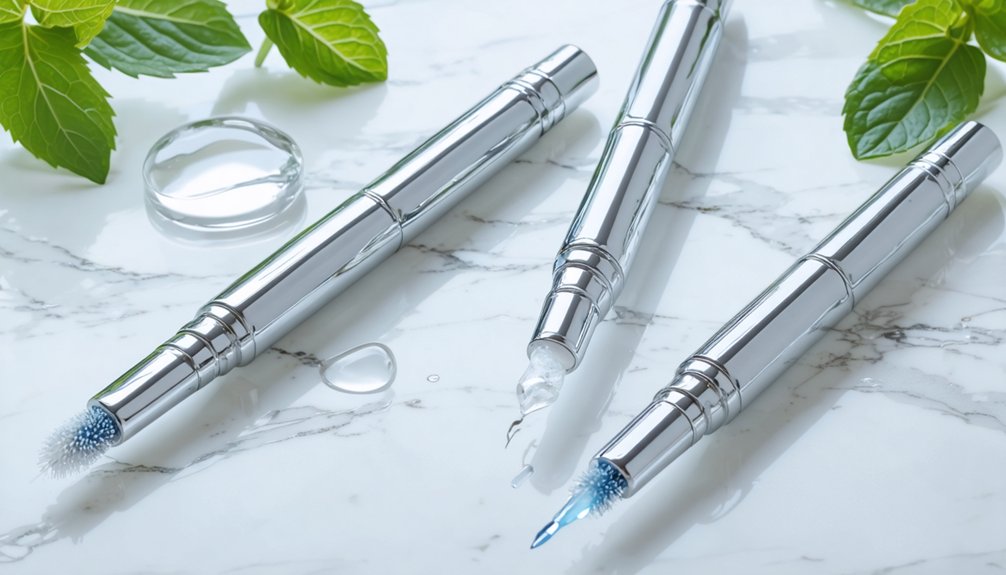
Teeth whitening pens deliver a peroxide-based gel directly onto the tooth surface through a brush tip applicator, allowing the active ingredient to penetrate the enamel and break down stain compounds at a molecular level. The peroxide oxidizes chromogenic molecules embedded within enamel tubules, gradually reducing discoloration.
Gel consistency determines how well the formula adheres during the contact period—thicker formulations stay in place longer, while thinner gels spread more easily but may migrate toward soft tissue. You’ll notice that teeth sensitivity often correlates with peroxide concentration and contact duration, as the oxidation process temporarily increases tubule permeability.
Understanding these mechanics gives you precise control over application variables—layer thickness, exposure time, and frequency—so you can optimize results while managing sensitivity risk effectively.
Prep Your Teeth Before Applying the Whitening Pen
Before you apply the whitening pen, brush and floss thoroughly to clear plaque and debris so the gel makes direct contact with enamel.
Once you’ve finished brushing, dry your teeth using a tissue, gauze, or forced air, since surface moisture dilutes the peroxide formula and reduces adhesion.
Time your application immediately after this prep routine, as several clinical guides confirm that post-brushing use on dry enamel produces the most consistent whitening results.
Brush and Floss First
Prepping your teeth before applying a whitening pen directly affects how well the gel performs. Brush thoroughly to eliminate plaque, debris, and surface biofilm that would otherwise block direct contact between the gel and enamel. Strong dental hygiene at this stage isn’t optional — it’s mechanically necessary for effective penetration.
Floss next to clear interproximal spaces, ensuring the gel reaches surfaces between teeth where staining commonly accumulates. Skipping this step compromises oral health outcomes and limits coverage.
After brushing and flossing, dry your teeth using a tissue, gauze, or controlled air-drying. Residual moisture dilutes peroxide concentration and reduces adhesion. The gel requires a clean, dry surface to bond effectively and deliver consistent results across all visible tooth surfaces.
Dry Your Teeth Thoroughly
Moisture is the most overlooked variable in whitening pen application, yet it directly undermines gel performance. Saliva dilutes the active peroxide compounds, compromising gel consistency and reducing direct enamel contact.
Before applying, use a tissue, gauze pad, or controlled air-drying to remove surface moisture from all visible tooth surfaces.
Dry teeth allow the gel to adhere evenly, penetrate efficiently, and remain concentrated where it matters. Skipping this step doesn’t just reduce whitening efficacy — it can increase uneven absorption, which may contribute to teeth sensitivity by exposing inconsistent peroxide distribution across enamel surfaces.
Take ten seconds to dry thoroughly. It’s a minor step that produces measurable differences in how the gel performs and how predictably your results develop across the full treatment cycle.
Time Your Application Right
Dry teeth set the foundation, but when you apply the pen matters just as much as how you apply it. Apply immediately after brushing and drying your teeth, since your dental hygiene routine already removes plaque and surface debris that would otherwise block gel-to-enamel contact.
Don’t eat, drink, or reintroduce moisture before application. Timing within your routine also protects product storage integrity — capping the pen promptly and returning it to a cool, dry location prevents the brush tip from drying out between sessions.
Apply at the same time daily to maintain consistent peroxide exposure across the full treatment window. Consistency in timing isn’t a preference; it’s a variable that directly controls how predictably and evenly your results develop across multiple applications.
How to Activate and Load the Pen Correctly
Before applying any gel, you’ll need to activate the pen correctly to guarantee consistent product flow. Remove the cap first, then twist or click the base slowly until a small bead of gel appears on the brush tip—typically requiring one to three clicks depending on the pen’s design.
Activate the pen before use—twist or click the base slowly until a small bead of gel appears on the brush tip.
Don’t overload the brush. Excess gel increases unintended gum contact and wastes product. A controlled, minimal amount gives you precise application that respects dental anatomy, letting you target enamel surfaces without flooding the gumline.
Prime the pen over a tissue during initial setup to avoid surging. Once loaded, keep the tip oriented downward to maintain steady flow.
After use, wipe the tip clean and replace the cap immediately to prevent clogging and color matching inconsistencies from oxidized, degraded gel.
Apply the Whitening Gel the Right Way
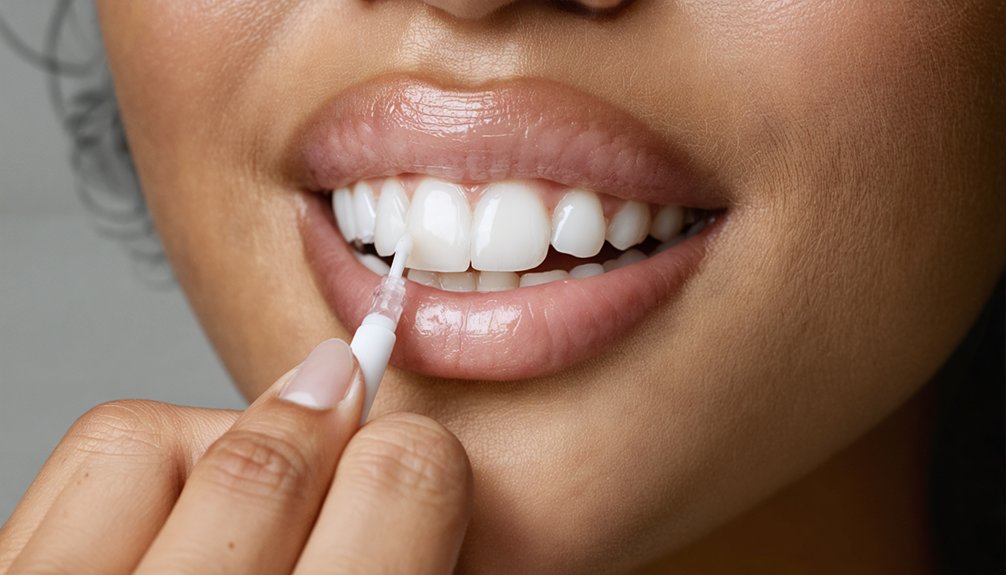
Once the pen is loaded, hold your lips away from your teeth to fully expose the front surfaces of both arches before you begin painting. This technique mirrors color matching principles used in clinical settings, ensuring uniform gel distribution across each visible tooth surface.
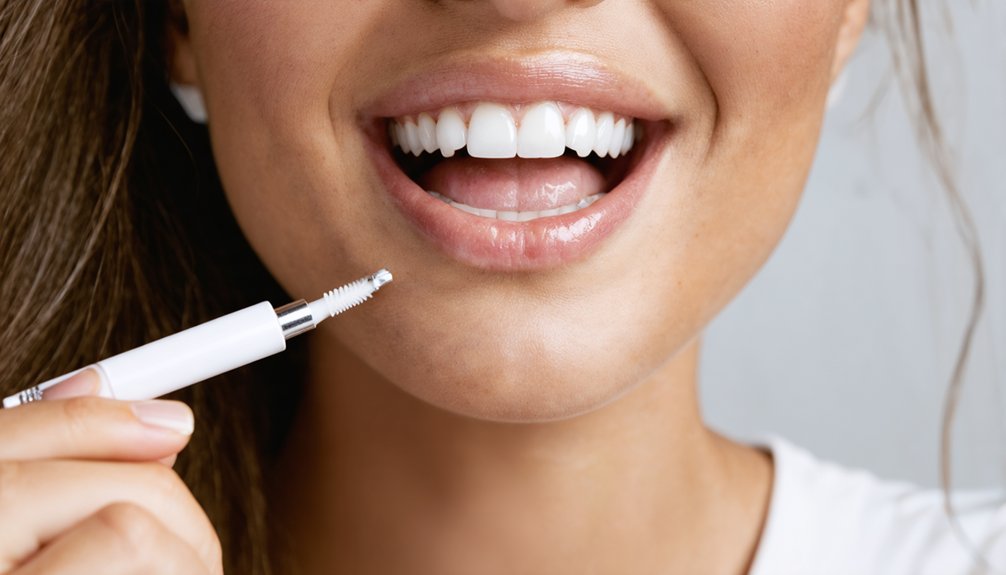
Work in short, vertical strokes from the gum line toward the biting edge, following dental anatomy to guide your stroke direction along each tooth’s natural contour. Apply a thin, even layer rather than building excess product, which increases gum contact risk and wastes formula.
Cover every visible surface completely before moving to the next tooth. Avoid soft tissue contact entirely, as peroxide compounds irritate gingival margins.
Precision during application directly controls your whitening outcome across the full treatment window.
How Long Should You Leave Whitening Pen Gel On?
The amount of time you leave whitening gel on your teeth depends entirely on the product’s formulation and peroxide concentration, with typical ranges spanning from 1 minute to 30 minutes or more.
Overnight pens follow a different protocol—you apply them before bed and brush the dried residue off in the morning rather than rinsing after a timed interval.
During whichever contact period applies to your product, you shouldn’t eat, drink, or rinse, as any interference reduces the gel’s effectiveness against enamel staining.
Recommended Wear Time Ranges
Wear time varies considerably across formulations, so you’ll need to follow the contact duration listed on your specific product rather than applying a universal timeframe.
Short-contact formulas require as little as 1 minute, while standard treatments typically specify 15–30 minutes. Overnight formulas rely on extended gel absorption as the coating dries directly on enamel and remains until morning.
Color consistency across treated teeth depends on maintaining the full recommended contact period without interruption. Cutting exposure short reduces the chemical reaction time necessary for enamel-level results. Don’t eat, drink, or rinse before the contact window closes.
Peroxide concentration directly determines safe wear duration, so higher-strength formulas often specify shorter times. Matching contact time precisely to your product’s instructions protects soft tissue while maximizing controlled, measurable whitening outcomes.
Overnight Versus Timed Applications
Choosing between an overnight formula and a timed application comes down to peroxide concentration and gel viscosity rather than personal preference.
High-viscosity, low-peroxide gels adhere without irritating tissue during extended wear, making overnight use structurally viable. Higher-concentration formulas require strict timed applications—typically 5 to 30 minutes—because prolonged tissue contact increases sensitivity risk.
Your lifestyle habits determine which format integrates without disruption. If your schedule prevents consistent daytime applications, overnight pens eliminate timing variables entirely.
However, diet considerations become critical post-application regardless of format. Eating or drinking during contact time chemically interferes with peroxide activity.
For timed formulas, you must control a 30-minute post-application window. Overnight use demands dietary restraint before application to prevent staining agents from embedding beneath the active gel layer.
What To Avoid During Use
Once the gel is on your teeth, two variables determine whether it works or causes harm: contact duration and what you expose your mouth to during that window. Exceeding the recommended wear time increases peroxide penetration into dentin, triggering sensitivity.
For sensitivity management, stop use immediately if you experience sharp or prolonged discomfort and reduce application frequency before resuming.
Diet restrictions during the contact period are non-negotiable. Eating or drinking dilutes the gel, disrupts adhesion, and introduces chromogens that counteract whitening.
Avoid all food and beverages until the gel has either been rinsed away or fully dissolved. Acidic drinks are particularly damaging, as they compound enamel vulnerability during active peroxide exposure.
Control the window precisely, and you control the outcome.
What to Do Immediately After Application
After applying the whitening gel, keep your lips pulled back and your mouth slightly open for the first minute to allow the formula to set without smearing. Avoid swallowing saliva excessively, and don’t rinse immediately unless the product instructions specifically require post-application rinsing—premature rinsing reduces contact time and compromises efficacy.
Once the recommended wear time concludes, spit out residual gel before rinsing with warm water. Monitor for oral sensitivity during and after this window; mild transient sensitivity is common but shouldn’t be severe. If burning or significant discomfort occurs, rinse thoroughly and discontinue use.
Avoid food and beverages for at least 30 minutes post-application to protect the treated enamel surface and allow the whitening agents to complete their oxidation cycle effectively.
Why Your Whitening Pen Isn’t Working (And How to Fix It)
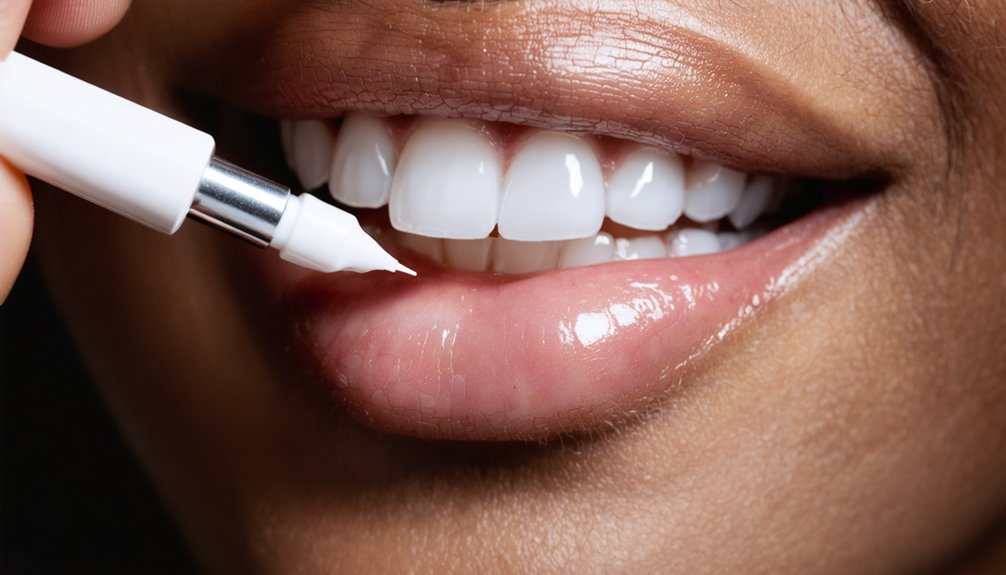
Even when you follow post-application protocol correctly, you may still see little to no visible whitening after several days—and the cause is almost always procedural rather than product failure.
Seeing little to no whitening after several days is almost always a procedural issue, not a product failure.
Inadequate dental hygiene before application is the most common variable. If plaque or surface debris remains on enamel, the gel contacts biofilm rather than the tooth surface, compromising stain removal at the molecular level.
Other failure points include applying gel to wet teeth, using insufficient contact time, or dispensing too little product per session. Check that you’re drying teeth thoroughly before each application, holding the gel for the full recommended duration, and applying consistently at the same time daily.
Correcting even one procedural gap typically produces measurable improvement within the next treatment cycle.
How Often Should You Use a Whitening Pen?
Frequency depends entirely on the specific formulation you’re using, not on a universal standard. Most pens specify daily application across a 5–14 day treatment window, while higher-concentration formulas may limit use to every other day to manage tooth sensitivity. Always defer to the product’s stated protocol.
Overuse doesn’t accelerate results—it increases the risk of enamel disruption and gum irritation, which compromises your dental hygiene baseline. Apply at the same time each day to maintain consistent gel exposure and predictable outcomes.
Expect gradual whitening across multiple sessions rather than immediate change. Once your treatment cycle ends, maintenance applications—typically once or twice weekly—can sustain results.
Track your usage precisely so you can identify patterns that correlate with sensitivity or diminishing returns.
Frequently Asked Questions
Can Teeth Whitening Pens Damage Existing Crowns, Veneers, or Dental Work?
If you have porcelain veneers, whitening pens won’t lighten them—dental material compatibility matters. You risk potential staining risks when surrounding enamel brightens but restorations stay the same shade, creating visible contrast.
Are Teeth Whitening Pens Safe to Use During Pregnancy or Breastfeeding?
You shouldn’t use teeth whitening pens without consulting your doctor first. Pregnancy safety data on peroxide absorption remains limited, and breastfeeding precautions apply equally—professional guidance guarantees you’re making an evidence-based, controlled decision for your specific situation.
What Is the Average Cost Difference Between Whitening Pens and Professional Treatments?
Penny for your thoughts—whitening pens cost $10–$50, while professional treatments run $300–$1,000. You’ll sacrifice targeted dental sensitivity management and deeper tooth enamel penetration, but you’ll gain accessible, controlled, daily whitening application.
Can Children or Teenagers Safely Use Teeth Whitening Pens at Home?
You shouldn’t let children use whitening pens without consulting a dentist first. Teenage use carries risks since developing enamel is more porous. Youth safety requires professional clearance before you initiate any peroxide-based whitening protocol at home.
Do Teeth Whitening Pens Expire, and How Should They Be Stored Properly?
Yes, teeth whitening pens do expire. Address expiration concerns by checking the label before use. Follow proper storage tips: keep the pen capped, away from heat, and out of direct light to maintain gel potency.
References
- https://www.wikihow.com/Use-a-Whitening-Pen
- https://biancabright.com/pages/how-to-use-a-whitening-pen-complete-guide-for-maximum-results
- https://wewhiten.com/how-to-teeth-whitening-pen/
- https://www.youtube.com/watch?v=mzBJKxM4aOA
- https://hutsrenovations.co.uk/tips/how-to/how-to-use-teeth-whitening-pen/
- https://www.suryadentalcare.com/all-about-teeth-whitening-pens-and-how-they-work/
- https://www.dentaly.org/us/teeth-whitening/teeth-whitening-pen/
- https://www.fernwhiteningsupplies.ca/blogs/news/mastering-the-art-of-whitening-pens-tips-and-tricks-from-our-dental-professionals
- https://eu.spotlightoralcare.com/pages/whitening-pen-tips