To combat red wine and vinegar teeth discoloration naturally, you’ll want to work with your body rather than against it. Rinse with plain water right after exposure to flush pigments before they settle. Wait 30 minutes before brushing so softened enamel can reharden. Support remineralization by eating hard cheese or letting saliva do its work. Gentle remedies like baking soda paste can lift fresh stains without harsh chemicals. There’s much more you can do to protect your smile naturally.
Key Takeaways
- Rinse mouth with plain water immediately after consuming red wine vinegar to flush pigments and minimize prolonged enamel contact.
- Avoid vinegar-based whitening remedies, as their acidity accelerates enamel erosion, worsening discoloration over time.
- Use baking soda paste once or twice weekly to gently loosen fresh surface pigments without aggressive scrubbing.
- Wait 30-60 minutes before brushing after acid exposure, allowing enamel to reharden and preventing further erosion.
- Brush twice daily with whitening toothpaste and floss nightly to consistently manage recurring discoloration from acidic substances.
Why Red Wine Stains Teeth So Stubbornly
Red wine leaves such a stubborn mark on teeth because it carries a triple threat: natural pigments called chromogens, tannins that help those pigments cling to enamel, and acid that temporarily softens the tooth surface so stains sink in faster.
Once acid triggers enamel erosion, even briefly, those chromogens penetrate deeper than surface-level teeth whitening methods can easily reach. Tannins act like a binding agent, locking pigment onto weakened enamel before your body’s natural defenses can respond.
The longer wine sits in contact with your teeth, the more stubborn that discoloration becomes. Understanding this process puts you in control. When you know exactly what’s happening at the surface level, you can make smarter, natural choices that interrupt the staining cycle before it takes hold.
Prep Your Teeth Before the First Sip of Red Wine
Before your first sip, what you do with your teeth matters more than most people realize. Brushing and flossing beforehand removes plaque, which otherwise acts like a sponge that pulls red pigments deep into tooth surfaces, working against your teeth whitening efforts.
Plaque acts like a sponge for red pigments — brush and floss before your first sip.
Good gum health also plays a role here. Inflamed or plaque-covered gums absorb staining compounds more readily, so a clean baseline protects both your gum line and enamel.
Eat something before you open the bottle. Cheese, yogurt, or crunchy vegetables like carrots or broccoli stimulate saliva, your body’s natural defense against pigment adhesion.
Also skip white wine as a starter, since its higher acidity softens enamel, making red wine stains stick faster and deeper.
Sip Smarter While Drinking to Reduce Red Wine Stains
Once you’ve prepped your teeth, how you sip throughout the evening matters just as much. Alternate each glass of red wine with plain water to flush tannins and pigments before they settle into enamel.
You’ll also reduce staining by eating throughout the meal, using crunchy whole foods as natural cleaners, and swallowing wine promptly rather than letting it linger against your teeth.
Sip Water Between Glasses
Sipping water between glasses of red wine is one of the simplest, most natural ways to protect your teeth from staining. Practicing mindful glass etiquette means water isn’t an afterthought—it’s part of your strategy.
Here’s how to make it work:
- Sip water after every glass to flush tannins and pigments before they settle.
- Use straw alternatives like wide-mouth glass straws to minimize direct wine contact with front teeth.
- Swish gently with each water sip to reach between teeth where pigment collects.
- Choose still water over sparkling, since carbonation adds unnecessary acidity.
You control what touches your teeth. Water acts as a natural buffer, diluting acids and rinsing away the compounds that bond pigment to enamel.
Pair Wine With Food
Pairing wine with food isn’t just good hosting—it’s one of the most natural ways to protect your teeth while you drink.
When you eat alongside red wine, you reduce how long tannin effects linger on enamel surfaces. Chewing stimulates saliva, which naturally neutralizes acid and rinses away pigment before it can settle.
Reach for fiber-rich whole foods like broccoli, carrots, apples, or raw celery—these create a mild mechanical cleaning effect while enhancing wine flavor naturally.
Cheese and yogurt add a protective layer of calcium, reducing direct tannin contact with enamel.
Eating isn’t just about pleasure here; it’s a deliberate, chemical-free strategy that puts you in control of what sticks to your teeth and what doesn’t.
Minimize Wine Mouth Contact
How long wine stays in contact with your teeth matters more than most people realize. Every extra second tannins linger on enamel deepens potential staining. You have more control than you think.
- Swallow promptly — don’t swish or hold wine in your mouth before swallowing.
- Monitor wine temperature — warmer wine releases more pigment, so slightly cooler pours reduce staining intensity.
- Choose glass shape wisely — narrower-rimmed glasses direct wine toward the back of your mouth, limiting front-to-tooth contact.
- Sip smaller amounts — less volume per sip means less surface exposure each time.
These small, intentional shifts during drinking create meaningful protection without relying on any chemical intervention afterward.
The 30-Minute Post-Wine Routine That Protects Enamel
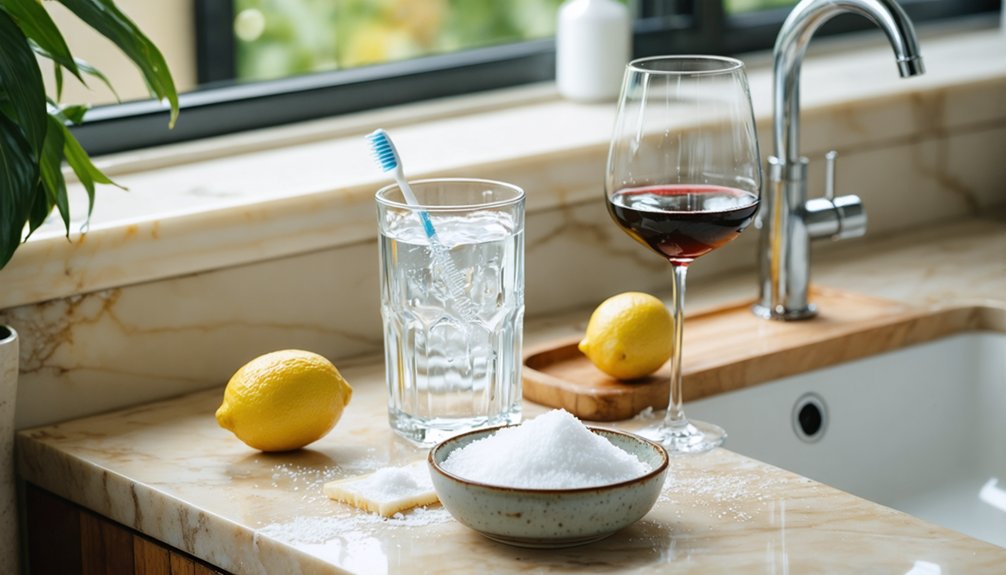
After finishing your wine, rinse your mouth thoroughly with plain water to flush away lingering tannins and pigments before they settle into enamel.
You’ll want to hold off on brushing for at least 30 minutes, since acid temporarily softens enamel and brushing too soon causes more harm than good.
Before bed, finish your routine with a careful floss to pull out any trapped particles your rinse couldn’t reach.
Rinse First, Brush Later
Once you’ve finished your last glass of wine, the smartest move is a simple water rinse — not reaching for your toothbrush. Wine’s acidity temporarily softens enamel, making immediate brushing a fast track to enamel erosion — and for anyone with dental veneers, that risk doubles.
Follow this 30-minute protection window:
- Swish water thoroughly for 30 seconds immediately after your last sip.
- Wait 30 to 60 minutes before introducing any toothbrush friction to softened enamel.
- Drink plain water during the waiting period to neutralize residual acidity naturally.
- Brush gently with a soft-bristle toothbrush once enamel has had time to reharden.
You’re not delaying care — you’re working with your body’s natural remineralization process, not against it.
The Waiting Period Explained
The 30-minute window isn’t arbitrary — your enamel needs real time to remineralize after acid exposure, and rushing that process works against your body’s natural repair cycle.
Alcohol consumption temporarily weakens your enamel’s surface, leaving it more porous and vulnerable to abrasion. Brushing too soon grinds that softened layer away rather than cleaning it.
Use those 30 minutes intentionally. Swish with plain water, eat a small piece of hard cheese, or simply let your saliva do its quiet work — rebuilding mineral bonds naturally.
Enamel sensitivity increases after wine exposure, so protecting that recovery window matters more than acting fast.
Think of it as cooperating with your body rather than overriding it. Patience here isn’t passive — it’s precise, protective, and fully within your control.
Nighttime Flossing Matters
While your saliva works to remineralize enamel during that 30-minute recovery window, particles and tannins are settling into the spaces between your teeth — and that’s where nighttime flossing becomes essential. Flossing is your most direct stain prevention tool after wine exposure.
Make it count with this simple approach:
- Floss before brushing so loosened particles get swept away rather than redistributed.
- Use slow, deliberate strokes against each tooth surface to lift tannin residue fully.
- Work every gap, including back molars where pigment hides longest.
- Follow with a water rinse to flush dislodged debris naturally.
This nightly oral hygiene habit costs you two minutes but gives you real control over what stays on your teeth while you sleep.
Natural Ways to Lift Red Wine Stains at Home
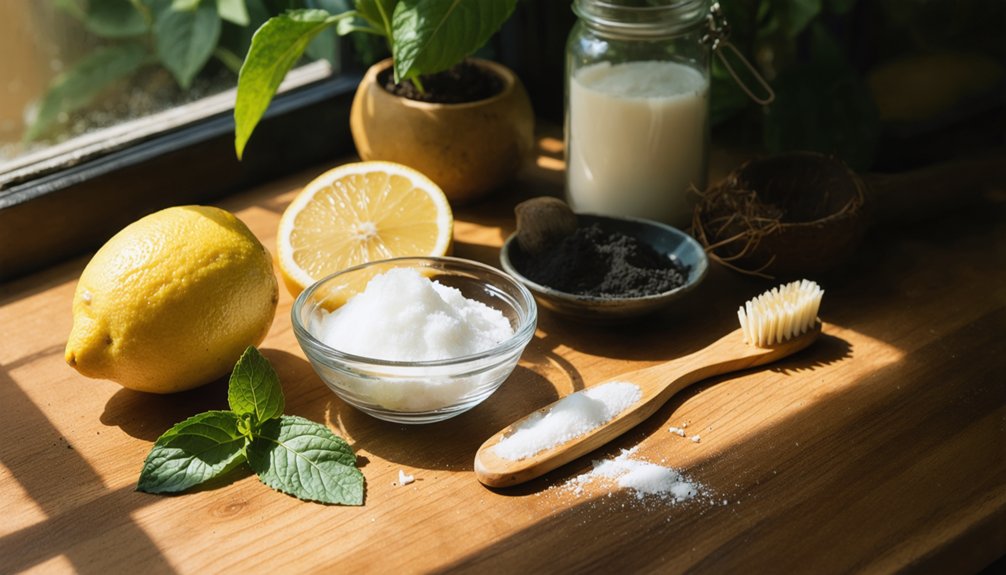
After a night of red wine, a few gentle, natural options can help lift surface stains before they settle deeper. These natural remedies put stain removal back in your hands without relying on harsh chemicals.
Try a baking soda paste once or twice a week — it loosens fresh pigment without aggressive scrubbing.
A diluted 3% hydrogen peroxide rinse works similarly but shouldn’t become a daily habit.
Whitening toothpaste used consistently helps manage recurring discoloration while supporting your routine.
You can also try oil pulling with coconut or sesame oil for 15 to 20 minutes. It’s less proven than other methods, but many people find it a grounding, whole-body addition to their oral care practice.
Use what works for your body.
Stop These Habits That Make Red Wine Stains Worse
Knowing what helps is only half the picture — what you stop doing matters just as much. Certain habits quietly accelerate staining and enamel erosion, undoing your natural care efforts. Take back control by cutting these out:
Helping your teeth is only half the battle — what you *stop* doing shapes your smile just as much.
- Brushing immediately after alcohol consumption — acid temporarily softens enamel, making brushing abrasive rather than protective.
- Drinking white wine before red — white wine’s acidity opens enamel pores, letting red pigments grip deeper.
- Using vinegar-based “natural” whitening remedies — acidity worsens enamel erosion over time, despite whitening claims.
- Sipping wine slowly on an empty mouth — prolonged contact increases tannin buildup and stain adhesion.
Small behavioral shifts protect your enamel and keep your natural whitening routine actually working.
Daily Practices That Keep Red Wine Stains Away
Consistency is your strongest defense against red wine stains — not occasional intensive treatments, but simple daily habits that protect enamel and limit pigment buildup over time.
Brush twice daily for two minutes using a whitening toothpaste that supports surface stain removal without harsh chemicals. Floss every night to clear trapped particles before they settle.
Drink water throughout the day to rinse away residual tannins and support saliva production naturally. Schedule professional cleanings every six months to maintain enamel health and prevent buildup from compounding.
If enamel erosion is a concern, switch to a soft-bristled or electric toothbrush for gentler, more effective cleaning.
These consistent choices give you real control over long-term teeth whitening results without relying on aggressive or synthetic interventions.
Frequently Asked Questions
Can Red Wine Stains on Teeth Become Permanent if Left Untreated?
Like roots gripping soil, yes, red wine stains can permanently embed into your tooth enamel if you ignore them. You’ve got natural stain removal power—act quickly with water rinsing and fiber-rich foods before they set.
Does Drinking Red Wine Through a Straw Meaningfully Reduce Tooth Staining?
Straws help limit wine acidity’s contact with your tooth enamel, but they don’t eliminate it. You’ll still benefit more from rinsing with water, eating fiber-rich foods, and maintaining whole, natural oral care habits.
Are Some People Genetically More Prone to Red Wine Tooth Staining?
Yes, your genetic predisposition shapes your tooth enamel strength, making some people naturally more vulnerable to staining. You can fight back using whole-body, chemical-free habits like water rinsing, fiber-rich foods, and consistent natural oral care.
Can Professional Whitening Treatments Fully Reverse Deep Red Wine Stains?
Professional whitening can’t fully reverse deep stains rooted in red wine chemistry, but it’ll considerably lighten them. You’ll get better control pairing treatments with natural remedies and smart wine preservation habits that prevent future discoloration from taking hold.
Does the Type or Brand of Red Wine Affect How Badly Teeth Stain?
Like a medieval alchemist mixing potions, yes — wine quality and glass color both affect staining. Deeper, darker wines leave more tannins on your teeth, so you’ll naturally want lighter varieties to keep your smile pure.
References
- https://crest.com/en-us/oral-care-tips/how-to-prevent-and-get-rid-of-red-wine-teeth-stains
- https://elizabethlwakimdds.com/blog/how-to-remove-red-wine-stains-from-teeth-safe-dentist-approved-tips/
- https://www.medicalnewstoday.com/articles/321172
- https://www.mydentaloffice.com/natural-whitening-remedies-for-coffee-and-wine/
- https://grapecollective.com/articles/say-goodbye-to-purple-teeth
- https://rutgershealth.org/news/how-prevent-wine-teeth-holiday
- https://www.carlmontdentalcare.com/blog/wine-and-tooth-staining
- https://www.foreveryoungdentistry.com/blog/?p=108
- https://www.bbc.co.uk/food/articles/dentist_advice_food_white_teeth