Whitening medication-stained teeth depends on whether your discoloration is intrinsic or extrinsic. Tetracycline causes deep, intrinsic staining that resists most over-the-counter products, while chlorhexidine and iron supplements create surface stains that respond better to standard whitening. Your best options range from professional in-office bleaching and custom take-home trays to veneers and composite bonding for resistant cases. The right method depends on your stain type, depth, and severity—and each approach has critical details worth understanding before you decide.
Key Takeaways
- Distinguishing intrinsic from extrinsic medication stains is essential, as each type responds differently to whitening treatments.
- In-office professional whitening uses prescription-strength peroxide, effectively targeting stubborn stains within one or more sessions.
- Custom take-home trays offer controlled, lower-intensity whitening with professional oversight for gradual, measurable stain removal.
- OTC whitening strips and gels address surface stains but prove ineffective against deep, intrinsic medication discoloration.
- Porcelain veneers, composite bonding, and dental crowns provide reliable restorative solutions when whitening treatments fail completely.
Which Medications Stain Teeth the Most: and Why It Matters for Whitening
Knowing which medications cause tooth discoloration directly shapes how effective any whitening approach will be. Tetracycline antibiotics cause deep intrinsic staining through stain pigmentation that binds to dentin during tooth development, making surface treatments largely ineffective.
Chlorhexidine mouthwash produces extrinsic discoloration through medication interactions with dietary tannins, which responds better to professional cleaning.
Antihistamines, antipsychotics, and antihypertensives can reduce saliva flow, accelerating surface stain accumulation.
Iron supplements and certain liquid medications deposit dark residue directly onto enamel.
Understanding whether your staining is intrinsic or extrinsic determines which whitening method you pursue. Intrinsic discoloration typically requires professional-grade peroxide treatments or cosmetic intervention, while extrinsic staining often responds to structured bleaching regimens.
Accurate identification prevents wasted effort and positions you to choose the most targeted, effective solution.
Professional In-Office Whitening for Severe Medication Stains
When medication stains run deeper than surface-level discoloration, professional in-office whitening is one of the fastest and most clinically reliable options available. Dentists apply prescription-strength hydrogen peroxide or carbamide peroxide agents that address both extrinsic and intrinsic staining—something OTC products rarely accomplish effectively.
Professional in-office whitening reaches intrinsic stains that over-the-counter products simply can’t touch.
You can often see measurable results within a single visit, though severe staining may require multiple sessions.
Innovative research continues to refine bleaching protocols, improving efficacy while reducing the two most common side effects: temporary tooth sensitivity and gingival inflammation. Future developments point toward more targeted delivery systems that minimize tissue irritation further.
If you want structured, supervised control over stubborn medication stains, in-office whitening gives you the strongest starting point before shifting to a maintenance regimen.
How Many In-Office Sessions Do Medication Stains Actually Require?
Understanding how many sessions you’ll actually need builds directly on why in-office whitening works—but the honest answer is that no single number applies to everyone. Medication stains vary in depth and origin, so your dentist will assess your specific dental health before estimating a treatment timeline.
Surface-level discoloration often responds within one to two sessions.
Deeper, intrinsic staining—common with tetracycline or certain long-term medications—may require three or more visits before noticeable lightening occurs.
Tooth sensitivity between sessions can also influence pacing, as your dentist may space appointments to allow enamel recovery.
You maintain control by asking your dentist for measurable benchmarks after each session. Tracking shade changes objectively helps you make informed decisions about continuing, pausing, or combining in-office treatment with a take-home regimen.
What Your Dentist’s Custom Take-Home Trays Can Do for Medication Stains
Custom take-home trays from your dentist offer a structured, lower-intensity alternative to in-office sessions—one that’s particularly useful when gradual lightening is preferred or when medication stains haven’t fully resolved after chairside treatment.
Custom tray benefits include precise gel-to-tooth contact, which improves medication stain targeting compared to generic OTC strips.
Your dentist-provided regimen typically delivers:
- Controlled peroxide concentration to minimize sensitivity risk
- Custom-fitted trays that maximize contact with discolored surfaces
- Structured application schedules for consistent, measurable results
- Lower-concentration formulas suited for extended home use
- Professional oversight to adjust the protocol if staining responds unevenly
This approach gives you direct control over your whitening timeline while maintaining clinical standards your dentist can monitor and modify as needed.
How Well Do Whitening Strips Work on Medication Stains?
Over-the-counter whitening strips offer a practical, accessible option—but their effectiveness against medication stains depends heavily on whether the discoloration is surface-level or intrinsic.
For extrinsic staining, strips can lighten teeth by several shades, making color matching with surrounding teeth more achievable. However, deeper, medication-related intrinsic staining—such as that caused by tetracycline—responds poorly to OTC concentrations alone.
Stain depth is the critical variable here. Strips deliver lower-concentration peroxide that penetrates enamel minimally, limiting their impact on embedded pigmentation.
The ADA recognizes OTC whiteners as a legitimate option, but you should use them exactly as directed—overuse increases sensitivity without improving results. If strips produce little change after a full regimen, professional-strength treatment is the more appropriate next step.
OTC Whitening Gels That Target Surface Medication Stains
OTC whitening gels work by delivering low-concentration hydrogen peroxide directly to stained enamel surfaces, making them a reasonable first-line option when medication staining is primarily extrinsic. Unlike natural remedies or alternative treatments, these gels follow structured formulations that produce measurable results when used consistently.
To use them effectively, follow these guidelines:
- Apply only to surface-stained enamel, not deeper intrinsic discoloration
- Follow manufacturer directions precisely to avoid sensitivity
- Use on a consistent schedule rather than sporadically
- Avoid staining foods like coffee, tea, and red wine during treatment
- Rinse thoroughly after each application to minimize gingival irritation
You’ll get better outcomes by treating OTC gels as a structured clinical regimen rather than a casual whitening attempt. Overuse increases sensitivity risk without improving results.
Can Hydrogen Peroxide Rinses Remove Medication Stains?
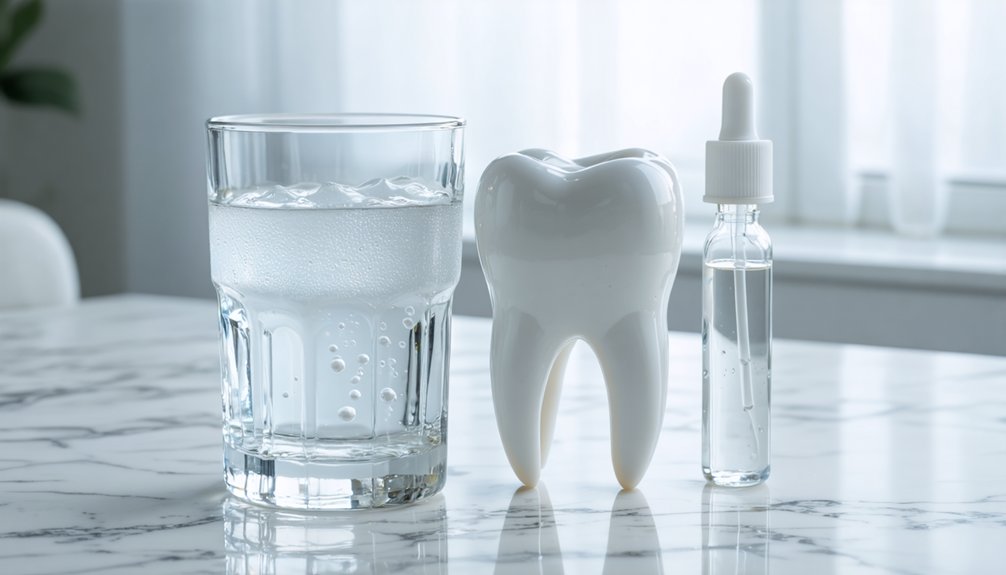
You should monitor for tooth sensitivity, which signals overuse or excessive concentration. Rinses won’t penetrate deep intrinsic discoloration caused by medications like tetracycline, so managing expectations is critical.
Limit use to avoid disrupting your oral microbiome—prolonged overuse has been linked to black hairy tongue.
If rinsing produces minimal visible change within a few weeks, escalate to prescription-strength peroxide gels or consult your dentist for a more targeted whitening protocol.
Baking Soda Brushing for Mild Medication Stains
While hydrogen peroxide targets staining through chemical oxidation, baking soda works differently—its mild abrasive action physically buffs surface discoloration from enamel. Among natural remedies, it’s one of the more practical options for mild, extrinsic medication stains.
To use it effectively:
- Mix baking soda with water to form a paste and brush gently for two minutes
- Limit use to two or three times per week to prioritize enamel protection
- Combine with hydrogen peroxide occasionally for added whitening effect
- Rinse thoroughly afterward to clear residue from the gum line
- Avoid daily use, as excessive abrasion weakens enamel over time
Baking soda won’t address intrinsic or deep medication-related discoloration. If surface stains persist despite consistent use, professional whitening becomes the more appropriate next step.
When Whitening Fails: Veneers, Bonding, and Restorative Options
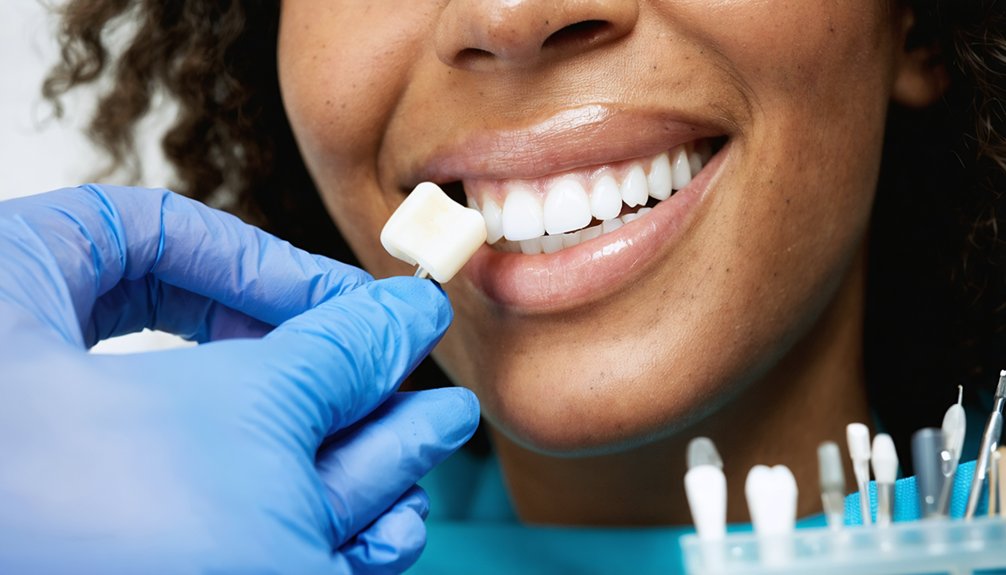
Some medication stains—particularly intrinsic discoloration from tetracycline or prolonged fluorosis—resist even professional-grade whitening. When alternative natural remedies and conventional bleaching protocols fail to produce acceptable results, restorative dentistry offers reliable solutions.
Tetracycline and fluorosis stains often defy even professional whitening—making restorative dentistry the most reliable path forward.
Porcelain veneers cover the labial surface entirely, masking deep staining while utilizing innovative dental materials engineered for durability and natural translucency.
Composite bonding provides a less invasive option, allowing your dentist to layer tooth-colored resin directly over discolored enamel.
Dental crowns become appropriate when structural compromise accompanies the staining.
Each option carries distinct cost, longevity, and maintenance considerations you’ll need to evaluate with your dentist.
Veneers typically last 10–15 years; bonding may require earlier replacement.
Prioritizing a thorough clinical assessment ensures you choose the most appropriate and cost-effective restorative pathway.
Daily Habits That Stop Medication Stains From Coming Back
Once you’ve whitened medication-stained teeth, protecting that result requires consistent daily choices.
Limiting coffee, tea, red wine, and dark sauces reduces the extrinsic staining that accumulates on enamel over time.
After taking liquid medications, rinse your mouth with water immediately to clear pigmented residue before it bonds to tooth surfaces.
Limit Stain-Causing Foods
Certain everyday foods and drinks can undo whitening progress by depositing new pigments on enamel, so reducing your intake of coffee, tea, red wine, soda, tomato-based sauces, and dark berries is a practical first step.
Strategic dietary restrictions strengthen your oral hygiene routine and protect whitening results longer.
Apply these evidence-based controls:
- Drink staining beverages through a straw to minimize direct enamel contact
- Rinse with water immediately after consuming pigment-heavy foods or liquid medications
- Wait 60 minutes after acidic foods before brushing to avoid enamel erosion
- Limit frequency rather than eliminating foods entirely for sustainable adherence
- Pair dietary changes with regular professional cleanings to address residual surface deposits
Consistent dietary discipline gives you measurable control over new stain formation.
Rinse After Medications
Rinsing with water immediately after taking liquid medications or swallowing pills removes residual compounds before they settle into enamel and trigger new staining cycles. Medication absorption through oral tissues is rapid, but surface residue lingers longer than most people realize, accelerating stain permanence when left unaddressed.
A simple 30-second water rinse disrupts this process without interfering with systemic drug uptake. For liquid medications especially, residue coats proximal surfaces and gumlines where pigmented compounds bond most aggressively.
You don’t need specialized products to implement this habit—water is sufficient and immediate availability removes barriers to consistency. Pair rinsing with strategic brushing timed 60 minutes post-dose to avoid pushing acidic medication residue deeper into softened enamel.
Consistent execution limits cumulative discoloration before it requires corrective whitening intervention.
Frequently Asked Questions
Can Children Safely Use Whitening Treatments for Medication-Stained Teeth?
Studies show 45% of children experience sensitivity with whitening agents. You shouldn’t use standard whitening treatments without consulting a pediatric dentist first—children’s safety depends on age-appropriate, supervised pediatric options tailored specifically to developing enamel and medication-stained teeth.
Does Dental Insurance Ever Cover Whitening Caused by Prescription Medications?
Most dental insurance won’t cover whitening, even for medication effects. You’ll want to contact your provider directly, as insurance coverage policies vary—some plans may partially cover treatments when staining results from a documented prescription.
How Long Do Whitening Results Typically Last on Medication-Stained Teeth?
Your results’ duration longevity varies—typically six months to two years. Stain persistence from medications means you’ll likely need maintenance sessions. Avoiding staining foods, using take-home trays, and scheduling professional cleanings help you extend and control your whitening outcomes.
Can Whitening Worsen Sensitivity in People Still Actively Taking Staining Medications?
Yes, whitening’s topical agents can worsen sensitivity if you’re still taking staining medications. You’re at higher risk for enamel erosion and irritation, so you’ll want professional supervision to manage side effects effectively.
Are There Whitening Methods Safe for People With Dental Restorations or Crowns?
Over 15 million crowns are placed yearly—whitening won’t change their shade. You’ll need crown-specific whitening options targeting natural teeth only, as dental restoration compatibility limits bleaching agents’ effectiveness on ceramic or composite materials.
References
- https://www.healthline.com/nutrition/whiten-teeth-naturally
- https://www.medicalnewstoday.com/articles/322421
- https://www.ntfcdentistry.com/blog/brighten-10-teeth-whitening-methods/
- https://vegassmilesuite.com/how-to-whiten-teeth-with-tetracycline-stains/
- https://dentalpedia.co/article/teeth-whitening-for-stained-teeth-from-medications.html
- https://clearclub.com/blogs/clearclub/10-effective-ways-to-whiten-teeth-after-smoking-or-taking-medications
- https://www.ada.org/resources/ada-library/oral-health-topics/whitening
- https://www.hopkinsmedicine.org/health/treatment-tests-and-therapies/teeth-whitening