Whitening your teeth while wearing braces is possible, but your options depend on appliance type and treatment timing. Laser whitening can lighten exposed enamel up to 10 shades in a single 60-minute session, while dentist-supervised bleaching with 35% hydrogen peroxide targets both extrinsic and intrinsic stains around brackets. Whitening toothpaste and mouthwash help maintain enamel clarity between professional treatments. Each method carries specific clinical limitations you’ll want to understand before committing to a protocol.
Key Takeaways
- Laser whitening during braces takes about 60 minutes, using peroxide gel activated by laser light on exposed enamel surfaces only.
- Results can achieve up to 10 shades whiter with a 76% reduction in visible discoloration despite bracket coverage limitations.
- Soft tissue isolation is essential during laser whitening to protect gums and orthodontic brackets from peroxide gel exposure.
- Dentist-supervised in-office bleaching with 35% hydrogen peroxide offers a controlled alternative, with each 40-minute session targeting extrinsic and intrinsic stains.
- Whitening toothpaste and mouthwash used daily maintain enamel cleanliness and complement professional laser whitening during active orthodontic treatment.
Can You Whiten Teeth While Wearing Braces?
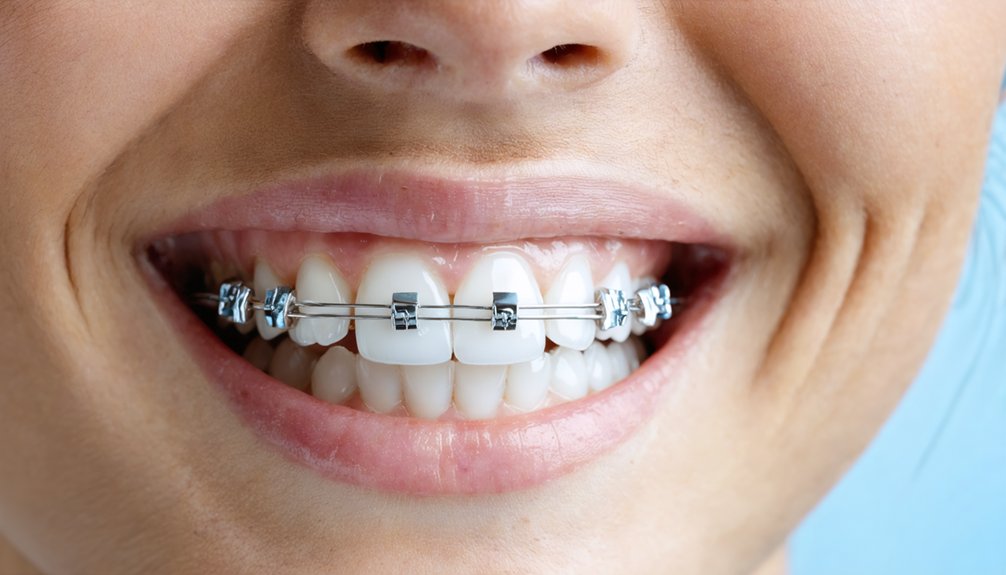
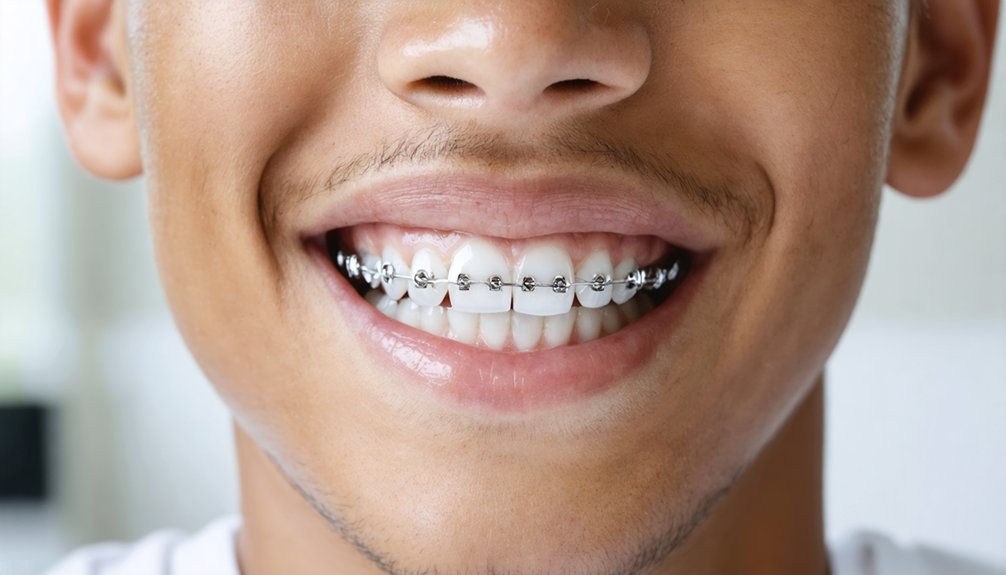
Whitening teeth while wearing braces is possible, but the outcome depends heavily on the type of orthodontic appliance you have. Traditional bracket-and-wire systems create uneven whitening because brackets physically block gel from reaching covered enamel surfaces. You’ll achieve more uniform results after removal.
Brackets block whitening gel, creating uneven results — uniform whitening is best achieved after braces removal.
However, supervised professional whitening remains viable during treatment under specific clinical conditions.
Over the counter products like whitening strips face the same coverage limitations as professional gels and typically lack the concentration to produce meaningful results around brackets.
Alternative natural remedies offer minimal clinical evidence and won’t deliver controlled, predictable outcomes.
If you’re seeking maximum precision during active orthodontic treatment, professional supervision is non-negotiable. Your orthodontist can assess your specific appliance type and recommend the most structurally appropriate whitening protocol for your current stage of treatment.
Laser Whitening With Braces: What One Session Actually Does
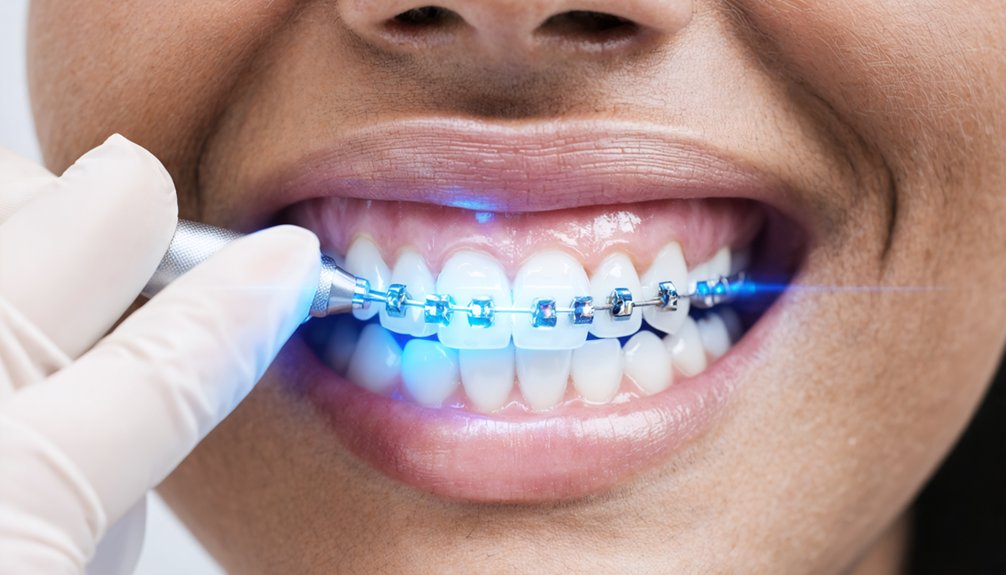
Among professional whitening methods, laser treatment stands out as the most accelerated option for patients steering active orthodontic care. A single session typically runs 60 minutes, during which your dentist applies peroxide-based gel to exposed tooth surfaces, then activates it using a focused laser light device across repeated 20–30 minute intervals.
Laser safety protocols require soft tissue isolation before activation, protecting your gums and bracket margins from concentrated light exposure. Clinical data reports outcomes of up to 10 shades whiter within one treatment duration, alongside a 76% reduction in visible discoloration.
With braces, coverage remains limited to unobstructed enamel. Bracketed surfaces won’t receive uniform exposure, so expect differential results until appliances are removed and full-surface retreatment becomes viable.
What Dentist-Supervised Bleaching Can Do Around Brackets
Two to three in-office bleaching sessions using a 35% hydrogen peroxide solution can produce significant whitening on bracketed teeth, even while your appliances remain in place. Your dentist applies this high-concentration dental material directly to exposed enamel surfaces, targeting both extrinsic and intrinsic staining with precision that over-the-counter products can’t replicate.
Two to three professional bleaching sessions can produce significant whitening—even with brackets still in place.
Each session runs approximately 40 minutes, giving you measurable results without waiting until after removal.
Staining prevention becomes part of the protocol here. Your dentist controls application boundaries, protecting soft tissue while maximizing contact with discolored enamel. This level of supervision reduces the risk of uneven results around brackets.
If your goal is predictable, controlled whitening during active orthodontic treatment, dentist-supervised bleaching offers the most clinically reliable path available before your braces come off.
Whitening Toothpaste and Mouthwash During Orthodontic Treatment
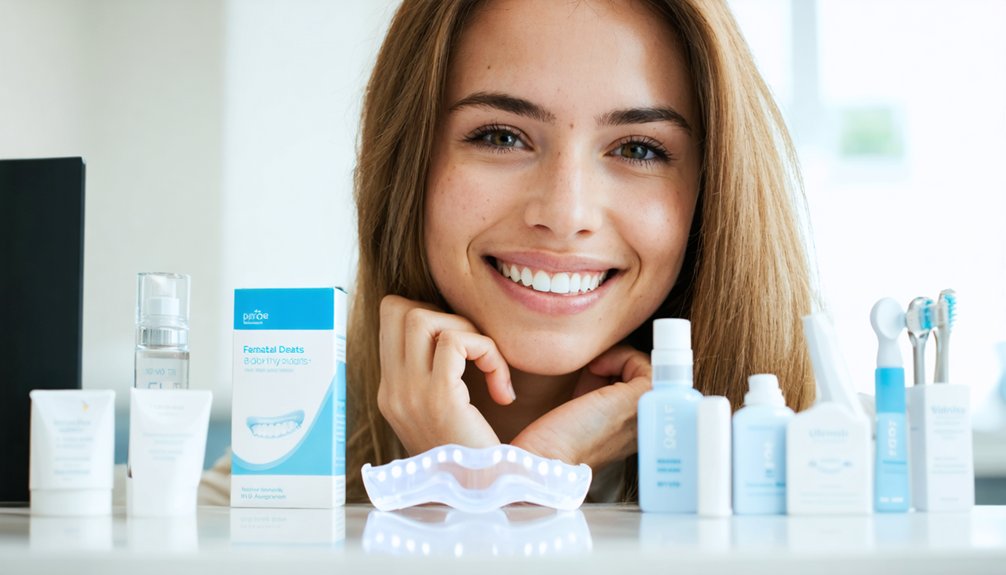
Both whitening toothpaste and whitening mouthwash are compatible with all brace types, making them the most accessible maintenance tools during active orthodontic treatment. These products don’t deliver dramatic shade changes, but they’re effective for stain prevention and surface discoloration control around brackets and wires.
For best oral hygiene, use whitening toothpaste two to three times daily and whitening mouthwash at least once daily. This frequency helps reduce plaque accumulation at bracket margins, where staining compounds tend to concentrate.
You’re not correcting deep discoloration with these tools — you’re managing it systematically while your orthodontic treatment progresses.
Think of this approach as a holding strategy. It keeps your enamel cleaner and more receptive to professional whitening once your brackets are removed and full-surface treatment becomes viable.
When to Whiten for the Most Even Results With Braces
Timing your whitening treatment strategically determines whether you end up with uniform results or a patchy, uneven finish. Brackets block gel contact, leaving unwhitened patches once removed. You control outcomes by planning precisely.
- Before braces: Whiten first to establish a baseline shade, then align teeth—your aesthetic improvements are fully mappable from the start.
- During treatment: Restrict whitening to toothpaste and mouthwash only; aggressive agents increase tooth sensitivity around compromised enamel near brackets.
- After braces: Wait one to six months post-removal before full whitening—enamel needs stabilization, and your results will be dramatically more uniform across every surface.
Each phase demands a different protocol. Consult your orthodontist before initiating any whitening agent to match treatment timing with your specific clinical situation.
Frequently Asked Questions
Does Laser Whitening Damage Orthodontic Brackets or Bonding Adhesive?
Laser whitening won’t directly damage brackets compatibility or bonding integrity, but heat from laser activation can weaken adhesive bonds over time. You should always confirm your orthodontist approves the procedure before proceeding.
How Much Does In-Office Laser Whitening Typically Cost With Braces?
Costs can burn a hole in your budget—expect $500–$1,500 per session. With braces, you’ll want to weigh alternative whitening methods carefully, as effects on enamel and bracket coverage can limit your precision-driven results.
Can Laser Whitening Remove Stains Left Behind After Brackets Are Removed?
Yes, laser whitening can address dental stain removal after bracket discoloration occurs. You’ll target both extrinsic and intrinsic stains effectively, with clinical reports citing up to 10 shades improvement in a single 60-minute supervised session.
Is Laser Whitening Safe for Teenagers Currently Wearing Braces?
Laser whitening isn’t recommended for teenagers currently wearing braces. You’ll achieve more even results by following a controlled whitening timeline post-removal. Prioritize teen oral health now through supervised hygiene protocols, then pursue in-office laser treatment strategically.
How Many Laser Whitening Sessions Are Needed for Noticeable Results?
Forget home remedies and natural treatments—you’ll typically need one 60-minute session for noticeable results. A single in-office laser whitening appointment can deliver up to 10 shades whiter, giving you precise, controlled, clinically measurable outcomes immediately.
References
- https://www.amazon.com/BraceBright-Foam-Brackets-Whitening-Sensitivity/dp/B09L2MB9KL
- https://www.healthline.com/health/whitening-with-braces
- https://www.ultradent.com/resources/articles/article?articleTitle=How to Whiten Teeth With Braces
- https://orthodonticsaustralia.org.au/teeth-whitening-braces/
- https://www.dentistsanfrancisco.com/ultimate-teeth-whitening-after-braces/
- https://www.webmd.com/oral-health/whiten-teeth-wearing-braces
- https://www.jjohnsondmdpa.com/blog/1394816-whitening-teeth-with-braces
- https://www.mylifesmiles.com/teeth-whitening-clinic/what-are-the-best-laser-teeth-whitening-methods