Laser teeth whitening protects your enamel best when you match the right system to your stain type, sensitivity level, and treatment goals. Diode, argon, CO2, Nd:YAG, and BIOLASE-based systems are the top FDA-cleared options dentists use to minimize thermal damage while maximizing whitening results. Each system works differently depending on gel concentration and laser exposure time. Understanding how these systems compare — and what risks and costs you’re actually facing — helps you make a smarter, safer choice.
Key Takeaways
- Diode laser systems are FDA-cleared, precise, and widely used for controlled whitening with minimal risk to enamel integrity.
- Argon lasers activate peroxide gels while limiting enamel exposure, making them a reliable option for enamel-safe whitening.
- CO2 laser systems offer documented whitening efficacy and FDA approval, supporting both safety and effective results.
- BIOLASE-based laser systems deliver dramatic whitening results with high patient satisfaction and strong enamel protection standards.
- Nd:YAG lasers combined with fluoride treatment effectively whiten teeth while actively reducing enamel demineralization risk.
What Makes a Laser Teeth Whitening System Safe for Enamel?
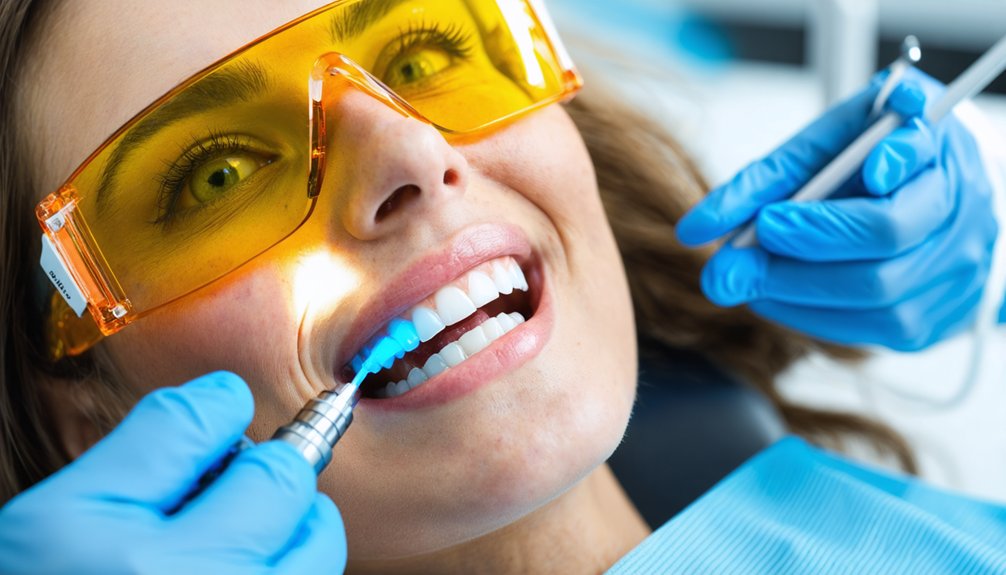
Several factors determine whether a laser teeth whitening system is genuinely safe for enamel, and understanding them helps you make a smarter clinical choice. Dentist supervision remains non-negotiable because it controls gel concentration, laser exposure duration, and tissue protection.
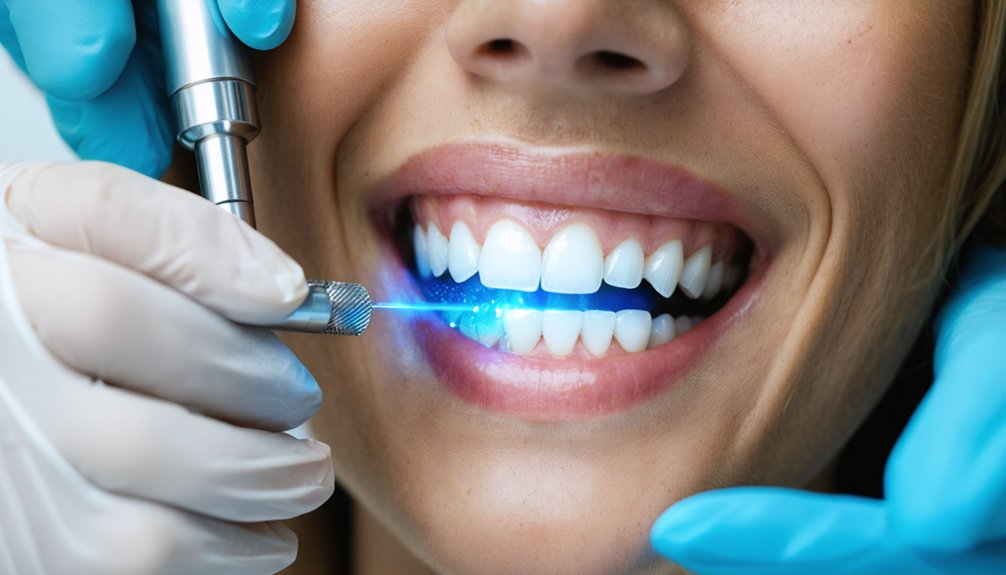
You want systems using FDA-cleared lasers—argon, CO2, or diode—paired with conservative bleaching protocols that minimize thermal output to reduce dental pulp sensitivity. Excessive heat penetration risks pulpal inflammation and irreversible nerve damage, so controlled energy delivery matters.
Additionally, prioritize systems compatible with fluoride gel or varnish application post-treatment, since fluoride actively supports enamel remineralization after bleaching disrupts the mineral matrix. Research confirms that combining laser therapy with fluoride reduces demineralization more effectively than laser alone, giving you measurable protection alongside cosmetic results.
The 5 Best Laser Teeth Whitening Options for Enamel Protection
When choosing a laser whitening system with enamel protection in mind, the type of laser, gel protocol, and clinical oversight all determine whether your results come with unnecessary risk.
Laser technology advancements have produced five clinically relevant options worth considering:
Laser technology has produced five clinically relevant whitening options, each designed with precision, safety, and enamel protection in mind.
- Diode laser systems — FDA-cleared, precise, and widely used in supervised whitening protocols.
- Argon laser systems — effective for activating peroxide gels with controlled enamel exposure.
- CO2 laser systems — FDA-cleared with documented whitening efficacy.
- BIOLASE-based systems — associated with dramatic lightening and high patient satisfaction.
- Nd:YAG laser combined with fluoride — directly supports enamel durability by reducing demineralization.
Each option requires dentist supervision to control gel strength, exposure time, and post-treatment remineralization support.
Laser Teeth Whitening Risks Worth Knowing Before You Book
Laser teeth whitening delivers fast, visible results, but it’s not without documented risks you should weigh before scheduling a session. Tooth sensitivity is the most commonly reported side effect, occurring when laser energy and bleaching gel temporarily compromise enamel integrity.
You may also experience gum safety concerns, including irritation or tissue damage if protective barriers aren’t properly applied. Additional documented risks include mineral and fluoride loss from enamel, increased susceptibility to erosion, and elevated decay risk with repeated sessions.
Crowns and veneers won’t whiten, which can create visible shade mismatches. To minimize exposure, confirm your provider uses controlled gel concentrations, timed laser application, and fluoride-compatible post-treatment protocols.
Informed selection reduces your risk profile substantially before you ever sit in the chair.
Which Stain Types Laser Teeth Whitening Actually Eliminates
Both extrinsic and intrinsic stains respond to laser whitening, though outcomes vary by stain origin and depth. Surface stains from coffee, tobacco, and wine clear most predictably.
Not all stains respond equally — surface discoloration from coffee, tobacco, and wine clears most predictably with laser whitening.
Intrinsic discoloration requires deeper gel penetration and longer exposure, producing less uniform results.
- Surface stains: Respond quickly; typically addressed within a single session
- Intrinsic discoloration: Lightens with laser activation, but may need multiple sessions
- Tetracycline staining: Partially responsive; expect moderate rather than dramatic improvement
- Age-related yellowing: Combines extrinsic and intrinsic factors, producing moderate-to-strong results with laser systems
You get the most control when you know your stain type before booking. Ask your dentist to classify the discoloration so you can set accurate expectations and select an appropriate protocol.
What Does Laser Teeth Whitening Cost Per Session?
Insurance coverage won’t help you offset these costs. Dental insurers classify laser whitening as cosmetic, so you’ll be paying entirely out of pocket.
Factor in potential touch-up sessions every 12 to 36 months when calculating your long-term investment.
To control costs without compromising enamel safety, prioritize clinics using documented low-demineralization protocols.
A higher per-session fee at a reputable practice often means better-monitored gel application and reduced risk of enamel damage.
Frequently Asked Questions
How Long Does Laser Teeth Whitening Typically Last Before Fading?
Your results typically last 12 to 36 months before fading. You’ll manage tooth sensitivity post-treatment and maintain enamel safety by scheduling periodic touch-ups and controlling dietary staining factors to preserve brightness effectively.
Can Laser Teeth Whitening Work on Crowns or Dentures?
Coincidentally, if you’re planning whitening, you’ve already missed the window for crowns and dentures. Crown compatibility doesn’t exist with laser bleaching, and denture whitening feasibility is zero—you won’t achieve any lightening on artificial restorations.
How Many Shades Whiter Can Laser Whitening Make Your Teeth?
Laser whitening can make your teeth up to 10 shades whiter in a single 60-minute session. You’ll achieve significant shade improvement while your dentist controls gel strength and exposure to maintain enamel safety throughout treatment.
Does Dental Insurance Ever Cover Laser Teeth Whitening Procedures?
Dental coverage won’t typically apply to laser whitening since insurance policies classify it as cosmetic. You’ll need to budget out-of-pocket, as costs can reach $1,800 when multiple sessions are required.
How Long Does a Single Laser Teeth Whitening Session Take?
Cut to the chase: you’re looking at 30 to 60 minutes per session. Factor cost considerations into scheduling multiple visits, and you’ll want proactive side effect management protocols monitored closely by your dentist throughout treatment.
References
- https://www.forbes.com/sites/forbes-personal-shopper/article/best-teeth-whitening-kit/
- https://www.mylifesmiles.com/teeth-whitening-clinic/what-are-the-best-laser-teeth-whitening-methods
- https://pmc.ncbi.nlm.nih.gov/articles/PMC4281994/
- https://www.healthline.com/health/dental-and-oral-health/laser-teeth-whitening
- https://www.interesjournals.org/articles/different-types-of-laser-use-in-teeth-bleaching.pdf