You don’t need to spend hundreds of dollars to get measurably whiter teeth. Crest 3D Whitestrips and Zimba strips both deliver hydrogen peroxide directly to enamel, producing visible results within one to two weeks for under $20. If you’re sensitive to peroxide, Lumineux peroxide-free strips run $15–$25 and reduce irritation without sacrificing efficacy. Matching the right format and active ingredient to your tolerance level is what determines your outcome—and there’s more to weigh before choosing.
Key Takeaways
- Crest 3D Whitestrips and Zimba strips both deliver effective hydrogen peroxide whitening under $20, rivaling premium brands.
- Lumineux peroxide-free strips cost $15–$25, offering effective whitening with reduced sensitivity and irritation.
- Whitening strips provide the highest efficacy per session by delivering hydrogen peroxide directly to enamel.
- Visible results typically appear within 1–2 weeks when following manufacturer protocols consistently.
- Budget products under $30 deliver reliable, measurable whitening when properly formulated with quality active ingredients.
The Best Budget Teeth Whitening Brands Under $30
Achieving noticeably whiter teeth doesn’t require a dentist visit or a steep investment. Several clinically validated over-the-counter options deliver measurable results under $30, giving you direct control over your whitening regimen.
Crest 3D Whitestrips offer a 22-treatment kit under $20, while Zimba strips provide comparable hydrogen peroxide performance at $18.56. If teeth sensitivity is a concern, Lumineux peroxide-free strips ($15–$25) and SmilePro Advanced’s 6% hydrogen peroxide formula minimize irritation without sacrificing efficacy.
Pair your whitening routine with consistent dental floss use to remove interproximal debris, ensuring the active ingredients contact full tooth surfaces.
Paint-on varnishes and whitening toothpastes extend your options from $5 to $20, delivering gradual brightening over several weeks through repeated, low-concentration exposure.
Peroxide or Peroxide-Free: Which Ingredient Actually Works?
When choosing a budget whitening product, you’ll encounter two primary active ingredient categories: peroxide-based and peroxide-free formulas.
Hydrogen peroxide penetrates enamel and breaks apart chromogenic molecules, delivering measurable shade improvement—Zimba strips, for example, use this mechanism to achieve results comparable to premium brands at half the cost.
If you’re avoiding peroxide due to sensitivity or personal preference, peroxide-free options like Lumineux strips use alternative oxidizing agents that whiten more gradually but with considerably less irritation risk.
Peroxide Whitening Benefits
Hydrogen peroxide and carbamide peroxide remain the two gold-standard bleaching agents in over-the-counter whitening products, and both work by releasing oxygen radicals that penetrate enamel and break apart chromogen molecules responsible for staining.
Gel formulations typically deliver faster, more measurable shade improvements than natural remedies like activated charcoal or oil pulling, which lack peer-reviewed efficacy data.
Hydrogen peroxide acts immediately upon contact, while carbamide peroxide breaks down more slowly, releasing hydrogen peroxide over an extended period. This distinction matters when you’re selecting a product.
Strips using 6% to 10% hydrogen peroxide concentrations provide clinically meaningful lift within one to two weeks.
You get predictable, repeatable results when you choose peroxide-based options, giving you direct control over your whitening outcomes and timeline.
Peroxide-Free Alternatives Explained
Peroxide-based strips deliver measurable results, but they’re not the right fit for everyone. If you experience sensitivity or want to avoid peroxide exposure, peroxide-free alternatives give you clinical-grade control without the irritation. These formulas bridge the gap between natural remedies and professional treatments.
Key peroxide-free options to explore:
- Lumineux Strips – priced $15–$25, using plant-derived ingredients for gentle whitening
- Waving Palms Strips – zero-sensitivity formula clinically suited for peroxide intolerance
- Whiteening Toothpastes – $5–$15, offering gradual brightening through mild abrasives
- Paint-On Varnishes – $10–$20, delivering targeted application without chemical sensitivity risk
You’re not sacrificing efficacy by going peroxide-free. You’re selecting a formulation that matches your biological tolerance while maintaining measurable whitening outcomes within your $30 budget.
Best Whitening Strips Under $30
When shopping for whitening strips under $30, your two strongest options are Zimba Teeth Whitening Strips at $18.56 and Crest 3D Whitestrips, typically priced under $20 for a 22-treatment kit.
Zimba uses hydrogen peroxide to deliver shade improvement comparable to premium brands at roughly half the cost, while Crest’s strips offer a mess-free application with a consistent evidence-backed track record.
If you’re avoiding peroxide due to sensitivity, Lumineux peroxide-free strips ($15–$25) and Waving Palms Strips with their zero-sensitivity formula are clinically sound alternatives within budget.
Top Strip Brand Picks
Four whitening strip brands stand out as top performers under $30, each targeting different user needs. Ignore teeth whitening myths claiming budget options can’t deliver results—these picks prove otherwise. Stay alert to budget whitening scams by choosing verified formulations.
- Crest 3D Whitestrips – Under $20 for 22 treatments; mess-free application with proven peroxide-based whitening.
- Zimba Strips – $18.56; hydrogen peroxide formula delivering results comparable to premium brands at roughly half the cost.
- Lumineux Strips – $15–$25; peroxide-free formulation suited for users avoiding chemical sensitivity.
- Waving Palms Strips – Zero-sensitivity formula verified for peroxide intolerance cases.
Each option targets a specific user profile—cost efficiency, sensitivity management, or ingredient preference—giving you precise control over your whitening protocol.
Strip Ingredients and Sensitivity
Knowing which strip fits your sensitivity profile requires understanding what’s inside each formulation.
Hydrogen peroxide is the active whitening agent in Zimba and Crest 3D Whitestrips, delivering measurable shade improvement but potentially triggering dentinal hypersensitivity in susceptible users. For effective sensitivity management, you’ll want to assess your tolerance before committing to a full treatment cycle.
Ingredient safety becomes critical when selecting between peroxide-based and peroxide-free options. Lumineux strips eliminate hydrogen peroxide entirely, substituting plant-derived compounds that reduce irritation risk without sacrificing gradual brightening.
SmilePro Advanced uses 6% hydrogen peroxide, a lower concentration clinically suited for sensitive dentition.
Waving Palms Strips offer a zero-sensitivity formula for users with documented peroxide intolerance. Match the active ingredient concentration directly to your sensitivity threshold before purchasing.
Best Whitening Options for Sensitive Teeth Under $30
Sensitive teeth don’t have to disqualify you from achieving a brighter smile, as several effective options exist under $30. Managing tooth sensitivity while still using hydrogen peroxide formulations is achievable when you select products clinically designed for low irritation.
Top options for sensitive users include:
- Rembrandt 1 Week Whitening Kit – dentist-recommended for sensitivity management
- SmilePro Advanced – contains 6% hydrogen peroxide, balancing efficacy with gentleness
- Lumineux Peroxide-Free Strips – eliminates hydrogen peroxide entirely, priced $15–$25
- Waving Palms Strips – zero-sensitivity formula for peroxide intolerance
You’re in control of how aggressively you whiten. Choosing lower-concentration hydrogen peroxide formulas or peroxide-free alternatives lets you pace your treatment while minimizing tooth sensitivity throughout the whitening cycle.
How Long Do Budget Whitening Products Take to Work?
Budget whitening products don’t deliver overnight results, but timelines vary predictably by product type. Whitening strips require daily 30 to 60-minute applications over one to two weeks before measurable shade changes appear.
Paint-on varnishes and whitening toothpastes produce gradual brightening across several weeks due to lower active concentrations. Ingredient stability directly affects your outcomes—formulas with well-preserved hydrogen peroxide, like Zimba strips, perform closer to clinical benchmarks than degraded or peroxide-free alternatives.
Peroxide-free options like Lumineux strips whiten more slowly but reduce sensitivity risk. Color retention depends on post-treatment habits: avoiding staining agents extends results considerably.
You’ll achieve ideal outcomes by adhering strictly to the manufacturer’s protocol and completing the full treatment cycle rather than stopping early.
Strips vs. Varnishes vs. Toothpastes: Which Format Wins?
Choosing the right format determines how effectively your whitening regimen performs within a $30 ceiling. Each delivery system varies in contact time, active concentration, and consistency of application.
Format dictates results. Within any budget, contact time and concentration separate effective systems from expensive habits.
- Strips — deliver hydrogen peroxide directly to enamel; highest efficacy per session.
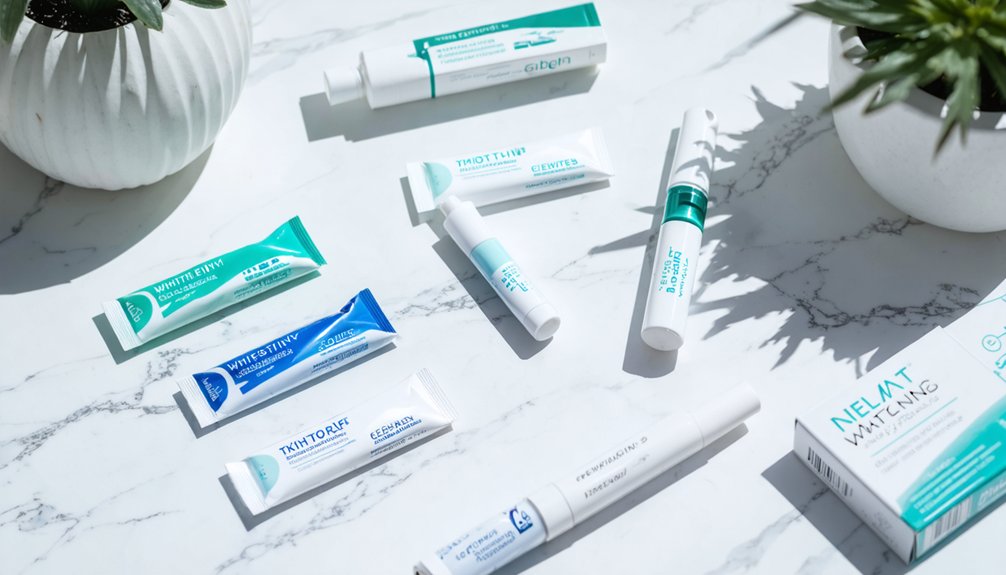
- Whitening gels and gel pens — offer precision application and portability for targeted touch-ups.
- Varnishes — provide gradual lift over several weeks; best for maintenance phases.
- Toothpastes — lowest peroxide concentration; effective only for surface stain removal.
Strips dominate for measurable shade improvement within one to two weeks. Whitening gels give you controlled dosing, while gel pens suit on-the-go use. Toothpastes and varnishes work best as adjuncts, not primary treatments. Prioritize strips if results-per-dollar is your primary metric.
Are Budget Teeth Whitening Products Worth It?
The short answer is yes — over-the-counter whitening products priced under $30 deliver measurable results when you select formulations with clinically active concentrations. Hydrogen peroxide strips like Zimba and Crest 3D Whitestrips produce shade improvements comparable to premium alternatives at roughly half the cost.
For your personal care routine, peroxide-free options like Lumineux strips reduce irritation risk without sacrificing efficacy. Travel convenience is another measurable advantage — paint-on varnishes and portable pens like the Crest 3D White Pen fit easily into carry-on bags, eliminating disruption to your whitening schedule.
OTC kits ranging from $5 to $55 give you precise control over ingredient selection, sensitivity tolerance, and treatment duration. When you match the format to your specific needs, budget products perform with clinical reliability.
Frequently Asked Questions
Can Budget Whitening Products Damage Tooth Enamel With Regular Use?
Like a river slowly carving stone, overuse can risk enamel erosion. Budget whitening products won’t damage your enamel if you follow directed usage. However, you’ll notice tooth sensitivity signals when you’re overusing them.
Are Teeth Whitening Strips Safe to Use During Pregnancy?
You shouldn’t use teeth whitening strips during pregnancy due to unverified pregnancy safety data. Peroxide absorption risks remain unstudied in prenatal contexts, and heightened tooth sensitivity during pregnancy can intensify discomfort. Consult your OB-GYN before proceeding.
How Should Whitening Products Be Stored to Maintain Effectiveness?
Like a vault protecting valuables, store your whitening products in a cool, dry place away from sunlight. You’ll maximize storage conditions and product longevity by keeping them sealed tightly, ensuring active ingredients retain full whitening efficacy.
Can Whitening Strips Be Used With Dental Crowns or Veneers?
Whitening strips won’t alter dental crown compatibility or veneer whitening options—they don’t bleach restorations. You’ll notice uneven results as natural teeth lighten while crowns and veneers stay their original shade, creating visible color mismatches.
How Soon After Eating Should You Apply Whitening Strips?
Like a shield left vulnerable after battle, your enamel’s temporarily weakened by sugar acids post-meal. Wait 30 minutes before applying strips to prevent enamel erosion and guarantee ideal whitening agent adhesion for maximum results.
References
- https://www.goodhousekeeping.com/health-products/g28723133/best-at-home-teeth-whitening-products/
- https://www.sbdental.com/blog/budgetfriendly-teeth-whitening-options-that-deliver-real-results
- https://www.gentledental.com/resources/articles/teeth-whitening-products
- https://www.theconsumers.guide/reviews/best-teeth-whitening-kits-home-use-2026
- https://www.popsugar.com/beauty/best-cheap-teeth-whitening-43807002
- https://wellfizz.com/best-budget-teeth-whitening/