Tetracycline stains are intrinsic, meaning they’re embedded deep within your dentin—so natural remedies can only do so much. That said, you can reduce surface discoloration using baking soda paste, hydrogen peroxide rinses, and oil pulling. Each method targets extrinsic buildup and can brighten your smile by 1–3 shades. They won’t erase deep pigmentation, but they’ll optimize your surface appearance. Stick around to discover exactly how to use each method—and what to do when natural solutions hit their limit.
Key Takeaways
- Tetracycline stains are intrinsic, embedded deep in dentin, meaning natural remedies can only improve surface appearance minimally.
- Baking soda paste, used 2–3 times weekly, removes superficial debris but cannot reach deep tetracycline pigmentation.
- Hydrogen peroxide rinses, diluted equally with water, may achieve 1–3 shade improvement when used daily for two weeks.
- Oil pulling with coconut oil for 15–20 minutes daily over 4–6 weeks offers minimal surface stain reduction.
- Natural methods serve as supplementary measures only; professional treatments are necessary for significant tetracycline discoloration results.
Why Tetracycline Stains Resist Every Natural Remedy
Tetracycline stains resist natural remedies because the antibiotic binds to calcium ions during tooth development, embedding dark pigments deep within the dentin—far below the enamel surface that natural whitening agents can reach. You’re dealing with intrinsic discoloration, not surface buildup, which fundamentally limits what any topical treatment can accomplish.
Alternative herbal remedies and dietary supplement effects operate exclusively at the enamel’s outermost layer, addressing extrinsic stains caused by coffee, wine, or plaque accumulation. They can’t penetrate dentin where tetracycline pigments are chemically bonded to your tooth structure.
Baking soda, activated charcoal, and oil pulling remove superficial debris—nothing more. Understanding this structural reality lets you make informed decisions rather than investing time in approaches that won’t deliver meaningful results for your specific condition.
3 Natural Methods That Reduce Tetracycline Stains (And Exact Usage Protocols)
While no natural remedy eliminates tetracycline’s intrinsic discoloration, three methods can reduce surface staining that compounds the underlying pigmentation—making your teeth appear marginally brighter and preventing further darkening.
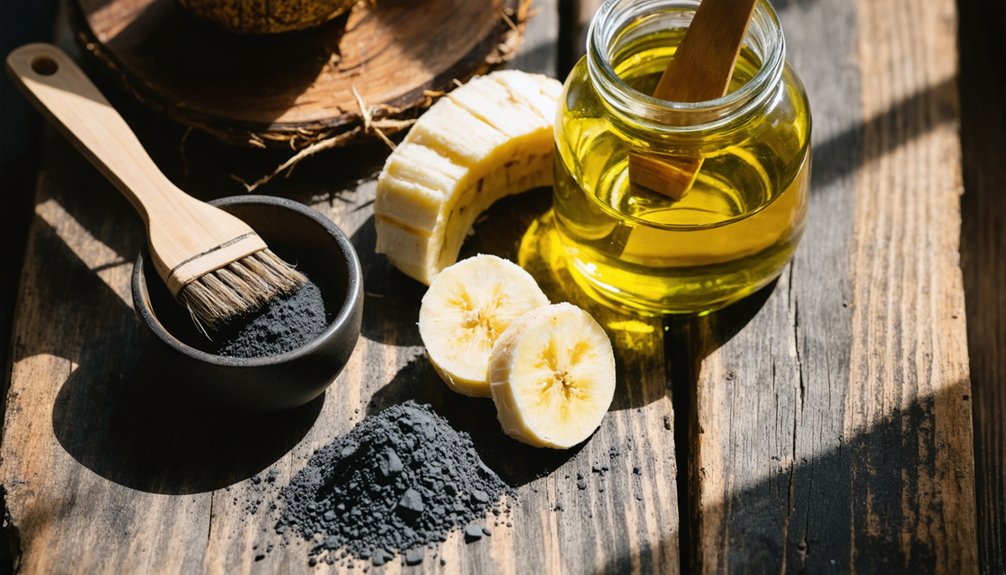
Baking Soda Paste: Mix one teaspoon baking soda with two teaspoons water. Brush gently 2–3 times weekly. Overuse erodes enamel, worsening stain visibility.
Hydrogen Peroxide Rinse: Your most effective home remedy for surface stain removal. Dilute 3% drugstore solution equally with water, achieving 1.5%. Rinse 1–2 times daily for two weeks—expect 1–3 shade improvements only.
Oil Pulling: Swish one tablespoon coconut oil through your teeth for 15–20 minutes daily across 4–6 weeks. It’s the gentlest option, yielding minimal but measurable surface results.
None replace professional intervention—they simply optimize what’s controllable.
Professional Treatments for Tetracycline Stains When Home Methods Fall Short
When natural methods reach their ceiling—lightening surface stains by only 1–3 shades—professional treatments become your only viable path to meaningful improvement.
Tetracycline’s intrinsic discoloration requires cosmetic dental procedures that penetrate beyond surface-level intervention.
Your strongest options include:
- Extended tray whitening (3–12 months): the most clinically proven alternative whitening product system for tetracycline cases
- Laser power whitening (KTP or Nd:YAG): delivers deep structural bleaching, achieving 6–8 shade improvements
- Dental veneers: porcelain shells that permanently mask severe discoloration when bleaching proves insufficient
Each option targets discoloration at the structural level—something no natural remedy accomplishes.
Consult your dentist to assess stain severity and match the appropriate treatment to your specific case, timeline, and aesthetic goals.
Frequently Asked Questions
Can Tetracycline Stains Worsen Over Time Without Proper Dental Care?
Over 60% of untreated cases worsen. Yes, your tetracycline stains can deepen without care. Natural remedies slow surface changes, but stain prevention through consistent hygiene and dietary control remains your most powerful defense against accelerating discoloration.
Are Tetracycline Stains in Adults Treated Differently Than Childhood Stains?
Yes, adult tetracycline stains often require more aggressive intervention. You’ll find dental bonding or veneer options deliver superior aesthetic control, as childhood intrinsic stains are deeper, demanding extended professional bleaching protocols rather than surface-level natural remedies.
Does Teeth Whitening Toothpaste Help Reduce Tetracycline Discoloration at All?
Whitening toothpaste won’t effectively address your tetracycline discoloration. It’s designed for surface stain removal only, leaving intrinsic pigmentation untouched. You’ll need professional-grade treatments to achieve meaningful, controlled results against tetracycline’s deep structural staining.
Can Dietary Changes Alone Prevent Tetracycline Stains From Becoming More Visible?
Imagine stubborn gray shadows locked deep within enamel—dietary modifications and natural remedies can’t erase them. You can slow surface worsening by avoiding dark staining foods, but you won’t reverse tetracycline’s intrinsic discoloration through diet alone.
Is Tetracycline Staining Hereditary or Only Caused by Antibiotic Exposure?
Tetracycline staining isn’t hereditary—it’s solely caused by antibiotic exposure during tooth development. Genetic factors and dental genetics don’t trigger it; you’ve acquired it externally, meaning you can take targeted, empowered steps to manage its visible impact.
References
- https://www.drkamila.com/how-to-remove-tetracycline-stains-from-teeth/
- https://www.healthline.com/health/tetracycline-teeth
- https://www.healthline.com/nutrition/whiten-teeth-naturally
- https://www.medicalnewstoday.com/articles/322421
- https://www.okundentistry.com/blog/how-to-get-rid-of-tetracycline-stains-on-teeth
- https://oralhealthhq.com/teeth-whitening/whiten-teeth-naturally/
- https://pubmed.ncbi.nlm.nih.gov/34915121/
- https://hubpages.com/health/forum/262710/whats-the-best-natural-way-to-whiten-your-teeth
- https://pocketdentistry.com/whitening-treatments-for-tetracycline-discoloration/