To keep your teeth white long-term, you’ll need more than just daily brushing. Brush twice daily with fluoride toothpaste using gentle, circular motions, and floss once daily to remove interdental staining. Limit coffee, tea, red wine, and tobacco, and rinse with water after consuming staining foods. Schedule professional cleanings twice yearly and follow ADA-approved whitening guidelines. Each habit compounds the others — and there’s much more to each one worth knowing.
Key Takeaways
- Brush twice daily with fluoride toothpaste using gentle circular motions, and floss daily to prevent plaque buildup and staining.
- Limit coffee, tea, red wine, and dark sauces, using straws and rinsing with water to minimize staining.
- Quit tobacco to halt tar and nicotine stains, improving whitening treatment effectiveness and long-term oral health.
- Schedule professional cleanings twice yearly to remove deep stains and calcified deposits that at-home care cannot address.
- Follow ADA-approved whitening product guidelines and avoid stain-causing foods for 24 hours post-whitening to preserve results.
Why Teeth Stain Even When You Brush Daily
Even when you brush twice daily, teeth can still stain because brushing alone doesn’t clean every surface. Pigments from coffee, tea, red wine, and colorful foods penetrate dental enamel through microscopic surface pores, embedding stains that a toothbrush can’t fully reach.
Interdental spaces and the gumline accumulate plaque consistently, and that buildup attracts additional discoloration over time.
Your oral microbiome also plays a role. Bacterial biofilm creates a surface layer where pigmented compounds adhere more readily. Without daily flossing and consistent rinsing after staining foods, residue lingers and sets.
Acidic foods compound the problem by softening dental enamel temporarily, making it more vulnerable to pigment absorption.
Understanding these mechanisms gives you the precise control needed to build a more effective whitening maintenance routine.
Build a Brushing Routine That Actually Prevents Stains
Your brushing routine is one of the most controllable factors in long-term stain prevention, and small adjustments can make a measurable difference.
Brush twice daily for two minutes using a soft-bristled toothbrush and fluoride toothpaste, applying gentle circular motions rather than aggressive scrubbing that wears enamel.
An electric toothbrush can improve plaque removal beyond what manual brushing typically achieves, making it a clinically sound upgrade if surface staining is a persistent concern.
Brush Twice Daily Consistently
Brushing twice daily is one of the most effective ways to prevent surface stains from setting into enamel. Morning brushing clears overnight oral bacteria buildup that weakens enamel resilience and accelerates discoloration.
Evening brushing removes pigment-laden residue accumulated throughout the day before it bonds to enamel surfaces.
Use a soft-bristled toothbrush with fluoride toothpaste and brush for two full minutes each session. Gentle, circular motions clean effectively without abrading enamel.
Scrubbing aggressively doesn’t remove stains faster—it erodes the protective surface that keeps teeth looking bright.
Consistency matters more than intensity. Skipping sessions allows plaque and pigments to accumulate, compounding discoloration over time.
If you want long-term whiteness, twice-daily brushing isn’t optional—it’s the baseline habit everything else builds on.
Choose the Right Toothbrush
Twice-daily brushing only works as well as the tool you’re using to do it. Soft-bristled toothbrushes are clinically recommended because harder bristle materials accelerate enamel wear without improving stain removal. Worn enamel exposes dentin, which appears yellow—undermining your whitening goals over time.
Toothbrush innovation has produced electric models that outperform manual brushing in plaque removal through consistent oscillating or sonic action. Research supports their effectiveness for reducing surface stains and gingival buildup.
If you’re using a manual brush, replace it every three months or when bristles fray—degraded bristles lose cleaning efficiency.
Pair your toothbrush with fluoride toothpaste and use gentle, circular motions. Scrubbing harder doesn’t remove more stain; it removes more enamel. Selecting the right tool is a precision decision, not a passive one.
Master Your Brushing Technique
Even the best toothbrush delivers limited results if your technique is working against you. Brush twice daily for two minutes using gentle, circular motions rather than aggressive horizontal scrubbing. Scrubbing accelerates enamel erosion, which compromises your oral health and increases tooth sensitivity over time.
Apply moderate pressure and work systematically across all surfaces — outer, inner, and chewing. Rushed, random strokes leave plaque behind, allowing surface stains to set into enamel.
Timing matters too. After consuming acidic foods or beverages, wait 30 to 60 minutes before brushing. Brushing too soon spreads acid across enamel, weakening its surface and reducing long-term brightness.
Consistent, technique-driven brushing removes plaque before it hardens, giving you direct control over stain accumulation and structural enamel integrity.
Don’t Skip Flossing If You Want Whiter Teeth
Flossing once daily removes plaque and debris from the interdental spaces and gumline that brushing simply can’t reach. Dental flossing is a direct stain prevention strategy—when plaque accumulates between teeth, it traps pigments and accelerates discoloration in areas you can’t visually monitor. Skipping it means roughly 35% of each tooth’s surface goes uncleaned every session.
If traditional floss feels cumbersome, a water flosser delivers comparable interdental cleaning with less technique dependency. Either tool works; what matters is consistency. Make interdental cleaning a non-negotiable step in your daily routine, not an afterthought.
Pair it with twice-daily brushing, and you’re controlling stain accumulation across every tooth surface—not just the visible ones. That precision is what sustains long-term whiteness.
Foods and Drinks That Stain Teeth the Most
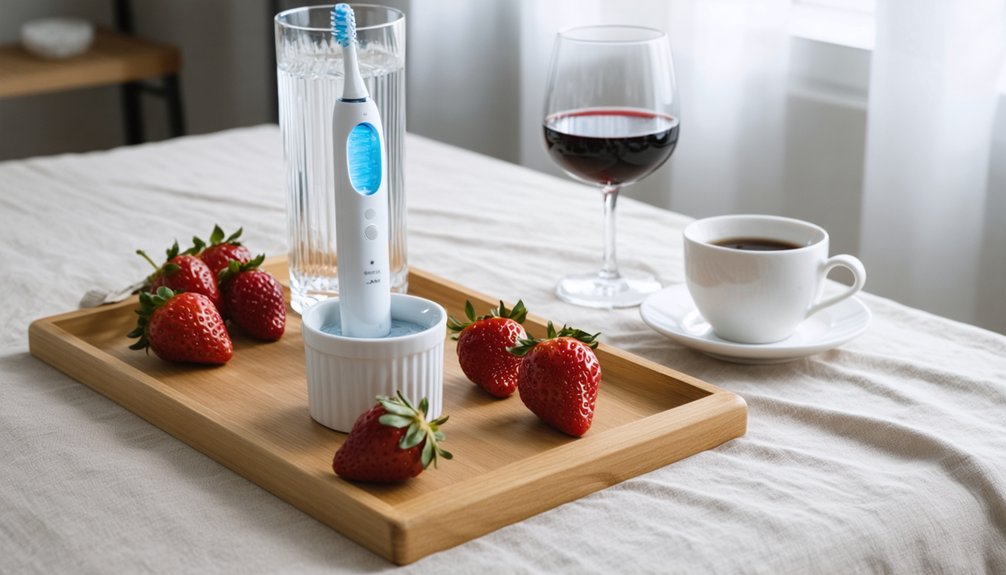
Controlling stain accumulation isn’t just about how you clean your teeth—it’s also about what you’re putting on them. Coffee, tea, red wine, soda, berries, and dark sauces are primary sources of beverage pigmentation and food-based chromogens that bind to enamel over time.
Stain control starts before you brush—it starts with what you eat and drink.
Dietary acids from citrus, vinegar-based foods, and carbonated drinks compound the problem by softening enamel, making it more susceptible to pigment absorption.
To reduce exposure, use a straw when drinking staining beverages and rinse with water immediately afterward. Limit contact time by consuming these items in one sitting rather than sipping throughout the day.
After whitening treatment, avoid stain-causing foods for approximately 24 hours. Strategic dietary management directly reduces how quickly discoloration returns between cleanings.
How Smoking and Tobacco Stain Teeth Permanently
When you smoke or use tobacco, tar and nicotine penetrate the enamel surface and bond to tooth structure, producing yellow, brown, and black discoloration that resists routine brushing.
Unlike food-based stains, tobacco stains accumulate in the enamel’s porous layer over time, making them progressively harder to remove without professional intervention.
Quitting tobacco stops this cycle of pigment exposure and allows both professional cleaning and whitening treatments to work more effectively on your remaining discoloration.
Tobacco’s Staining Mechanism
Tobacco stains teeth through two primary compounds: tar and nicotine. Tar deposits dark residue directly onto enamel, while nicotine oxidizes upon air exposure, turning yellow-brown. Together, they drive deep stain penetration into porous enamel surfaces, making tobacco residue exceptionally difficult to remove.
- Tar coats enamel like a sticky, dark film after each use.
- Nicotine starts colorless but oxidizes into a yellow-brown pigment.
- Repeated exposure layers stain deeper into microscopic enamel pores.
- Tobacco residue bonds chemically to enamel, resisting routine brushing.
- Stain penetration worsens over time, eventually reaching dentin beneath enamel.
You can’t reverse years of tobacco staining with whitening toothpaste alone. Eliminating tobacco use stops new stain formation and gives professional treatments a realistic chance of restoring brightness.
Quitting Improves Tooth Color
Quitting tobacco doesn’t erase existing stains overnight, but it immediately stops new stain formation and gives professional whitening treatments a realistic foundation to work from. Tobacco stains penetrate enamel over time, making removal progressively harder the longer exposure continues.
Once you quit, your oral health trajectory shifts measurably — saliva flow normalizes, gum tissue begins recovering, and stain-causing tar and nicotine no longer accumulate on tooth surfaces.
Professional cleanings become significantly more effective without active tobacco use reintroducing discoloration between appointments. Whitening agents also perform better on surfaces no longer receiving continuous pigment exposure.
Quitting isn’t just a cosmetic decision — it’s a clinical one that directly determines how well any whitening protocol performs and how long results last.
When to Brush After Eating to Protect Tooth Color

Brushing immediately after eating can actually work against you, particularly after consuming acidic foods or drinks. Acid exposure temporarily softens enamel, and brushing too soon spreads that acid across tooth surfaces, accelerating wear. Timing consistency protects both enamel integrity and long-term brightness.
- Wait 30–60 minutes after acidic foods or beverages before brushing
- Rinse immediately with plain water to neutralize residual acids
- Picture acid as a softening agent—brushing during this window erodes your shield
- After staining foods, brush closer to the 60-minute mark to clear pigments safely
- Set a consistent post-meal timer to build reliable, protective brushing habits
Controlling when you brush gives you a precise, evidence-backed advantage in maintaining tooth color over time.
When to Use Whitening Products and Professional Cleanings
Timing your brushing correctly protects enamel, but home habits alone can’t remove hardened tartar or fully reverse deeper discoloration—that’s where whitening products and professional cleanings fill the gap. Schedule professional cleanings twice yearly for thorough dental stain removal, including calcified deposits that brushing and flossing can’t address.
Between visits, use ADA-approved whitening products and follow label directions precisely—overuse increases sensitivity without improving results. Whitening product timing matters: avoid applying treatments immediately after consuming acidic foods or drinks, since compromised enamel absorbs agents unevenly.
After a whitening session, avoid stain-causing foods and beverages for approximately 24 hours to protect results. Whitening toothpaste used consistently can maintain brightness between professional appointments.
Combining scheduled cleanings with disciplined at-home whitening gives you measurable, long-term control over tooth color.
Frequently Asked Questions
Can Drinking More Water Throughout the Day Help Prevent Tooth Staining?
Yes, drinking more water supports stain prevention and delivers key hydration benefits. It rinses away pigments, neutralizes acids, and boosts saliva production—you’re actively reducing residue that causes discoloration when you stay consistently hydrated throughout the day.
Does Teeth Whitening Work the Same on Crowns or Veneers?
Whitening doesn’t change dental crown durability or veneer color matching—these materials resist bleaching agents. You’ll need to consult your dentist to replace restorations if they no longer match your newly whitened natural teeth.
Are Natural Remedies Like Baking Soda Safe for Long-Term Whitening?
Like a double-edged sword, homemade treatments such as baking soda can safely polish surface stains occasionally, but you shouldn’t rely on them long-term. Chemical alternatives in ADA-approved products offer more controlled, evidence-based whitening without risking enamel erosion.
How Does Dry Mouth Affect Tooth Discoloration Over Time?
Dry mouth reduces saliva production, disrupting oral pH balance and allowing acids and pigments to linger on enamel longer. You’ll experience accelerated discoloration as residue accumulates unchecked, progressively deepening stains over time.
Can Certain Medications Cause Teeth to Stain or Discolor Permanently?
Yes, certain medications can permanently discolor your teeth. Tetracycline antibiotics cause intrinsic staining, while antihistamines and antihypertensives contribute to tooth enamel erosion through dry mouth. You’ll want to consult your dentist about medication side effects proactively.
References
- https://mypenndentist.org/dental-tips/2021/08/02/maintain-white-teeth/
- https://www.healthline.com/nutrition/whiten-teeth-naturally
- https://www.youtube.com/watch?v=pxBK4NDS0-k
- https://www.camarillopremierdental.com/best-oral-care-routine-for-long-lasting-white-teeth/
- https://www.arborviewdentalgroup.com/the-secret-to-long-lasting-white-teeth-6-essential-tips/
- https://health.clevelandclinic.org/how-to-whiten-teeth
- https://www.colgate.com/en-sg/oral-health/teeth-whitening/how-to-maintain-white-teeth
- https://www.claytondentalstudio.com/blog/how-to-maintain-white-teeth-4963b