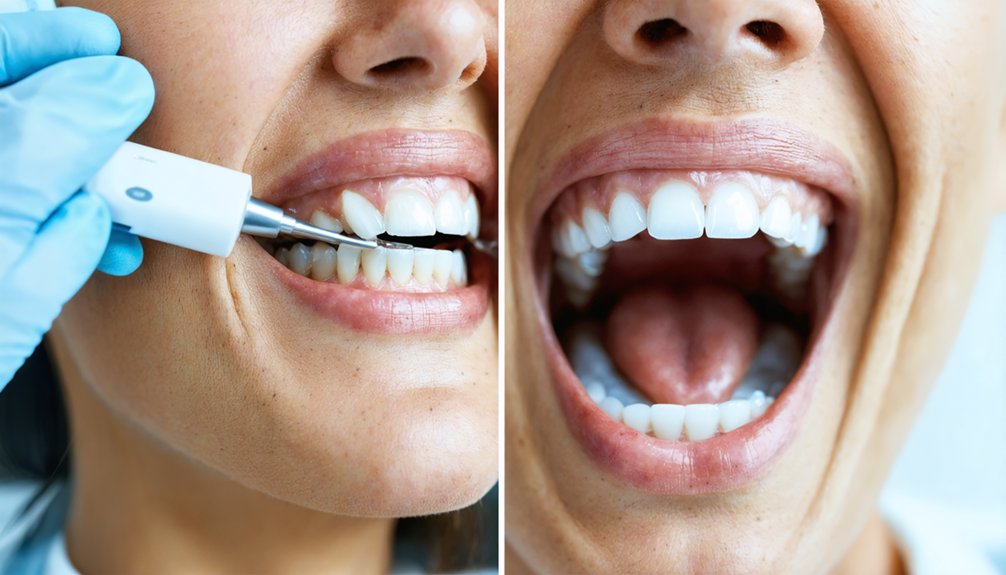
To keep your teeth white after treatment, you’ll want to avoid staining foods and drinks like coffee, red wine, and dark berries. Brush twice daily with a soft-bristled toothbrush, floss regularly, and rinse with water after consuming pigment-heavy beverages. Quit tobacco and cut back on sugar to protect your enamel. Schedule dental cleanings every six months and plan periodic touch-ups. Each practice works together, and understanding the details behind each one makes all the difference.
Key Takeaways
- Avoid staining foods and drinks like coffee, red wine, berries, and dark sauces to preserve your whitening results longer.
- Brush twice daily with a soft-bristled toothbrush and floss daily to prevent plaque buildup and surface stains.
- Use a straw and rinse with water immediately after consuming dark beverages to minimize enamel pigment contact.
- Quit tobacco products entirely, as tar and nicotine cause deep, stubborn staining that undermines whitening treatments.
- Schedule dental cleanings every six months and plan whitening touch-ups every six months to two years as needed.
Foods and Drinks That Stain Teeth After Whitening
After whitening your teeth, what you eat and drink plays a critical role in how long your results last. Stain prevention starts with eliminating high-risk foods and beverages from your routine.
Avoid coffee, tea, red wine, and dark sodas, as tannins and acids dull enamel quickly. Skip berries, beets, tomato sauce, soy sauce, and dark chocolate, since their pigments penetrate freshly whitened enamel faster.
Acidic foods like citrus, pickles, and vinegar-based dressings weaken enamel, making teeth more susceptible to discoloration.
Natural remedies like drinking water throughout the day help flush staining particles before they set. Opt for light-colored foods and white sauces to minimize pigment contact.
Controlling your diet directly controls how effectively you preserve your whitening investment.
Brushing and Flossing Habits That Prevent Restaining
Maintaining consistent brushing and flossing habits is your strongest defense against restaining after whitening. Brush twice daily for two full minutes using a soft-bristled toothbrush and fluoride toothpaste.
Consistent brushing and flossing remain your strongest defense against restaining teeth after whitening treatment.
Alternative brushing techniques, such as the Bass method, direct bristles at the gumline to dislodge plaque more effectively than standard horizontal strokes.
Limit whitening toothpaste to one or two uses per week to remove surface stains without irritating enamel.
Replace your toothbrush every three months to preserve bristle efficiency.
For flossing tools, water flossers and interdental brushes reach tight spaces where traditional floss may miss, preventing trapped particles that trap pigments.
Floss daily to eliminate plaque that accelerates discoloration.
These targeted habits give you precise control over your whitening results long-term.
How to Drink Coffee and Wine Without Staining White Teeth
Giving up coffee or wine isn’t the only way to protect your whitened teeth from discoloration. With the right drinking techniques, you can maintain stain prevention without eliminating your favorite beverages.
Apply these four strategies consistently:
- Use a straw when drinking coffee, tea, or wine to minimize liquid contact with your front teeth.
- Rinse immediately with plain water after consuming dark beverages, swishing gently for several seconds.
- Limit sipping duration by drinking beverages within a set timeframe rather than nursing them over hours.
- Choose lighter alternatives like herbal teas or clear spirits with light mixers when possible.
These techniques reduce pigment exposure without requiring complete avoidance, keeping your whitening results intact longer between professional touch-ups.
Tobacco and Sugar Habits That Undermine Whitening Results
While drinking habits profoundly impact whitening results, tobacco and sugar consumption can undermine your investment even faster. Tobacco products—cigarettes, cigars, pipes, and chewing tobacco—deposit tar and nicotine directly onto enamel, causing severe yellowing that resists standard whitening treatments.
Tobacco cessation isn’t optional if you’re serious about maintaining results; it’s foundational.
Sugar presents a different but equally damaging threat. Frequent sugary drink consumption accelerates decay and discoloration, directly compromising the brightness you’ve worked to achieve.
Sugar reduction protects enamel integrity and prevents the bacterial acid activity that weakens tooth structure over time.
Commit fully to quitting tobacco and eliminating sugary beverages from your daily routine. These two behavioral changes give your whitening treatments the stable foundation they need to deliver lasting, visible results.
When to Schedule Cleanings and Whitening Touch-Ups
Behavioral discipline sets the stage, but professional care seals the results. You can’t maintain whitening gains without structured dental appointments that handle what daily brushing can’t. Plaque removal and enamel reinforcement require clinical-grade tools and expertise. Schedule accordingly:
- Dental cleanings every six months to eliminate tartar and surface stains.
- Touch-up whitening treatments every 6 months to 2 years, depending on your method and lifestyle.
- Post-checkup gel applications using custom bleaching trays for precise, consistent maintenance.
- Pre- and post-whitening fluoride treatments to support enamel reinforcement and reduce sensitivity.
Don’t wait for visible discoloration to act. Proactive scheduling keeps your results stable, extends whitening longevity, and gives your dentist the opportunity to catch any developing oral health issues early.
Frequently Asked Questions
How Often Should Whitening Toothpaste Be Used Each Week?
You should use whitening toothpaste one to two times per week. This frequency effectively removes dental stain without irritating enamel, helping you maintain ideal tooth brightness while preventing overuse-related sensitivity or surface damage.
Should Fluoride Products Be Applied Before or After Whitening Treatments?
Imagine a patient who skipped fluoride and faced enamel erosion post-treatment. You should apply fluoride application both before and after whitening timing to remineralize teeth, ensuring maximum protection and stronger enamel throughout your whitening process.
How Long Should Whitening Procedures Be Paused to Reduce Sensitivity?
Pause your whitening procedures for 2 to 3 days periodically for effective sensitivity management. During this break, you’ll also want to maintain dietary restrictions by avoiding acidic and pigment-rich foods to protect your temporarily vulnerable enamel.
What Type of Toothbrush Bristles Are Safest for Whitened Teeth?
You should use soft-bristled toothbrushes, as bristle durability matters less than gentleness on enamel. Prioritize toothbrush ergonomics for controlled, precise strokes, replacing every three months to maintain effective cleaning without compromising your whitened teeth’s surface integrity.
Are Over-The-Counter Whitening Kits Safe Without Consulting a Dentist First?
You should consult a dentist before using over-the-counter whitening kits, even when exploring home remedies or natural alternatives. A dentist’ll assess your oral condition, ensuring you’re selecting safe, effective products tailored to your specific needs.
References
- https://landmarkdentalarts.com/best-practices-for-keeping-teeth-healthy-after-whitening/
- https://www.ba-dentist.com/post-teeth-whitening-care-guide-5-habits-for-a-radiant-smile/
- https://sinquefieldfamilydentistry.com/the-dos-and-donts-of-teeth-whitening-achieving-a-brighter-smile-safely/
- https://www.canaandental.com/tips-for-keeping-your-teeth-white-after-professional-whitening/
- https://www.elitedentistrymonroeville.com/blog/teeth-whitening-maintenance/
- https://skyridgedental.com/blog/teeth-whitening-services-aftercare-10-maintenance-tips/
- https://www.sahuaritadentistry.com/2025/02/13/tips-for-maintaining-teeth-whitening/
- https://westbelldentalcare.com/teeth-whitening-aftercare-how-to-maintain-white-teeth-after-treatment/
- https://eaglefalls.com/tips-for-maintaining-the-results-of-teeth-whitening/
- https://www.webmd.com/oral-health/teeth-whitening