Tea stains your teeth because tannins bind to enamel proteins, embedding pigments deep into microscopic pores. You can prevent staining by rinsing with water immediately after drinking, using a straw, and waiting 30 minutes before brushing. ADA-approved whitening toothpastes, strips, and professional treatments effectively reverse existing discoloration. Consistent daily habits combined with targeted whitening products deliver the best long-term results. Keep going to discover exactly which strategies work hardest for your specific situation.
Key Takeaways
- Tea tannins bind to enamel proteins, causing yellow-brown stains that resist regular brushing and penetrate microscopic pores over time.
- Rinse with water immediately after drinking tea, then wait 30 minutes before brushing to protect softened enamel.
- Use ADA-approved whitening toothpaste with mild abrasives like baking soda for safe, gradual removal of surface stains.
- Persistent or deep intrinsic stains require professional treatments, including in-office hydrogen peroxide whitening or custom take-home bleaching trays.
- Prevent re-staining by using a straw, reducing steeping time, adding milk, and chewing sugar-free gum after tea.
Why Tea Stains Teeth in the First Place
Tea contains tannins, naturally occurring polyphenolic compounds that bind to proteins and minerals on tooth enamel, creating yellowish-brown discoloration over time. These compounds penetrate microscopic enamel pores, embedding pigmentation that routine brushing can’t fully eliminate.
Black tea produces the heaviest staining due to its high tannin concentration, but don’t assume herbal teas are entirely safe—certain varieties contain chromogens, additional pigment-producing compounds that accelerate discoloration.
Your enamel’s vulnerability increases when dental sealants wear thin or erode, exposing porous surfaces that absorb staining compounds more readily. Acidic teas further compromise enamel integrity by temporarily softening its surface, widening those microscopic pores.
The longer tea contacts your teeth, the deeper tannins penetrate. Understanding this mechanism gives you precise control over preventing and reversing the damage effectively.
How to Stop Tea Stains Before They Start
Preventing tea stains begins the moment liquid contacts your teeth. Your tea brewing habits directly influence staining intensity. Reduce steeping time to three minutes to lower tannin concentration, cutting stain removal demands later. Strategic consumption choices give you measurable control over discoloration before it develops.
Steep tea for three minutes max — your future smile will thank you for the lower tannin count.
Apply these evidence-based prevention strategies immediately:
- Rinse with plain water directly after drinking tea to flush tannins before they bond to enamel.
- Use a straw with cold brew or iced tea to minimize direct surface contact.
- Add milk or cream to neutralize acids and reduce staining pigment concentration.
- Chew sugar-free gum post-consumption to stimulate saliva, your mouth’s natural defense against discoloration.
Consistency with these habits considerably reduces cumulative staining over time.
Daily Brushing Habits That Remove Tea Stains
After drinking tea, you should wait at least 30 minutes before brushing, since enamel temporarily softens from acid exposure and brushing too soon causes abrasion.
When you do brush, switching from a manual toothbrush to an electric or ultrasonic model markedly improves plaque and surface stain removal.
Consistent use of an electric toothbrush, combined with proper timing, gives you a clinically superior approach to managing tea-related discoloration daily.
Brushing Timing Matters
Brushing immediately after drinking tea can actually damage your enamel rather than protect it. Tea temporarily lowers your oral pH, softening enamel and making it vulnerable to abrasion. Waiting 30 minutes allows saliva flow to neutralize acids and reharden the enamel surface before mechanical brushing begins.
Control your brushing schedule with these evidence-based timing strategies:
- Wait 30 minutes after your last sip before brushing to let saliva flow restore oral pH balance.
- Rinse with plain water immediately after tea to accelerate neutralization.
- Chew sugar-free gum during the waiting period to stimulate protective saliva production.
- Brush twice daily at consistent intervals rather than reactively after every tea consumption.
Strategic timing prevents enamel erosion while maximizing stain removal efficiency.
Electric Toothbrush Benefits
Switching to an electric or ultrasonic toothbrush gives you a measurable advantage over manual brushing when combating tea stains. Electric toothbrush benefits include oscillating or sonic bristle movements that generate thousands of strokes per minute, far exceeding what manual technique delivers. This mechanical superiority disrupts plaque biofilm more thoroughly, reducing the surface adhesion that allows tannins to accumulate and darken enamel.
Advanced brushing techniques become more accessible with electric models because the device controls pressure and movement, minimizing enamel abrasion from aggressive scrubbing. Many units include pressure sensors that alert you when you’re brushing too hard, protecting softened enamel.
Paired with fluoride toothpaste, an electric toothbrush systematically targets stained surfaces with consistent, controlled force—giving you greater authority over discoloration outcomes than manual brushing allows.
The Best Whitening Toothpastes for Tea Stains
When selecting a whitening toothpaste for tea stains, you should look for products carrying the ADA approval seal, which confirms the formula contains clinically vetted stain-removing ingredients.
Mild abrasives like baking soda offer a safer, gradual whitening effect without compromising enamel integrity.
You’ll want to limit coarse stain-removal toothpastes to short-term use only, as prolonged application risks irreversible enamel abrasion.
ADA-Approved Whitening Toothpastes
Not all whitening toothpastes are created equal, so selecting one with the ADA Acceptance Seal guarantees you’re using a product whose active ingredients have been clinically evaluated for both safety and efficacy.
When tea consumption affects your oral health, ADA-approved formulas provide a controlled, evidence-backed response to surface staining caused by tannins.
- Choose formulas containing mild abrasives like baking soda to remove stains without eroding enamel
- Prioritize products with fluoride to strengthen enamel compromised by acidic dietary habits
- Verify the ADA Seal directly on packaging before purchasing any whitening product
- Use consistently twice daily alongside flossing for measurable stain reduction over time
These toothpastes won’t bleach intrinsic discoloration, but they effectively manage surface stains when integrated into a disciplined daily routine.
Mild Abrasive Ingredient Options
Mild abrasives do the heavy lifting in whitening toothpastes by physically disrupting and lifting surface stains left behind by tea tannins. Baking soda ranks among the most clinically validated options, delivering effective stain removal without compromising enamel integrity.
Hydrated silica offers controlled abrasion suitable for daily use, including stains from herbal teas, which deposit pigments just as aggressively as black tea. Calcium carbonate provides a gentler alternative if you’re managing teeth sensitivity while still targeting discoloration.
You’ll want to verify the Relative Dentin Abrasivity (RDA) score on any product you select—scores below 70 indicate safe daily use. Prioritizing low-RDA formulas lets you maintain consistent whitening without accelerating enamel erosion, giving you measurable results and full control over your whitening protocol.
Limiting Coarse Toothpaste Use
Coarse stain-removal toothpastes may deliver noticeable short-term results, but they’re not designed for sustained daily use. Relying on coarse toothpaste regularly accelerates enamel erosion, increasing long-term sensitivity and vulnerability to deeper staining. Use them strategically, not habitually.
Apply coarse stain-removal formulas within these boundaries:
- Frequency: Limit use to once or twice weekly, not as your primary toothpaste.
- Duration: Rotate back to a gentler fluoride toothpaste after achieving visible stain reduction.
- Monitoring: Watch for increased tooth sensitivity—that’s your signal to reduce usage immediately.
- Replacement: Transition to mild abrasive options like baking soda-based toothpaste for maintenance between treatments.
You control the timeline. Disciplined, targeted use of coarse toothpaste protects enamel while still delivering effective stain removal.
Whitening Strips and Gels Worth Trying for Tea Stains
When tea stains resist daily brushing, over-the-counter whitening strips and gels offer a clinically supported next step. Products like Crest Whitestrips deliver hydrogen peroxide directly to enamel surfaces, breaking down discoloration caused by tannins released during tea brewing.
Over-the-counter whitening strips combat stubborn tea stains by delivering hydrogen peroxide directly to discolored enamel surfaces.
You apply the strips to clean, dry teeth and leave them on according to package directions—consistency drives stain removal results.
Whitening gel pens complement strips by targeting specific stained areas, particularly incisors where tea contact concentrates. Apply the gel precisely, avoid eating or drinking immediately afterward, and repeat as directed.
Choose products carrying the ADA Acceptance Seal, confirming safety and efficacy. Monitor your enamel for sensitivity; if discomfort develops, reduce application frequency.
These targeted treatments address moderate-to-severe staining that toothpaste alone can’t effectively resolve.
Natural Home Remedies for Tea-Stained Teeth
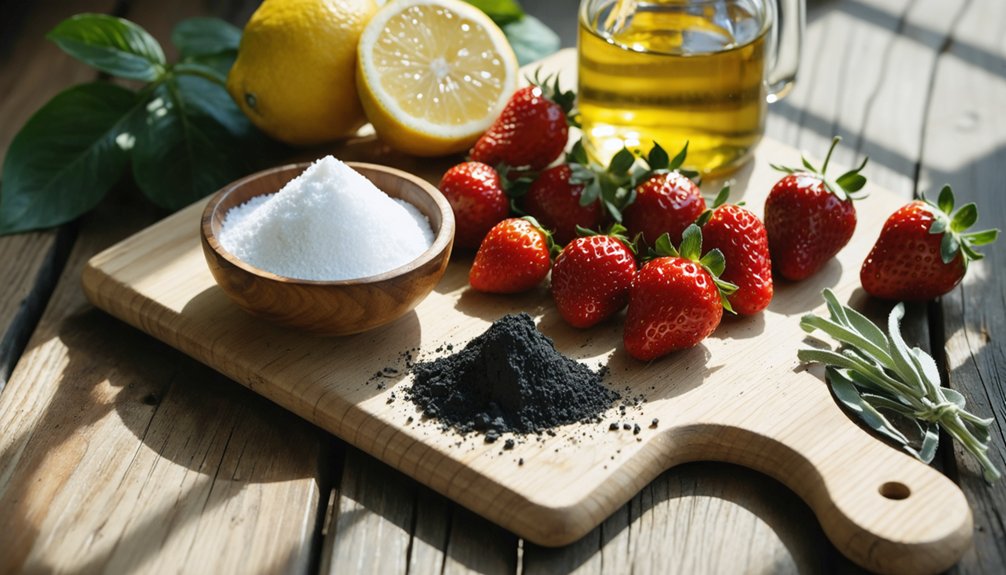
Before reaching for commercial whitening products, you’ll find several natural remedies that address tea stains through mild mechanical or chemical action. These herbal remedies and techniques offer targeted, low-cost interventions you can control directly.
- Baking soda paste: Mix ¼–½ teaspoon with water; brush gently for 1–2 minutes to lift surface stains without harsh bleaching.
- Strawberry and baking soda combination: Mash fresh strawberries with baking soda, apply for 5 minutes, then rinse and brush immediately.
- Activated charcoal paste: Combine powder with water, brush gently, wait 3 minutes, then rinse thoroughly.
- Oil pulling: Swish one tablespoon of coconut oil for 10–15 minutes to reduce bacteria contributing to discoloration.
Limit frequency to avoid enamel abrasion over time.
When Professional Help Is the Right Call
Although home remedies and over-the-counter products handle mild surface stains effectively, persistent discoloration that resists these interventions signals it’s time to consult a dental professional.
Deep intrinsic staining, pitting, or enamel erosion require clinical assessment beyond what dental flossing, mouth rinses, or whitening pastes can address.
A professional cleaning removes calcified tartar deposits that trap pigments and block surface treatments from working.
Dental polishing eliminates residual tea stains before in-office whitening procedures begin, ensuring maximum penetration of bleaching agents.
For severe cases, your dentist can formulate personalized care plans targeting specific discoloration patterns.
Delaying professional intervention allows stains to deepen and compounds structural damage.
Scheduling routine hygiene appointments twice yearly gives you measurable control over long-term tooth appearance and enamel integrity.
Professional Whitening Treatments for Tea Stains
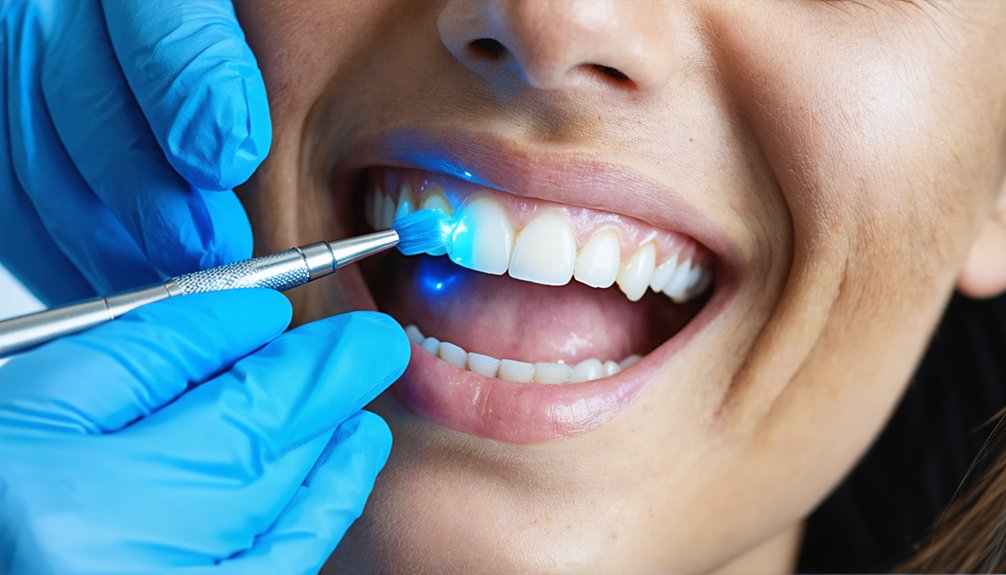
Once your dentist confirms that professional care is the appropriate course, in-office whitening becomes one of the most effective options for eliminating tea-related discoloration. Years of tea brewing habits deposit tannins deep within enamel, requiring clinical-grade intervention that over-the-counter products can’t match.
Years of tea drinking embed tannins deep in enamel—only clinical-grade whitening can fully eliminate them.
Your dentist will also assess enamel erosion before proceeding to guarantee treatment won’t compromise structural integrity.
- Dental polishing removes surface stains before whitening agents are applied for maximum penetration.
- In-office bleaching uses concentrated hydrogen peroxide activated by light for rapid, measurable results.
- Custom take-home trays provide controlled, ongoing whitening between professional appointments.
- Personalized treatment plans target your specific stain severity, enamel condition, and whitening goals.
These clinical options deliver precise, evidence-backed outcomes when consistent daily habits haven’t produced sufficient results.
Maintenance Habits That Prevent Tea Stains From Returning
Sustaining the results of any whitening treatment depends on building consistent, targeted habits into your daily routine. Rinse with plain water immediately after drinking tea to remove tannins before they bond to enamel. If you don’t want to compromise tea flavor, use a straw to minimize direct surface contact.
Wait 30 minutes before brushing to protect against enamel erosion from temporarily softened surfaces. Chew sugar-free gum post-consumption to stimulate saliva, which neutralizes acids naturally.
Brush twice daily with ADA-approved whitening toothpaste, floss once daily, and schedule professional cleanings regularly. Adding milk to tea reduces both its acidity and staining potential.
These compounding habits create a reliable defense system that preserves your whitening results long-term.
Frequently Asked Questions
Can Tea Stains on Teeth Affect Overall Gum Health Long-Term?
Tea stains don’t directly harm gums, but they signal dental plaque buildup, which you must control. Unchecked plaque triggers gum inflammation, while enamel erosion weakens tooth structure, compounding long-term periodontal risks if you neglect consistent oral hygiene.
Are Certain Tea Types Less Likely to Stain Teeth Than Others?
Yes, you’ll find Herbal teas and green tea benefits your staining risk considerably. They contain fewer tannins than black tea, reducing discoloration. Lighter brews, shorter steeping times, and rinsing afterward give you greater control over staining outcomes.
Do Teeth Whitening Treatments Work Differently on Sensitive Teeth?
Yes, tooth sensitivity affects whitening effectiveness. If you’ve got sensitive teeth, peroxide-based treatments may cause heightened discomfort. You’ll want to choose lower-concentration formulas, limit application frequency, and consult your dentist to optimize results while minimizing irritation.
Can Children Safely Use Whitening Products for Tea-Stained Teeth?
While adults benefit freely, children’s safety demands caution — you shouldn’t use whitening products on children without consulting a dentist first, as developing enamel remains vulnerable to damage from active whitening compounds.
Does Teeth Whitening Insurance Coverage Apply to Tea Stain Treatments?
Your dental insurance typically won’t cover tea stain treatments since they’re classified under cosmetic benefits. You’ll likely pay out-of-pocket, so consult your provider to confirm exclusions and explore flexible spending accounts to manage whitening costs effectively.
References
- https://www.advantagedental.com/blog/how-to-remove-coffee-and-tea-stains-from-your-teeth
- https://www.reddit.com/r/tea/comments/39kk1u/tips_for_stained_teeth/
- https://gulfsidedental.com/does-tea-stain-your-teeth-insights-from-a-dentist/
- https://mypenndentist.org/dental-tips/2024/02/13/how-to-remove-stains-from-teeth/
- https://www.docklandsdental.ie/how-to-remove-tea-stains-from-teeth/
- https://www.youtube.com/watch?v=S1ltc0YS_TI
- https://www.wikihow.com/Remove-Tea-Stains-from-Teeth
- https://www.smilearizonadentistry.com/blog/remove-coffee-stain-from-teeth