Hydrogen peroxide can help remove medication stains by penetrating your enamel and oxidizing the chromogenic compounds embedded within the tooth matrix. It works through chemical oxidation, breaking apart pigmented molecular bonds that form deep inside your tooth’s structure. For home use, you’ll want to stay at or below 3% concentration to avoid enamel erosion and gum irritation. Some stains, like those from tetracycline, may resist peroxide entirely. The details ahead will help you treat this effectively and safely.
Key Takeaways
- Hydrogen peroxide penetrates enamel to oxidize and fragment medication-derived pigments embedded within the tooth’s internal structure.
- A 3% hydrogen peroxide rinse, used twice daily, typically produces noticeable improvement within 14–21 days.
- Combining a hydrogen peroxide paste with a rinse enhances effectiveness, targeting both concentrated and diffuse medication stains.
- Home use should remain at or below 3.5% concentration; higher levels risk enamel erosion and gum damage.
- Intrinsic stains from tetracycline or minocycline often resist peroxide treatment and may require professional procedures like veneers.
Why Medication Stains Teeth Differently Than Other Discoloration
Medication stains differ fundamentally from dietary or surface discoloration because they form within the tooth’s internal structure rather than on the enamel’s outer surface. Medication discoloration occurs when drug compounds—such as tetracycline or iron supplements—bind directly to developing dentin or penetrate mineralized tissue, making removal significantly more complex than treating coffee or wine stains.
Unlike surface stains that respond quickly to standard cleaning, medication discoloration resists conventional whitening because it’s embedded beneath the enamel layer. Enamel penetration by hydrogen peroxide becomes critical here—the oxidizing agent must travel past the outer coating to break apart discoloring compounds within deeper tooth structures.
You’re dealing with a chemical challenge that requires a targeted, evidence-based approach rather than routine surface-level treatment.
How Hydrogen Peroxide Breaks Down Medication Stains
When hydrogen peroxide contacts stained tooth structure, it initiates a chemical oxidation process that breaks apart the molecular compounds responsible for discoloration. It penetrates enamel layers, targeting the stain chemistry unique to medication-derived pigments embedded within the tooth matrix. Understanding this mechanism gives you precise control over your dental hygiene strategy.
Hydrogen peroxide doesn’t just clean teeth — it chemically dismantles the molecular compounds behind stubborn medication stains.
Key actions hydrogen peroxide performs:
- Oxidizes chromogenic compounds, fragmenting their molecular bonds and neutralizing color-causing agents
- Penetrates both surface and subsurface enamel layers to address intrinsic medication stains
- Lifts destabilized stain particles out of the enamel structure through continued chemical activity
This targeted oxidation makes hydrogen peroxide particularly effective against stubborn pharmaceutical discoloration that conventional brushing can’t address. You’re working with a clinically supported mechanism, not guesswork.
What Concentration of Hydrogen Peroxide Is Actually Safe?
When using hydrogen peroxide for medication stains, you must stay within concentrations no greater than 3% for home-prepared solutions to avoid damaging your enamel or gums.
The American Dental Association considers up to 3.5% safe for over-the-counter products, while concentrations exceeding 6% require professional supervision.
You should never use concentrations above 9%, as they pose significant risks to your oral tissues and overall dental health.
Safe Concentration Ranges
Choosing the right concentration of hydrogen peroxide matters as much as the application method itself.
For medication stains requiring deep stain penetration, you need a concentration that’s effective without compromising dental enamel integrity.
Key concentration thresholds to follow:
- 3% or below: Safe for home use; ideal for daily rinses without professional supervision
- 3%–6%: Acceptable when following manufacturer guidelines precisely; offers stronger stain penetration
- Above 6%: Requires dental professional oversight to prevent enamel degradation
The American Dental Association caps over-the-counter products at 3.5%. Anything exceeding 9% poses unacceptable risks to oral tissues.
You maintain control by selecting concentrations within evidence-backed ranges, ensuring medication stains are addressed without compromising your dental enamel’s long-term structural integrity.
Avoiding Harmful Percentages
Exceeding safe hydrogen peroxide thresholds doesn’t just reduce effectiveness—it actively damages oral tissues. Concentrations above 9% are categorically unsafe for any rinse or paste application. Products exceeding 6% require direct dental supervision—you shouldn’t self-administer these without professional clearance.
For home use, stay within the 3% range to protect enamel integrity and gum tissue. Long term usage effects compound when you ignore concentration limits, accelerating enamel erosion and increasing sensitivity.
If you’re exploring alternative natural remedies like baking soda combinations, ensure any added peroxide remains within safe parameters. The ADA caps over-the-counter products at 3.5%—that boundary exists for documented clinical reasons.
Exceeding it introduces unnecessary risk, particularly when managing medication-induced intrinsic staining that already compromises tooth structure.
How to Apply Hydrogen Peroxide to Medication Stains
To treat medication stains effectively, you’ll need to mix equal parts 3% hydrogen peroxide and water—roughly 2 ounces each—before applying the solution as a rinse or paste.
If you’re using a paste, combine the peroxide with baking soda and apply it with a toothbrush in small, gentle circular motions for no longer than 2 minutes.
Swish the rinse for 30 to 60 seconds, then spit it out completely to avoid gastrointestinal irritation from swallowing.
Mixing the Solution Correctly
Mixing hydrogen peroxide correctly is essential to achieving safe, effective results when targeting medication stains. Use precise mixing techniques to maintain solution integrity and maximize stain-removal efficacy.
- Combine equal parts 3% hydrogen peroxide and water—½ cup each—using glass or BPA-free plastic container materials to prevent chemical interaction.
- Avoid metal containers, as they can accelerate peroxide degradation and reduce solution potency.
- For a targeted paste, mix 3% hydrogen peroxide with baking soda until a thick, consistent texture forms.
Swish the prepared rinse for 30 to 60 seconds, then spit it out completely. Never exceed a 3% concentration for home-prepared solutions.
Accurate proportions protect your enamel while delivering controlled, evidence-based whitening results against stubborn medication-induced discoloration.
Application Technique and Duration
Applying hydrogen peroxide correctly determines how effectively it targets medication stains without compromising enamel integrity. Using a soft-bristled toothbrush, apply the 3% solution paste in small, circular motions for no longer than two minutes. Excessive duration accelerates enamel erosion, undermining enamel remineralization and weakening surfaces protected by dental sealants.
For rinse application, swish the diluted solution for 30 to 60 seconds, then spit completely. Never exceed the recommended contact time, as prolonged exposure increases sensitivity and structural damage. After application, rinse thoroughly with water to neutralize residual peroxide activity.
You maintain control over outcomes by adhering strictly to timing guidelines. Consistent, precise application optimizes stain removal while preserving the structural integrity your enamel and existing dental sealants depend on for long-term protection.
How Long Before You See Results on Medication Stains?
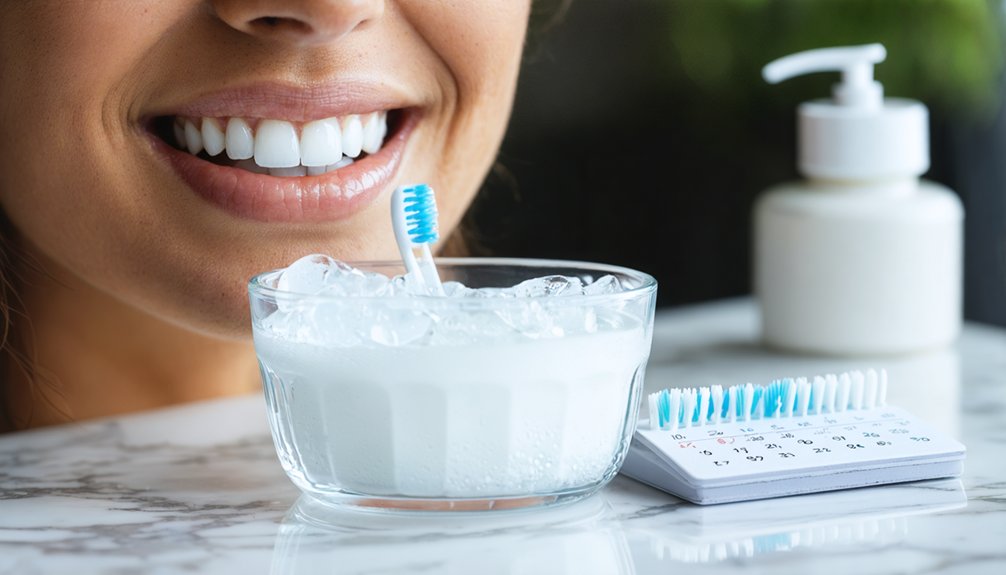
When using hydrogen peroxide to address medication-induced tooth stains, results typically vary based on stain depth, concentration used, and application consistency. Clinical evidence suggests noticeable improvement within 14 to 21 days of twice-daily rinsing.
Hydrogen peroxide results vary—stain depth, concentration, and consistency determine whether improvement appears within two to three weeks.
Dietary influence matters—avoiding staining foods accelerates visible outcomes.
- Surface stains typically respond within 1–2 weeks of consistent 3% hydrogen peroxide application.
- Deeper intrinsic medication stains may require 3–6 weeks, sometimes needing professional-strength concentrations.
- Alternative natural remedies like baking soda pastes can complement your regimen but work more gradually.
You’ll optimize results by maintaining application discipline and limiting coffee, wine, and pigment-heavy foods.
If discoloration persists beyond six weeks, consult a dentist—some medication-induced stains require professional-grade carbamide peroxide or clinical intervention for effective removal.
Hydrogen Peroxide Paste vs. Rinse: Which Works Better?
Both hydrogen peroxide paste and rinse deliver whitening benefits, but they work through distinct mechanisms that make each better suited to specific stain types. Paste formulations combine hydrogen peroxide with baking soda, creating a mild abrasive that physically lifts surface deposits while oxidizing stain compounds.
You apply it using gentle circular motions for no longer than two minutes, maximizing contact with enamel.
Rinses, as alternative application methods, penetrate more broadly, reaching interdental surfaces paste misses. You swish a 3% solution diluted equally with water for 30 to 60 seconds.
Among natural stain remedies, paste targets concentrated extrinsic medication stains more precisely, while rinses address diffuse discoloration effectively.
For deep medication-induced staining, combining both methods within your routine produces superior results compared to either approach used independently.
Signs You’re Using Hydrogen Peroxide Too Aggressively
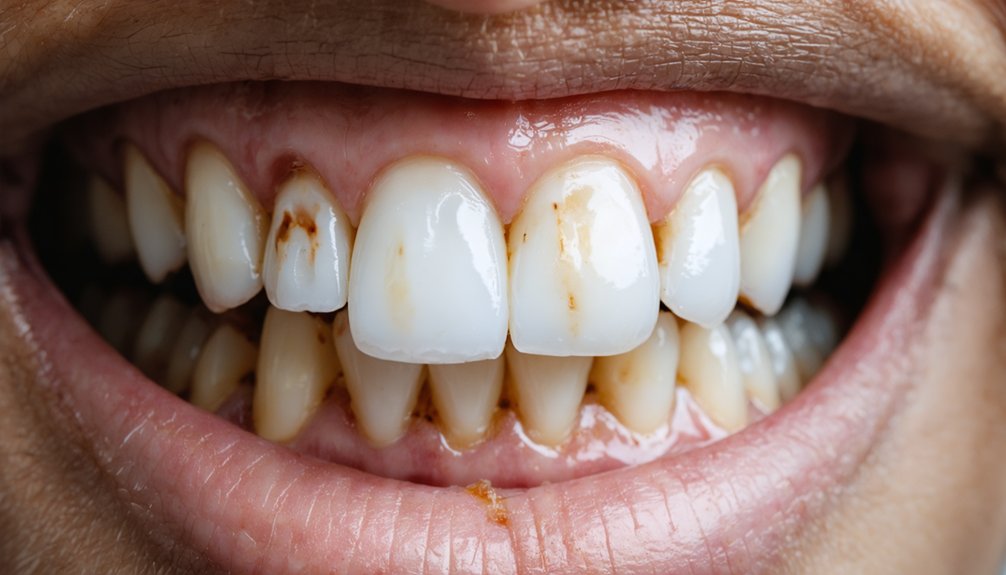
Knowing which application method works best means little if you’re using hydrogen peroxide too frequently or at concentrations your enamel can’t tolerate. Aggressive use produces measurable warning signs you shouldn’t ignore:
Knowing the right method means nothing if overuse is quietly working against your enamel.
- Increased tooth sensitivity to hot, cold, or sweet foods, signaling enamel erosion
- Gum irritation or whitening of soft tissue, indicating chemical overexposure
- Persistent soreness along the gumline that disrupts your oral hygiene routine
These signs suggest your application frequency or concentration exceeds safe thresholds. Concentrations above 6% without professional supervision accelerate enamel breakdown, particularly when your dietary habits include acidic foods or beverages that further weaken enamel structure.
If you notice any of these indicators, reduce frequency immediately and consult your dentist before continuing treatment.
When Medication Stains Need a Dentist, Not Hydrogen Peroxide
Some medication stains penetrate beyond enamel’s surface layer, embedding within dentin or forming structural bonds that hydrogen peroxide’s oxidation process can’t break down. Tetracycline discoloration, fluorosis banding, and minocycline-induced pigmentation fall into this category. These require professional dental care rather than repeated home attempts.
When you’re dealing with these intrinsic stains, alternative treatments become necessary. Dentists can apply higher-concentration peroxide systems under controlled conditions, or recommend microabrasion, composite bonding, or porcelain veneers when chemical agents prove insufficient.
Hydrochloric acid combined with hydrogen peroxide addresses certain intrinsic stains that over-the-counter products can’t reach.
Continuing hydrogen peroxide application on stains that aren’t responding risks enamel erosion without achieving results. Recognize when the mechanism doesn’t match the problem, and consult a dentist for accurate diagnosis and targeted intervention.
Frequently Asked Questions
Can Hydrogen Peroxide Interact Negatively With Medications Currently Being Taken Orally?
You should consult your dentist regarding medication compatibility before use. Hydrogen peroxide can affect oral health safety by potentially interacting with certain oral medications, altering absorption rates or causing localized reactions in your mouth.
Are Medication Stains on Dental Implants Treated Differently Than Natural Teeth?
Yes, implant maintenance requires different stain removal protocols than natural teeth. You shouldn’t apply hydrogen peroxide directly to implants, as it can compromise surface integrity, accelerating stain recurrence and potentially damaging the prosthetic crown’s material. Consult your dental professional.
Does Hydrogen Peroxide Affect Tooth-Colored Fillings or Crowns Near Stained Areas?
If your composite filling lightens unevenly—like many tetracycline-stained patients experience—you’ve compromised dental material compatibility. Hydrogen peroxide won’t alter crown and filling color stability, leaving restorations mismatched against naturally whitened surrounding enamel. Consult your dentist first.
Can Children Safely Use Hydrogen Peroxide to Remove Medication-Caused Tooth Stains?
You shouldn’t use hydrogen peroxide for children’s oral health without consulting a dentist first. Pediatric safety guidelines don’t support unsupervised use, as young enamel’s more vulnerable to damage from peroxide concentrations, even at lower levels.
Will Stopping the Stain-Causing Medication Improve Hydrogen Peroxide Whitening Results Faster?
Yes, stopping the stain-causing medication directly reduces medication influence on discoloration, accelerating your whitening timeline. You’ll allow hydrogen peroxide to work without new stains competing against it, producing faster, more measurable results.
References
- https://www.gentledental.com/resources/articles/hydrogen-peroxide-teeth-whitening
- https://www.healthline.com/health/hydrogen-peroxide-teeth-whitening
- https://pmc.ncbi.nlm.nih.gov/articles/PMC3800406/
- https://www.medicalnewstoday.com/articles/326148
- https://www.hicksdentalgroup.com/whiten-teeth-with-hydrogen-peroxide/
- https://pubmed.ncbi.nlm.nih.gov/9663072/