To whiten coffee-stained teeth, you’ll want to rinse with water immediately after drinking to dilute tannins before they bind to enamel. Wait 30 minutes before brushing, then use a whitening toothpaste containing hydrogen peroxide or stannous fluoride twice daily. For deeper stains, whitening strips or custom tray kits deliver stronger results within weeks. Adding milk to your coffee and eating crunchy vegetables also helps reduce pigment adhesion. There’s much more to uncover ahead.
Key Takeaways
- Rinse your mouth with water immediately after drinking coffee to dilute tannins and reduce pigment binding to enamel.
- Brush twice daily with whitening toothpaste containing hydrogen peroxide or stannous fluoride, using an ADA-approved product for verified results.
- Use whitening strips consistently for 2–3 weeks to achieve visible improvement on deeper coffee stains.
- Adding milk to coffee introduces casein, which binds polyphenols and lowers the drink’s overall staining potential.
- Consult a dentist if over-the-counter treatments fail, particularly for persistent deep discoloration requiring professional-grade whitening.
Why Coffee Stains Teeth and What That Means for Treatment
Coffee stains teeth through a combination of tannins, natural polyphenols that bind to enamel and trap pigment on the tooth surface. Coffee chemistry also introduces chromogens—intensely pigmented compounds—that exploit enamel porosity to penetrate microscopic surface channels. Once embedded, these pigments resist ordinary brushing.
Tannins bind to enamel, chromogens sink into its pores—coffee stains resist brushing by design, not accident.
Understanding this mechanism directly shapes your treatment strategy. Surface stains caught early respond well to whitening toothpastes, rinses, and consistent hygiene habits.
Stains that have settled deeper into porous enamel require more targeted intervention—whitening strips, at-home kits, or professional treatment.
A dentist can distinguish between extrinsic discoloration and intrinsic staining, which originates beneath the enamel and won’t respond to surface-level approaches.
Matching the right treatment to the stain’s depth is what makes the difference between results and wasted effort.
Daily Habits That Prevent Coffee Stains From Setting
After finishing your coffee, rinse your mouth with water immediately to dilute pigments and tannins before they bond to enamel. This simple step considerably reduces the staining load that builds up over repeated cups throughout the day.
When it’s time to brush, wait about 30 minutes, since coffee’s acidity temporarily softens enamel. Brushing too soon can cause surface damage rather than protection.
Rinsing After Each Cup
One of the simplest daily habits you can adopt is rinsing your mouth with water immediately after finishing a cup of coffee. Regardless of your coffee brewing method, every cup delivers tannins and pigments that begin binding to enamel within minutes. A quick rinse dilutes these compounds before they adhere, giving you direct control over stain accumulation.
Enamel strength is a factor here as well. Coffee’s acidity temporarily softens enamel, making it more vulnerable to pigment penetration. Rinsing promptly reduces that acidic exposure without the abrasive risk of brushing too soon.
Wait approximately 30 minutes before brushing to allow enamel to reharden. This two-step approach—rinse immediately, brush later—is straightforward, costs nothing, and measurably limits how deeply coffee stains take hold.
Brushing Timing Matters
Timing your brushing routine can determine whether coffee stains stay on the surface or work their way deeper into enamel. Coffee temporarily acidifies your mouth, softening enamel and leaving it vulnerable to abrasion. Brushing immediately after drinking accelerates that damage rather than preventing it. Instead, wait roughly 30 minutes, giving saliva time to neutralize acids and support enamel remineralization before you introduce any mechanical friction.
Brushing *before* your morning coffee offers a strategic advantage. You’ll remove oral bacteria and plaque that would otherwise give pigments a surface to grip.
Fewer bacterial deposits mean fewer sites where tannins can anchor.
Pair this approach with consistent twice-daily brushing, and you’re actively managing both stain accumulation and the microbial environment that makes staining worse over time.
What to Eat and Drink to Reduce Coffee Staining
What you eat and drink alongside your coffee can meaningfully reduce how much staining accumulates over time. Understanding stain chemistry helps you make smarter dietary choices.
Tannins and polyphenols released during coffee brewing bind readily to enamel, but certain foods counteract this process.
Rinse with water between sips to dilute pigments before they settle.
Crunchy vegetables like carrots, celery, and apples mechanically scrub surface residue during chewing.
Cheese and dairy products may support enamel integrity and reduce pigment adhesion.
Adding milk introduces casein, a protein that binds coffee polyphenols and lowers their staining potential.
Reducing overall intake or switching to lighter roasts directly limits pigment exposure.
These adjustments give you measurable control over discoloration without requiring additional whitening products.
The Best Whitening Toothpastes for Coffee Stains
Whitening toothpastes offer a practical first step for addressing coffee stains, but their effectiveness depends on selecting the right formulation. Look for products containing hydrogen peroxide, stannous fluoride, or gentle abrasives, and verify they carry the ADA seal.
These ingredients target extrinsic staining more reliably than natural remedies like activated charcoal, which lack strong clinical backing. Use your chosen toothpaste consistently twice daily rather than intermittently—results typically emerge over several weeks.
If you have dental sealants, confirm the product is compatible, since abrasive formulations can degrade sealant surfaces over time. Pairing whitening toothpaste with a whitening mouthwash adds another layer of stain control, though neither replaces professional cleaning for deeper discoloration.
Consistency and product selection are the variables you directly control.
At-Home Whitening Treatments That Remove Coffee Stains
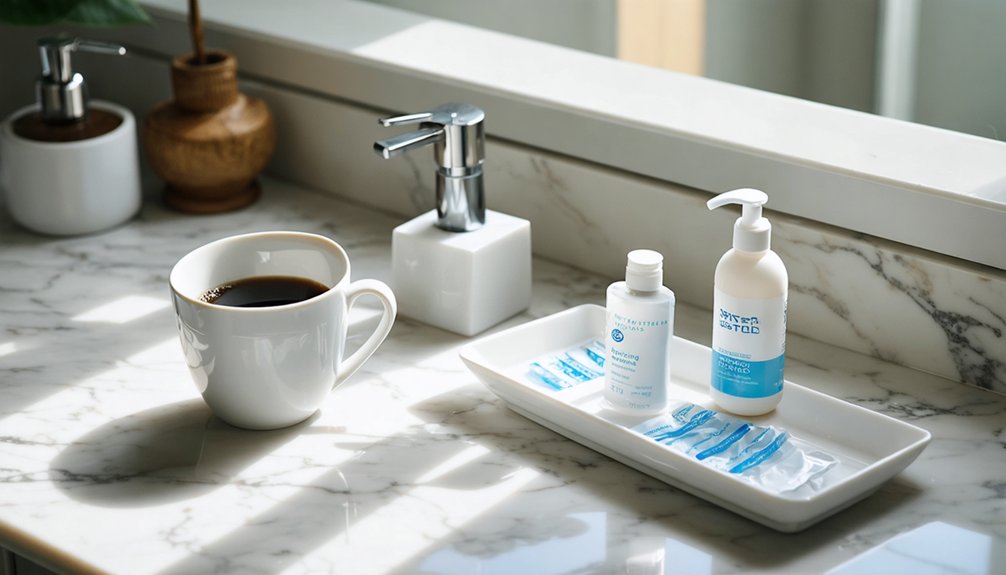
When toothpaste alone isn’t lifting your coffee stains, at-home whitening treatments offer a more targeted step up. Whitening strips are your most reliable option, delivering visible results within two to three weeks when used consistently.
For deeper discoloration, at-home whitening kits with custom trays provide more concentrated treatment than strips alone.
Among popular natural remedies and DIY techniques, a baking soda paste effectively removes surface stains through mild abrasion. Hydrogen peroxide, diluted and used briefly, adds a bleaching component that strengthens results. Activated charcoal appears frequently in DIY techniques, but its evidence base remains weaker than peroxide-based options.
Whichever method you choose, follow product directions precisely. Overuse doesn’t accelerate results—it risks enamel sensitivity and undermines the progress you’re working toward.
When to See a Dentist About Coffee Stains
At-home treatments handle surface-level staining well, but some discoloration runs deeper than strips or baking soda can reach. If your coffee brewing habits span years, pigments may have penetrated beyond the enamel surface, making professional intervention necessary.
See a dentist when OTC whitening produces no visible improvement after consistent use, or when staining reappears rapidly despite strong oral hygiene. A dentist distinguishes between extrinsic and intrinsic discoloration, which directly determines your treatment path.
In-office whitening uses higher-concentration agents that deliver faster, more significant results than anything available over the counter.
Your enamel resilience also matters here. A dentist can identify whether acid exposure from coffee has compromised enamel, adjusting treatment to whiten effectively without causing further structural damage.
Frequently Asked Questions
Can Coffee Staining Affect Dental Veneers or Crowns Differently Than Natural Teeth?
Like armor with a chink, your veneers and crowns aren’t immune—coffee stains their edges and cement lines differently. Veneer durability weakens with pigment buildup, and crown discoloration occurs faster than on natural enamel.
Does the Temperature of Coffee Affect How Quickly Stains Develop?
Temperature isn’t directly addressed in current stain prevention data, but hotter coffee brewing accelerates pigment activity. You’d still benefit most from rinsing immediately after consumption and limiting prolonged sipping to control staining progression effectively.
Are Teeth More Prone to Staining at Certain Ages or Life Stages?
Like a canvas weathered by time, your enamel thins with age, accelerating age-related discoloration. You’re more vulnerable during hormonal shifts too. Lifestyle influences compound this, making proactive whitening habits essential at every stage.
Can Certain Medications Make Teeth More Vulnerable to Coffee Staining?
Yes, certain medications can trigger drug-induced staining and heighten medication interactions with coffee pigments. They’ll dry your mouth, reduce saliva’s protective buffering, and leave your enamel more vulnerable to absorbing tannins and discoloration rapidly.
Does Genetics Play a Role in How Easily Teeth Stain From Coffee?
Yes, your genetic predisposition directly influences how easily coffee stains your teeth. If you’ve inherited thinner or more porous tooth enamel strength, you’ll absorb pigments faster, making consistent preventive habits even more critical for you.
References
- https://www.barniescoffee.com/blogs/blog/a-coffee-lovers-guide-to-whiter-teeth
- https://www.brownroaddental.com/ways-to-remove-coffee-stains-from-your-teeth/
- https://www.healthline.com/health/dental-and-oral-health/what-does-coffee-do-to-your-teeth
- https://www.reddit.com/r/Coffee/comments/ort9jx/coffeestained_teeth/
- https://www.rioranchodentalassociates.com/10-simple-ways-to-avoid-teeth-stains-from-coffee/
- https://dentistinmanvel.com/goodbye-to-coffee-stains-8-effective-methods-to-brighten-your-smile/
- https://oralhealthhq.com/teeth-whitening/coffee-stains/
- https://scienceinsights.org/how-to-whiten-coffee-stained-teeth-7-methods/
- https://thesugarlanddentist.com/blog/whats-the-safest-teeth-whitening-option-for-coffee-drinkers/
- https://www.youtube.com/watch?v=ScCoM0X4AXI