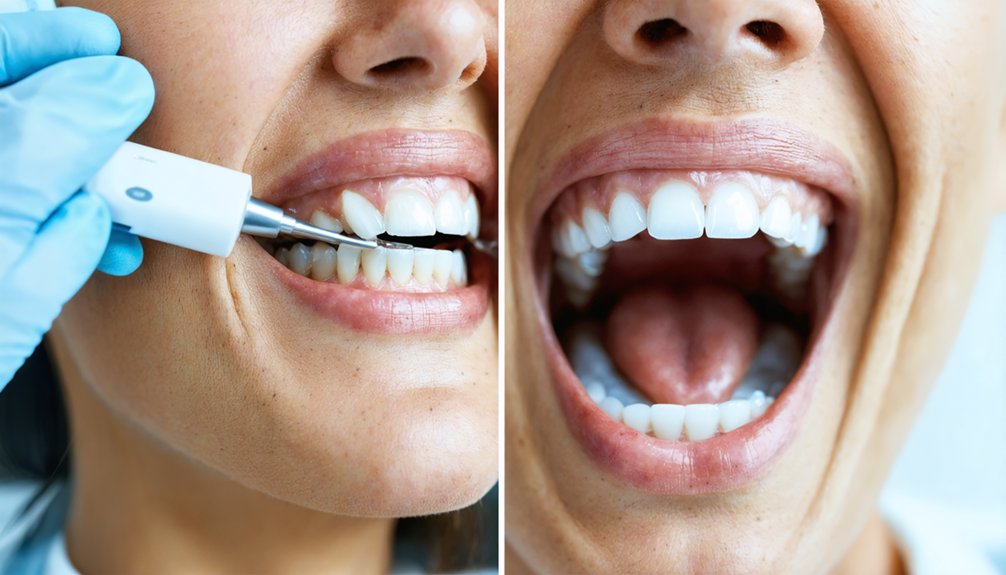
The safest teeth whitening option depends on your dental health, but whitening toothpaste and ADA-accepted whitening strips carry the lowest risk for most people. They use lower peroxide concentrations, which reduces your chances of enamel damage and sensitivity. You should always follow the manufacturer’s instructions and watch for irritation. Custom trays from your dentist offer even more controlled results. Keep going to find out which option best fits your specific situation.
Key Takeaways
- Whitening toothpaste is the mildest and safest option, carrying minimal sensitivity risk compared to other whitening methods.
- ADA-accepted whitening strips provide effective results with manageable sensitivity when used correctly and as directed.
- Custom dental trays from dentists offer controlled peroxide exposure, precise fit, and lower concentration for safer whitening.
- In-office professional whitening is conducted under supervision, making it one of the safest and most effective options.
- Starting with lower peroxide concentrations, around 10% carbamide peroxide, significantly reduces risks of sensitivity and enamel damage.
What Actually Makes a Teeth Whitening Option Safe
When choosing a whitening product, safety comes down to a few concrete factors: the concentration of the active ingredient, how well the product stays off your gums, and whether you’re using it as directed.
Higher peroxide concentrations increase your risk of enamel softening and gum irritation, especially with repeated use.
Higher peroxide concentrations don’t just whiten faster — they raise your risk of enamel damage and gum irritation.
Products that fit poorly or shift during application spread whitening agents onto soft tissue, compromising gum health over time.
Overuse accelerates those risks further.
What reduces risk is straightforward: start with a lower-concentration formula, choose a product designed to stay in place, and follow the instructions exactly.
Protecting your tooth enamel means treating whitening as a controlled process, not a faster-is-better one.
Precision in application and dosage is what separates safe whitening from damaging it.
The Safest Teeth Whitening Options, Ranked
From safest to most aggressive, five whitening options stand out based on evidence, professional oversight, and risk profile. Your choice should match your teeth sensitivity level and your whitening effectiveness goals.
- Whitening toothpaste – Mildest option; minimal sensitivity risk but limited results.
- ADA-accepted whitening strips – Stronger whitening effectiveness than toothpaste; manageable sensitivity when used as directed.
- Dentist-dispensed custom trays – Precise fit reduces gum exposure and supports consistent whitening effectiveness while controlling teeth sensitivity through lower peroxide concentrations.
- In-office professional whitening – Fastest results under direct supervision, with monitored application reducing overexposure risk.
Beyond these four, high-concentration over-the-counter products exist but carry greater risk. If you have existing sensitivity, start lower on this list and move up only with professional input.
How to Whiten Safely at Home Without a Dentist
If you’re whitening at home without a dentist, your first step is choosing a product that carries the ADA Seal of Acceptance, which confirms independent safety and efficacy testing.
Start with a lower-concentration formula—around 10% carbamide peroxide or 3% hydrogen peroxide—especially if you have sensitive teeth.
Once you’ve selected a product, follow the directions exactly, since overuse is one of the most common causes of enamel damage and gum irritation.
Choose ADA-Approved Products
One of the simplest ways to reduce risk when whitening at home is to choose products that carry the ADA Seal of Acceptance. Unlike unverified natural remedies or herbal whitening solutions, ADA-approved products have undergone independent testing for both safety and effectiveness.
When selecting a product, follow this decision framework:
- Confirm the ADA Seal appears on the packaging before purchasing.
- Choose peroxide-based formulas—strips, gels, or trays—over unproven alternatives.
- Select lower concentrations first, especially if you have sensitivity concerns.
- Follow manufacturer directions precisely; overuse increases your risk of enamel damage and gum irritation.
This approach puts measurable criteria in your hands. You’re not guessing—you’re filtering products through a standard that removes much of the uncertainty from at-home whitening.
Start With Lower Concentrations
When starting at home without professional guidance, lower peroxide concentrations reduce your risk of sensitivity and enamel stress. Begin with products containing 10% carbamide peroxide or 3% hydrogen peroxide—these concentrations are well-studied and manageable for most users.
Don’t fall for whitening myths suggesting stronger formulas always produce faster, better results. Higher concentrations increase side effects without always improving outcomes, particularly for sensitive teeth.
Another common dental myth is that more frequent application accelerates whitening safely. It doesn’t. Overuse raises your risk of enamel demineralization and gum irritation.
Start conservatively, follow directions exactly, and monitor how your teeth respond. If sensitivity develops, pause two to three days before resuming.
Lower-strength formulas give you measurable control while reducing unnecessary risk.
Follow Directions Carefully
Following directions exactly is one of the most effective ways to reduce whitening risks at home. Overuse and misuse are leading causes of tooth enamel damage and gum health complications. When you follow the product’s protocol precisely, you stay within the safety margins the formula was tested against.
Keep these four rules consistent:
- Apply only the recommended amount — excess gel increases gum exposure and irritation.
- Never exceed the advised wear time — prolonged contact weakens tooth enamel over time.
- Stick to the suggested treatment frequency — skipping rest days accelerates sensitivity and gum health risks.
- Stop immediately if pain occurs — discomfort signals that your enamel or gums need recovery time.
Discipline with directions is your strongest safeguard.
The Safest Teeth Whitening Products for Sensitive Teeth
If you have sensitive teeth, starting with a lower peroxide concentration—around 10% carbamide peroxide or 3% hydrogen peroxide—reduces your risk of discomfort while still delivering visible results.
Look for formulas that include potassium nitrate, fluoride, or hydroxyapatite, as these ingredients actively support enamel and help calm nerve sensitivity during treatment.
If irritation develops, pause whitening for two to three days and use a desensitizing toothpaste to manage discomfort before resuming.
Lower Peroxide Concentration Options
Tooth sensitivity doesn’t mean you have to skip whitening altogether—it just means starting with a lower peroxide concentration. Ignoring whitening myths about needing high-strength formulas saves your enamel—and your budget. Lower-concentration options also reduce cost considerations since gentler products typically need fewer corrections later.
Follow this protocol:
- Start at 10% carbamide peroxide or 3% hydrogen peroxide—these concentrations minimize sensitivity risk without sacrificing results.
- Use ADA-accepted formulas—the Seal confirms independent safety and efficacy testing.
- Incorporate sensitivity-support ingredients—look for potassium nitrate, fluoride, or hydroxyapatite in the formula.
- Pause treatment for two to three days if sensitivity spikes, then resume.
You’re controlling the process—lower concentration means slower progress, but it protects your enamel long-term.
Sensitivity-Reducing Formula Ingredients
Choosing a whitening product with sensitivity-reducing ingredients gives your enamel a measurable layer of protection during treatment. Look for formulas containing potassium nitrate, which calms nerve response, or fluoride, which reinforces enamel structure during peroxide exposure.
Hydroxyapatite, a compound that mimics natural tooth mineral, has shown short-term whitening effectiveness while supporting remineralization. Xylitol adds another layer of enamel support by discouraging bacterial activity.
Some products now incorporate herbal extracts and natural remedies, though you should verify these carry ADA acceptance before relying on them as your primary sensitivity buffer. Ingredients without independent testing offer less predictable protection.
Prioritize products that combine an established desensitizing agent with a low-concentration peroxide base, giving you both visible whitening results and a controlled, reduced-risk experience for sensitive teeth.
Managing Discomfort During Whitening
Even the right formula with the right ingredients can still produce noticeable sensitivity if you don’t manage the whitening process carefully. Controlling discomfort means adjusting how you use whitening gels, not just which ones you choose.
Follow these steps to stay ahead of sensitivity:
- Start with shorter sessions—don’t exceed recommended wear times, especially during the first week.
- Pause treatment for two to three days if sensitivity spikes, then resume gradually.
- Use desensitizing toothpaste before and after applying whitening gels to reinforce enamel protection.
- Avoid whitening teeth staining foods and cold beverages immediately after treatment, since enamel is temporarily more porous.
Discomfort doesn’t mean you must stop whitening entirely—it means you need tighter process control.
Whitening Risks That Can Damage Teeth Over Time
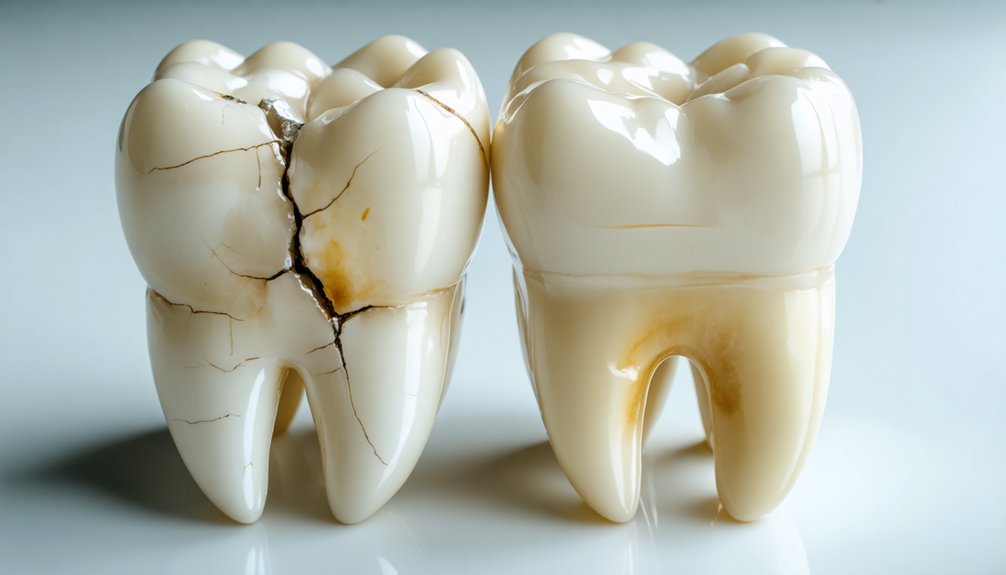
While whitening products are largely safe when used correctly, overuse and high-concentration formulas can cause lasting harm. Repeated bleaching sessions stress enamel at the structural level, contributing to enamel erosion and microcrack formation over time.
Once enamel thins, it doesn’t regenerate, leaving teeth more vulnerable to sensitivity, staining, and decay.
High-concentration peroxide used too frequently can also demineralize enamel, softening its surface and altering its microstructure. Laboratory research confirms that aggressive bleaching cycles compound these risks considerably.
To protect your teeth, you should space out treatments, follow product instructions exactly, and avoid chasing faster results with stronger formulas.
If you have existing restorations, consult your dentist first, since whitening agents can react unpredictably with crowns, sealants, and ceramic work.
When You Actually Need a Dentist for Safer Whitening
Some whitening risks can be managed at home, but others call for a dentist’s involvement before you open any product. Skipping this step increases your exposure to avoidable damage.
See a dentist first if you have:
- Existing crowns, veneers, or restorations that react differently to peroxide
- Significant sensitivity or gum recession that lowers your tolerance for standard formulas
- Active cavities or enamel erosion that make any whitening agent harmful
- An interest in alternative remedies or natural whitening methods with no clinical backing
A dentist can assess your enamel condition, recommend the right concentration, and provide custom trays that limit gum contact. That professional evaluation isn’t optional when your mouth has existing vulnerabilities—it’s the step that makes whitening controllable and predictably safe.
Frequently Asked Questions
Can Teeth Whitening Products Affect Dental Implants or Veneers?
Yes, whitening products can affect veneers and implants differently than natural teeth. You’ll want to verify product compatibility with your dentist to avoid uneven results or dental sensitivity, since restorations don’t respond to peroxide-based treatments.
How Long Do Teeth Whitening Results Typically Last?
Your whitening results typically last six months to two years. You’ll extend whitening longevity by avoiding staining foods and beverages. If you experience dental sensitivity, pause treatment and maintain results with ADA-approved whitening toothpaste regularly.
Is Teeth Whitening Safe During Pregnancy or Breastfeeding?
You should avoid teeth whitening during pregnancy and breastfeeding. Pregnancy safety concerns exist because peroxide absorption risks aren’t fully studied. Breastfeeding concerns are similar—dentists consistently recommend waiting until after you’ve finished nursing before beginning any whitening treatment.
At What Age Is Teeth Whitening Considered Safe for Teenagers?
Teenage safety guidelines generally recommend you wait until age 14–16, once permanent teeth fully erupt. Age considerations matter, so you should consult your dentist before starting any whitening treatment to guarantee enamel development is complete.
Can You Whiten Teeth if You Have Cavities or Gum Disease?
You shouldn’t whiten teeth if you have cavities or gum disease. Address these dental health issues first, as they compromise whitening effectiveness and increase sensitivity risk. Treat underlying conditions before beginning any whitening protocol.
References
- https://www.northeastdentalarts.com/blog/what-is-the-least-damaging-way-to-whiten-your-teeth/
- https://www.forbes.com/sites/forbes-personal-shopper/article/best-teeth-whitening-kit/
- https://www.goodrx.com/conditions/dental-care/is-teeth-whitening-safe
- https://newsnetwork.mayoclinic.org/discussion/mayo-clinic-q-and-a-many-safe-choices-available-to-help-whiten-teeth/
- https://www.gentledental.com/resources/articles/teeth-whitening-products
- https://www.health.com/condition/oral-health/teeth-whitening-kits
- https://health.clevelandclinic.org/is-teeth-whitening-safe
- https://www.webmd.com/oral-health/teeth-whitening
- https://www.healthline.com/health/dental-and-oral-health/best-teeth-whitening