Pregnancy doesn’t directly change your tooth color through hormones alone, but it creates conditions that erode the enamel keeping your teeth bright. Frequent vomiting and acid reflux soften and thin enamel, exposing the yellow dentin underneath. Pregnancy gingivitis adds inflamed, darkened gums that make teeth appear duller by contrast. Reduced oral hygiene compounds the damage. Understanding exactly how each factor works helps you take the right steps to protect your smile.
Key Takeaways
- Pregnancy hormones don’t directly alter tooth color, but reduced oral hygiene and acid exposure can make teeth appear duller and less bright.
- Repeated vomiting and acid reflux soften and erode enamel, exposing yellow dentin and causing increased sensitivity and irregular surfaces.
- Enamel thinning from acid erosion reveals the yellowish dentin beneath, giving teeth a duller, discolored appearance over time.
- Hormonal changes increase gum inflammation, causing swollen, dark red gums that create visual contrast, making teeth appear less bright.
- Using fluoride toothpaste, a soft-bristle toothbrush, and attending routine dental visits helps protect enamel and preserve tooth appearance during pregnancy.
Does Pregnancy Actually Change Your Tooth Color?
Although pregnancy is often blamed for dulling or yellowing teeth, hormonal changes don’t directly alter tooth color. Research shows that pregnancy hormones don’t strip minerals from your enamel.
What actually changes your teeth’s appearance is enamel thinning, which lets the naturally yellow dentin underneath show through more visibly.
Reduced oral hygiene during nausea, acid exposure from vomiting, and surface staining all contribute to a duller smile. If you’re noticing discoloration, addressing the underlying cause matters more than pursuing tooth whitening alone.
Without enamel strengthening and erosion control, cosmetic treatments won’t deliver lasting results.
You have more control over this than you might think. Identifying what’s actually driving the color change allows you to take targeted, effective action rather than guessing.
Why Vomiting and Reflux Are the Biggest Threat to Pregnancy Teeth
If you’re experiencing morning sickness or acid reflux during pregnancy, your teeth face a serious chemical threat. Stomach acid from vomiting contacts your enamel directly, softening and eroding it over time—and the more frequently you vomit, the greater your cumulative risk of permanent enamel loss.
Protecting your teeth after each episode requires specific steps, including rinsing immediately and delaying brushing to avoid abrading acid-weakened enamel.
Acid Erodes Tooth Enamel
When you vomit or experience acid reflux during pregnancy, gastric acid makes direct contact with your tooth enamel. Repeated exposure disrupts enamel regeneration and accelerates dental discoloration. Understanding the damage pattern helps you act precisely.
Acid erosion progresses through four measurable stages:
- Softening – Gastric acid demineralizes enamel surfaces immediately upon contact.
- Thinning – Repeated exposure reduces enamel thickness, exposing yellow dentin underneath.
- Surface wear – Weakened enamel abrades faster, creating dull, irregular edges.
- Increased decay risk – Exposed tooth structure loses its natural protective barrier, raising cavity risk.
Each vomiting episode compounds the previous damage. The more frequently acid contacts your teeth, the less opportunity enamel has to remineralize between exposures.
Vomiting Frequency Increases Risk
Vomiting frequency determines how much cumulative acid damage your teeth sustain throughout pregnancy. Each episode exposes enamel to strong gastric acids, triggering demineralization that compounds with every occurrence.
If morning sickness is frequent or prolonged, erosion progresses faster, leaving enamel thinner, duller, and more vulnerable to decay and sensitivity. This structural breakdown also undermines any interest in dental whitening, since compromised enamel responds poorly to whitening treatments and can sustain further irritation.
Enamel repair becomes harder the longer erosion continues unchecked. You can reduce risk by tracking vomiting episodes, rinsing with water or a baking-soda solution immediately after each episode, and delaying brushing by 30 to 60 minutes.
Controlling frequency and managing acid exposure directly determines how well your enamel survives pregnancy.
Protecting Teeth After Vomiting
Gastric acid from vomiting and reflux is the single greatest structural threat to your teeth during pregnancy. Hormonal influences driving nausea don’t excuse inaction—you can take direct steps to minimize damage.
- Rinse immediately with water or a baking-soda solution to neutralize acid before it continues eroding enamel.
- Delay brushing 30–60 minutes post-vomiting; acid-softened enamel abrades easily under immediate mechanical pressure.
- Apply fluoride toothpaste or rinse during the waiting period to support remineralization of weakened surfaces.
- Pursue diet modifications by limiting acidic beverages and snacks, reducing cumulative acid exposure beyond vomiting episodes.
Each step directly counters the erosion cycle. Combining these protective measures with routine dental monitoring gives you measurable control over enamel preservation throughout pregnancy.
How Pregnancy Gingivitis Changes the Way Your Gums Look
Pregnancy gingivitis can make your gums look noticeably swollen, dark red, and irritated. Hormonal shifts during pregnancy increase your susceptibility to gum inflammation, and declining plaque control worsens it further. These inflammation effects alter your smile’s overall appearance, making teeth look less bright even when enamel itself hasn’t changed.
Gum health directly influences how your teeth are perceived. Deeply red, puffy gum tissue creates visual contrast that dulls your smile’s appearance. Inflamed gums also bleed more easily during brushing, which can discourage thorough cleaning and allow plaque and staining to accumulate.
Gingivitis doesn’t strip calcium from your teeth, but it does signal that bacterial activity is elevated. Maintaining consistent brushing, flossing, and professional cleanings keeps inflammation controlled and preserves both your gum tissue and your smile’s appearance.
Why Enamel Erosion Makes Teeth Look Yellow and Feel Sensitive
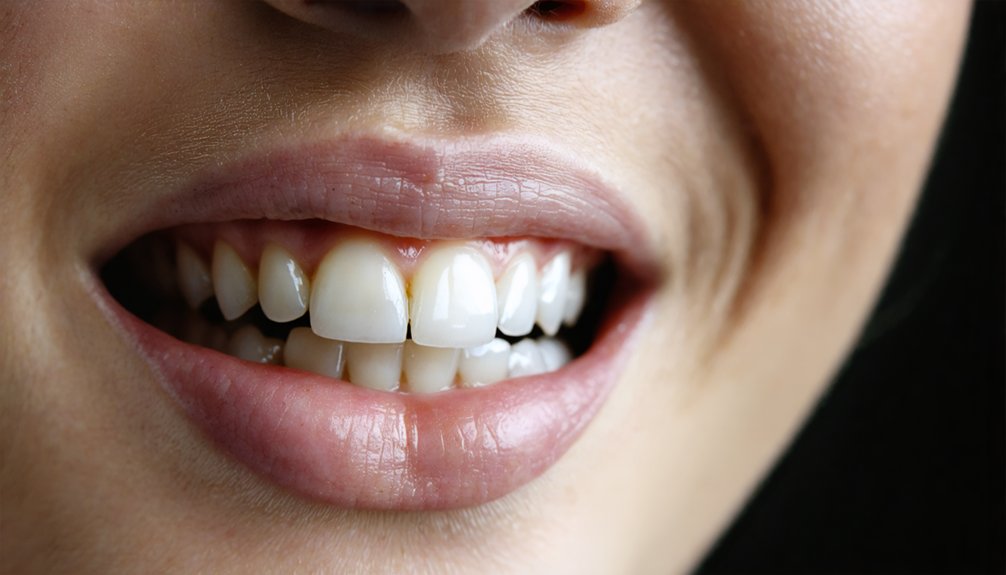
Repeated acid exposure from vomiting or reflux gradually wears away enamel, and as this protective layer thins, the yellowish dentin beneath becomes more visible. Reduced enamel thickness directly affects both appearance and comfort.
Watch for these four signs that dentin exposure is progressing:
- Yellow or dull tone — thinner enamel allows dentin’s natural color to show through more clearly.
- Sensitivity to temperature — exposed dentin responds more intensely to cold, heat, or pressure.
- Irregular or worn edges — eroded surfaces create uneven tooth margins, especially on front teeth.
- Increased decay risk — less enamel means fewer defenses against bacteria and acids.
Recognizing these changes early lets you act before erosion advances further.
How to Protect Your Teeth Immediately After Vomiting
Knowing what erosion looks like is only half the picture—what you do in the minutes after vomiting directly determines how much additional damage occurs. Stomach acid temporarily softens enamel, making it highly vulnerable to abrasion. Brushing immediately strips away that weakened surface layer, accelerating erosion rather than preventing it.
Instead, rinse immediately with water or a baking-soda mouth rinse to neutralize acid and clear residue from tooth surfaces. Wait 30 to 60 minutes before brushing.
Incorporate dental flossing into your routine, but time it appropriately—never force abrasive actions against acid-softened enamel. Use a soft-bristle brush with fluoride toothpaste once the waiting period ends.
These deliberate steps preserve enamel structure and considerably reduce cumulative damage across repeated vomiting episodes throughout pregnancy.
Daily Habits That Protect Enamel Throughout Pregnancy
Building protective daily habits starts with how you respond to vomiting episodes—rinse your mouth immediately with water or a baking-soda solution to neutralize residual acid before it continues eroding enamel.
You should then wait 30 to 60 minutes before brushing, since acid-softened enamel abrades more easily under bristle friction.
When you do brush, use a soft-bristle toothbrush with fluoride toothpaste, which supports remineralization and reinforces the enamel surface against ongoing acid exposure.
Rinsing After Vomiting
After vomiting, rinsing your mouth immediately with water is one of the simplest and most effective steps you can take to protect your enamel. Acid lingers on tooth surfaces and accelerates erosion if left untreated. Prioritizing dental hygiene after each episode directly supports cavity prevention.
Follow these four steps after vomiting:
- Rinse with plain water immediately to dilute and remove stomach acid from tooth surfaces.
- Use a baking-soda rinse (one teaspoon per cup of water) to neutralize remaining acid effectively.
- Wait 30 to 60 minutes before brushing, since acid-softened enamel abrades more easily.
- Brush gently using a soft-bristle brush with fluoride toothpaste to remineralize and protect weakened enamel.
Choosing Protective Toothpaste
Protecting your enamel doesn’t stop once the acid is neutralized—your daily toothpaste choice plays a consistent role in keeping enamel strong throughout pregnancy.
Choose a fluoride toothpaste specifically formulated for sensitivity or enamel protection, as fluoride supports remineralization and reduces further mineral loss.
Avoid herbal remedies marketed as natural alternatives; most lack clinical evidence for enamel protection and some contain acids or abrasives that worsen erosion.
Use a soft-bristle brush with gentle pressure twice daily.
If your dentist recommends dental sealants to shield vulnerable surfaces, toothpaste remains a necessary complement—not a replacement—to that protection.
Prescription-strength fluoride toothpaste may be appropriate if erosion is already visible.
Discuss your current product with your dentist to confirm it matches your specific enamel condition during pregnancy.
When to See a Dentist About Tooth Changes During Pregnancy
Routine dental visits during pregnancy aren’t just safe—they’re recommended. Don’t wait for pain to act. Schedule an appointment if you notice any of the following:
- Increased sensitivity to heat, cold, or brushing—this signals possible enamel erosion requiring evaluation before further damage occurs.
- Visible yellowing or dullness that appeared after frequent vomiting—a dentist can assess whether enamel restoration is appropriate for your stage of pregnancy.
- Bleeding, swollen, or darkened gums that persist despite consistent brushing and flossing.
- Questions about dental whitening—a dentist can clarify which treatments are safe during pregnancy and which to postpone.
Monitoring changes early gives you more options. Untreated erosion and inflammation compound over time, so professional oversight keeps damage within a manageable and treatable range.
Frequently Asked Questions
Can Whitening Treatments Safely Restore Enamel Color Lost During Pregnancy?
Teeth whitening won’t achieve enamel restoration since whitening only alters surface color. If acid erosion thinned your enamel, you’ll need fluoride treatments or dental bonding to rebuild lost structure and protect exposed dentin effectively.
Does Breastfeeding After Pregnancy Continue to Affect Tooth Enamel?
Wondering if breastfeeding benefits come at your teeth’s expense? They don’t directly harm your enamel. However, you must prioritize postpartum dental health by maintaining fluoride use and hydration, as lingering acid exposure from pregnancy remains your primary concern.
Are Some Pregnant Women More Genetically Prone to Severe Enamel Erosion?
Yes, your genetic predisposition can make you more vulnerable to enamel erosion during pregnancy. If you naturally have thinner enamel, frequent vomiting worsens damage faster, so you’ll need more aggressive protective strategies.
Can Pregnancy-Related Dry Mouth Worsen Enamel Damage and Tooth Discoloration?
Studies show saliva production can drop up to 40% during pregnancy. Hormonal fluctuations reduce your mouth’s natural acid-buffering capacity, accelerating enamel erosion and allowing surface stains to penetrate deeper, directly worsening tooth discoloration.
Do Calcium Supplements During Pregnancy Help Prevent Enamel Thinning?
Calcium supplements don’t directly support enamel strengthening because your enamel’s already fully formed. Calcium absorption benefits your baby’s development, but protecting existing enamel requires controlling acid exposure, using fluoride, and maintaining consistent oral hygiene throughout pregnancy.
References
- https://health.adelaide.edu.au/arcpoh/dperu/ua/media/317/caries-control-information-sheet-9.pdf
- https://journalwjarr.com/sites/default/files/fulltext_pdf/WJARR-2025-4292.pdf
- https://pmc.ncbi.nlm.nih.gov/articles/PMC6883753/
- https://www.aafp.org/pubs/afp/issues/2008/0415/p1139.html
- https://www.rdhmag.com/patient-care/rinses-pastes/article/16405982/preventing-dental-erosion-in-the-pregnant-patient
- https://ijrar.org/papers/IJRAR24B1405.pdf
- https://www.dentalhygienist.london/blog/managing-morning-sickness-acid-erosion-during-pregnancy
- https://pregatips.com/pregnancy/pregnancy-nausea-damages-teeth-causes-risks-fixes/articleshow/127561649.cms
- https://www.moh.gov.sa/en/awarenessplateform/WomensHealth/Documents/Dental and Oral Health of Pregnant Women.pdf
- https://pubmed.ncbi.nlm.nih.gov/12418714/