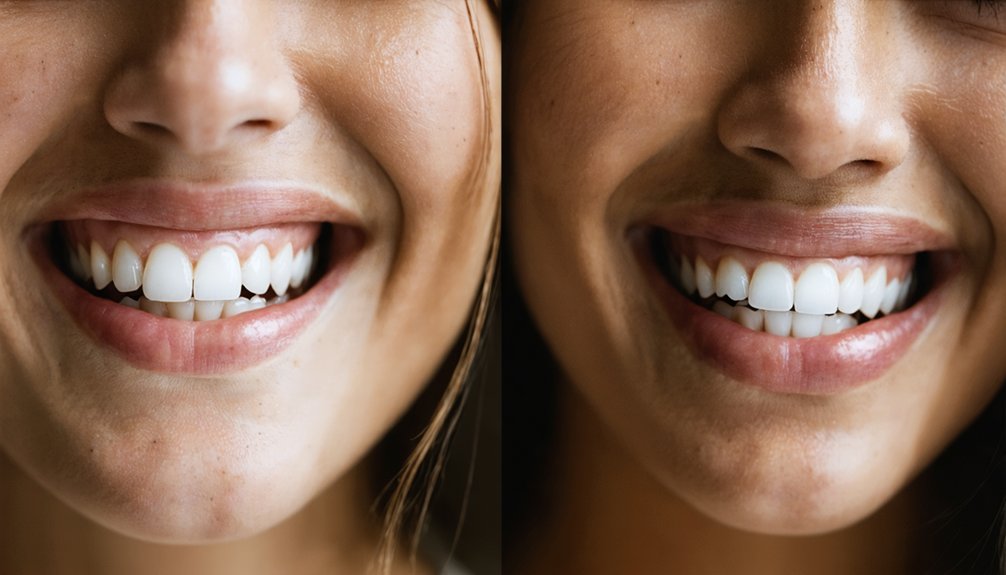
When you whiten your teeth, the changes often go beyond aesthetics. Studies show 95.7% of patients report increased confidence and satisfaction post-treatment. You’re likely to smile more openly, feel less self-conscious socially, and find yourself more motivated to maintain your oral hygiene. Results don’t last forever—satisfaction can decline within a year without maintenance. The real stories behind these outcomes reveal patterns worth knowing before you choose your next step.
Key Takeaways
- 95.7% of patients report feeling more confident and satisfied after whitening, with many smiling more spontaneously in social situations.
- Many patients notice an immediate boost in self-esteem, perceiving visible shade improvements without needing measurement tools.
- Whitening motivates better oral hygiene habits, with patients becoming more conscious of maintaining their newly brightened smiles.
- Social behavior shifts noticeably post-treatment, with patients feeling less self-conscious and more willing to smile openly.
- Confidence peaks shortly after treatment but fades within a year, making regular maintenance essential for sustaining emotional benefits.
The Moment People Knew Teeth Whitening Was Worth It
For many patients, the defining moment comes not during treatment but afterward — catching their reflection and noticing a smile they feel confident showing. That shift in self-perception is well-documented.
A 2024 study reported 95.7% patient satisfaction following professional bleaching, confirming that modern dental technology delivers measurable psychosocial benefits alongside cosmetic results.
You’re not simply responding to a whiter shade. You’re responding to a visible outcome that aligns with your expectations — and that alignment drives satisfaction more than shade change alone.
Cosmetic procedures like whitening work because they give you control over a highly visible feature. When results meet what you anticipated, confidence follows.
That’s the moment most patients describe as the turning point — not the treatment itself, but the reflection that confirms it worked.
What In-Office Whitening Patients Said Right After the Chair
That turning point in the mirror often comes within minutes of leaving the dental chair — and patient-reported responses from in-office whitening reflect exactly that. Research consistently shows in-office treatment delivers the highest immediate satisfaction scores across whitening methods.
In-office whitening delivers the highest immediate satisfaction scores — results patients see and feel within minutes of the appointment.
For dental aesthetics and confidence building, the post-appointment window matters most.
Patients frequently report three immediate responses:
- Visible shade change they can identify without comparison tools
- Heightened awareness of their smile in social interactions
- Stronger motivation to maintain oral hygiene routines
These reactions aren’t incidental. They’re measurable shifts in self-perception tied directly to outcome expectations being met.
When you choose professional treatment, you’re selecting the method most likely to produce a result you can see, feel, and act on immediately.
What Happened When People Tried At-Home Whitening Kits
While in-office treatment dominates satisfaction rankings, at-home whitening kits still deliver strong, research-backed results for most users. In fact, 66% of participants in a 2024 patient-perception study chose home bleaching, and satisfaction remained particularly high across that group.
When you use a carbamide peroxide tray system consistently and follow manufacturer instructions, you can achieve measurable tooth shade improvement over time. Satisfaction tends to rise progressively as results accumulate.
Pairing your whitening routine with solid dental hygiene practices also protects enamel and reduces the risk of sensitivity, which affects roughly one-third of users.
You’re trading immediacy for convenience, not effectiveness. At-home kits give you control over timing and frequency, making them a practical, evidence-supported option when professional treatment isn’t accessible or preferred.
Did the Teeth Whitening Confidence Boost Actually Last?
The confidence boost you feel after whitening is real, but research shows it doesn’t always hold.
Studies indicate that emotional and psychosocial benefits can fade within a year, even when visible whitening remains.
Maintaining your results—and your confidence—often requires ongoing treatment rather than a single session.
Initial Confidence Boost Reality
Confidence after teeth whitening can feel immediate and almost startling, but research suggests it doesn’t always hold at that intensity. Whitening myths often frame results as permanently transformative, yet evidence tells a more measured story. Among the dental myths worth dispelling:
- The emotional lift typically peaks shortly after treatment.
- Satisfaction scores can decline within a year, even when whitening remains visibly effective.
- Expectations, not just shade change, strongly drive how long that confidence persists.
You’re not failing if the initial high fades — you’re experiencing a documented pattern.
Controlling that outcome means scheduling maintenance treatments before noticeable fading occurs and setting realistic expectations upfront. Understanding this cycle lets you plan strategically rather than react emotionally when the initial boost naturally settles.
Long-Term Whitening Results
Research confirms what many patients quietly discover: that initial confidence surge doesn’t always hold its ground over time. Satisfaction scores decline as whitening fades, even when results remain clinically visible. You’re not imagining the shift — your perception adjusts, and the emotional lift recalibrates accordingly.
Age considerations matter here. Older patients often experience faster re-staining due to accumulated dentin changes and enamel wear, making maintenance cycles shorter and more frequent. Younger patients may sustain results longer but aren’t immune to regression.
One persistent dental myth is that whitening results are permanent. They aren’t. Without maintenance, most outcomes fade within months to a year. Understanding this upfront lets you manage expectations, schedule timely touch-ups, and retain the psychosocial benefits that made whitening feel worthwhile in the first place.
How Whitening Changed the Way People Smile in Public

Once tooth color visibly improves, patients frequently report smiling more openly and feeling less self-conscious in social settings. Research links visible shade change to measurable psychosocial benefits, disproving common dental myths that cosmetic outcomes are purely superficial. Whitening myths often minimize these real behavioral shifts, but patient-reported outcomes consistently show otherwise.
You may notice these changes first:
- Smiling more spontaneously in professional or social interactions
- Feeling less inclined to cover your mouth when laughing
- Engaging more confidently in close-contact conversations
These behavioral shifts aren’t accidental. They reflect improved self-image tied directly to a visible change you controlled. Satisfaction remains highest when treatment meets realistic expectations, making informed product selection and professional guidance essential to sustaining both your results and your renewed willingness to smile publicly.
How People Handled Tooth Sensitivity After Whitening
Tooth sensitivity is one of the most commonly reported side effects after whitening, affecting more than a third of patients in some clinical studies.
You may notice sharp, transient discomfort triggered by temperature changes or air exposure, typically within the first 24 to 48 hours post-treatment.
Understanding which products helped real patients manage that sensitivity—and what practical steps they took—can help you navigate the same experience more confidently.
Sensitivity Symptoms They Noticed
While whitening can deliver striking cosmetic results, sensitivity is a common trade-off you should prepare for. Research shows 36.4% of previously treated patients report postoperative hypersensitivity.
Recognizing specific symptoms helps you stay in control of your experience.
Patients most commonly report:
- Sharp, transient pain triggered by cold beverages or food — directly tied to diet habits during and after treatment.
- Generalized tooth aching between whitening sessions.
- Mild gingival irritation, particularly when trays aren’t properly fitted.
These symptoms are typically short-term, but they can affect your oral hygiene routine if brushing becomes uncomfortable. You should monitor symptom intensity and duration carefully.
If sensitivity persists beyond 48 hours or escalates, consult your dental provider before continuing treatment to avoid compounding enamel vulnerability.
Products That Eased Discomfort
Sensitivity doesn’t have to derail your whitening plan. Several targeted products help you manage discomfort without abandoning your results.
Potassium nitrate toothpaste, applied before and after treatment, reduces nerve excitability and lowers sensitivity intensity.
Fluoride gels remineralize enamel, counteracting temporary demineralization linked to peroxide-based bleaching agents.
If you’re using a tray system, you can apply a desensitizing gel directly into the tray between whitening sessions.
Maintaining strong dental hygiene during treatment matters. Use a soft-bristled brush, avoid acidic foods for 24 hours post-treatment, and stay consistent with your protocol.
These steps protect your enamel while preserving your cosmetic confidence.
Choosing clinically supported products and following manufacturer instructions keeps side effects manageable, letting you stay on track toward the smile outcome you’re working for.
Tips From Real Patients
Real patients who’ve gone through whitening treatments offer practical insight that clinical instructions alone don’t always capture. Managing teeth discoloration and sustaining results requires deliberate dental maintenance. Those with first-hand experience consistently highlight three strategies:
- Time your treatment — Schedule whitening sessions before bed to reduce daytime sensitivity exposure.
- Use desensitizing products proactively — Apply potassium nitrate or fluoride toothpaste two weeks before starting, not after sensitivity begins.
- Control your diet strictly post-treatment — Avoid chromogenic foods and acidic beverages for at least 48 hours to protect results.
Patient-reported outcomes confirm that adherence to these habits correlates with higher satisfaction and longer-lasting whitening.
You maintain greater control over both comfort and outcome when you treat the process as structured, ongoing dental maintenance rather than a single procedure.
Why So Many People Whiten Their Teeth More Than Once
Repeat whitening is common, and the data reflect why. One 2024 study found that 33% of participants had bleached before, confirming that many people return for additional treatment. Results fade. Diet habits involving coffee, tea, wine, and pigmented foods gradually re-stain enamel, making maintenance necessary rather than optional.
Some patients also return because they’ve corrected dental myths — believing one treatment produces permanent results. It doesn’t. Whitening isn’t a fixed outcome; it’s a managed process. If you want sustained results, you need a structured maintenance plan, whether that’s periodic in-office sessions or supervised at-home trays.
Satisfaction scores remain high among repeat users, which suggests the outcome continues to justify the effort. Knowing this upfront helps you set accurate expectations and stay in control of your results.
What Patients Wish They Had Known Before Choosing a Whitening Treatment
Managing expectations around repeat whitening is straightforward once you understand how results fade — but knowing what to expect before your first treatment is a different challenge entirely.
First-time whitening expectations are the hardest to set — because you don’t yet know what fading even looks like.
Dental myths and pricing considerations routinely mislead first-time patients, creating dissatisfaction that better information could prevent.
Before committing to any whitening method, confirm these evidence-based realities:
- Sensitivity affects roughly 36% of patients post-treatment — plan accordingly.
- Pricing considerations vary considerably; in-office treatment costs more but consistently delivers superior, faster results.
- Dental myths about OTC products overpromise outcomes — supervised treatments outperform them in satisfaction scores.
Satisfaction correlates strongly with realistic expectations, not just shade change.
You control your outcome by selecting the right treatment tier, following instructions precisely, and understanding that maintenance determines how long your results last.
How Patients Describe Life After Teeth Whitening
Once treatment ends, most patients describe a consistent pattern: they smile more often, feel more socially comfortable, and report improved self-image. Research supports this, linking visible color change in dental aesthetics to improved psychosocial outcomes and oral health-related quality of life.
Confidence building tends to follow quickly. You may find yourself engaging more openly in social and professional settings, no longer concealing your smile.
One 2024 study reported 95.7% patient satisfaction post-bleaching, reflecting how strongly outcomes align with expectations when treatment is well-chosen and properly executed.
However, the emotional lift isn’t always permanent. As whitening fades, satisfaction can gradually decline. Recognizing this pattern lets you plan maintenance strategically, sustaining both the aesthetic result and the confidence that comes with it.
Frequently Asked Questions
Can Teeth Whitening Affect Existing Dental Work Like Crowns or Veneers?
Whitening won’t damage crowns or veneers, but it won’t lighten them either. You’ll face dental material compatibility mismatches and veneer discoloration risk if natural teeth whiten beyond your restorations’ original shade. Consult your dentist first.
How Soon After Whitening Can You Eat Normally Without Staining Risks?
After whitening, you’ll want to follow diet restrictions for 48 hours to minimize staining risks. Avoid pigmented foods and drinks during this window, as your enamel remains more porous and vulnerable to discoloration immediately post-treatment.
Is Teeth Whitening Safe During Pregnancy or While Breastfeeding?
You shouldn’t whiten during pregnancy or breastfeeding. There’s insufficient safety data, so dentists recommend postponing treatment. Prioritize dental hygiene instead, and if you experience tooth sensitivity, consult your provider before resuming any whitening protocol postpartum.
Does Whitening Work Equally Well on All Natural Tooth Shades?
Whitening effectiveness varies across natural shades. You’ll typically see stronger results if your teeth are yellow-toned. Gray or brown discoloration responds less predictably, so managing your expectations and consulting a professional before treatment helps you achieve the best possible outcomes.
How Much Does Professional Teeth Whitening Typically Cost Compared to OTC?
Like night and day, professional whitening’s cost comparison reveals a stark gap: you’ll typically spend $300–$1,000 in-office versus $20–$100 OTC. Price factors include treatment type, provider expertise, and your geographic location.
References
- https://pubmed.ncbi.nlm.nih.gov/38869835/
- http://repositorio.ucsg.edu.ec/handle/3317/23627?locale=en
- https://pmc.ncbi.nlm.nih.gov/articles/PMC12563559/
- https://www.news-medical.net/news/20250812/Personality-predicts-who-stays-happy-with-a-smile-after-teeth-whitening.aspx
- https://www.sciencedirect.com/science/article/pii/S0020653924005665
- https://iadr.abstractarchives.com/abstract/17iags-2640638/satisfaction-analysis-of-patients-undergoing-whitening-a-double-blind-randomized-clinic
- https://www.xjenza.org/ISSUES/4/101.pdf
- https://repositorio.ucp.pt/bitstream/10400.14/46162/4/203677900.pdf
- https://iadr.abstractarchives.com/abstract/afrmde05-70907/patient-perceptions-of-the-results-of-tooth-whitening-procedures
- https://pmc.ncbi.nlm.nih.gov/articles/PMC4058574/