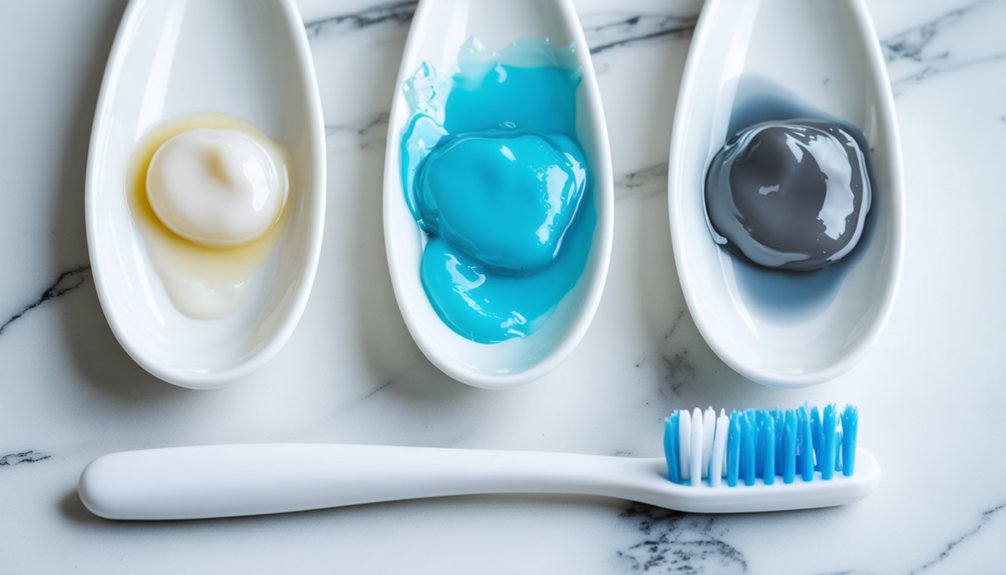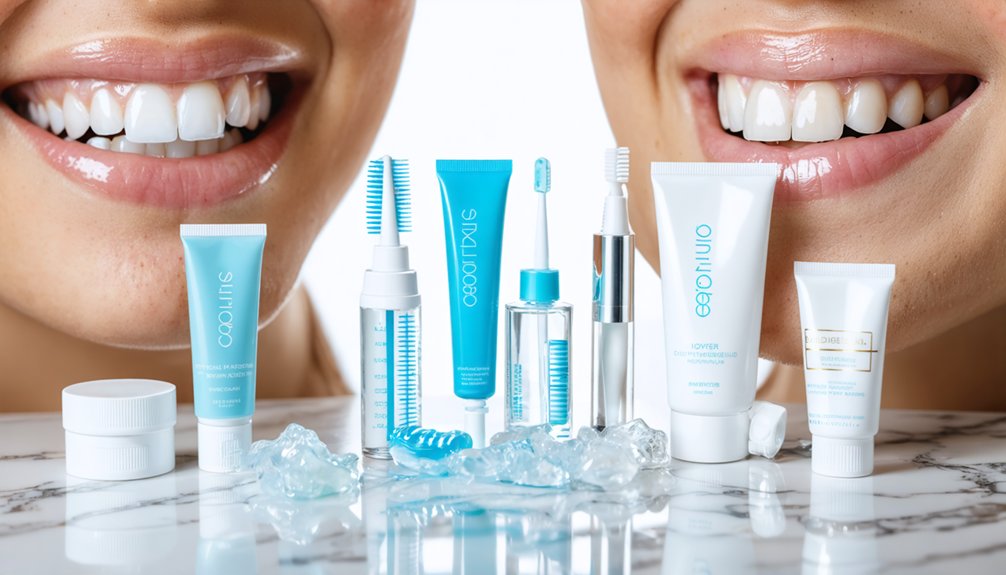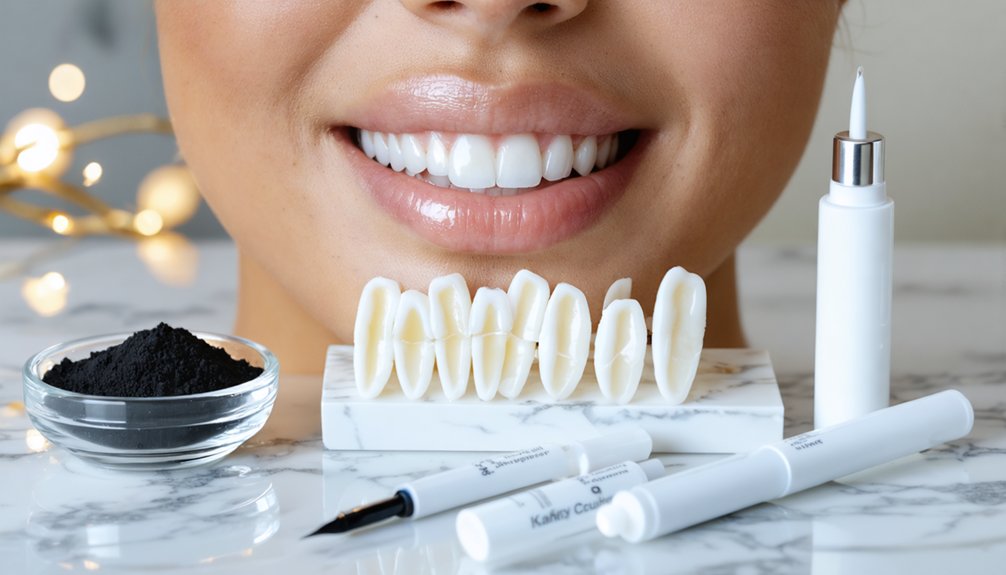
For enamel-safe whitening, you’ll get the best results by matching the product to your stain type. Surface stains from coffee or tea respond well to ADA-accepted whitening strips or low-abrasivity toothpaste. Deeper discoloration requires peroxide-based gels and custom trays. Avoid acidic DIY remedies and overuse, as both accelerate enamel erosion. Always verify the ADA Seal before purchasing. The sections ahead break down every effective option by stain type, safety profile, and clinical evidence.
Key Takeaways
- ADA Seal of Acceptance is the most reliable indicator of safe, effective whitening products; avoid unverified “enamel-safe” marketing claims.
- Whitening strips used as directed effectively remove surface stains from coffee, tea, and tobacco without significant enamel damage.
- Low-abrasivity whitening toothpaste (RDA below 70) safely addresses mild surface stains while preserving enamel integrity.
- Peroxide-based gels with properly fitted trays provide targeted whitening for deeper discoloration with minimal gum exposure.
- Acidic DIY remedies like lemon juice accelerate enamel erosion; always choose clinically recognized products and follow instructions strictly.
Why Teeth Turn Yellow and What Whitening Can Actually Fix
Teeth yellow for different reasons, and the cause matters more than most people realize when choosing a whitening approach. Surface stains from coffee, tea, wine, and tobacco respond well to peroxide-based strips, gels, or professional cleaning.
Deeper yellowing tied to aging or disrupted tooth mineralization during development is harder to reverse and often requires stronger peroxide treatment under dental supervision.
You also need to contemplate what whitening can’t fix. Enamel erosion changes tooth structure permanently, and thinned enamel can make underlying dentin more visible, creating a yellow appearance that no whitening product corrects.
Identifying your specific cause first helps you select a targeted solution rather than wasting time on products that won’t address your actual problem.
The Enamel-Safety Labels and Certifications That Actually Matter
When shopping for whitening products, the ADA Seal of Acceptance is the most reliable indicator you’ll find on store shelves. It signals that a product has met independently verified standards for both safety and effectiveness. Don’t let marketing language substitute for this credential.
Whitening misconceptions often arise from packaging terms like “enamel-safe” or “dentist-recommended,” which carry no standardized regulatory definition. These phrases aren’t certifications—they’re claims.
Marketing terms like “enamel-safe” aren’t certifications—they’re unregulated claims designed to sell products.
To protect against enamel erosion, look specifically for low-to-moderate peroxide concentrations paired with ADA recognition. Products lacking third-party verification give you less control over actual safety outcomes.
If you’re choosing a higher-strength system, professional supervision functions as an additional safeguard. Credentials and clinical oversight aren’t optional extras—they’re your most precise tools for minimizing risk.
Whitening Habits That Damage Enamel
When you use whitening products more often or longer than directed, you raise your risk of enamel erosion and microstructural damage that wouldn’t occur with label-compliant use.
Acidic DIY remedies—like lemon juice or undiluted vinegar—actively break down enamel rather than lift stains, making them among the least safe choices available.
You can avoid both risks by sticking strictly to instructed wear times and skipping any acid-based approach entirely.
Overuse Risks Enamel
How you use a whitening product matters as much as which one you choose. Exceeding recommended wear times or application frequency doesn’t accelerate results—it accelerates enamel erosion. Peroxide penetrates enamel at a controlled rate, and overexposure disrupts that balance, increasing the risk of microcrack formation and structural weakening over time.
Current evidence confirms that consumer-level whitening is safe when you follow label directions precisely. The problems arise when you don’t. Using strips daily beyond the instructed cycle, layering multiple whitening products simultaneously, or ignoring sensitivity signals all raise your risk profile significantly.
You control the outcome. Treat the dosing schedule as non-negotiable, not a suggestion. Responsible use preserves both your results and your enamel integrity long-term.
Acidic Remedies Cause Damage
Overuse isn’t the only enamel threat worth addressing—what you put on your teeth matters just as much as how often you apply it.
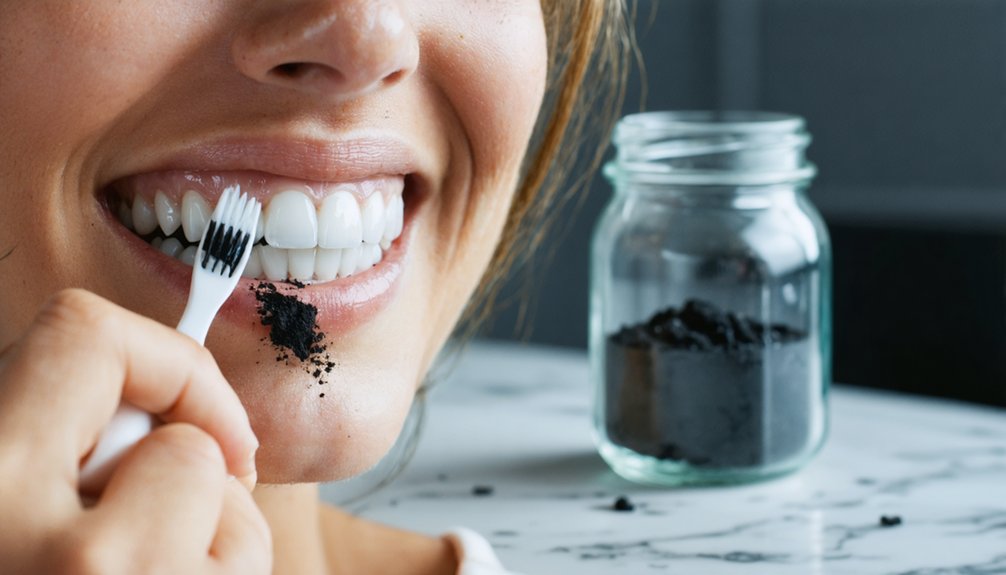
Acidic reactions from DIY remedies like lemon juice, apple cider vinegar, or activated charcoal paste accelerate enamel erosion by lowering surface pH below safe thresholds.
Unlike formulated peroxide products, these substances lack buffering agents that protect enamel microstructure during application.
Once erosion begins, it’s irreversible—no whitening result justifies that trade-off.
Applying drugstore hydrogen peroxide directly, without a stabilized formulation, carries similar risk.
You’re better served by ADA-recognized products engineered to whiten without compromising structural integrity.
If a remedy sounds natural or simple, verify its pH profile before applying it to a surface you can’t rebuild.
Best Whitening Strips for Yellow Teeth
Whitening strips remain one of the most well-supported at-home options for addressing yellow teeth, particularly when they’re peroxide-based and used exactly as directed. Clinical reviews consistently show no significant alteration to enamel microstructure when you follow label guidelines, which counters common whitening myths suggesting strips are inherently damaging.
The primary risk of enamel erosion arises from overuse or extended wear times, not from compliant use of consumer-grade peroxide strips. You’ll want to prioritize products carrying the ADA Seal of Acceptance, as these meet established benchmarks for both safety and effectiveness.
Expect temporary sensitivity as the most likely side effect. Surface stains from coffee, tea, or tobacco typically respond well, while deeper yellowing may require professional-strength intervention beyond what strips alone can deliver.
Best Whitening Gels and Trays for Deeper Discoloration
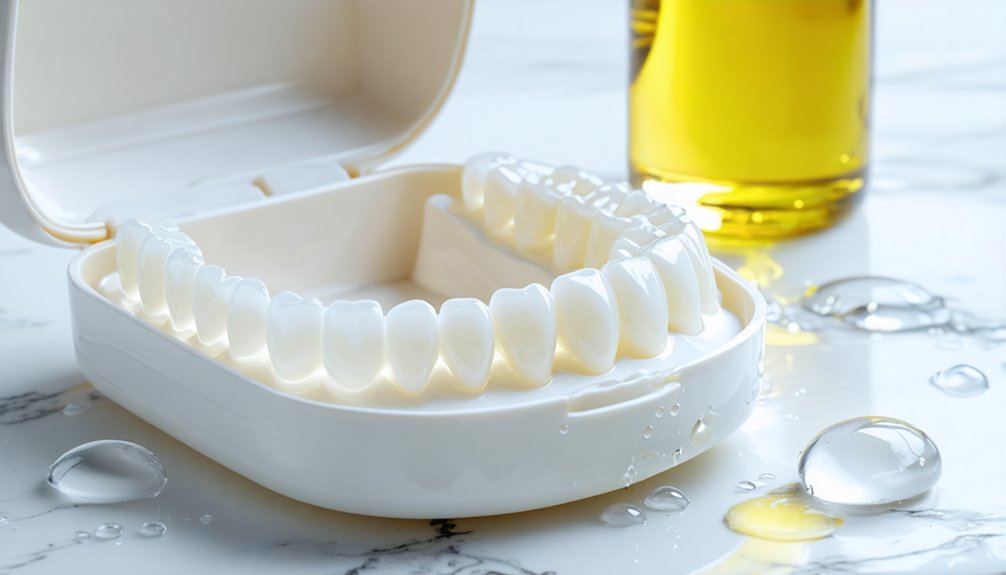
For deeper discoloration that strips can’t fully address, whitening gels and trays offer a more sustained and targeted peroxide delivery method. Neutral pH carbamide peroxide systems deliver regulated concentrations directly against tooth surfaces, making them more effective against stubborn intrinsic yellowing.
Used correctly, they don’t cause enamel erosion—a concern often amplified by whitening myths circulating online.
You’ll want to prioritize trays with precise fits, either custom-made by your dentist or well-fitted over-the-counter versions, since ill-fitting trays concentrate gel against gum tissue unnecessarily.
Follow label exposure times strictly; extended wear increases sensitivity risk without improving outcomes.
Products carrying the ADA Seal of Acceptance provide an additional evidence-based benchmark for both safety and efficacy, giving you reliable control over your whitening protocol.
Best Whitening Toothpaste for Mild Yellow Stains
If your yellowing is mild and mostly tied to surface stains, a low-abrasivity whitening toothpaste is often your most enamel-friendly starting point.
You’ll want to check the Relative Dentin Abrasivity (RDA) score—options scoring below 70 remove staining efficiently without the enamel-wearing risk of harsher formulas.
Clinical evidence supports these products for lifting coffee, tea, and tobacco stains from the outer surface, though they’re less effective against deeper intrinsic discoloration.
Low-Abrasivity Toothpaste Options
When mild surface stains from coffee, tea, or wine are the main concern, low-abrasivity whitening toothpaste is often the most enamel-friendly starting point. Aggressive scrubbing accelerates enamel erosion, making abrasivity a critical variable you should control.
Look for these evidence-supported markers when selecting a product:
- Low RDA score (Relative Dentin Abrasivity below 70) to minimize structural wear
- ADA Seal of Acceptance confirming verified safety and efficacy claims
- Peroxide-based formula for addressing tooth staining beyond surface-level abrasion
- Fluoride inclusion to reinforce enamel integrity during the whitening process
Using a low-abrasivity toothpaste consistently, combined with rinsing after stain-causing beverages, gives you a sustainable, controlled approach to managing mild discoloration without compromising enamel structure.
Surface Stain Removal Effectiveness
How well a whitening toothpaste removes surface stains depends largely on its mechanism—whether it relies on abrasion, chemical action, or both.
If you’re targeting coffee, tea, or wine discoloration, peroxide-based formulas outperform purely abrasive options because they lift pigment chemically rather than scrubbing it away. Excessive abrasion accelerates enamel erosion over time, undermining any cosmetic gain you’re working toward.
You’ll want to prioritize products that balance stain removal with tooth remineralization support—look for added fluoride or hydroxyapatite, which help restore mineral density while the whitening agents do their work.
ADA-recognized low-abrasivity formulas consistently show the strongest safety profile for daily use.
For deeper yellowing, however, toothpaste alone won’t deliver meaningful results, and peroxide strips or professional cleaning become the more effective, evidence-backed choices.
When to Choose Professional Whitening Over At-Home Products
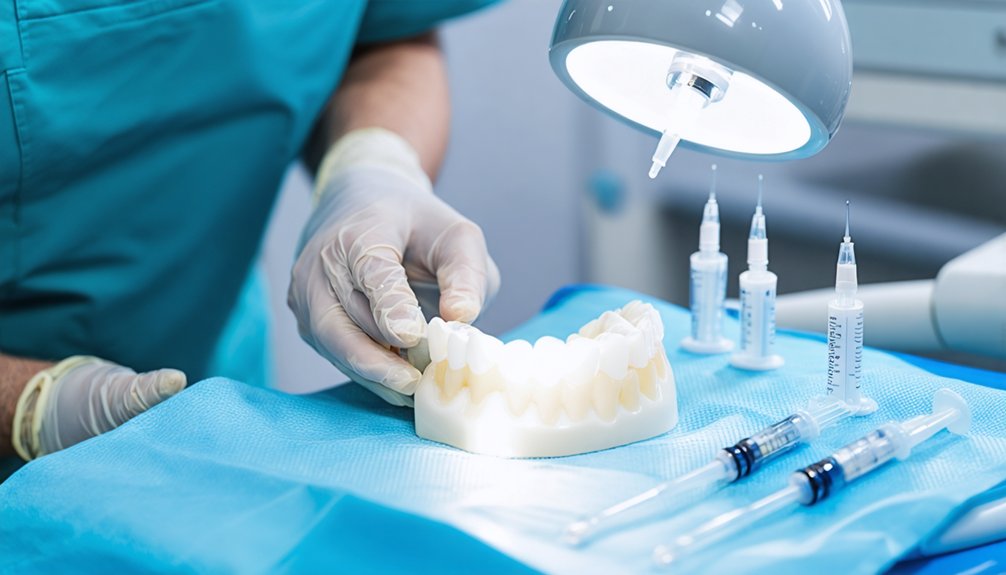
Though at-home whitening strips and trays handle mild surface staining well, deeper or more persistent yellowing often calls for professional intervention. Don’t let teeth whitening myths about natural remedies steer you toward ineffective solutions when clinical-grade treatment delivers measurable results.
Choose professional whitening when you experience:
- Severe intrinsic discoloration that low-concentration peroxide can’t adequately address
- Existing dental restorations like crowns or sealants requiring supervised management to avoid uneven results
- Persistent sensitivity that makes standard consumer products difficult to tolerate safely
- Previous overuse of at-home products where professional assessment helps you reset safely
Dentist-supervised whitening gives you higher-strength peroxide with controlled application, reducing your risk of enamel erosion and soft-tissue irritation while maximizing your whitening outcome precisely and efficiently.
Sensitivity and Gum Irritation: What’s Normal and What’s Not
Whether you opt for professional whitening or an ADA-recognized at-home product, you’ll likely encounter some degree of tooth sensitivity or gum irritation during treatment—and that’s expected. Whitening ingredients like hydrogen peroxide and carbamide peroxide temporarily increase tooth enamel permeability, triggering sensitivity that typically resolves within 24 to 48 hours after treatment ends.
Mild gum irritation from tray contact or strip edges is similarly normal and short-lived. What isn’t normal: persistent sensitivity lasting several days, significant gum inflammation, or visible tissue damage. These signs indicate misuse, excessive concentration, or prolonged wear time—all controllable variables.
To minimize risk, follow label directions precisely, reduce application frequency if sensitivity escalates, and consider lower-concentration carbamide peroxide systems if your baseline sensitivity is already high.
Frequently Asked Questions
Can Whitening Products Affect Dental Crowns, Veneers, or Sealants?
Yes, whitening products won’t change the color of crowns, veneers, or sealants due to dental material compatibility limits. They can aid surface stain removal on natural teeth, creating shade mismatches you’ll want to discuss with your dentist.
How Long Do Whitening Results Typically Last Before Retreatment Is Needed?
Studies show results last 6–12 months before you’ll need retreatment. Your whitening longevity depends on diet and habits. Manage dental sensitivity by choosing lower concentrations, and you’ll extend results while maintaining control over your whitening schedule.
Is Teeth Whitening Safe During Pregnancy or While Breastfeeding?
You should avoid whitening during pregnancy or breastfeeding. Evidence supporting safety is insufficient, and dental sensitivity risks remain unquantified. Opt for natural remedies like professional cleaning to maintain control over your oral health safely.
At What Age Is It Safe to Start Using Whitening Products?
Most dentists recommend you wait until age 16, when permanent teeth have fully developed. Starting earlier raises your risk of tooth sensitivity and other whitening side effects, as developing enamel responds less predictably to peroxide exposure.
Can Diet Changes Alone Prevent Yellow Teeth Without Using Whitening Products?
Diet impact alone can’t fully prevent yellow teeth, but you can slow discoloration considerably. Avoid staining foods, rinse after consuming them, and don’t rely on natural remedies—they lack the clinical evidence peroxide-based whitening carries.
References
- https://downloads.regulations.gov/FDA-2009-P-0566-0003/attachment_1.pdf
- https://www.dm.af.mil/Media/Article-View/Article/314209/teeth-whitening-update/
- https://ada.org.au/policy-statement-2-2-8-teeth-whitening-bleaching-by-persons-other-than-dental-practitioners
- https://learn.thedentalprotocol.com/guide/how-to-get-rid-of-yellow-teeth
- https://pmc.ncbi.nlm.nih.gov/articles/PMC4058574/
- https://adanews.ada.org/huddles/experts-weigh-in-on-teeth-whitening/
- https://pubmed.ncbi.nlm.nih.gov/11908348/
- https://www.aspendental.com/dental-care-resources/is-it-safe-to-whiten-your-teeth-with-hydrogen-peroxide/
- https://www.gale.care/health/is-teeth-whitening-safe-for-enamel
- https://www.elevatedentalmo.com/is-teeth-whitening-safe-on-tooth-enamel/