Baking soda paste, diluted hydrogen peroxide rinses, and strawberry pulp can lift wine stains from your teeth by targeting the tannins and chromogens embedded in enamel. You’ll want to wait 30–60 minutes after drinking wine before brushing, since acids temporarily soften enamel and make it vulnerable. Avoid lemon juice and overusing abrasives, as both accelerate erosion. Each remedy carries specific guidelines worth following carefully to protect your enamel while achieving real results.
Key Takeaways
- Mix 1 tsp baking soda with 2 tsp water to create a paste that lifts surface wine stains effectively.
- Dilute 3% hydrogen peroxide to 1.5% with equal parts water and rinse for one minute to break down pigments.
- Apply strawberry pulp to teeth for mild stain removal, but rinse immediately afterward to prevent sugar damage.
- Rub orange or kiwi peels on teeth to utilize their natural enzymes for gentle stain removal.
- Avoid lemon juice despite its whitening reputation, as it rapidly erodes tooth enamel and worsens staining long-term.
Why Wine Stains Your Teeth in the First Place
Wine contains tannins, chromogens, and acids that work together to permanently embed pigment into your tooth enamel.
Wine tannins bind to proteins on your enamel surface, creating a sticky layer that traps color-producing chromogens. Your enamel’s natural tooth porosity accelerates this process — the more porous your enamel, the deeper pigment penetrates.
Acids in wine temporarily soften enamel, widening those microscopic pores and making stain absorption worse.
Red wine delivers the heaviest pigment load, but white wine’s high acidity primes your enamel for staining from other foods and beverages consumed afterward.
You can’t eliminate wine’s staining chemistry, but understanding it gives you an advantage.
Knowing when and how stains form lets you intervene early, before discoloration becomes difficult to reverse.
Which Kitchen Remedies Actually Remove Wine Stains
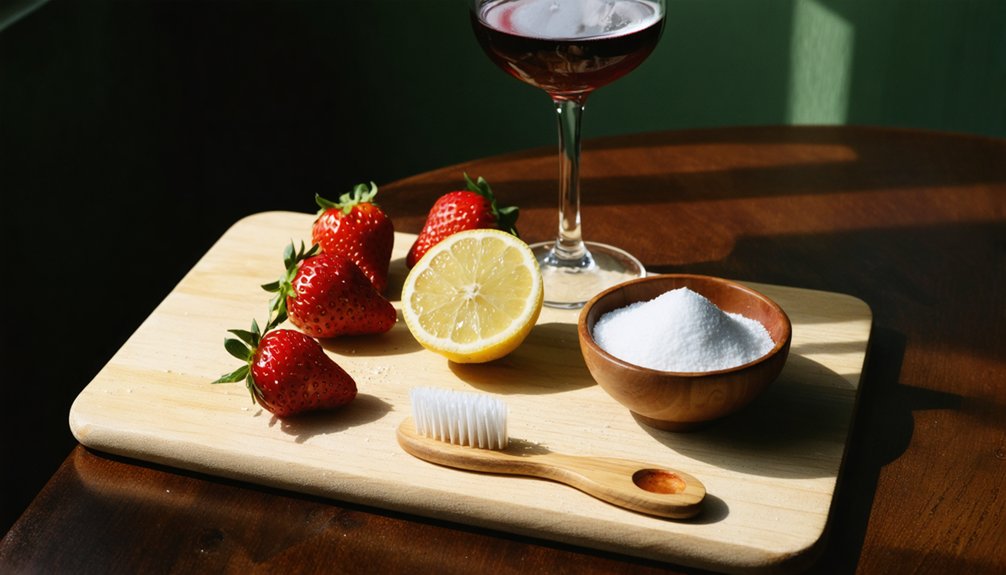
Several kitchen staples carry legitimate whitening potential, but the evidence behind them varies widely. For natural remedies, baking soda offers the strongest support. You can mix one teaspoon with two teaspoons of water, then brush gently for two minutes to lift surface stains.
Hydrogen peroxide diluted to 1.5% works as a rinse, breaking down pigment compounds left by wine tannins.
Strawberry pulp contains malic acid, which supports mild stain removal when rubbed on teeth for one minute. However, its sugar content demands an immediate water rinse afterward.
Orange and kiwi peels offer similar enzymatic action.
Avoid lemon juice entirely. Its acidity erodes enamel faster than wine itself.
Stick to remedies with measurable concentrations and limit abrasive applications to twice weekly.
How to Use Hydrogen Peroxide Safely to Remove Wine Stains
Hydrogen peroxide stands out among kitchen remedies as one of the more reliable options, but concentration and technique determine whether it helps or harms.
Hydrogen peroxide can help or hurt your teeth — concentration and technique make all the difference.
For hydrogen peroxide safety, dilute a 3% solution to 1.5% by mixing equal parts peroxide and water. Rinse your mouth with this 50:50 mix for one minute, then spit completely.
For more targeted stain removal techniques, combine one tablespoon of baking soda with two tablespoons of hydrogen peroxide to form a mild abrasive paste. Brush gently for two minutes, twice weekly. Exceeding this frequency risks enamel erosion.
Never combine hydrogen peroxide with lemon juice or activated charcoal, as the combination accelerates enamel damage.
If sensitivity develops, discontinue use immediately and consult your dentist before resuming any peroxide-based treatment.
Do Whitening Strips and Charcoal Remove Wine Stains?
Both whitening strips and activated charcoal can address wine stains, but they carry distinct risks you’ll need to weigh carefully. Whitening strips containing carbamide peroxide deliver measurable results when applied daily for 30 minutes over two weeks. However, consult your dentist before starting, since improper use can compromise gum tissue.
Activated charcoal functions differently among natural remedies—you dip a wet toothbrush into the powder and brush gently for two minutes. Limit use to twice weekly, as excessive abrasion erodes enamel irreversibly.
Neither option replaces professional treatments, which offer controlled concentrations and supervised application. If sensitivity develops or staining persists beyond two weeks, discontinue home use immediately and schedule a professional cleaning.
Prioritizing enamel integrity over rapid whitening protects your long-term dental health.
Brushing Habits That Prevent Wine Stains From Returning
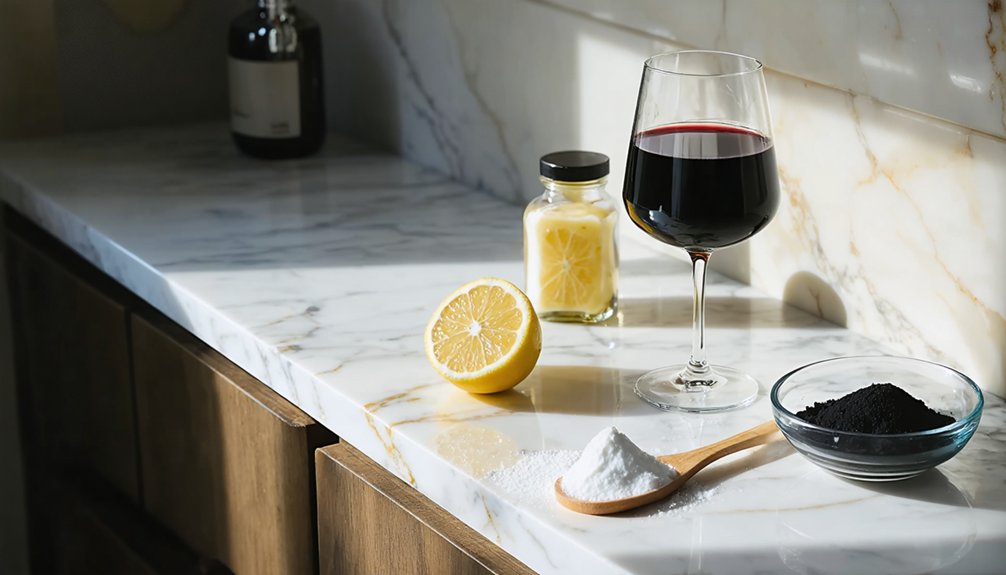
Consistent brushing habits form your strongest defense against recurring wine stains. Brush twice daily for two minutes using a whitening toothpaste, but wait 30 to 60 minutes after drinking wine before brushing. Wine temporarily softens enamel, and brushing too soon accelerates erosion rather than preventing it.
Dental flossing at least once daily removes plaque and food particles that grip wine pigments between teeth. Skipping this step leaves stain-causing residue in areas your brush can’t reach.
Tongue cleaning also matters — tannins and acids accumulate on the tongue’s surface and redistribute onto teeth if left unaddressed.
Consider switching to an electric toothbrush for more consistent stain removal. Combined with regular professional cleanings, these habits give you measurable, lasting control over wine-related discoloration.
Frequently Asked Questions
Can Oil Pulling With Coconut Oil Effectively Remove Wine Stains From Teeth?
Oil pulling with coconut oil can help reduce wine stains, but it’s not a guaranteed solution. You should swish one tablespoon for 15–20 minutes daily, understanding that clinical evidence supporting complete wine stain removal remains limited.
How Long Should You Wait Before Brushing Teeth After Drinking Wine?
You should wait 30 to 60 minutes before brushing after wine consumption. Alcohol consumption effects soften enamel temporarily, and brushing too soon accelerates erosion. Don’t fall for teeth whitening myths — patience here genuinely protects your enamel.
Are Fruit Enzymes Like Strawberry Malic Acid Safe for Tooth Enamel?
Like Icarus flying too close to the sun, you can overdo fruit acids. Strawberry’s malic acid offers mild whitening, but enamel safety requires you to rinse immediately after and limit applications to avoid gradual erosion.
How Often Can You Safely Use Activated Charcoal for Wine Stain Removal?
You shouldn’t use activated charcoal more than twice a week for activated charcoal safety. Exceeding this limit risks enamel abrasion, undermining your staining prevention strategies. Control your usage carefully to protect long-term dental health effectively.
What High-Fiber Foods Help Prevent Wine Stains From Adhering to Teeth?
Boost your fiber intake with broccoli or spinach for effective stain prevention. These high-fiber foods increase your saliva production, actively washing away wine pigments before they adhere to your enamel—protecting your teeth naturally.
References
- https://www.mydentaloffice.com/natural-whitening-remedies-for-coffee-and-wine/
- https://smilepointdental.ca/teeth-whitening-for-wine-lovers/
- https://thepsdentalstudio.com/how-to-remove-coffee-and-wine-stains-from-teeth/
- https://crest.com/en-us/oral-care-tips/how-to-prevent-and-get-rid-of-red-wine-teeth-stains
- https://lp-dentistry.com/everyday-dentistry/how-to-whiten-teeth-after-coffee-and-wine-stains-for-a
- https://dental.drjamesd.com/teeth-whitening-options-for-wine-stains/
- https://www.dentaly.org/us/teeth-whitening/wine-stain-teeth/
- https://www.youtube.com/watch?v=GMee32KAL4E
- https://www.medindia.net/health/homeremedies/white-teeth.htm
- https://www.healthline.com/nutrition/whiten-teeth-naturally