You can safely use most whitening toothpastes during pregnancy, but you’ll need to choose carefully. ADA-approved formulas rely on mild abrasives like silica and calcium carbonate rather than harsh bleaching agents, making them a far safer option. You should avoid products containing hydrogen peroxide or carbamide peroxide, as these can penetrate tissues and reach your bloodstream. The sections below break down exactly what to look for and what to avoid.
Key Takeaways
- Most whitening toothpastes are safe during pregnancy if they carry the ADA Seal of Acceptance and exclude peroxide-based ingredients.
- ADA-approved whitening toothpastes use mild abrasives like silica and calcium carbonate, which don’t penetrate enamel or enter the bloodstream.
- Avoid whitening toothpastes containing hydrogen peroxide or carbamide peroxide, as these can penetrate tissues and reach the fetus.
- Professional whitening treatments involve high peroxide concentrations and should be postponed until after delivery and breastfeeding.
- Discontinue use if gum sensitivity develops and consult a dentist for personalized guidance during pregnancy.
Is Whitening Toothpaste Safe During Pregnancy?
Although pregnancy prompts valid concerns about product safety, most whitening toothpastes are considered safe for expectant mothers when selected carefully. You should prioritize products bearing the ADA Seal of Acceptance, as these typically exclude harsh bleaching agents like hydrogen peroxide.
Most whitening toothpastes are safe during pregnancy—prioritize ADA-approved options that exclude harsh bleaching agents like hydrogen peroxide.
Unlike professional whitening treatments, standard whitening toothpastes rely on mild abrasives to remove surface stains without chemical oxidation or systemic absorption.
Adjusting your oral hygiene routines during pregnancy is a practical, evidence-based step toward maintaining dental health without unnecessary risk.
Dietary habits that increase staining—such as coffee or tea consumption—may make whitening toothpaste appealing, and ADA-approved formulations offer a cautious solution.
Always verify ingredient labels before use, and consult your dentist or obstetrician if you’re uncertain about a specific product’s suitability.
What’s Actually Inside Your Whitening Toothpaste?
Understanding why whitening toothpaste is considered safer than professional treatments requires a closer look at what’s actually in the tube. Most whitening toothpastes rely on mild abrasives like silica and calcium carbonate to remove surface stains physically, not chemically.
Unlike professional treatments, they typically don’t contain high concentrations of hydrogen peroxide or carbamide peroxide.
Some formulations incorporate natural remedies or herbal options, such as baking soda or plant-derived polishing agents, offering gentler alternatives. However, you should still verify labels carefully, as certain specialty products include low-level peroxide concentrations.
Choosing an ADA Seal of Acceptance product helps confirm the formula excludes harsh bleaching agents.
If you notice increased gum sensitivity, discontinue use and consult your dentist promptly.
Why Peroxide Whitening Treatments Aren’t Safe During Pregnancy
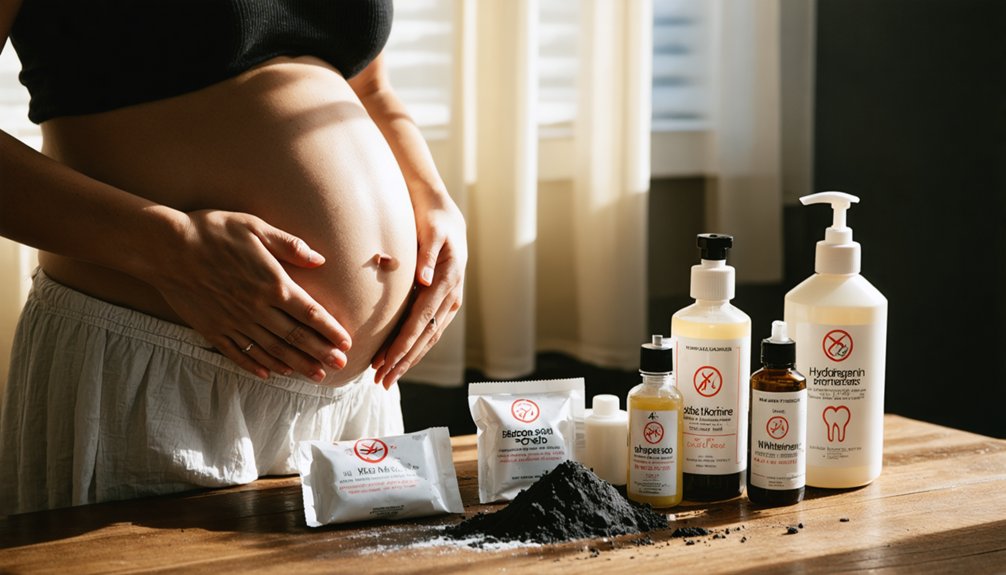
When it comes to professional whitening treatments, the core safety concern centers on peroxide absorption. High-concentration hydrogen peroxide and carbamide peroxide penetrate oral tissues, entering your bloodstream during in-office or strip-based procedures.
During pregnancy, your hormonal effects alter gingival sensitivity and tissue permeability, potentially increasing chemical absorption rates.
Clinical research on peroxide exposure during fetal development remains insufficient. The American Pregnancy Association, NHS, and major dental organizations collectively recommend postponing these treatments until after delivery and breastfeeding.
You retain control over your oral care by choosing alternative cosmetic options, specifically ADA-approved whitening toothpastes that use mild abrasives rather than chemical oxidation.
These alternatives remove surface stains without introducing peroxide into your system, making them the clinically cautious choice throughout your pregnancy.
Whitening Toothpaste vs. Professional Treatments While Pregnant
Knowing why peroxide treatments pose risks during pregnancy helps clarify the practical choice between whitening toothpaste and professional procedures.
Professional whitening uses high peroxide concentrations that absorb through oral tissues, raising unresolved fetal safety concerns. Whitening toothpaste, by contrast, relies on mild abrasives like silica to physically remove surface stains without chemical oxidation or systemic absorption.
Separating evidence from pregnancy dental myths is essential. Some alternative natural remedies like activated charcoal lack clinical validation and may damage enamel.
You should prioritize ADA-approved whitening toothpastes that exclude peroxide and carry verified safety profiles.
Professional treatments are elective cosmetic procedures—postpone them until after delivery and breastfeeding.
Your dentist and obstetrician can confirm which toothpaste formulations align with current safety standards for your specific trimester.
Which Whitening Toothpaste Ingredients Are Safe During Pregnancy?
Identifying safe whitening toothpaste ingredients during pregnancy starts with understanding what drives the whitening mechanism. Most ADA-approved formulations rely on mild abrasives like silica and calcium carbonate, which remove surface stains physically rather than chemically. These ingredients don’t penetrate enamel or enter your bloodstream, making them considerably safer than peroxide-based alternatives.
You should verify that your chosen product contains no hydrogen peroxide or carbamide peroxide.
Some natural remedies and herbal options incorporate baking soda or activated charcoal, though clinical evidence supporting their safety during pregnancy remains limited. Consult your dentist before using such formulations.
Prioritize products carrying the ADA Seal of Acceptance, as these exclude harsh bleaching agents.
Discontinue use immediately if gingival sensitivity develops, since pregnancy already elevates gum inflammation risk.
Should You Check With Your Dentist Before Switching?
Consulting your dentist before switching whitening toothpastes during pregnancy isn’t just a precaution—it’s a clinically sound step that accounts for your individual oral health status.
Pregnancy alters gum sensitivity, enamel integrity, and saliva composition, all of which affect how your teeth respond to new products. Your dentist can evaluate ingredient safety relative to your current dental hygiene baseline and identify formulations that minimize irritation risk.
They’ll also confirm whether a product contains low-risk abrasives or potentially problematic peroxide compounds. Without this consultation, you’re making decisions without complete clinical context.
Your obstetrician may also offer relevant input, particularly if you have underlying health conditions.
Taking this step ensures your product switch is both intentional and medically informed, giving you greater control over your prenatal oral care.
Frequently Asked Questions
Can Whitening Toothpaste Affect Morning Sickness or Pregnancy Nausea Symptoms?
Whitening toothpaste can worsen your morning sickness if you’ve got heightened oral sensitivity during pregnancy. Strong mint flavors or abrasives affecting tooth enamel may trigger nausea. You should switch to a gentler, unflavored formula if symptoms occur.
Is It Safe to Use Whitening Toothpaste While Breastfeeding After Delivery?
Better safe than sorry — you can generally use whitening toothpaste while breastfeeding, but verify it’s peroxide-free. Prioritize tooth enamel safety, monitor dental sensitivity, and consult your dentist before continuing any whitening oral care routine.
How Does Pregnancy Change the Natural Color or Shade of Teeth?
During pregnancy, your hormonal shifts lower oral pH, weakening tooth enamel and making it more porous. This increases stain absorption, causing your teeth to appear yellower or darker than their pre-pregnancy shade.
Can Hormonal Changes During Pregnancy Make Whitening Toothpaste Less Effective?
Yes, hormonal changes can reduce whitening toothpaste’s effectiveness. Increased dental sensitivity and enamel softening during pregnancy mean you’ll notice slower results. Prioritize tooth enamel preservation by choosing gentle, ADA-approved formulas and consult your dentist before adjusting your routine.
Are Whitening Toothpaste Ingredients Safe During the First Trimester Specifically?
Most whitening toothpastes are likely safe in your first trimester, as they rely on mild abrasives that protect dental enamel without chemical absorption. Fluoride safety is confirmed, but you should verify your product contains no peroxide.
References
- https://www.webmd.com/baby/features/revamp-your-pregnancy-beauty-regimen
- https://favdentistry.com/whitenning-polishing/whitening-toothpaste-pregnancy
- https://lagunadentalcenter.com/teeth-whitening/can-you-whiten-your-teeth-while-pregnant/
- https://teethwhiteninghochiminh.com/teeth-whitening-pregnancy-what-is-safe-during-pregnancy/
- https://www.thebump.com/a/whiten-teeth-pregnancy
- https://dentalhealthsociety.com/brushing/best-toothpaste-for-pregnant-women/
- https://www.natrusmile.com/blogs/news/is-teeth-whitening-during-pregnancy-recommended
- https://nvdentists.com/pregnancy-safe-teeth-whitening/
- https://www.ddsdearborn.com/can-you-whitening-your-teeth-when-pregnant/
- https://patient.enlightensmiles.com/blogs/teeth-whitening/teeth-whitening-during-pregnancy