For professional teeth whitening success, start with a clean, healthy foundation by brushing twice daily and scheduling a dental cleaning beforehand. Use desensitizing toothpaste containing potassium nitrate before and during treatment to minimize sensitivity. After whitening, rinse with water after consuming staining foods and drinks, and limit coffee, tea, and tobacco to protect your results. Following your dentist’s guidance makes the entire process safer and more effective—and there’s much more to discover ahead.
Key Takeaways
- Visit your dentist before whitening to assess enamel health and identify underlying issues that could affect treatment safety and results.
- Use desensitizing toothpaste containing potassium nitrate or stannous fluoride throughout treatment to minimize discomfort and protect enamel.
- Choose lower-peroxide formulas initially, gradually increasing strength to reduce sensitivity while still achieving noticeable whitening results.
- Rinse with water immediately after consuming staining foods or drinks to prevent pigments from bonding to freshly whitened enamel.
- Schedule professional cleanings every six months to maintain oral health and optimize the longevity of your whitening results.
Why Professional Teeth Whitening Works Faster
When it comes to speed and strength, in-office whitening outperforms at-home options by a significant margin. Dentists use higher concentrations of hydrogen peroxide or carbamide peroxide, delivering visible results in a single session. You’re getting precision and power that generic strips simply can’t match.
Beyond whitening, your dentist can address cavity prevention and enamel strengthening during the same visit, giving you a more complete approach to oral health. That means you’re not just improving color — you’re actively protecting your teeth’s long-term integrity.
If sensitivity or uneven staining concerns you, professional supervision lets you adjust treatment in real time. You stay in control of the outcome, backed by clinical expertise rather than guesswork. That’s a clear advantage worth considering.
Start With a Clean, Healthy Foundation
Before any whitening product can do its job effectively, your teeth need a clean, healthy surface to work with. Oral bacteria and plaque weaken tooth enamel and block even contact with whitening agents, reducing your results.
Build your foundation with these key habits:
- Brush twice daily for two minutes to clear plaque and surface buildup
- Floss daily to remove bacteria between teeth where brushes can’t reach
- Schedule professional cleanings every six months to eliminate tartar and surface stains
- Consider an electric toothbrush for more thorough plaque removal
- Visit your dentist before starting any whitening routine to confirm your enamel is ready
Strong oral hygiene doesn’t just protect your teeth—it actively sets the stage for better, longer-lasting whitening outcomes.
Which Professional Whitening Option Is Right for You?
Two main professional whitening options exist, and choosing between them comes down to your schedule, sensitivity levels, and how quickly you want results.
Your schedule, sensitivity, and desired speed of results determine which professional whitening option suits you best.
In-office whitening delivers the fastest, strongest results in a single visit, making it ideal if speed matters.
Custom trays, fitted precisely by your dentist, offer a more gradual home-based approach with greater flexibility.
Cost considerations matter here. In-office treatment typically costs more upfront, while custom trays spread the investment over time.
Neither option is inherently wasteful, but reusable custom trays carry a lower environmental impact than single-use over-the-counter strips.
If sensitivity or uneven staining concerns you, dentist supervision guarantees safer outcomes either way.
Discuss your stain severity and comfort tolerance with your dentist to choose the option that fits your needs precisely.
At-Home Whitening Methods Worth Trying
If you’re not ready for professional treatment, several at-home options can still deliver noticeable results when used correctly. Whitening toothpastes and mouthwashes with mild polishing agents lift surface stains gradually.
While dentist-approved strips—used once daily for a limited period—offer a stronger effect with manageable sensitivity risk. You can also try a baking soda paste occasionally, but limit use to about once a week for no more than two minutes to protect your enamel.
Whitening Toothpaste And Mouthwash
Whitening toothpaste and mouthwash are two of the easiest low-risk options you can work into your daily routine. Unlike unproven natural remedies or risky DIY hacks, these products offer gradual, manageable results when used correctly.
Key guidelines to keep you in control:
- Choose whitening toothpaste with mild polishing agents designed to lift surface stains without harsh abrasion
- Use whitening mouthwash consistently to gradually reduce discoloration while freshening breath
- Follow product directions precisely—overuse increases sensitivity risk
- Don’t expect overnight results; gradual improvement is normal and safer
- Pair both products with twice-daily brushing for stronger cumulative benefit
These methods won’t replace professional treatment for deep staining, but they’re reliable tools for maintaining brightness between dental visits without compromising enamel health.
Dentist-Approved Whitening Strips
Beyond toothpaste and mouthwash, dentist-approved whitening strips offer a step up in visible results while still keeping you in control at home. These strips use low-concentration peroxide to gradually lift surface stains without the risks tied to harsh DIY bleaching methods.
To protect your enamel, follow the usage directions precisely — typically once daily for a limited period. Overuse raises your risk of enamel erosion, which weakens tooth structure and increases sensitivity.
If you have dental bonding or other restorations, check with your dentist first, since peroxide doesn’t whiten synthetic materials evenly.
Consistency matters more than frequency. Stick to the recommended schedule, rinse after each session, and pair strips with good brushing habits to extend and protect your results effectively.
Baking Soda Paste Tips
Baking soda is another gentle option worth adding to your routine, though it works best when used sparingly. Its mild abrasiveness helps reduce dental plaque and lift surface stains without aggressive chemicals. However, overuse risks enamel erosion, so following clear guidelines keeps it safe and effective.
Use baking soda paste strategically by keeping these tips in mind:
- Mix a small amount with water to form a thin paste
- Limit use to approximately once per week
- Brush gently for no longer than two minutes
- Avoid combining it with acidic products, which accelerates enamel erosion
- Rinse thoroughly afterward to remove residue and reduce dental plaque contact
Used correctly, baking soda gives you a low-cost, controlled method for maintaining a brighter smile between professional cleanings.
How to Reduce Sensitivity During Teeth Whitening
If you experience sensitivity during whitening, start by switching to a desensitizing toothpaste a few days before you begin your routine.
You should also wait at least 30 minutes after brushing before applying any whitening product, since this can reduce gum irritation.
Choosing a lower-strength formula and working up gradually helps you protect enamel while still making progress toward a brighter smile.
Use Desensitizing Toothpaste First
Sensitivity is one of the most common reasons people stop whitening before they see results, but using a desensitizing toothpaste in the days leading up to treatment can make a noticeable difference. Sensitivity management starts before you apply any whitening product.
These toothpastes work by blocking tubules in the enamel, reducing nerve response to whitening ingredient safety concerns like peroxide.
Apply it consistently two to three days before starting your whitening routine:
- Choose a toothpaste containing potassium nitrate or stannous fluoride
- Brush twice daily for two full minutes
- Don’t rinse immediately after brushing to extend contact time
- Continue using it throughout your whitening period
- Replace standard toothpaste entirely during treatment for best comfort
This simple step keeps you in control of your comfort without compromising your results.
Wait Before Applying Whitener
Desensitizing toothpaste sets a strong foundation, but timing adds another layer of protection. One of the simplest application techniques you can adopt is waiting 20 to 30 minutes after brushing before applying any whitening product.
Brushing temporarily opens microscopic pathways along your gum line, making tissue more reactive to peroxide-based formulas.
Timing considerations matter because rushing this step increases your risk of unnecessary irritation. Your gums need a short recovery window before direct whitener contact.
This pause doesn’t complicate your routine — it refines it.
You’re already investing in a smarter approach by using desensitizing toothpaste. Adding a deliberate wait period reinforces that strategy.
Small, intentional adjustments like this one give you measurable control over your comfort throughout the entire whitening process.
Choose Lower Strength Products
One of the most effective ways to manage whitening sensitivity is simply choosing a product with a lower peroxide concentration. Short-term use of gentler formulas gives you control over comfort without sacrificing results. Before pursuing alternative whitening treatments, exhaust lower-strength options first—natural remedy effectiveness rarely matches evidence-based products.
Consider these practical options:
- Whitening toothpaste lifts surface stains with minimal sensitivity risk
- Low-concentration strips used once daily reduce enamel stress
- Whitening mouthwash gradually targets discoloration with gentle ingredients
- Carbamide peroxide formulas release more slowly than hydrogen peroxide, easing irritation
- Dentist-approved custom trays with diluted gel offer precision without aggressive bleaching
Starting conservatively lets you gauge your tolerance and adjust accordingly.
Foods and Drinks That Reverse Whitening Results
Several common foods and drinks can undo whitening results faster than you might expect. Coffee, tea, red wine, and soda are among the most frequent culprits, as their pigments bond directly to enamel and dull brightness over time. Strongly colored sauces, berries, and candy also contribute to gradual staining.
You don’t need extreme natural remedies to protect your results—simple habits work better. Rinse with water immediately after consuming staining foods or drinks to reduce pigment contact time. Using a straw for dark beverages limits direct exposure to your enamel health matters here, since repeated staining weakens your whitening investment.
Tobacco is another significant factor; nicotine and tar cause persistent discoloration that’s difficult to reverse. Controlling these exposures keeps your results lasting longer.
Daily Habits That Keep Teeth Whiter Longer
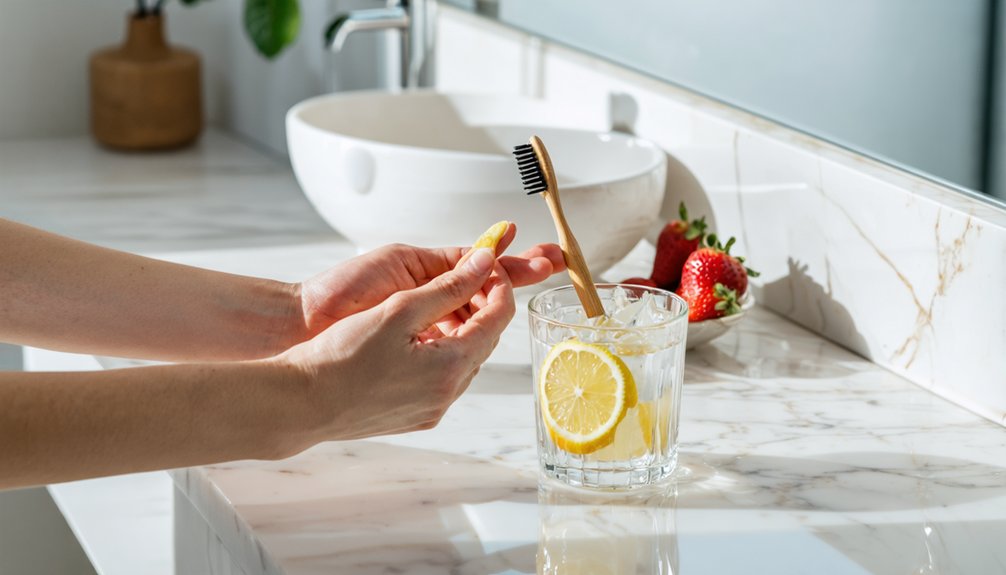
Maintaining whiter teeth long-term doesn’t require dramatic changes—consistent small habits make the biggest difference. You’ll protect your results by building a simple, intentional routine that limits staining and supports natural enamel strength.
Dental flossing removes plaque between teeth that brushing misses, while stimulating saliva production that naturally neutralizes acids and washes away pigments.
- Rinse with water immediately after consuming coffee, tea, or red wine
- Use a straw for dark beverages to reduce direct enamel contact
- Brush twice daily for two minutes using a whitening or gentle fluoride toothpaste
- Practice daily dental flossing to reduce plaque and support saliva production
- Limit tobacco use, which causes deep, stubborn discoloration that resists most whitening treatments
Signs You Need a Professional Whitening Touchup
Even with consistent habits, there are clear signs that it’s time to revisit professional whitening. If surface stains return despite regular brushing and rinsing after staining foods, your enamel may need stronger intervention than at-home whitening gels can provide.
Even consistent habits have limits—returning surface stains may signal your enamel needs professional-strength whitening intervention.
Uneven discoloration, yellowing that resists strips, or staining from tobacco are reliable indicators that professional-strength treatment is necessary.
Persistent sensitivity without visible progress also signals that you need guided care rather than continued DIY attempts.
Before scheduling an appointment, check whether your dental insurance covers any portion of professional whitening or related cleanings, as costs vary by plan.
Acting on these signs promptly helps you maintain control over your results and prevents deeper discoloration from becoming harder to treat.
Frequently Asked Questions
Can Whitening Strips Damage Existing Dental Crowns or Veneers?
whitening strips won’t damage your crowns or veneers, but dental crown compatibility and veneer stain resistance mean they won’t whiten them either—consult your dentist to guarantee even, consistent results.
How Long Do Professional Whitening Results Typically Last Before Fading?
Your professional whitening results can last six months to two years. You’ll extend longevity through consistent whitening maintenance, avoiding staining foods, and managing dental sensitivity with desensitizing toothpaste. Touch-up treatments help you stay in control of your smile.
Is Teeth Whitening Safe During Pregnancy or While Breastfeeding?
You’ll want to pause whitening during pregnancy or breastfeeding. Pregnancy safety guidelines recommend avoiding peroxide-based treatments, and breastfeeding precautions suggest waiting until you’re done nursing before resuming any professional whitening regimen.
Does Whitening Work on Teeth Stained by Antibiotics Like Tetracycline?
Like a shadow etched deep in stone, antibiotic stains resist standard whitening effectiveness. You’ll likely need professional-grade treatment, as tetracycline discoloration is intrinsic. Your dentist can guide you toward realistic options for meaningful improvement.
At What Age Is Professional Teeth Whitening Considered Appropriate for Teens?
Most dentists recommend waiting until age 14–16 for professional whitening, once permanent teeth have fully erupted. For teen dental health, age considerations matter—you’ll want your dentist to evaluate enamel maturity before starting any whitening treatment.
References
- https://www.gentledental.com/resources/articles/teeth-whitening-products
- https://robisondental.com/13-amazing-teeth-whitening-tips-straight-from-a-dentist/
- https://www.northeastdentalarts.com/blog/what-is-the-least-damaging-way-to-whiten-your-teeth/
- https://www.ada.org/resources/ada-library/oral-health-topics/whitening
- https://www.nhs.uk/tests-and-treatments/teeth-whitening/
- https://health.clevelandclinic.org/how-to-whiten-teeth
- https://www.youtube.com/watch?v=KloenqZIekw
- https://www.reddit.com/r/beauty/comments/m7vqlt/tips_to_safely_whiten_your_teeth/
- https://www.healthpartners.com/blog/safe-teeth-whitening/
- https://www.youtube.com/watch?v=i8yqDgT0tCE