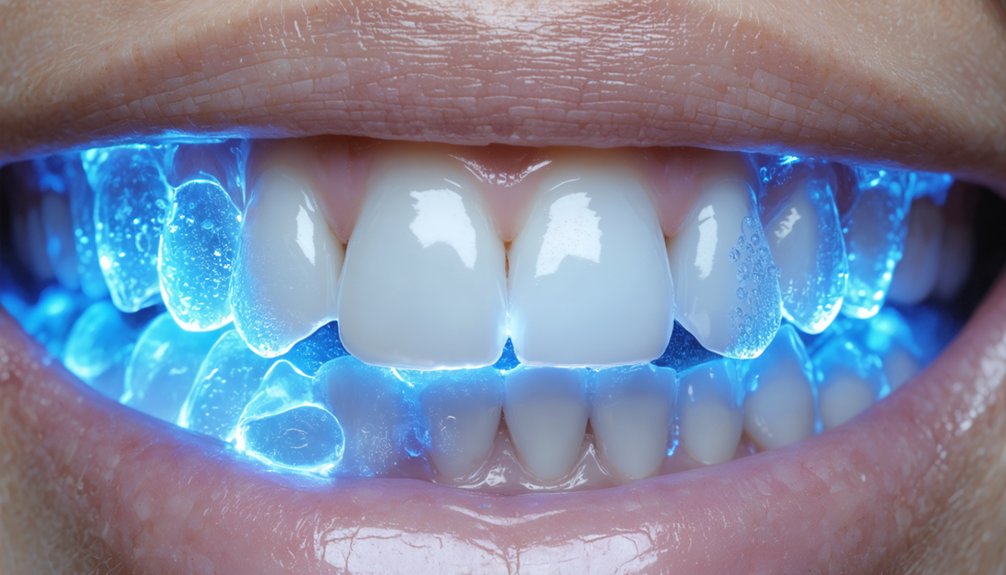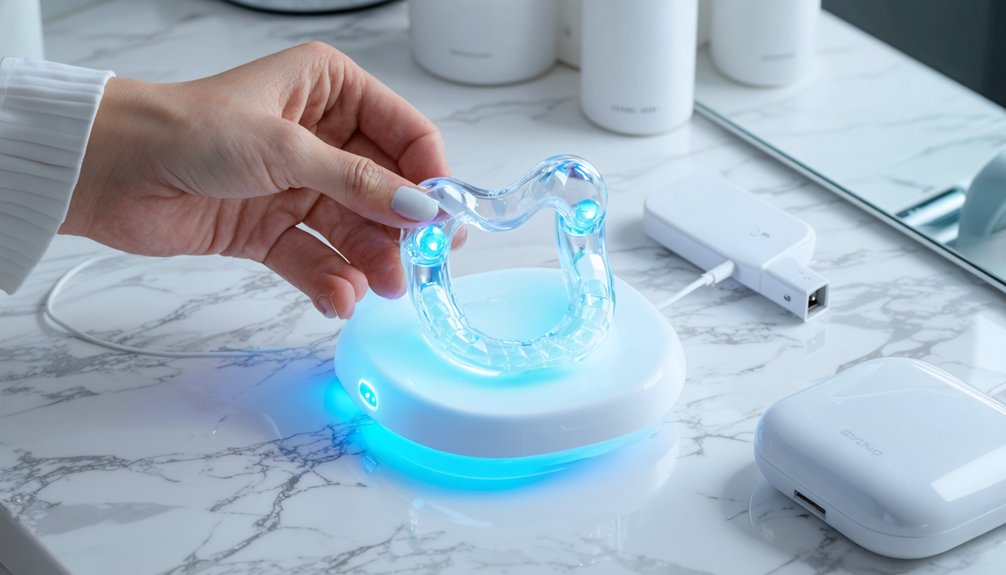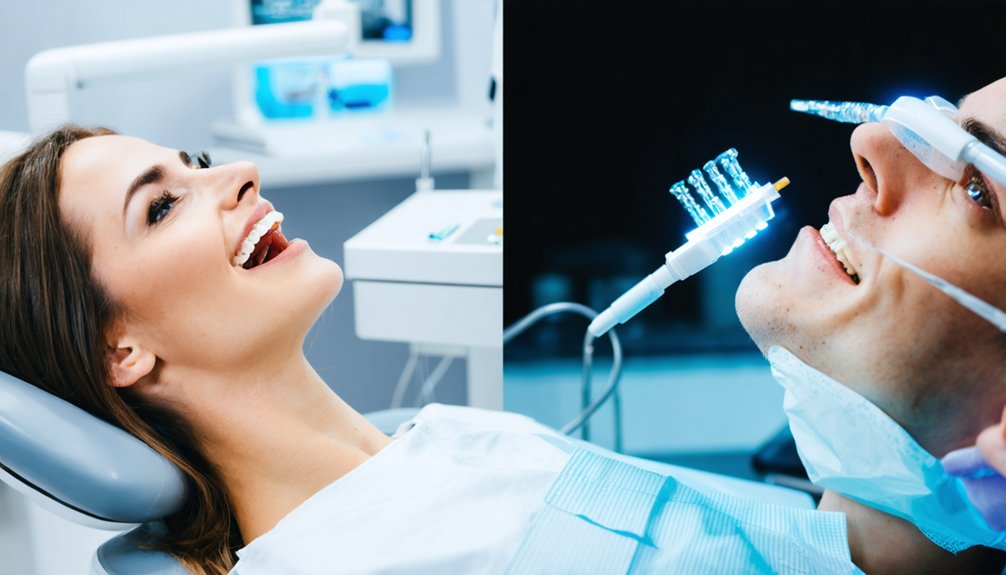
Yes, LED light teeth whitening can cause sensitivity, and it’s more common than you might think. The bleaching agent, hydrogen peroxide, penetrates your enamel and reaches the dentin beneath, triggering nerve discomfort. LED light accelerates this process, increasing the risk. Clinical evidence shows 53% of LED-treated patients experienced sensitivity within 24 hours, with an odds ratio of 3.53 compared to non-light methods. Keep going to learn what’s actually happening and how to protect yourself.
Key Takeaways
- LED teeth whitening can cause sensitivity, as hydrogen peroxide penetrates enamel and reaches dentin, triggering nerve discomfort.
- LED light accelerates peroxide activity, increasing sensitivity risk compared to non-light whitening methods.
- Studies show 53% of LED whitening users experienced sensitivity within 24 hours of treatment.
- Sensitivity typically resolves within 1 to 3 days, peaking within the first 24 hours post-treatment.
- Using sensitive toothpaste beforehand and avoiding acidic foods after treatment can help reduce sensitivity.
Does LED Light Teeth Whitening Actually Cause Sensitivity?
LED light teeth whitening can cause sensitivity, and it’s actually the most commonly reported side effect of the treatment. The bleaching dental material, typically hydrogen peroxide, penetrates your enamel and reaches the underlying dentin, which heightens your sensitivity to temperature and pressure.
Light activation accelerates this process, and clinical evidence suggests it increases sensitivity risk compared to non-activated whitening. One study found that 53% of LED-treated participants reported sensitivity versus 26% in the non-activated group at 24 hours.
A systematic review reported an odds ratio of 3.53, meaning light-activated whitening considerably raised sensitivity odds. Most cases are mild to moderate and resolve within one to three days, but understanding this risk lets you make informed decisions about your whitening approach.
How Common Is Sensitivity After LED Whitening?
Sensitivity rates after LED whitening are well-documented, and the numbers are higher than many people expect. Research shows that light-activated whitening carries an odds ratio of 3.53 for sensitivity compared to non-light methods.
LED whitening carries an odds ratio of 3.53 for sensitivity — higher than most people expect.
In one clinical study, 53% of LED-treated participants reported sensitivity within 24 hours, versus 26% in the non-activated group.
Broader reviews estimate 30% to 40% of users experience mild to moderate sensitivity, typically resolving within one to three days.
These figures matter when you’re weighing cost concerns against expected outcomes. If you’re already considering alternative treatments due to budget or comfort, knowing that over half of LED users may experience sensitivity gives you measurable data to factor into your decision rather than relying on marketing claims.
Why Does LED Whitening Make Your Teeth Sensitive?
When LED whitening makes your teeth sensitive, the bleaching agent is doing most of the work. Hydrogen peroxide penetrates dental enamel and reaches the underlying dentin, where fluid movement within microscopic tubules triggers nerve exposure and discomfort.
The LED light activates the gel to accelerate the whitening reaction, but that activation can intensify how deeply the peroxide works.
Research supports this mechanism. One clinical study found that 53% of LED-treated participants reported sensitivity at 24 hours, compared to 26% in the non-activated group. The light itself isn’t the primary cause, but it amplifies the bleaching agent’s reach.
Higher peroxide concentrations increase this risk further. Understanding this process lets you make informed decisions about concentration levels, treatment duration, and whether professional supervision makes sense for your situation.
How Long Does LED Whitening Sensitivity Last?
For most people, LED whitening sensitivity resolves within 24 to 48 hours. Dentin exposure from peroxide penetrating tooth enamel drives this temporary discomfort, which typically peaks within the first day post-treatment.
Key factors that influence recovery time:
- Sensitivity duration commonly ranges from 1 to 3 days in clinical reviews
- Higher peroxide concentrations may extend discomfort beyond the typical window
- Overuse or improper application increases the likelihood of prolonged irritation
- Pre-existing sensitivity can slow recovery compared to those without prior dental concerns
- Stopping treatment at the first sign of persistent pain shortens overall discomfort
If sensitivity extends beyond 3 days or intensifies, consult a dental professional.
You can manage most cases predictably by following recommended protocols and choosing sensitivity-formulated whitening gels.
How to Reduce Sensitivity Before and After LED Whitening
Reducing sensitivity before and after LED whitening requires deliberate preparation and post-treatment care. Before treatment, switch to a toothpaste formulated for sensitive teeth at least two weeks prior. This helps occlude dentinal tubules and lower baseline reactivity. Follow the manufacturer’s instructions precisely — overuse increases your risk.
Switching to sensitive toothpaste two weeks before LED whitening helps occlude tubules and reduce baseline reactivity.
During treatment, guarantee the gel doesn’t contact your gums, as soft tissue exposure amplifies irritation.
After whitening, apply dietary adjustments by avoiding acidic, hot, or cold foods and beverages for 24 to 48 hours. These stimuli aggravate temporarily exposed dentin.
Home remedies like rinsing with lukewarm water can ease mild discomfort without additional chemical exposure. If sensitivity persists beyond three days or intensifies, stop treatment and consult your dentist to rule out underlying dental conditions.
Frequently Asked Questions
Is LED Whitening Sensitivity Worse Than Traditional In-Office Bleaching Treatments?
Like a double-edged blade, LED whitening’s sensitivity isn’t necessarily worse — but you’re exposing your tooth enamel to activated whitening agents that studies show carry a 3.53 odds ratio for sensitivity versus traditional non-light treatments.
Can You Whiten Teeth With LED Light if You Have Gum Disease?
You shouldn’t pursue LED whitening if you have gum disease, as compromised gum health increases your risk of irritation. Consult a dental professional first to assess whitening safety and protect your oral condition before treatment.
Are Older Adults More Likely to Experience Sensitivity From LED Whitening?
Like Achilles’ heel, your aging enamel may be your vulnerability—older adults can experience varied tooth sensitivity patterns from LED whitening, so you’ll want to consult your dentist to tailor a protocol that minimizes risk.
Does the LED Light Itself Cause Sensitivity or Only the Whitening Gel?
The gel primarily causes sensitivity, not the light itself. However, light exposure can amplify gel irritation by accelerating peroxide penetration. You’re more likely to experience discomfort from the bleaching agent’s concentration than from LED activation alone.
Should You Avoid Certain Foods After LED Whitening to Prevent Sensitivity?
Like an open wound, your enamel’s temporarily vulnerable post-whitening. You should follow diet restrictions—avoid hot, cold, and acidic foods for 24–48 hours. These sensitivity prevention steps help minimize discomfort during your teeth’s recovery window.
References
- https://www.abritersmile.com/blue-light-teeth-whitening-side-effects/
- https://www.healthline.com/health/dental-and-oral-health/blue-light-teeth-whitening
- https://pristinedental.com.sg/led-teeth-whitening-pros-and-cons/
- https://pmc.ncbi.nlm.nih.gov/articles/PMC3466022/
- https://www.colgate.com.au/oral-health/teeth-whitening/how-does-led-teeth-whitening-work
- https://www.nationalelfservice.net/publication-types/systematic-review/light-activated-tooth-whitening-increases-the-risk-of-tooth-sensitivity-and-may-not-improve-the-bleaching-effect/
- https://www.ivismilepro.com/blog/led-teeth-bleaching-light-safe/
- https://www.webmd.com/oral-health/features/what-is-tooth-whitening
- https://www.dailytoothcare.com/archives/13635
- https://www.drbicuspid.com/dental-specialties/smile-design/whitening/article/15365293/light-activation-ups-tooth-sensitivity-during-bleaching