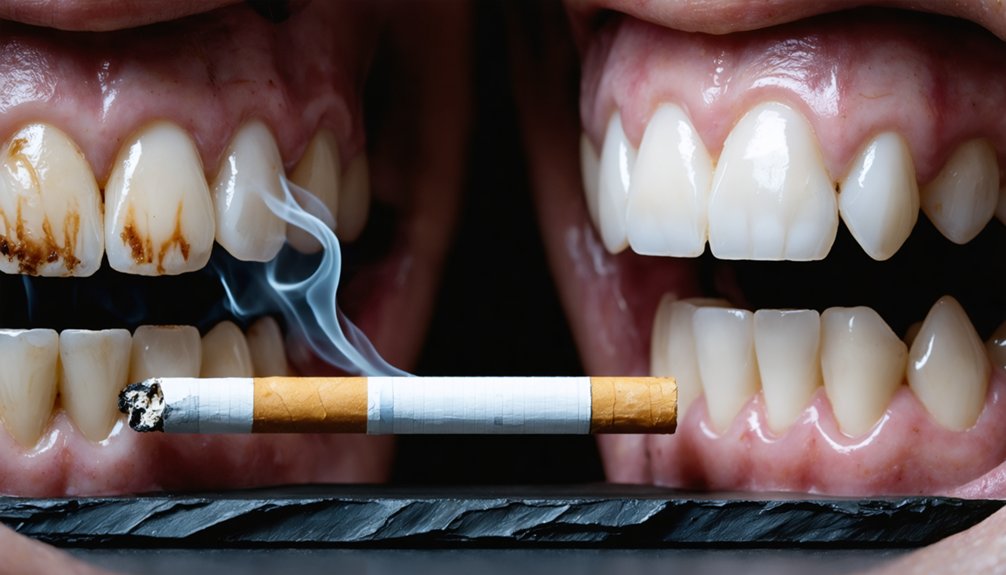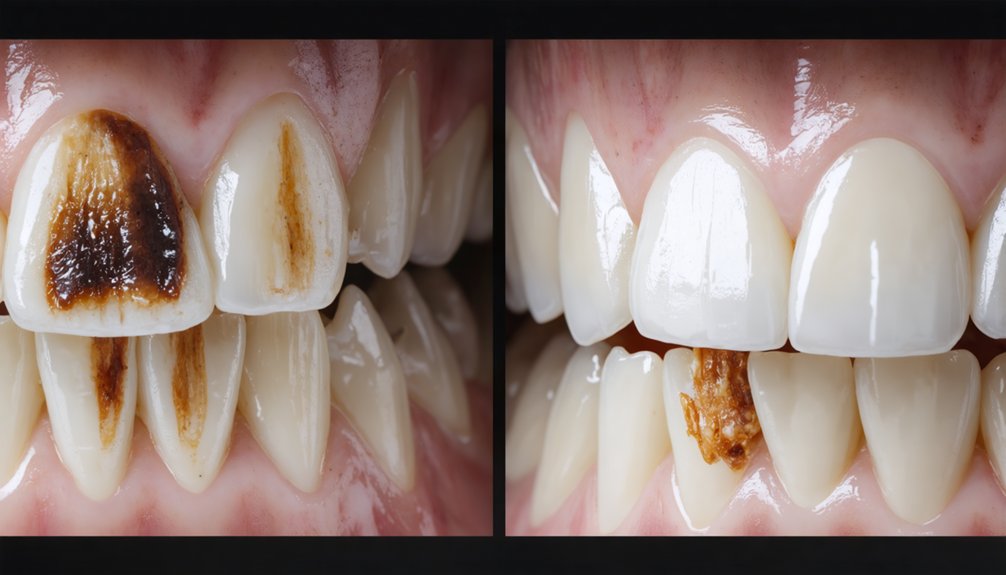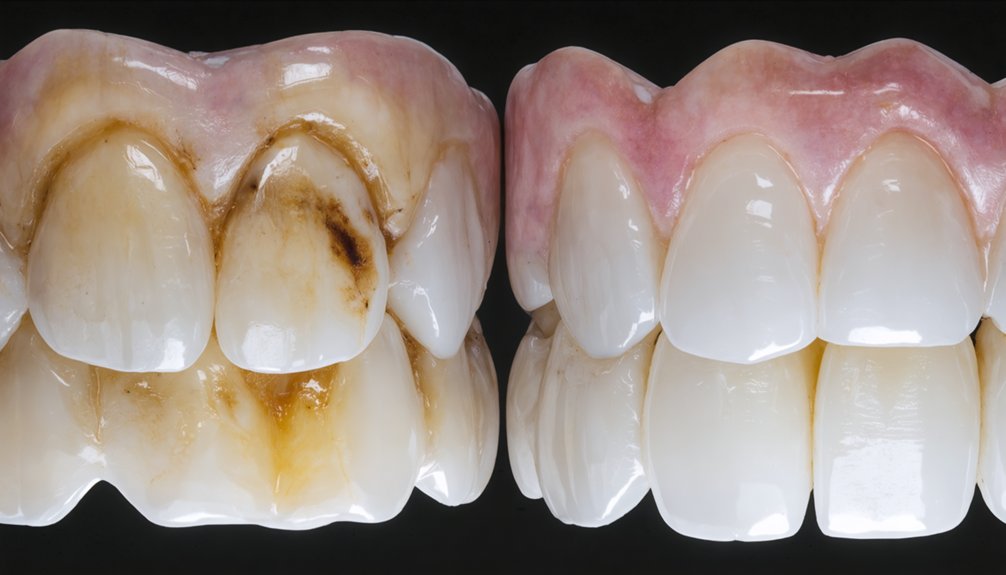
Tobacco stains penetrate enamel’s microscopic pores, making them resistant to ordinary cleaning. Whitening pens work by delivering peroxide-based gel that oxidizes and breaks down those embedded chromogenic compounds. For smokers, you’ll need consistent daily application, the right peroxide concentration, and realistic expectations—surface stains can fade within a week, but deep nicotine buildup may require two weeks or longer. The full picture of what works, what doesn’t, and why is just ahead.
Key Takeaways
- Peroxide-based whitening pens oxidize and break down tobacco stains, with surface stains visibly fading within one week of daily use.
- Deep nicotine stains embedded in enamel pores require prolonged treatment or professional bleaching beyond what whitening pens alone can achieve.
- Apply the pen consistently daily, following manufacturer contact times precisely, as consistency matters more than the amount applied per session.
- Expect a potential 4–8 shade improvement within two weeks; heavier smokers may see slower, more limited results.
- Maintain results by limiting staining beverages, brushing regularly, and scheduling periodic touch-ups to prevent new tobacco stain buildup.
Why Smoker Stains Are Harder to Remove
Smoking doesn’t just stain the surface of your teeth—it drives tar and nicotine into the microscopic pores of your enamel, creating discoloration that sits far deeper than what coffee or tea typically leaves behind.
Understanding dental anatomy explains why: enamel is porous, and repeated smoke exposure forces pigmented compounds progressively deeper into that structure. The longer you smoke, the more layered the staining becomes.
Surface-level oral hygiene—brushing and rinsing—removes plaque but can’t extract pigments embedded below the enamel’s outer layer. This is why smoker stains resist standard cleaning and require peroxide-based interventions that chemically penetrate and break down discoloration at its source.
You’re not dealing with a surface problem; you’re dealing with a structural one that demands a targeted, consistent whitening strategy.
Do Whitening Pens Work on Tobacco Stains?
Given that smoker stains penetrate below the enamel’s outer layer, the real question is whether whitening pens can reach deep enough to matter. The answer depends on stain depth.
Peroxide-based pens—using hydrogen peroxide or carbamide peroxide—oxidize surface and near-surface discoloration effectively. For moderate tobacco staining, consistent daily application over one to two weeks produces measurable results.
Peroxide-based whitening pens oxidize tobacco stains effectively—with consistent daily use, moderate discoloration shows measurable improvement within two weeks.
However, deeply set nicotine stains may not respond adequately to pens alone. In those cases, alternative whitening methods, such as professional bleaching or custom tray systems, deliver stronger peroxide concentrations to achieve meaningful improvement.
Natural stain removal approaches lack the oxidizing power to address tobacco discoloration at any significant depth.
Pens work best as targeted maintenance tools, not primary treatment for heavy, long-term smoker stains.
What Whitening Pens Do to Tobacco Stains
When you apply a whitening pen, the hydrogen peroxide or carbamide peroxide gel penetrates the outer enamel and breaks apart the chromogenic compounds responsible for tobacco discoloration.
Surface stains respond faster, while deeper nicotine stains embedded further into the enamel require consistent daily use over one to two weeks before visible improvement appears.
With products like Venus Visage claiming four to eight shade improvements and ELLE reporting faded yellow stains within roughly one week of regular application, your results will ultimately depend on stain depth and how consistently you use the pen.
How Peroxide Lifts Stains
Tobacco stains penetrate the outer enamel layer through repeated exposure to tar and nicotine, which bind to the tooth surface and gradually deepen in color.
Peroxide-based gels counteract this enamel penetration through a targeted oxidation process:
- The peroxide compound breaks apart into oxygen molecules upon contact with teeth.
- Those molecules penetrate the enamel and disrupt the chemical bonds holding stain pigments in place.
- The destabilized pigments oxidize, reducing their color intensity across the tooth surface.
- Repeated applications push the reaction deeper, addressing stains that have built up over time.
Because smoking accelerates stain recurrence, a single treatment won’t hold indefinitely.
Consistent, scheduled reapplication is what maintains visible results and keeps newly deposited nicotine compounds from re-bonding to the enamel surface.
Surface Versus Deep Stains
Whitening pens work most effectively on surface stains—the kind deposited by recent or moderate smoking that haven’t yet penetrated deep into the enamel structure.
If you’ve maintained consistent dental health habits, peroxide gel can reach these extrinsic stains and lift them within roughly one week of daily use.
Deeper stains are a different challenge. Years of heavy smoking allow nicotine and tar to work past the enamel surface, embedding discoloration into the dentin beneath.
At that level, a pen’s peroxide concentration isn’t strong enough for complete stain removal on its own. You’ll see improvement, but not full correction.
Knowing which category your stains fall into helps you set realistic expectations and decide whether a pen alone is sufficient or whether professional treatment should run alongside it.
Expected Results Timeline
Once you understand where your stains sit, you can reasonably predict how a whitening pen will perform against them over time. Surface stains typically respond within one week of consistent daily use. Deeper nicotine stains require longer timelines and may need professional dental treatments to achieve measurable change.
General evidence-based benchmarks include:
- Days 1–3: Gel penetrates surface tobacco film
- Days 4–7: Visible fading of yellow discoloration begins
- Week 2: Up to 4–8 shade improvement with consecutive application
- Beyond week 2: Diminishing returns signal when professional dental treatments or alternative natural remedies should supplement your routine
Alternative natural remedies won’t replace peroxide’s mechanism, but they may support maintenance between applications.
Control your results by tracking shade changes weekly and adjusting application frequency based on observed progress.
Peroxide Strength, Treatment Count, and What Else to Check
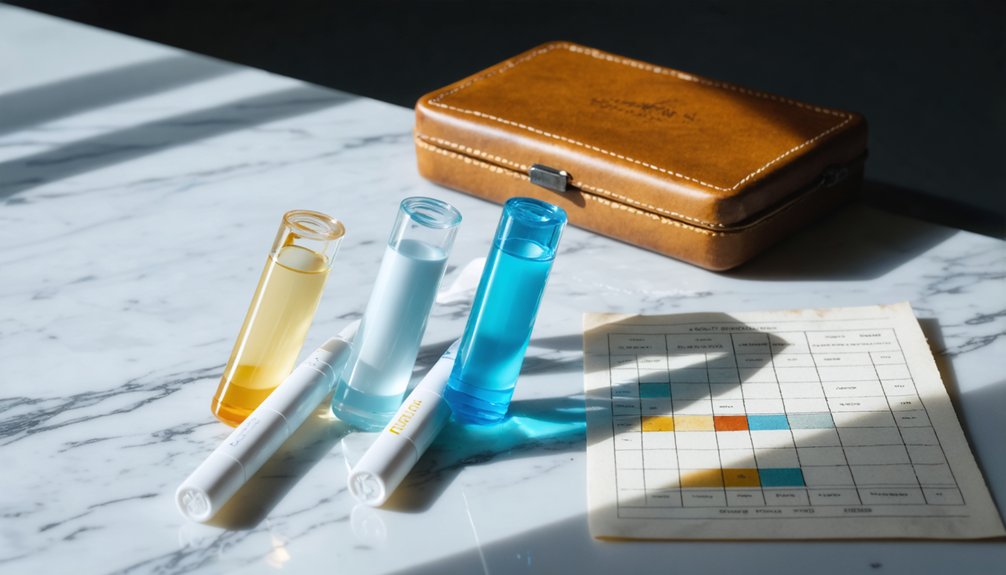
Choosing the right whitening pen for smoker stains starts with peroxide strength. Hydrogen peroxide and carbamide peroxide are your primary active agents—Auraglow delivers 9% hydrogen peroxide, while Venus Visage uses carbamide peroxide for progressive stain removal. Match concentration to your stain severity; deeper nicotine discoloration typically requires stronger formulas.
Treatment count directly affects long-term value. Auraglow offers 40+ applications per pen; Venus Visage provides 20+. Calculate cost-per-use before committing.
Beyond concentration, ingredients clarity matters—verify the full formula, not just marketing claims. Avoid pens with vague ingredient labeling. Brand reputation also signals reliability; choose manufacturers who publish clinical support or transparent testing data.
Finally, confirm the product explicitly targets tobacco, coffee, and wine stains, since that positioning reflects stain-specific formulation priorities.
The Best Teeth Whitening Pens for Smokers
For smokers dealing with nicotine and tobacco stains, two pens stand out based on peroxide formulation, treatment yield, and stain-specific claims: Auraglow’s extra-strength pen and Venus Visage’s carbamide peroxide formula.
Both deliver cosmetic benefits while supporting dental health through targeted peroxide action. Here’s how they compare:
- Peroxide type: Auraglow uses 9% hydrogen peroxide; Venus Visage uses carbamide peroxide.
- Treatment yield: Auraglow provides 40+ applications; Venus Visage offers 20+ uses.
- Shade improvement: Venus Visage claims 4–8 shades with consecutive use.
- Sensitivity profile: Auraglow states no irritation and is safe for caps, crowns, and veneers.
You’re choosing between volume and concentration. Match the formula to your stain severity and compliance capacity.
How to Use a Whitening Pen Correctly
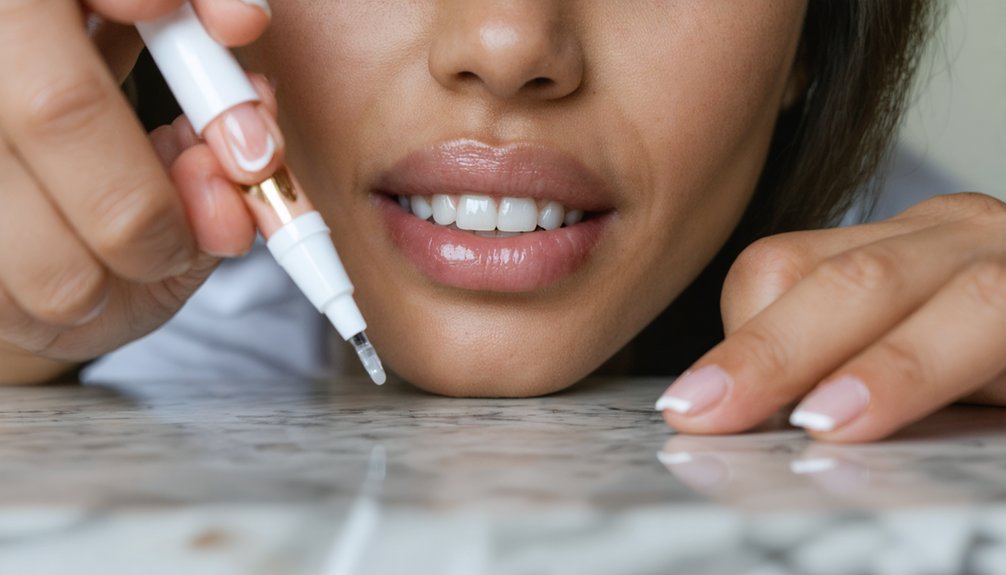
Picking the right pen matters, but how you apply it determines whether you actually see results. Before you apply anything, brush and floss thoroughly — plaque blocks the gel from reaching enamel directly.
Twist the pen until gel appears, then paint a thin, even layer across each tooth’s surface. Don’t swallow, and keep your lips away from your teeth while the formula sets.
Follow the manufacturer’s contact time precisely; Venus Visage, for example, specifies 30 seconds.
Use the pen daily or twice daily as directed — consistency drives results, not volume per application.
Skip DIY remedies like baking soda scrubs or alternative uses such as oil pulling immediately before application, since these can interfere with gel adhesion and reduce whitening efficacy.
How to Maintain Whitening Pen Results as a Smoker
Whitening pens can lift smoker stains, but tobacco quickly rebuilds discoloration if you don’t follow through with consistent maintenance. Protecting your results requires disciplined habits that address both oral health and diet factors.
- Apply your whitening pen daily or as directed to neutralize new stain deposits before they set.
- Brush and floss consistently to maintain a clean surface that allows the peroxide gel to penetrate effectively.
- Limit diet factors like coffee, wine, and soda, which compound tobacco staining and accelerate discoloration.
- Schedule periodic touch-up sessions rather than waiting until staining becomes visually significant.
Surface stains respond faster when you intervene early. Smoking frequency directly correlates with how quickly results fade, so treatment regularity isn’t optional—it’s the mechanism that sustains progress.
Frequently Asked Questions
Can Whitening Pens Be Used Safely Over Dental Crowns or Veneers?
You’re a thousand times safer than you think—Auraglow confirms its pen won’t harm caps, crowns, or veneers. Maintain your dental hygiene routine, apply carefully, and monitor tooth sensitivity throughout use.
How Soon After Smoking Should You Wait Before Applying a Whitening Pen?
Wait at least 30 minutes after smoking before applying your whitening pen. Prioritize oral hygiene routines first—brush thoroughly to clear residue. Consistent timing supports smoking cessation goals and guarantees the peroxide gel contacts your enamel without interference.
Are Whitening Pens Safe to Use During Pregnancy or While Breastfeeding?
Studies show peroxide absorbs minimally through oral tissue, yet pregnancy safety guidelines recommend you avoid whitening pens while pregnant. Breastfeeding concerns mirror this caution — consult your doctor before resuming any peroxide-based whitening treatment.
Can Whitening Pens Cause Gum Damage if Applied Incorrectly?
Yes, improper application can irritate your gums. You’ll minimize gum sensitivity by practicing proper application—keep the gel strictly on tooth surfaces, avoid gum contact, and follow manufacturer directions to prevent overexposure and tissue inflammation.
Do Whitening Pens Expire, and Does Expired Gel Still Work?
“Don’t push your luck”—yes, whitening pens expire. You’ll find shelf life and product longevity details on the label. Expired gel loses peroxide potency, so you won’t get reliable stain removal. Always check the date before applying.
References
- https://www.amazon.com/Venus-Visage-Effective&Painless-Sensitivity-Travel-Friendly/dp/B082X2GSGJ
- https://auraglow.com/products/teeth-whitening-pen
- https://thewhiteningstore.com/blogs/smileblog/teeth-whitening-for-smokers
- https://www.amazon.com/teeth-whitening-smokers/s?k=teeth+whitening+for+smokers
- https://thecommonmom.com/best-teeth-whitening-for-smokers/
- https://dentalreviewers.com/best-teeth-whitening-kits-for-smokers/
- https://hairlosschronicles.com/best-teeth-whitening-kit-for-smokers/
- https://www.elle.com/beauty/g40957582/best-teeth-whitening-pens/