Fluoride stains don’t have to be permanent. You can tackle mild cases with custom whitening trays, low-concentration bleaching agents, and consistent at-home maintenance. For stubborn fluorosis, professional microabrasion using hydrochloric acid and silica removes compromised enamel effectively, while severe cases may require porcelain veneers. Pair treatments with smart dietary choices, daily oral hygiene, and fluoride-free toothpaste to protect your enamel long-term. The full picture of what works—and what doesn’t—is worth exploring further.
Key Takeaways
- Professional microabrasion using hydrochloric acid and silica effectively removes stubborn fluoride stains from compromised enamel layers.
- In-office whitening with 35% hydrogen peroxide gel significantly reduces fluorosis discoloration when combined with microabrasion techniques.
- Custom-fitted trays with low-concentration bleaching agents provide safe, gradual at-home whitening over several weeks.
- Avoid coffee, tea, red wine, and acidic drinks, as they worsen fluoride stains on affected enamel.
- Porcelain veneers offer a permanent solution for severe fluorosis when other whitening methods prove ineffective.
What Are Fluoride Stains and Why Do They Form?
Fluoride stains, clinically known as dental fluorosis, form when excessive fluoride intake disrupts enamel development during a child’s early years. During this critical window, overexposure to fluoride absorption interferes with ameloblasts—the cells responsible for building enamel—resulting in hypomineralization.
You’ll notice the outcome as white spots, brown discoloration, or pitting across tooth surfaces.
Unlike stains caused by dental plaque or dietary pigments, fluorosis originates internally during tooth formation, making surface-level removal more challenging. The severity ranges from mild white streaking to severe brown staining with structural enamel damage.
Contributing factors include swallowing fluoride toothpaste, consuming high-fluoride water, and using unsupervised fluoride supplements.
Understanding the root cause empowers you to pursue targeted, effective treatment rather than wasting effort on unsuitable remedies.
Professional Treatments That Actually Remove Fluoride Stains
When over-the-counter methods fall short, your dentist can perform microabrasion using 6.6% HCl and silica, followed by a 35% hydrogen peroxide gel application for 15–20 minutes to lift stubborn fluorosis stains effectively.
For deeper or more widespread discoloration, in-office whitening combined with enamel microabrasion and custom at-home trays delivers superior, longer-lasting results.
If stains remain resistant to these interventions, porcelain veneers offer the most reliable solution for severe fluorosis cases.
Microabrasion With Hydrogen Peroxide
Microabrasion combined with hydrogen peroxide is one of the most effective professional treatments for removing fluoride stains that at-home remedies simply can’t address. Your dentist applies 6.6% hydrochloric acid with silica using a slow-speed prophy cup, precisely targeting each dental stain through the microabrasion technique.
This controlled mechanical process removes compromised enamel layer by layer, exposing the cleaner structure beneath.
Following microabrasion, your dentist applies 35% hydrogen peroxide gel for 15–20 minutes, penetrating residual discoloration without causing sensitivity.
Gingival isolation is essential during this phase to protect your soft tissue from chemical irritation.
This two-phase approach delivers results that no strip or tray can replicate.
If you’re serious about eliminating fluorosis staining, this combined protocol gives you the most reliable, professionally controlled outcome available.
In-Office Whitening Options
Beyond microabrasion, you’ve got 3 proven in-office whitening options that consistently outperform anything you’ll find on a pharmacy shelf.
Your dentist controls every variable—concentration, timing, and application—eliminating guesswork that undermines at-home attempts.
- 35% hydrogen peroxide gel applied 15–20 minutes post-microabrasion penetrates enamel without triggering sensitivity.
- Combined in-office and custom tray whitening delivers superior stain reduction by targeting fluoride absorption layers missed in single sessions.
- Professional-grade dental brush application ensures even product distribution across discolored enamel surfaces.
- Porcelain veneers resolve severe fluorosis cases where chemical treatments reach their ceiling.
Each option requires gingival isolation to protect soft tissue.
Skipping professional treatment means accepting predictably limited results—your choice, but the evidence clearly favors clinical intervention.
Porcelain Veneers For Severe Fluorosis
Porcelain veneers represent the definitive endpoint when hydrogen peroxide and microabrasion can’t overcome deep fluorosis staining embedded within enamel structure. When you’ve exhausted remineralization therapy and conservative protocols without achieving acceptable aesthetic outcomes, veneers deliver complete visual control.
Your dentist bonds custom-fabricated porcelain shells directly onto prepared tooth surfaces, permanently concealing intrinsic discoloration that no bleaching agent penetrates. Unlike dental bonding, which addresses isolated defects, veneers provide extensive coverage across multiple affected teeth simultaneously.
You’re fundamentally replacing the compromised enamel facade with a precisely matched, stain-resistant ceramic surface. The procedure requires irreversible enamel reduction, so commit only after confirming other treatments have genuinely failed.
Executed correctly, porcelain veneers eliminate fluorosis visibility entirely, restoring both function and aesthetics with long-term predictability.
How Microabrasion Removes Fluoride Stains Professionally
When fluoride stains resist conventional whitening methods, professional microabrasion offers a clinically proven solution. Your dentist uses specialized dental tools to apply 6.6% HCl combined with silica paste directly onto affected enamel, physically eliminating staining agents at the surface level.
The procedure follows a precise sequence:
- Prophy cups at slow speed buff away discoloration methodically
- Controlled acid exposure dissolves stubborn fluorosis deposits efficiently
- 35% hydrogen peroxide gel application whitens for 15–20 minutes post-treatment
- Gingival isolation protects surrounding tissue throughout the entire process
You’re not guessing with home remedies—you’re targeting stains with clinical precision. Microabrasion delivers measurable results without reported sensitivity, giving you direct control over your smile’s outcome through evidence-based professional intervention.
At-Home Whitening Options Worth Trying for Fluorosis
While professional microabrasion delivers the most reliable results, at-home whitening options can meaningfully reduce fluorosis staining when you apply them consistently and correctly. Custom-fitted tray kits with lower-concentration bleaching agents let you control treatment frequency and intensity over several weeks.
Crest Whitestrips containing peroxide offer a practical starting point, though they rarely eliminate deep fluorosis stains without professional support.
Prioritize enamel remineralization alongside whitening by using calcium and phosphate pastes, which actively reverse white spots rather than just masking them.
If your dentist has applied dental sealants, confirm compatibility before using any peroxide-based product to avoid compromising the sealant’s integrity.
Always follow product instructions precisely—overuse accelerates enamel erosion and undermines your long-term whitening results.
Consistency and caution together determine your success.
Natural Remedies for Fluoride Stains Worth Trying at Home
If you’re looking for accessible, low-cost approaches to reducing fluoride stain visibility, oil pulling with coconut or sesame oil for 15–20 minutes can remove bacteria and plaque while slightly diminishing surface discoloration.
You should also incorporate natural dietary cleansers like apples, carrots, and celery into your daily meals, as these foods actively scrub tooth surfaces and prevent future staining.
While neither method eliminates deep fluorosis stains, they’re practical maintenance strategies that complement more intensive professional or at-home treatments.
Oil Pulling Benefits
Oil pulling—an ancient Ayurvedic practice—involves swishing coconut or sesame oil in your mouth for 15–20 minutes to draw out bacteria and plaque, which can slightly reduce the visibility of fluoride stains. It won’t eliminate fluorosis, but it supports your overall oral environment.
Here’s how to maximize its benefits:
- Choose cold-pressed coconut or sesame oil for best antibacterial properties against dental plaque.
- Swish gently for 15–20 minutes each morning before brushing to pull toxins effectively.
- Spit into a trash bin—never the sink—to avoid pipe blockages.
- Rinse thoroughly with water, then brush normally to remove residual oil.
If you experience tooth sensitivity, reduce session frequency.
Consistency controls results.
Dietary Stain Prevention
Although no food can reverse fluorosis, your diet plays a measurable role in preventing additional staining and maintaining the clarity of your enamel.
Incorporating crunchy fruits and vegetables like apples, carrots, and celery into your daily routine supports dental health by mechanically scrubbing surface debris before it bonds to enamel. These natural cleansers reduce your reliance on aggressive stain removal methods later.
You’ll also want to limit dark beverages—coffee, tea, and red wine—since they compound fluoride discoloration rapidly. When you do consume them, rinse with water immediately afterward.
Cutting sugary drinks further protects enamel integrity, reducing the surface degradation that accelerates staining.
Strategic dietary control isn’t a cure, but it’s a precise, preventative measure that keeps your whitening efforts working longer between treatments.
Foods and Drinks That Worsen Fluoride Stains: and What to Eat Instead
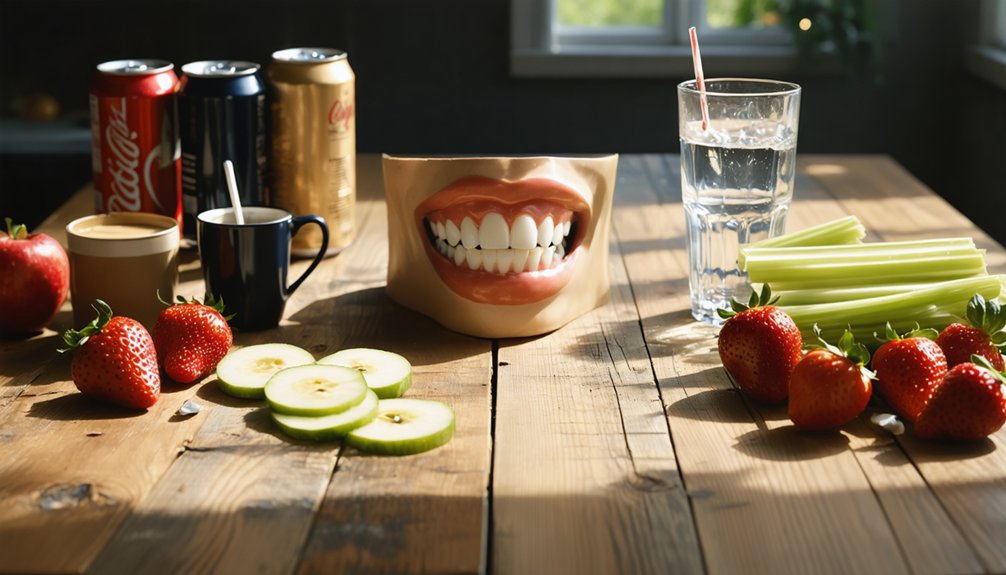
Certain foods and drinks actively worsen fluoride stains by layering additional discoloration onto already compromised enamel. You’ll want to eliminate these culprits while replacing them with enamel-supporting alternatives.
Avoid these four stain-compounding offenders:
- Coffee, tea, and red wine — their chromogens bind directly to fluorosed enamel, deepening discoloration.
- Sugary drinks — sugar consumption accelerates bacterial acid production, eroding enamel further and intensifying stain visibility.
- Dark sodas — combine acidity with pigmentation, creating a double assault on compromised surfaces.
- Acidic citrus juices — strip protective enamel layers, making stains more pronounced.
Replace them with apples, carrots, and celery, which mechanically cleanse surfaces.
Prioritize water, maintain dental flossing daily, and choose calcium-rich foods that actively support remineralization and structural enamel integrity.
Daily Habits That Prevent Fluoride Stains From Getting Worse
Preventing fluoride stains from worsening starts with your daily routine. Brush twice daily for two minutes using fluoride-free toothpaste to protect enamel health and avoid accelerating discoloration.
Don’t fall for dental myths suggesting aggressive scrubbing removes stains faster—it damages enamel and worsens appearance long-term. Floss daily and use an antiseptic mouthwash designed to reduce stain accumulation.
Switch to filtered or bottled water if your local supply contains elevated fluoride levels. Limit dark beverages like coffee, tea, and red wine, which compound existing discoloration.
See your dentist annually to monitor stain progression and catch issues early. These consistent, targeted habits give you direct control over your oral health and markedly slow fluoride stain development before professional intervention becomes necessary.
How to Whiten Safely Without Damaging Your Enamel
Whitening fluoride-stained teeth requires careful method selection to avoid compounding enamel damage. You must prioritize enamel integrity throughout every treatment stage to achieve results without long-term harm.
Follow these evidence-based guidelines:
- Choose lower-concentration peroxide in custom-fitted at-home trays—they reduce dental plaque while minimizing enamel erosion risk over consistent, weeks-long application.
- Limit baking soda paste to occasional use only; overuse aggressively strips enamel integrity beyond recovery.
- Always isolate gum tissue before applying 35% hydrogen peroxide during professional treatments to prevent chemical irritation.
- Rinse thoroughly with water after any chemical whitening agent to prevent residual compounds from yellowing teeth further.
Professional supervision remains your strongest safeguard—natural methods rarely penetrate fluorosis stains deeply enough to deliver meaningful, lasting results.
How to Stop Fluoride Stains Before They Start
Protecting your enamel during treatment matters, but stopping fluoride stains from forming in the first place gives you a far stronger outcome. Controlling fluoride absorption starts with switching to filtered or bottled water, particularly if your local supply exceeds recommended fluoride levels.
Use fluoride-free toothpaste if you’re already prone to fluorosis, and monitor fluoride sources across your diet and dental products simultaneously.
Preventive strategies reduce your dependence on corrective treatments like hydrogen peroxide applications later. Brush twice daily, floss consistently, and limit dark beverages that compound existing discoloration.
For infants and young children, strictly follow age-appropriate fluoride guidelines to prevent developmental staining entirely.
Taking these steps early keeps your treatment options broader, your costs lower, and your enamel structurally intact for the long term.
Frequently Asked Questions
Can Fluoride Stains Ever Return After Successful Professional Treatment Is Completed?
Like a shadow returning at dusk, fluoride stains can reappear. You’ll need to maintain cosmetic bonding results and support natural remineralization through consistent oral hygiene, limiting fluoride exposure, and attending regular professional check-ups to stay ahead.
Are Fluoride Stains Linked to Any Underlying Health Conditions Beyond Dental Concerns?
Fluoride stains can signal fluoride toxicity, affecting your systemic health beyond teeth. You’re potentially risking skeletal fluorosis, thyroid disruption, and neurological concerns. Consult your physician immediately if you’ve experienced excessive fluoride exposure to safeguard your overall well-being.
Does Dental Insurance Typically Cover Professional Fluorosis Treatments Like Veneers?
Coincidentally, many patients discover that dental insurance rarely covers veneers coverage for fluorosis, as insurers classify it cosmetic. You’ll need to verify your specific plan, since coverage policies vary considerably between providers.
At What Age Should Children First Be Evaluated for Dental Fluorosis Signs?
You should have your child evaluated for dental fluorosis signs by age three, when early detection of developmental markers becomes critical. Don’t wait—spotting enamel irregularities early gives you maximum control over treatment outcomes.
Can Fluoride Stains Affect the Structural Strength or Integrity of Teeth?
Like cracks in a fortress wall, fluoride stains signal compromised tooth enamel beneath. Yes, they can weaken structural integrity. You’ll need prompt stain removal to reclaim control and protect your teeth’s long-term strength.
References
- https://dentiste-enfant.com/en/remove-stain-fluor-teeth/
- https://www.facebook.com/groups/zerodonto/posts/10166315317545010/
- https://www.realself.com/question/chicago-il-i-hve-fluorosis-stains-teeth-rid-naturally
- https://hillcrestdentaltx.com/got-blotchy-teeth-eliminate-fluoride-stains-in-texas-now/
- https://www.youtube.com/watch?v=Zwrx4d7blyQ
- https://www.trysnow.com/blogs/news/how-to-get-rid-of-fluoride-stains-on-teeth
- https://www.youtube.com/watch?v=g21HwL8xfgk
- https://clubwhitesmile.com/how-to-remove-fluoride-stains-from-teeth/
- https://www.hazendentistry.com/blog/3-ways-you-can-treat-fluoride-stains-on-your-teeth.php