You can safely whiten your teeth at any age with the right approach. As you get older, your enamel thins and dentine deepens, making discoloration a biological process rather than a sign of neglect. Professional supervision minimizes sensitivity risks and guarantees predictable results tailored to your dental health. Whitening works on natural teeth, but it won’t change crowns or veneers. Keep exploring to discover every option available to you.
Key Takeaways
- Age-related enamel thinning and dentine staining cause discoloration in seniors, making professional whitening a safe and effective enhancement option.
- Dentist consultation before whitening ensures oral health conditions like sensitivity, restorations, and enamel integrity are properly assessed.
- In-office whitening delivers noticeable results within one session, using peroxide gel activated by laser or specialized light.
- Custom-fitted at-home trays worn 15–20 minutes daily over 5–10 days provide a controlled, dentist-monitored whitening alternative.
- Post-whitening maintenance includes brushing twice daily, limiting staining foods, and rinsing with water to preserve brightness long-term.
Can Seniors Safely Whiten Their Teeth?
Although many seniors assume whitening treatments are only for younger adults, there’s no upper age limit to achieving a brighter smile. If your overall health is good, you can safely whiten your teeth even in your 70s and beyond.
Age-related factors like enamel thinning and deeper dentine staining cause discoloration, not poor hygiene, so don’t mistake natural aging for neglect.
Professional dental supervision ensures treatments suit your specific oral condition and minimizes risks like sensitivity or uneven results.
Check whether your dental insurance covers a pre-whitening consultation, since a dentist’s approval is clinically essential before starting any regimen.
Taking control of this process means working with your provider to choose the safest, most effective option tailored to your needs.
Why Senior Teeth Discolor Differently Than Younger Teeth
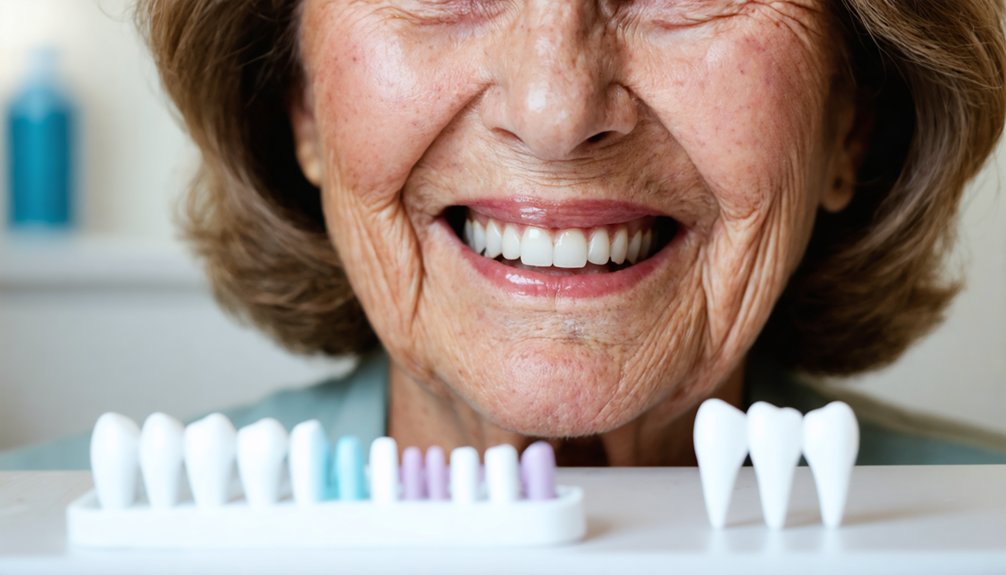
Understanding why your teeth discolor with age helps explain why whitening works differently for seniors than for younger adults. Over time, structural changes occur beneath the surface, making discoloration harder to reverse with standard approaches.
Age-related tooth discoloration runs deeper than the surface, making standard whitening solutions less effective for seniors.
Three key factors drive age-related tooth color change:
- Dental enamel thins progressively, allowing the naturally yellow dentine layer beneath to show through more visibly.
- Dentine staining deepens as pigmented compounds from food, beverages, and tobacco penetrate the more exposed inner layer.
- Enamel becomes less porous with age, which can slow how effectively whitening agents penetrate.
These changes aren’t signs of poor hygiene—they’re biological realities. Recognizing them empowers you to choose treatments specifically calibrated for your dental structure, rather than assuming products designed for younger adults will deliver equivalent results.
What Teeth Whitening Can and Cannot Fix for Older Adults
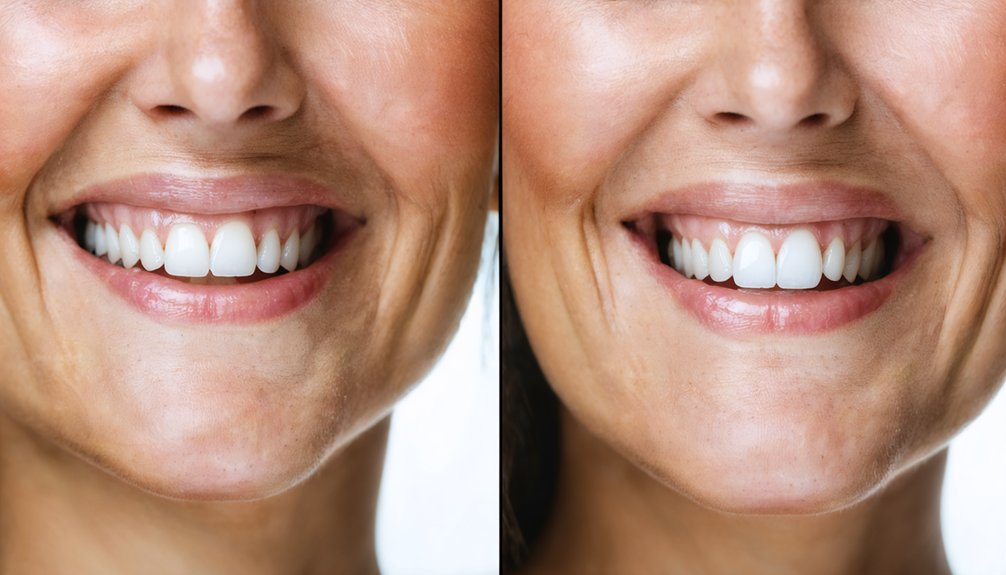
Whitening treatments work well on natural teeth affected by age-related enamel thinning and dentine staining, but they can’t change the color of crowns, veneers, or other tooth-colored restorations.
If you have significant restorative work, whitening your natural teeth first guarantees new restorations can be shade-matched afterward. Keep in mind that cosmetic dentistry procedures like whitening are typically excluded from dental insurance coverage, so you’ll want to budget accordingly.
Whitening also won’t correct structural damage, deep intrinsic stains from medications like tetracycline, or decay. Your dentist can assess which stains respond to peroxide-based treatments and which require alternative solutions.
Understanding these boundaries helps you set realistic expectations and make informed decisions about pursuing professional or at-home whitening options suited to your specific dental profile.
What to Discuss With Your Dentist Before Whitening
Before your first whitening appointment, you’ll want to bring up several key topics with your dentist to guarantee the treatment is safe and effective for your specific needs.
- Health and suitability: Confirm your overall oral health supports whitening, particularly if you have thinning enamel, sensitivity, or existing restorations that won’t respond to bleaching.
- Treatment options: Ask whether in-office procedures, custom trays, or supervised at-home products best match your timeline and desired results.
- Costs and coverage: Understand that cosmetic procedures are typically excluded from dental insurance, so request a clear breakdown of fees upfront.
Asking precise questions helps you stay in control of your care. Your dentist’s clinical guidance ensures whitening delivers safe, measurable improvements rather than unintended sensitivity or uneven results.
In-Office Teeth Whitening Treatments That Deliver Fast Results
If you’re looking for fast, dramatic results, chair-side bleaching lets you walk out of your dentist’s office with a noticeably brighter smile in just one 30- to 60-minute visit.
Your dentist applies a peroxide-based gel directly to your teeth, then activates it with a laser or specialized light to accelerate the whitening process at a clinically controlled level.
Afterward, a fluoride varnish is applied to minimize sensitivity and help preserve your results.
Chair-Side Bleaching Benefits
For seniors seeking dramatic results without weeks of waiting, chair-side bleaching delivers visible improvement in a single 30- to 60-minute office visit. Your dentist controls every step, protecting your gum health while maximizing efficacy.
The procedure follows a precise clinical sequence:
- Your dentist checks your baseline shade and cleans teeth with pumice to remove surface debris.
- A gingival barrier shields soft tissue before hydrogen peroxide gel is applied and light-activated.
- Fluoride varnish is applied post-treatment to support enamel remineralization and reduce sensitivity.
This supervised approach means you’re not guessing about concentration or timing. Results appear immediately, and professional oversight ensures the treatment suits your specific dental condition, giving you measurable, controlled outcomes without compromising structural integrity.
Peroxide Gel Activation
Once the hydrogen peroxide gel is in place, your dentist activates it using a laser or specialized light source, triggering an accelerated oxidation reaction that breaks down deep-set stain molecules within the enamel and dentine. Laser activation notably accelerates this process, producing results within a single 30- to 60-minute session.
Peroxide stability is carefully managed throughout the procedure. Your dentist monitors gel concentration and exposure time to prevent pulp irritation or enamel stress, both of which carry heightened concern for older adults with naturally thinned enamel.
Following activation, fluoride varnish is applied to reduce post-treatment sensitivity.
This controlled, clinician-supervised approach gives you measurable outcomes without guesswork. You’re not simply hoping for improvement—you’re receiving a clinically structured treatment designed to deliver predictable, safe brightening tailored to your dental profile.
Post-Treatment Fluoride Application
After the hydrogen peroxide gel has done its work, your dentist applies a fluoride varnish directly to your teeth to reduce sensitivity and help preserve the whitening results. This post-treatment fluoride step is clinically purposeful, not optional.
Enamel strengthening occurs through three key mechanisms:
- Fluoride remineralizes microscopic pores opened during bleaching, restoring surface integrity.
- It reduces post-treatment sensitivity by blocking exposed dentinal tubules.
- It creates a protective barrier that helps your whitening results last longer.
For seniors especially, whose enamel is naturally thinner, this step carries real clinical weight. You’re not simply finishing a cosmetic procedure—you’re actively reinforcing your tooth structure.
Trusting this evidence-based protocol means you leave the chair with both a brighter smile and stronger, better-protected enamel.
How In-Office Teeth Whitening Works for Seniors
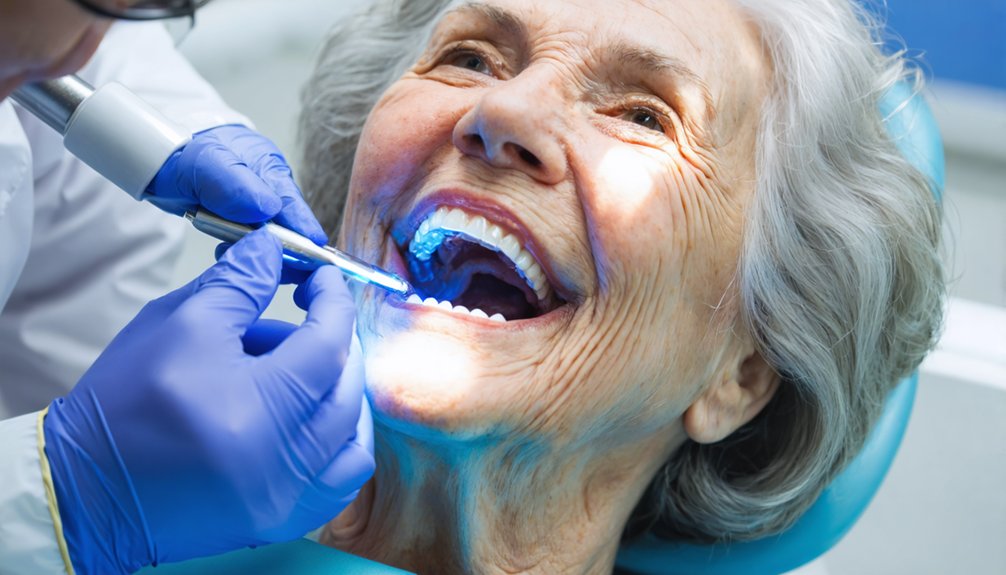
In-office teeth whitening delivers dramatic results in as little as one appointment, making it a practical option for seniors who want immediate improvement. Your dentist begins by checking your shade, cleaning teeth with pumice, and applying a gingival barrier to protect soft tissue.
A peroxide-based gel is then applied and activated by laser or light, accelerating the whitening process efficiently.
If you have a dental crown or veneer, understand that these restorations won’t change color, so your dentist will factor this into your treatment plan.
Following the procedure, fluoride varnish is applied to support enamel health and minimize sensitivity.
Most seniors achieve noticeable results within one to three visits, each lasting 15 to 60 minutes, giving you precise control over your whitening outcome.
How At-Home Whitening Trays Work for Older Adults
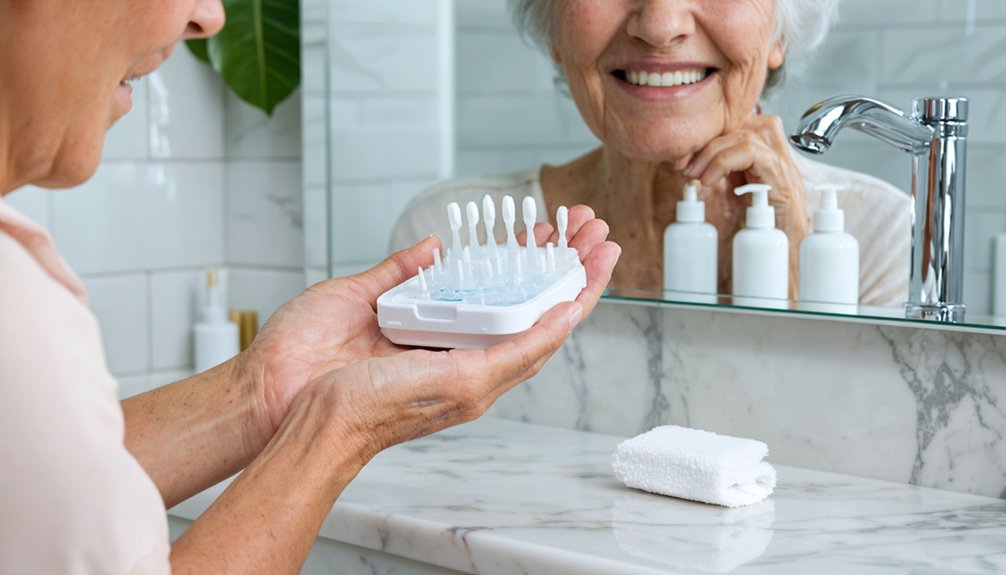
If you’re considering at-home whitening trays, your dentist will take precise impressions of your teeth to create custom-fitted trays that minimize gel contact with sensitive gum tissue.
You’ll typically wear these trays for 15–20 minutes daily over 5–10 days, depending on your desired level of whiteness and your dentist’s recommended protocol.
Throughout the process, your dentist monitors your progress to guarantee the peroxide concentration remains clinically appropriate, reducing your risk of enamel damage or uneven results.
Custom Tray Fitting Process
Custom whitening trays work by delivering a controlled dose of peroxide gel directly against your tooth surfaces, making them one of the most predictable at-home options available to older adults.
Your dentist takes a dental impression of your teeth, then fabricates trays from flexible tray material precisely molded to your unique bite.
The fitting process involves three key steps:
- Your dentist records an accurate dental impression using putty or digital scanning.
- A lab crafts thin, flexible tray material into snug-fitting trays within one to two days.
- You return for a fitting to confirm proper seal and comfort before beginning treatment.
This precise fit guarantees the peroxide gel stays evenly distributed, reducing uneven results and minimizing contact with sensitive gum tissue.
Daily Wear And Duration
Once your trays are fitted, most dentist-supervised protocols call for one to two hours of daily wear over five to ten days, though some lighter options like Opalescence Go require just 15–20 minutes per session. Your dentist will tailor the schedule to your enamel thickness and sensitivity levels, giving you precise control over the process.
Consistent oral hygiene between sessions matters greatly. Brush and floss before each application to guarantee the gel contacts clean enamel directly.
Avoid staining agents like coffee or wine during treatment, as these dietary adjustments prevent new discoloration from undermining your progress.
Skipping sessions or extending wear beyond recommended times won’t accelerate results and may increase sensitivity. Following your prescribed schedule protects your enamel while delivering the most reliable, even outcome possible.
Professional Guidance And Safety
Because older adults often present with thinned enamel and heightened sensitivity, professional oversight transforms at-home whitening from a guessing game into a clinically sound process. Your dentist assesses your oral health before recommending peroxide concentrations suited to your specific needs.
Follow these clinically grounded steps:
- Schedule a pre-treatment exam to identify contraindications like exposed roots or compromised restorations.
- Confirm that cosmetic procedures, including whitening, aren’t covered under dental insurance so you can budget accordingly.
- Use only dentist-supplied trays and gels at prescribed concentrations to prevent enamel damage.
This structured approach puts control firmly in your hands. You’ll minimize sensitivity risks while achieving measurable results.
Professional guidance doesn’t limit your autonomy—it gives you the clinical foundation to whiten safely and effectively.
Best OTC Whitening Strips and Serums for Sensitive Senior Teeth
Several over-the-counter whitening strips and serums can effectively brighten senior teeth while minimizing sensitivity risks. Products like Crest 3D White Daily Whitening Serum and Colgate Optic White Renewal Toothpaste rank among the top choices, delivering controlled peroxide application you can manage at home.
Whitening strips work by allowing peroxide gel to seep into enamel, lifting deeper stains linked to age-related dentine discoloration.
For added control, you can pair these products with natural remedies like baking soda toothpaste, which research from a 2017 Journal of the American Dental Association review confirms is both effective and less abrasive than other OTC types.
Lifestyle modifications, including limiting coffee and wine contact time, further protect your results and reduce the need for repeated treatments.
Baking Soda, Oil Pulling, and Other Home Remedies for Seniors
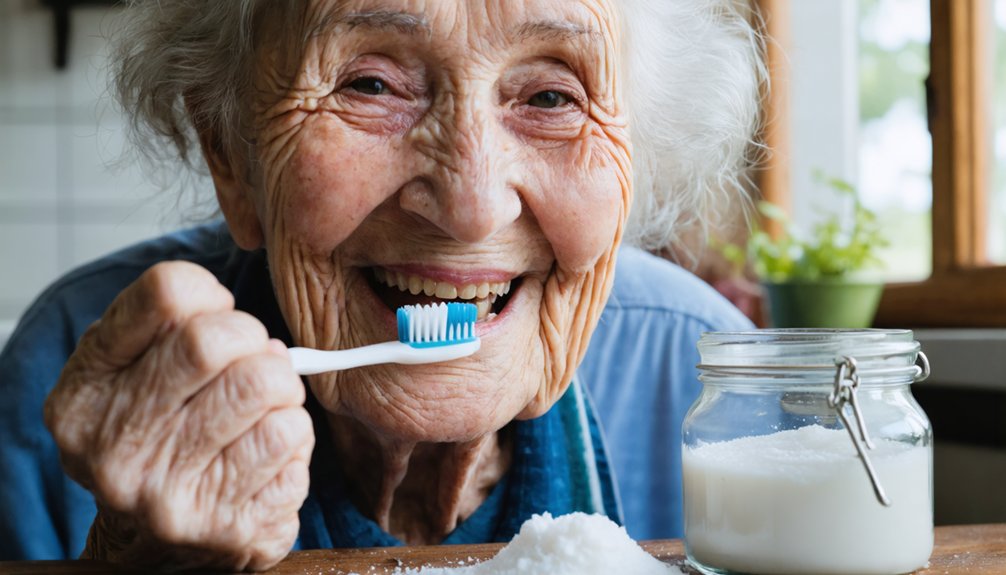
Beyond store-bought options, you’ll find a handful of home remedies that can gently support your whitening efforts without requiring a pharmacy run. While herbal remedies and dietary supplements lack strong clinical backing, a few evidence-based approaches offer measurable results:
- Baking soda paste: Mix one teaspoon with two teaspoons of water and brush a few times weekly—research confirms it’s effective yet less abrasive than many OTC alternatives.
- Hydrogen peroxide rinse: Use a 1.5%–3% solution as a mouthwash to lift surface stains safely.
- Oil pulling: Swish one tablespoon of coconut oil through your teeth for 15–20 minutes to reduce plaque accumulation.
These methods work best alongside professional supervision, ensuring you maintain control over your results without risking enamel integrity.
How Seniors Can Maintain Teeth Whitening Results Longer
Once you’ve achieved your desired whitening results, protecting them requires consistent daily habits. Brush twice daily with a soft-bristled toothbrush and fluoride toothpaste, and floss each day to prevent staining in hard-to-reach areas between teeth.
You’ll also want to limit your contact time with coffee, red wine, and deeply pigmented foods, as these are the primary contributors to new stain accumulation on freshly whitened enamel.
Daily Oral Hygiene Habits
Maintaining your whitening results long-term depends heavily on consistent daily oral hygiene habits. Neglecting your routine accelerates restaining and increases your risk of oral infections that can compromise both gum health and enamel integrity.
Follow these three evidence-based daily practices:
- Brush twice daily using a soft-bristled toothbrush and fluoride toothpaste for a full two minutes, removing plaque before it mineralizes.
- Floss daily to eliminate staining agents and bacteria from interproximal spaces your toothbrush can’t reach.
- Drink water consistently throughout the day to wash away staining compounds and stimulate saliva production, your mouth’s natural defense.
Your dietary habits also matter considerably. Limiting coffee, red wine, and deeply pigmented foods reduces new stain accumulation, preserving your whitening investment effectively.
Limiting Stain-Causing Foods
Your daily hygiene routine builds the foundation, but what you eat and drink each day determines how long your whitening results actually last. Diet modifications directly influence stain prevention, giving you measurable control over your results.
Coffee, red wine, and deeply pigmented foods deposit chromogens onto enamel surfaces quickly. Limiting your contact time with these substances reduces new stain accumulation considerably. When you do consume them, rinse with water immediately afterward to dilute residual pigments before they settle.
Incorporate calcium-rich foods like milk, cheese, and broccoli into your daily diet. These strengthen enamel and reduce erosion vulnerability, preserving the brighter shade you’ve worked to achieve.
Drinking water consistently also washes away staining agents while promoting saliva production, your mouth’s natural defense against discoloration.
Frequently Asked Questions
Can Teeth Whitening Interfere With Medications Commonly Taken by Seniors?
Like a careful navigator checking the tides, you’ll want to consult your dentist about medication interactions before whitening. Certain medications can heighten teeth sensitivity, so professional supervision guarantees you’re safely steering toward a brighter smile.
How Does Dry Mouth Caused by Aging Affect Whitening Treatment Outcomes?
Dry mouth reduces saliva production, disrupting your mouth’s pH balance and leaving teeth vulnerable during whitening. You’ll experience heightened sensitivity and uneven results, so staying hydrated and consulting your dentist beforehand helps optimize your treatment outcomes effectively.
Are There Whitening Options Specifically Designed for Seniors With Dentures?
Like a gardener tending only living plants, you can’t whiten dentures with custom whitening trays. Instead, use denture stain removal cleansers specifically designed for prosthetics. Consult your dentist to explore solutions tailored to your unique smile.
How Often Should Seniors Repeat Whitening Treatments to Sustain Results?
You’ll typically repeat treatments every 6–12 months. Complement sessions with alternative natural remedies like baking soda and lifestyle dietary changes—limit coffee and wine, increase calcium intake—to extend your results and maintain control over your smile’s brightness.
Does Dental Insurance Ever Cover Whitening Treatments for Older Adults?
Most dental insurance won’t cover whitening due to cosmetic coverage exclusions. You’ll want to review your policy limitations carefully, as plans typically classify whitening as elective, leaving you responsible for out-of-pocket costs.
References
- https://www.aarp.org/health/conditions-treatments/teeth-whitening/
- https://sunlakesdentistry.com/can-senior-teeth-be-whitened/
- https://tarpondental.com/teeth-whitening-for-seniors-tips-and-tricks-for-optimal-dental-care/
- https://www.ada.org/resources/ada-library/oral-health-topics/whitening
- https://www.infusedental.com/can-70-year-old-seniors-whiten-their-teeth/
- https://www.teethwhitening.london/blog/whitening-for-older-adults-removing-decades-of-yellowing
- https://www.nhs.uk/tests-and-treatments/teeth-whitening/
- https://smilewelldentist.com/is-teeth-whitening-safe-for-seniors/
- https://www.healthline.com/nutrition/whiten-teeth-naturally