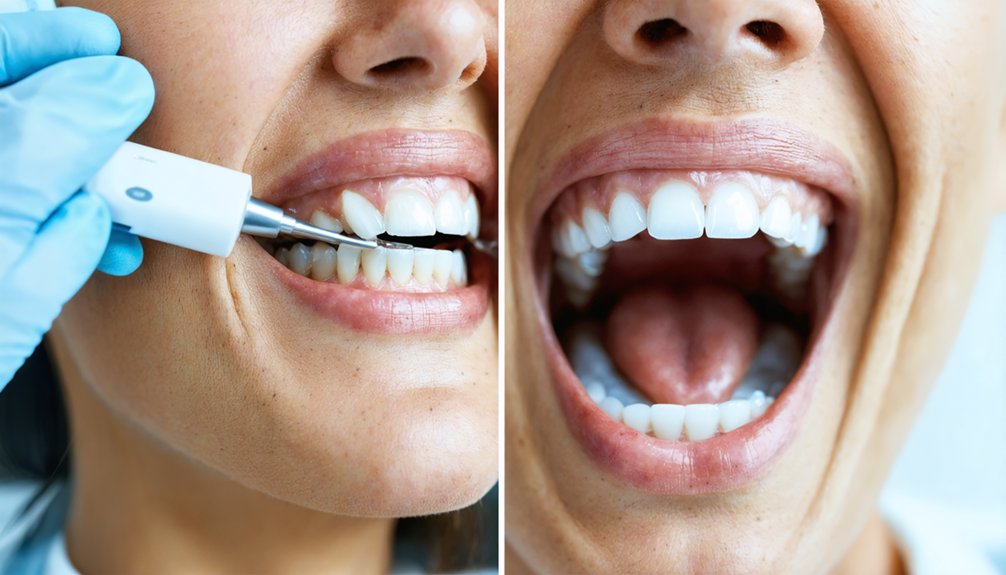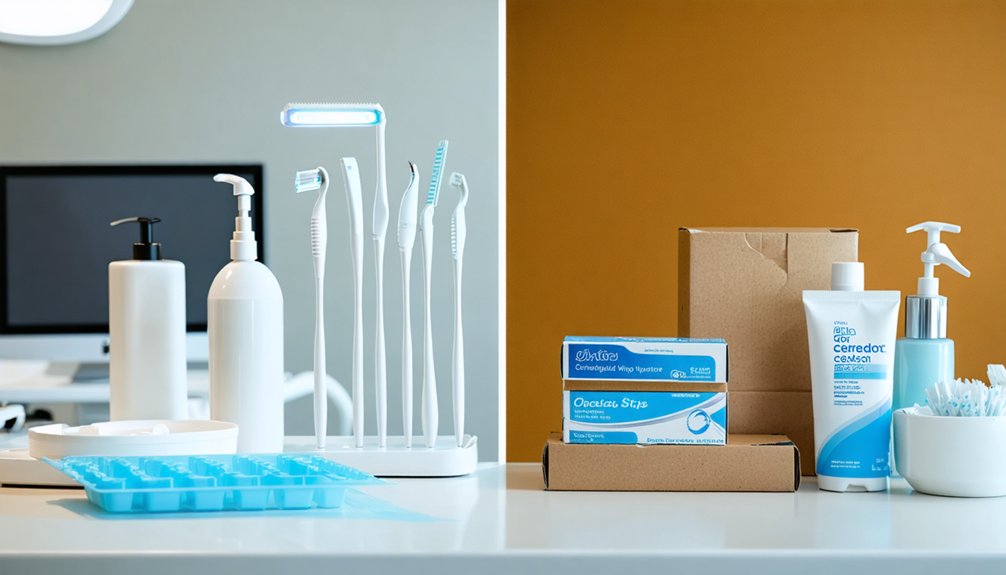
When comparing professional whitening to DIY kits, expert opinion consistently favors clinical treatments for safety and efficacy. Professional methods achieve several shades of improvement using higher-concentration bleaching agents and custom-fitted trays, while store kits typically deliver only 1-2 shades and fade within months. Dentists also monitor tissue response, reducing your risk of enamel damage and gum irritation that DIY kits can cause. The full clinical picture reveals even more critical distinctions worth knowing.
Key Takeaways
- Professional whitening uses higher-concentration bleaching agents, achieving several shades of improvement lasting 1–4 years, far surpassing DIY kit results.
- Dentists customize trays for even gel distribution, eliminating uneven whitening and reducing risks of gum irritation or enamel damage.
- DIY kits effectively manage mild extrinsic stains but cannot treat intrinsic staining or significant discoloration requiring professional-strength agents.
- Despite higher upfront costs ($300–$1,000), professional treatments offer long-term savings compared to repeatedly purchasing ineffective store-bought kits ($20–$50).
- Persistent sensitivity, uneven results, or gum irritation from DIY kits signal the need for professional dental assessment and intervention.
What Dentists Actually Recommend: Professional vs. DIY Whitening
When choosing between professional and DIY whitening, dentists consistently prioritize safety, efficacy, and individual patient suitability over convenience or cost.
Despite consumer trends favoring store-bought kits, clinical evidence supports professional treatments as the superior option for most patients.
Clinical evidence consistently favors professional whitening treatments over store-bought kits for most patients seeking reliable results.
Dentists recommend professional whitening because it accounts for enamel condition, existing restorations, and sensitivity thresholds—factors DIY kits can’t assess.
You’ll encounter whitening myths suggesting store kits deliver comparable results, but the concentration gap between over-the-counter and professional-grade bleaching agents is significant.
For mild staining, dentists may approve monitored DIY use.
However, for deeper discoloration or pre-existing dental concerns, professional in-office or custom take-home treatments remain the evidence-backed choice.
Your dentist tailors the approach to your specific oral health profile, maximizing both safety and outcome.
Do Professional Whitening Results Actually Look Better?
When you choose professional whitening, you’ll achieve several shades of improvement that DIY kits simply can’t match due to higher bleaching agent concentrations.
Custom trays guarantee consistent gel distribution across your teeth, eliminating the uneven application that generic strips commonly produce.
These results also hold longer—up to 1-4 years—giving you a visually superior outcome that store-bought kits, which fade within months, can’t sustain.
Dramatic Shade Improvements
Professional whitening treatments consistently outperform DIY kits in delivering dramatic, measurable shade improvements.
When you choose in-office procedures, you’re accessing higher bleaching agent concentrations that produce several shades of lightening in a single session. That’s a dramatic transformation you simply can’t replicate with store-bought strips or generic trays.
DIY kits typically deliver only 1-2 shades of improvement over weeks, producing minimal noticeable differences compared to clinical alternatives.
Custom professional trays guarantee even gel distribution across all tooth surfaces, eliminating the patchy results common with ill-fitting store options.
If you’re targeting deep intrinsic stains or preparing for a significant event, you need the precision and potency that only professional-grade concentrations provide.
You’re not guessing—you’re getting clinically verified, controlled outcomes.
Even Application Results
Beyond shade improvements, the visual quality of whitening results depends heavily on application consistency. Generic strips and trays don’t conform precisely to your tooth anatomy, causing uneven gel distribution and compromised whitening efficiency. You’ll often notice darker patches between teeth or near the gumline—a direct consequence of poor fit.
Professional customization eliminates this variable. Custom-molded trays guarantee consistent gel distribution across every tooth surface, producing shade uniformity that generic kits simply can’t replicate.
Under dental supervision, your dentist calibrates gel concentration specifically to your enamel condition, maximizing treatment effectiveness without compromising surrounding tissue.
The evidence is clear: professional customization directly determines even application results. If you want predictable, consistent results rather than patchy improvements, professional-grade delivery systems give you the precise control that store-bought alternatives fundamentally lack.
Lasting Visual Impact
The visual difference between professional and DIY whitening isn’t subtle—it’s measurable and clinically documented.
Professional treatments achieve several shades of lightening with uniform distribution, producing results that register clearly under visual perception assessments. You’re not guessing at improvement—you’re seeing documented, calibrated change.
DIY kits typically deliver one to two shades of temporary lightening. The lasting effects dissipate within months due to lower peroxide concentrations and inconsistent gel contact.
Professional results, by contrast, persist one to four years when supported by proper oral hygiene and periodic touch-up protocols.
Custom trays guarantee complete surface coverage, eliminating the patchy outcomes common with generic strips.
When visual impact matters—clinically or aesthetically—professional whitening delivers quantifiable, sustained results that store-bought alternatives can’t replicate at equivalent depth or duration.
Which Whitening Method Is Actually Safer for Your Teeth?
When you choose professional whitening, your dentist supervises the entire process, adjusting bleaching concentrations and applying protective barriers to minimize gum irritation and enamel damage.
DIY kits, however, expose you to poorly fitting trays that allow high-concentration gel to contact soft tissue, increasing your risk of chemical burns, uneven whitening, and enamel dehydration.
Without clinical oversight, you’re also more likely to overuse store-bought products, compounding sensitivity and long-term structural damage to your enamel.
Professional Supervision Minimizes Risks
Safety stands as one of the most critical factors when choosing between professional and DIY whitening, and the clinical evidence clearly favors supervised care.
When you undergo professional whitening, your dentist actively evaluates your specific risk factors before treatment begins, including enamel integrity, gum recession, and existing restorations. This pre-treatment assessment eliminates guesswork that DIY kits simply can’t replicate.
Without supervision, you risk gum irritation from poorly fitted trays that allow bleaching agents to contact soft tissue directly. You also risk enamel dehydration through overuse.
Dentists control bleaching concentrations precisely, integrate desensitizing agents when necessary, and monitor your tissue response throughout the process. This structured oversight converts whitening from a speculative consumer activity into a controlled clinical intervention, giving you measurable outcomes without compromising your oral health.
DIY Kits Risk Enamel Damage
Beyond the risks posed by poor tray fit and inadequate supervision, enamel damage represents a more insidious consequence of unsupervised DIY whitening.
When you overuse store-bought kits, you’re exposing your enamel to prolonged peroxide contact, accelerating enamel sensitivity and structural degradation.
Unlike professional treatments, DIY kits lack calibrated concentration controls, meaning you’re fundamentally self-administering a chemical process without measurable safeguards.
The long-term effects include irreversible enamel dehydration, increased porosity, and heightened susceptibility to decay.
You can’t reverse compromised enamel through additional whitening; the damage compounds with repeated misuse.
Dentists regulate exposure duration and peroxide strength precisely to prevent these outcomes.
Without that clinical oversight, you’re trading short-term cosmetic gains for measurable, lasting structural harm to your teeth.
Professional vs. Store-Bought Whitening: What It Actually Costs
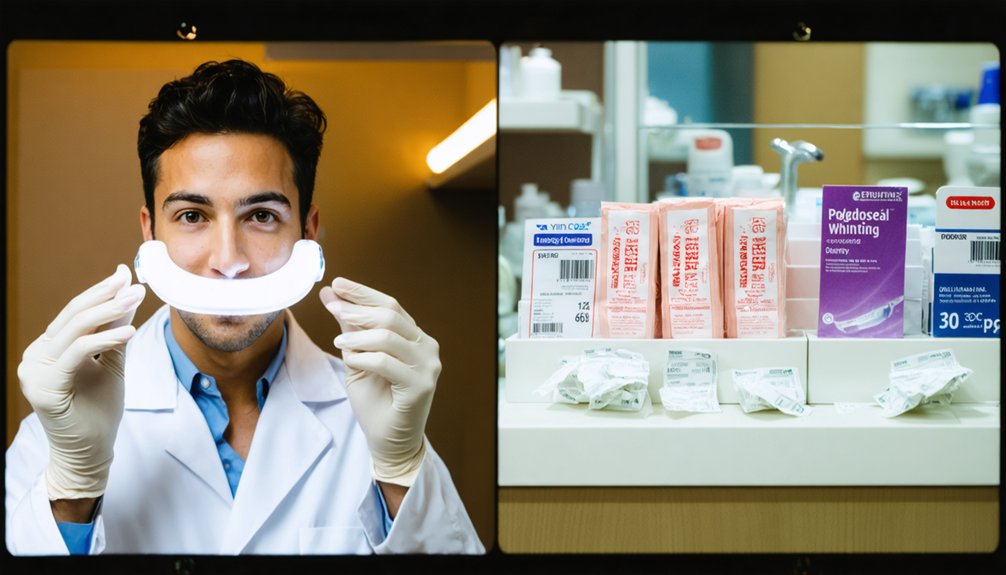
Cost is often the deciding factor when choosing between professional and store-bought whitening, yet the upfront price doesn’t always reflect the true long-term expense. A proper value assessment reveals store kits offer lower budget considerations initially, typically $20–$50, but their short-lived results demand repeated purchases.
Your price breakdown shifts considerably when you factor in cumulative costs over months.
Your cumulative costs tell a different story than the sticker price ever will.
Professional treatment options require higher initial investment, often $300–$1,000, but your investment analysis must account for results lasting one to four years.
Professional take-home kits represent a cost comparison middle ground, delivering clinical-strength outcomes at reduced rates.
When you conduct an honest affordability factors review, long term savings favor professional whitening. You’re not just buying brightness—you’re controlling the frequency, quality, and durability of your results.
How Long Does Each Whitening Method Actually Last?
When weighing whitening options, longevity data reveals a stark performance gap between professional and store-bought methods.
In this treatment comparison, professional in-office results sustain 1-4 years with disciplined oral habits and periodic touch-up gel applications. That’s measurable whitening longevity you can plan around.
Store-bought kits, however, deliver effects that fade within months, producing only temporary 1-2 shade improvements. Their lower peroxide concentrations can’t penetrate deeply enough for durable structural change.
Professional take-home kits occupy the middle ground—custom-molded trays and higher-grade gels slow pigment reversion considerably.
You’re fundamentally controlling the timeline rather than accepting a product’s generic limitations.
If sustained results matter to you, professional-grade treatment isn’t just preferable—it’s the only evidence-supported option for maintaining meaningful whitening long-term.
Signs You Need Professional Whitening, Not a Store Kit
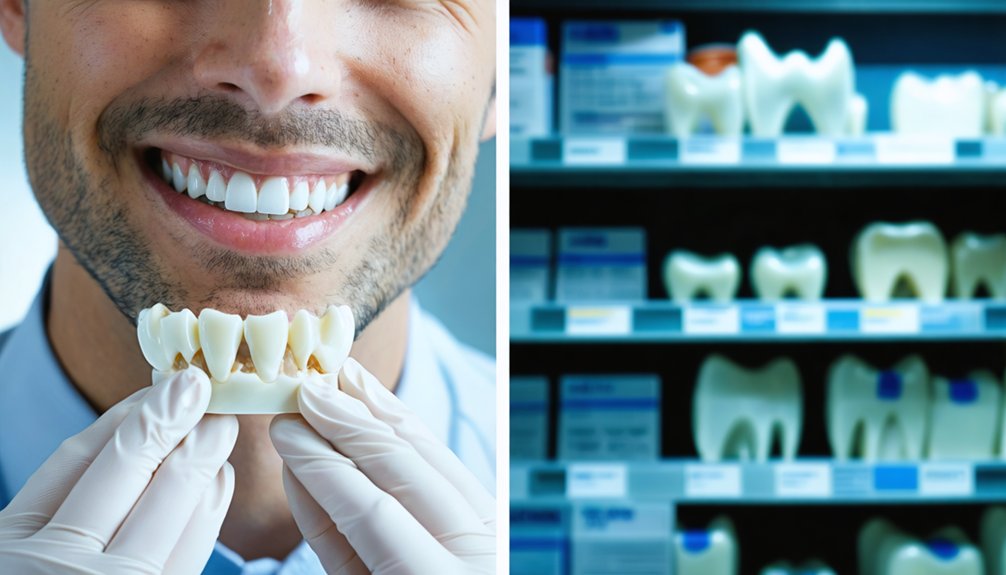
Longevity data only tells part of the story—knowing *when* professional whitening becomes necessary is equally important.
If you’re experiencing whitening sensitivity with store kits, that’s a clinical signal your enamel requires supervised intervention. Certain stain types—intrinsic discoloration from tetracycline, fluorosis, or trauma—don’t respond to over-the-counter peroxide concentrations.
You’ll also need professional assessment if previous DIY attempts produced uneven results or gum irritation. Deep, calcified stains penetrating dentin require higher-concentration bleaching agents only dentists can legally dispense.
Additionally, if you’ve undergone restorative work—crowns, veneers, or composite bonding—generic trays won’t address shade-matching complexities.
Recognizing these indicators early prevents wasted expenditure on ineffective products and allows your dentist to implement a targeted, concentration-adjusted protocol that delivers measurable, controlled outcomes.
When DIY Whitening Kits Are Worth It (And When They’re Not)
Despite their limitations, DIY whitening kits deliver clinically appropriate outcomes under the right conditions. If you’re managing mild extrinsic stains or maintaining professionally whitened teeth, a store kit represents a cost-effective, practical solution.
This DIY effectiveness comparison shows where over-the-counter products genuinely perform: surface-level discoloration from coffee, tea, or tobacco responds predictably to peroxide-based strips used consistently.
However, you shouldn’t rely on DIY kits for intrinsic staining, post-restoration matching, or significant discoloration—these cases exceed their chemical capacity.
For whitening maintenance tips, incorporate low-concentration strips biweekly after professional treatment to extend results without risking enamel dehydration. Avoid exceeding recommended application frequency.
When your clinical needs surpass mild correction, continuing with DIY options wastes time and risks compounding sensitivity issues.
Frequently Asked Questions
Can Whitening Treatments Work on Crowns, Veneers, or Dental Implants?
Surprise — whitening effectiveness doesn’t extend to crowns longevity, veneers maintenance, or implant sensitivity. You can’t bleach synthetic materials. They retain their original shade, so you’ll need replacements or adjustments to match newly whitened natural teeth.
Does Teeth Whitening Cause Permanent Enamel Damage Over Time?
Whitening doesn’t cause permanent enamel damage when used correctly. You’ll minimize enamel sensitivity by controlling whitening frequency and avoiding overuse of store kits, which risk dehydration and temporary structural compromise without professional supervision.
How Does Diet Affect Whitening Results After Treatment?
Your diet directly impacts whitening duration. You’ll accelerate staining by consuming coffee, tea, or red wine post-treatment. Avoiding pigment-rich foods and following diet considerations extends your results, preserving professionally achieved shades considerably longer.
Are Certain Tooth Stain Types Completely Unresponsive to Whitening?
Did you know some stain types resist whitening entirely? Intrinsic discoloration from tetracycline or fluorosis limits whitening efficacy considerably. Natural discoloration responds better, but treatment limitations mean you’ll need veneers or bonding for unresponsive cases.
At What Age Is Teeth Whitening Considered Safe to Begin?
You shouldn’t begin whitening before age 16, when enamel matures. After that, you can manage teeth sensitivity risks and control whitening frequency effectively. A dentist’s evaluation guarantees you’re proceeding safely based on your dental development.
References
- https://www.blancodentalcenter.com/professional-teeth-whitening-vs-diy-kits/
- https://centralparkdentalcharleston.com/professional-teeth-whitening-vs-diy-kits-which-is-better/
- https://westbranchdentist.com/do-take-home-whitening-kits-work/
- https://www.carolinasdentist.com/professional-teeth-whitening-vs-at-home-kits/
- https://www.perennialdental.com/post/professional-teeth-whitening-vs-at-home-kits-which-is-right-for-you
- https://derksendentistry.com/professional-teeth-whitening-vs-store-kits-what-actually-works-long-term/
- https://betterimagedentistry.com/professional-teeth-whitening-vs-diy-kits-what-you-should-know/
- https://www.tarheeldentistry.com/2026/04/professional-teeth-whitening-vs-at-home-kits-in-chapel-hill/