Laser teeth whitening is a professional cosmetic procedure where your dentist applies a peroxide-based gel to your teeth and activates it with a laser for faster, deeper whitening. You’ll typically see results of 2–6 shades brighter in a single 30–90 minute session, with outcomes lasting 1–3 years. It’s non-invasive, requires minimal downtime, and effectively removes surface stains from coffee, wine, and tobacco. Keep exploring to uncover everything you need to know before booking your appointment.
Key Takeaways
- Laser teeth whitening uses peroxide-based gel activated by laser light, lightening teeth 2-6 shades in a single 30-90 minute session.
- Dentists prepare teeth with a thorough cleaning, then apply protective barriers to gums before beginning the whitening process.
- Medical-grade hydrogen peroxide gel is applied evenly across teeth and activated in 15-20 minute laser exposure cycles.
- Results last 1-3 years, though diet, oral hygiene, and avoidance of staining foods significantly impact longevity.
- Temporary sensitivity lasting around 24 hours is common; the procedure cannot correct intrinsic stains embedded within dentin.
What Is Laser Teeth Whitening?
Laser teeth whitening is a professional cosmetic dental procedure that combines specialized laser technology with bleaching formulations to dissolve stains and reverse discoloration on dental enamel.
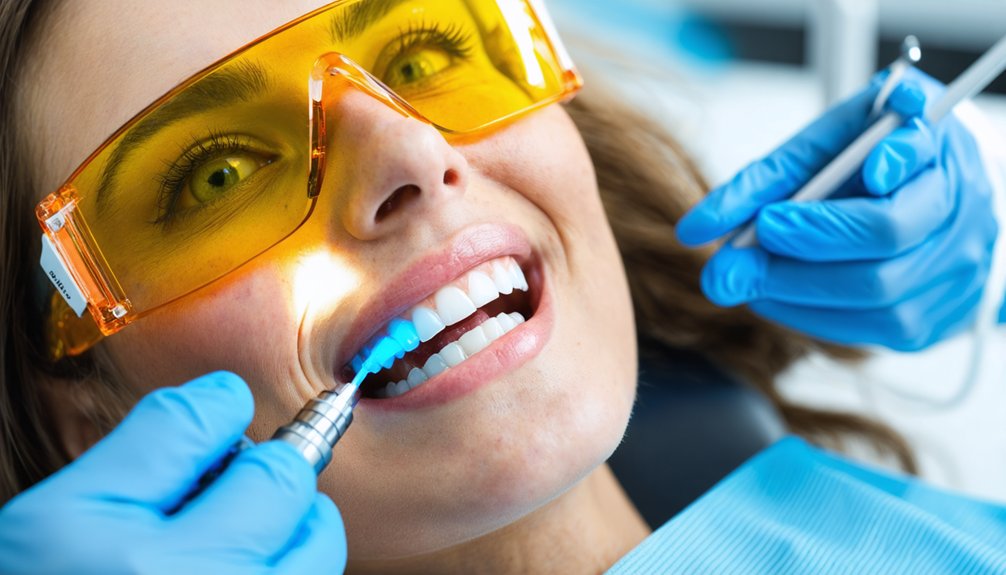
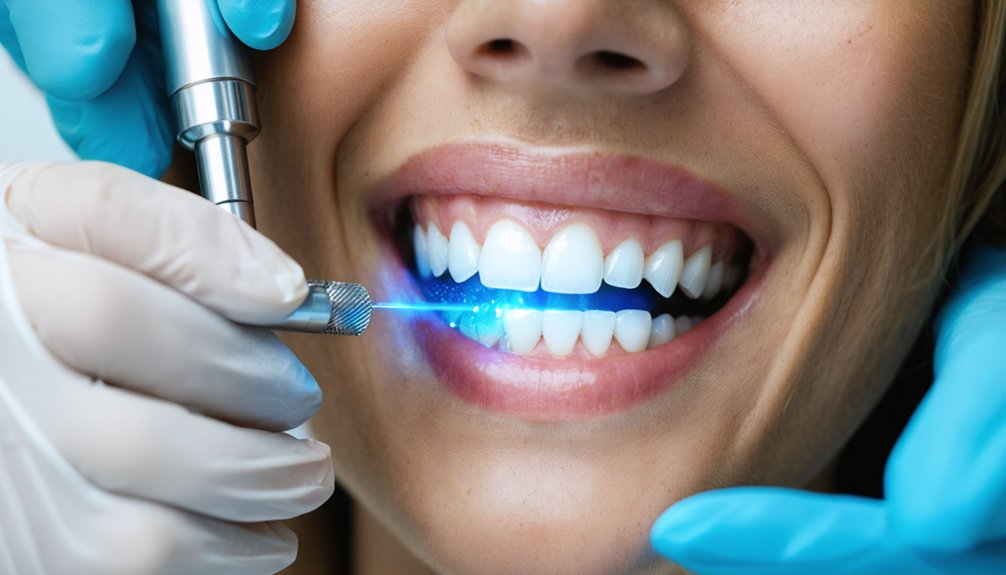
Your dentist applies a peroxide-based gel directly to your teeth, then activates it using a specialized laser, accelerating the whitening chemical reaction far beyond what at-home products achieve.
The benefits are compelling — you’ll see immediate results, with teeth lightening 2-6 shades in a single non-invasive session, allowing you to return to work the same day.
Unlike DIY strips or toothpastes, professional-grade formulations penetrate deeper, delivering longer-lasting outcomes.
However, understanding the risks keeps you informed.
Temporary tooth sensitivity lasting approximately 24 hours is the most commonly reported side effect, though the procedure itself remains painless throughout application.
How White Can Laser Teeth Whitening Actually Make Your Teeth: and How Long Does It Last?
How dramatically can laser teeth whitening transform your smile? Results depend on your starting shade and stain type, but you can realistically control your whitening expectations by understanding what’s achievable:
- Shade improvement: Laser whitening typically lightens teeth 2–6 shades in a single 30–60-minute session.
- Treatment longevity: Results last 1–3 years depending on your dietary habits, oral hygiene, and lifestyle choices like coffee or tobacco use.
- Limitations: Surface stains respond best; intrinsic stains within dentin may require alternative treatments.
You’ll see immediate results post-treatment, but maintaining them requires proactive care. Avoiding stain-causing foods and beverages during the first 48 hours maximizes your outcome.
Periodic touch-ups keep your results sharp and extend treatment longevity considerably.
How Dentists Prepare Your Teeth for Laser Whitening
Before the whitening gel ever touches your teeth, your dentist completes a precise sequence of preparation steps that directly determines how effective your results will be. A pre-treatment assessment identifies surface debris, plaque, or existing sensitivity concerns that could compromise outcomes. Your dentist then cleans your teeth thoroughly, ensuring the gel bonds directly to enamel rather than contaminants.
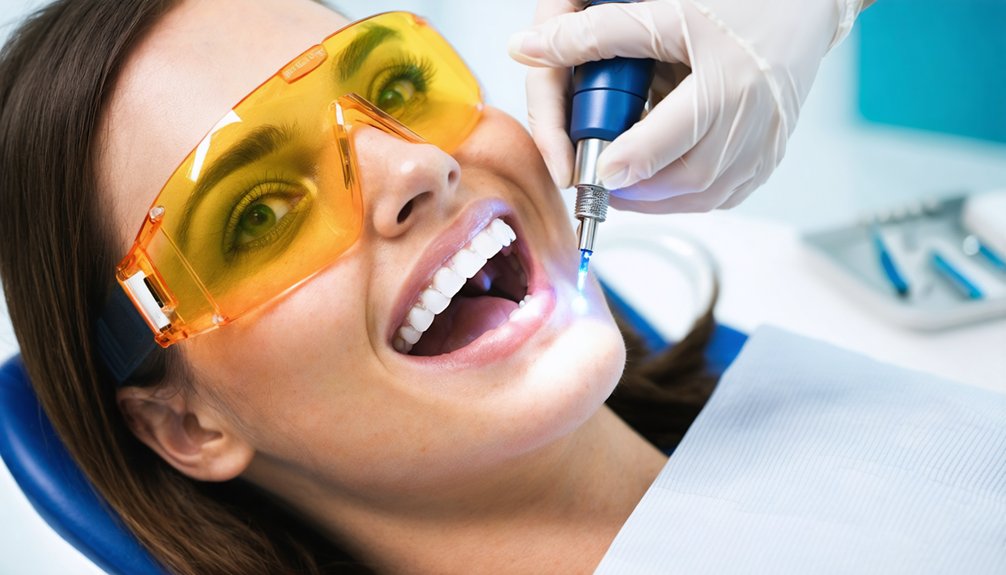
Next, cheek retractors hold your lips and cheeks away from all visible tooth surfaces. A light-cured resin barrier covers your gumline, blocking gel contact and reducing irritation risk. Protective glasses shield your eyes from laser exposure. Cotton rolls provide additional protection and patient comfort throughout the procedure.
Each step isn’t optional—it’s engineered to maximize gel penetration, protect surrounding tissue, and give you measurable, controlled whitening results.
What Happens During the Laser Whitening Procedure?
Once the protective barriers are in place, the actual whitening procedure begins with your dentist applying a thin, even layer of medical-grade hydrogen peroxide gel—approximately 1 mm thick—across all visible front tooth surfaces.
Unlike store-bought alternatives, this professional-strength formula starts breaking down stains immediately. Your pre-treatment assessment determines how many activation cycles you’ll need.
The laser then targets your teeth in precise intervals:
- Cycle 1: Laser activates the gel for 15-20 minutes, penetrating enamel deeply.
- Cycle 2: Fresh gel is reapplied, and laser exposure repeats for intensified results.
- Cycle 3: Final activation completes your whitening, achieving 2-6 shades lighter.
The entire session runs 30-90 minutes.
Your post-treatment care instructions follow immediately, ensuring you maintain these results effectively.
How Long Does Sensitivity Last and When Won’t Laser Whitening Work?
Although laser teeth whitening delivers immediate, dramatic results, you’ll likely experience temporary tooth sensitivity for roughly 24 hours post-treatment—a minor, manageable tradeoff for most patients.
Understanding sensitivity duration helps you plan accordingly, so you can resume normal activities without disruption.
However, you must also recognize whitening limitations before committing to treatment.
Laser whitening excels at eliminating surface-level stains caused by coffee, wine, or tobacco, but it won’t penetrate stains embedded below the enamel or within the dentin.
Intrinsic discoloration from medications, trauma, or fluorosis typically requires alternative restorative solutions.
Knowing these boundaries lets you make informed decisions.
If your discoloration originates at a deeper structural level, consult your dentist about veneers or bonding as more appropriate corrective options.
Frequently Asked Questions
How Much Does Laser Teeth Whitening Typically Cost per Session?
You’ll typically spend $300–$1,500 per session, depending on cost factors like location and dentist expertise. With session duration ranging 30–120 minutes, you’re investing in professional, immediate results that outperform at-home alternatives.
Is Laser Teeth Whitening Safe for Pregnant or Breastfeeding Women?
Sure, because nothing says “great timing” like bleaching your teeth while growing a human! You should avoid laser teeth whitening due to safety concerns, but alternative options exist—consult your dentist for pregnancy-safe solutions.
Can Laser Whitening Damage Existing Dental Crowns, Veneers, or Fillings?
Laser whitening won’t damage your crowns, veneers, or fillings, but it won’t whiten them either. You’ll notice crown sensitivity or uneven veneer longevity if restorations don’t match your newly brightened natural teeth afterward.
How Soon After Laser Whitening Can I Eat Normally Again?
Like walking on thin ice, rushing back to normal eating risks staining your fresh results. You can eat normally after 24 hours; until then, follow strict post-treatment care and white-food recommendations to protect your investment.
Does Dental Insurance Ever Cover Laser Teeth Whitening Procedures?
Dental insurance rarely covers laser teeth whitening since it’s considered cosmetic. You’ll want to explore your insurance coverage details and discuss alternative treatment options with your dentist to find the most cost-effective solution for your needs.
References
- https://bloommedspamn.com/laser-teeth-whitening-guide-what-to-expect/
- https://www.healthline.com/health/dental-and-oral-health/laser-teeth-whitening
- https://www.vantagepointedental.com/laser-teeth-whitening-how-it-works-and-what-to-expect/
- https://www.fletcherfamilydentistry.com/laser-teeth-whitening-vs-other-methods/
- https://www.youtube.com/watch?v=zF6pjQ5KXQk
- https://www.seattledentalcare.com/blog/show-your-bright-white-smile/
- https://www.biolase.com/media/Whitening_Step-by-Step.pdf
- https://www.yourmckinneydentist.com/pros-and-cons-of-laser-teeth-whitening/
- https://www.colgate.com/en-us/oral-health/teeth-whitening/is-laser-teeth-whitening-an-option-for-you