Laser whitening removes wine stains by applying a peroxide-based gel directly to your teeth, then activating it with a specialized laser to break down the organic chromophore molecules embedded in your enamel. Red wine’s tannins and anthocyanins bond deeply to tooth surfaces, but the laser-activated gel penetrates those layers to lift discoloration efficiently. You can see up to 8 shades of improvement in a single session — and there’s plenty more to uncover about how this treatment works for you.
Key Takeaways
- Laser whitening is a professional dental procedure using peroxide-based gel and specialized lasers to remove wine stains from teeth.
- Red wine stains teeth through organic chromophore molecules; the laser targets and breaks the chemical bonds of these pigments.
- Treatment lasts 30–60 minutes, achieving 5–8 shade improvements per session, with most patients needing 3–4 sessions total.
- Post-treatment sensitivity may last 24 hours; potassium nitrate toothpaste and ibuprofen help manage discomfort effectively.
- Ideal candidates have extrinsic wine stains, healthy teeth, and no cavities or gum disease for optimal whitening results.
What Is Laser Whitening for Wine-Stained Teeth?
Laser whitening is a professional dental procedure that removes stains and discoloration from your teeth using a powerful combination of peroxide-based gel and specialized laser technology.
Your dentist applies a hydrogen peroxide-based gel directly to your teeth, then activates it with a focused laser or light source that breaks down stain molecules at the molecular level.
A hydrogen peroxide gel targets your teeth at the molecular level, activated by precise laser energy to dissolve deep stains.
This targeted approach addresses tooth discoloration causes like red wine, coffee, tea, and tobacco — extrinsic stains that accumulate on your enamel over time.
Unlike whitening alternatives such as over-the-counter strips or toothpastes, laser whitening delivers professional-grade penetration into both enamel and dentin.
You’ll achieve noticeably brighter results in a single controlled appointment, giving you precise command over your smile’s transformation rather than relying on slower, less predictable solutions.
Why Wine Stains Respond Well to Laser Whitening
Because red wine contains organic chromophore molecules that bind to your enamel’s surface, it creates the type of extrinsic staining that laser whitening targets most effectively.
Wine composition includes tannins, anthocyanins, and chromogens — compounds that penetrate enamel’s porous surface and oxidize over time, deepening discoloration.
Laser whitening’s stain removal mechanism directly counteracts this process. The activated hydrogen peroxide gel breaks down those organic molecules at a chemical level, dismantling the bonds holding pigment to your enamel.
Because wine stains remain on the tooth’s exterior rather than embedded within dentin, the gel penetrates exactly where it needs to work.
You can expect 5-8 shades of improvement in a single session, making laser whitening the most precise, efficient solution for wine-related discoloration you can currently access.
What Actually Happens During a Laser Whitening Session
Before the whitening gel ever touches your teeth, your dentist carefully shields your gums and soft tissues to prevent chemical irritation from the peroxide formula.
Once your mouth is protected, the dentist applies a professional-grade hydrogen peroxide gel directly to your tooth surfaces and directs a specialized laser onto the gel to activate its whitening properties.
The laser’s heat accelerates the breakdown of stain molecules, allowing the gel to foam and penetrate the enamel where wine’s chromophore compounds have embedded themselves.
Protecting Gums Before Treatment
Once you’re settled into the dentist’s chair, the first thing your dentist does isn’t reach for the whitening gel—it’s protect your gums. Before any whitening agent touches your teeth, your dentist conducts pre-treatment assessments to confirm your gums and soft tissues are healthy enough to proceed.
From there, precise gum protection techniques take over. Your dentist applies a rubber dam or protective resin barrier directly along your gumline, shielding sensitive tissue from the high-concentration hydrogen peroxide gel.
This step isn’t optional—it’s critical. Peroxide contact with unprotected gums causes chemical irritation and discomfort that undermines your results and recovery.
This preparation phase gives you control over the outcome. A properly protected treatment zone means the gel works exactly where it should—on your enamel, nowhere else.
Gel Application And Activation
With your gums shielded, your dentist moves directly into the core of the procedure—applying the hydrogen peroxide gel across your tooth surfaces in a precise, controlled layer.
The gel composition typically ranges from 25% to 40% hydrogen peroxide concentration, engineered specifically to penetrate enamel and disrupt the organic chromophore molecules responsible for wine discoloration.
Once applied, your dentist directs a specialized laser onto the gel, triggering one of the most efficient activation methods in modern cosmetic dentistry.
The laser generates targeted heat, accelerating the peroxide’s oxidation reaction. You’ll notice the gel foaming—that’s the active breakdown of stain molecules occurring in real time.
This phase lasts several minutes before your dentist removes the gel, rinses your teeth, and evaluates whether another application cycle is necessary for your target shade.
Sensitivity, Timing, and What Happens at Your Appointment
After your laser whitening session, you’ll likely experience mild tooth sensitivity for up to 24 hours as the peroxide gel continues interacting with your enamel and dentin.
You can manage this discomfort effectively by avoiding hot, cold, or acidic foods and using a sensitivity-formulated toothpaste in the days following treatment.
Your appointment itself typically runs 30 to 60 minutes, during which your dentist may repeat the gel application cycle two to three times to achieve your target shade.
Managing Post-Treatment Sensitivity
Tooth sensitivity is a common side effect you’ll experience for up to 24 hours following laser whitening, as the peroxide gel temporarily opens dentinal tubules and heightens nerve responsiveness.
Effective sensitivity management begins immediately post-treatment. Avoid hot, cold, and acidic foods and beverages during this window to minimize nerve irritation.
Use a potassium nitrate-based toothpaste before and after your appointment to desensitize nerve endings proactively. Your dentist may also apply a fluoride varnish post-treatment to accelerate enamel remineralization and reduce discomfort.
Over-the-counter analgesics like ibuprofen manage residual inflammation efficiently.
Prioritizing disciplined post-treatment care guarantees your recovery stays on schedule and protects your results. You control the outcome by following these targeted protocols precisely and consistently.
Appointment Timeline Breakdown
Managing sensitivity effectively sets you up for a smooth appointment experience, and knowing exactly what happens during your session removes uncertainty and keeps you in control.
Your appointment preparation begins with a dental health screening—no cavities or gum disease can be present before treatment starts.
Once cleared, your dentist protects your gums, applies hydrogen peroxide gel, and directs the laser to activate the whitening properties. Each application cycle runs several minutes, with repetitions adjusted to your target shade. The entire session takes 30–60 minutes.
For post-treatment care, you’ll experience sensitivity within 24 hours, so avoid staining foods, beverages, and extreme temperatures during that window.
Most patients complete 3–4 sessions for ideal results, with each appointment delivering immediate, measurable shade improvement.
How Well Does Laser Whitening Remove Wine Stains?
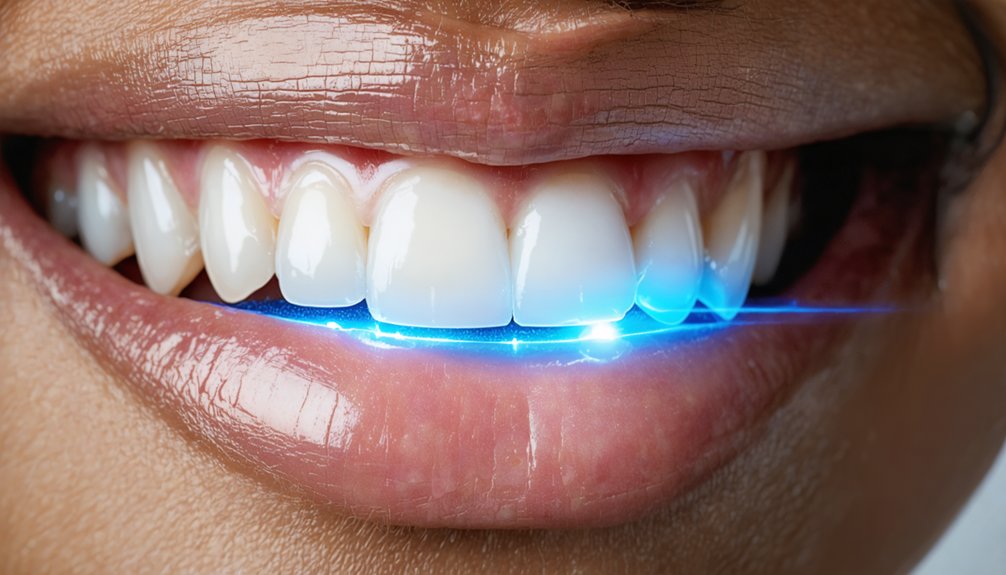
When it comes to wine stains, laser whitening delivers some of its most impressive results. The procedure excels on yellow and light brown discoloration — precisely the stain types red wine leaves behind.
Laser efficacy stems from its ability to break down organic chromophore molecules embedded in your enamel, targeting extrinsic stains that surface-level treatments simply can’t reach.
You can expect a five-to-eight shade improvement within a single appointment, effectively eliminating stubborn wine discoloration in roughly one hour.
However, you should understand that laser efficacy diminishes against intrinsic stain types, such as deep tetracycline or fluorosis discoloration. If your staining originates from wine, coffee, or tea consumption, you’re working with the ideal candidate profile for achieving measurable, controlled, and immediate whitening outcomes.
Is Laser Whitening Worth It Over At-Home Kits?
Choosing between laser whitening and at-home kits comes down to speed, strength, and reliability. At-home strips and toothpastes are viable treatment alternatives, but they deliver weaker peroxide concentrations that take weeks to show minimal results.
Laser whitening uses professional-grade gel activated by concentrated light, achieving 5-8 shades of improvement in a single session.
In the cost comparison, at-home kits appear cheaper upfront, but repeated purchases add up without guaranteeing consistent outcomes.
Laser whitening gives you precise, even results controlled by a trained dentist, reducing guesswork entirely. You also get customizable shading, ensuring a natural appearance rather than an over-whitened look.
If you want fast, measurable results with minimal effort and maximum control, laser whitening clearly outperforms anything you’d apply at home.
Who Gets the Best Results From Laser Whitening?

Not everyone walks out of a laser whitening session with the same dramatic results, and understanding who benefits most helps set realistic expectations.
You’re an ideal candidate if your stains are extrinsic — yellow or light brown discoloration from red wine, coffee, or tobacco. The procedure targets organic chromophore molecules effectively, delivering 5-8 shade improvements in a single appointment.
Age factors also influence outcomes. Younger patients with less enamel wear typically respond faster and more dramatically.
Your starting tooth condition matters considerably — healthy teeth free of cavities or gum disease yield the best results. However, if you have gray tetracycline stains, severe fluorosis, or extensive dental restorations, laser whitening delivers limited improvement.
Knowing your specific stain type before committing guarantees you invest in a procedure that actually provides measurable change.
How to Prevent Wine Stains After Whitening
Protecting your newly whitened teeth from wine stains requires immediate and consistent action, since enamel remains temporarily porous after laser treatment.
Implement these preventive measures within the first 48 hours to maximize your results.
Rinse your mouth with water immediately after consuming wine to neutralize chromophores before they penetrate enamel.
Rinsing with water after wine neutralizes staining agents before they infiltrate freshly whitened, porous enamel.
Use a straw to minimize direct contact between wine and tooth surfaces.
Brush teeth 30 minutes after drinking, never immediately, since acid temporarily softens enamel.
Lifestyle changes that extend your whitening results include scheduling touch-up sessions every six months, using whitening toothpaste twice daily, and avoiding wine consumption during the 48-hour post-treatment window.
You control how long your results last through disciplined maintenance habits and strategic beverage management.
Frequently Asked Questions
Can Laser Whitening Be Combined With Other Cosmetic Dental Treatments Simultaneously?
Like a master chef pairing flavors, you can combine laser whitening with veneers or bonding for enhanced treatment effectiveness. Combined treatments amplify your results, giving you complete control over achieving your ideal smile transformation simultaneously.
Does Dental Insurance Ever Cover Laser Whitening for Wine Stain Removal?
Dental insurance won’t cover laser whitening for wine stains since it’s cosmetic. You’ll manage treatment costs out-of-pocket, but flexible spending accounts can offset insurance coverage gaps, giving you control over your whitening investment.
How Does Laser Whitening Affect Existing Dental Crowns, Veneers, or Fillings?
Like painting over marble, laser whitening won’t change your crowns or veneers’ color. You’ll notice crown sensitivity temporarily, but veneer durability remains intact. Your existing restorations simply won’t whiten, creating potential shade mismatches you must consider beforehand.
Are There Age Restrictions for Patients Seeking Laser Whitening Treatments?
You’ll find laser whitening’s age suitability typically excludes patients under 18, as developing teeth require protection. You must provide informed patient consent, ensuring you’re an adult with healthy teeth and no cavities before treatment begins.
Can Pregnant Women Safely Undergo Laser Whitening Procedures for Stained Teeth?
Like a shield protecting precious cargo, you shouldn’t undergo laser whitening while pregnant due to safety concerns. You’ve got treatment alternatives—consult your dentist, who’ll recommend safer options until after delivery.
References
- https://www.giangrecofamilydental.com/pros-and-cons-of-laser-teeth-whitening/
- https://picassodental.vn/does-laser-whitening-work-on-all-types-of-tooth-stains/
- https://www.bostonsmile.com/blog/2016/01/02/can-you-drink-wine-after-166371/
- https://www.mondaygrazianidds.com/coffee-wine-and-smoking-can-teeth-whitening-really-reverse-the-damage/
- https://deandentalsolutions.com/discover-if-laser-teeth-whitening-is-right-for-you/
- https://www.healthline.com/health/dental-and-oral-health/laser-teeth-whitening
- https://philipkclarkdmd.com/teeth-whitening-for-wine-enthusiasts-savoring-reds-and-whites/
- https://kaysvillefamilydentistry.com/how-laser-teeth-whitening-treatment-works/
- https://jdental.co/laser-teeth-whitening/