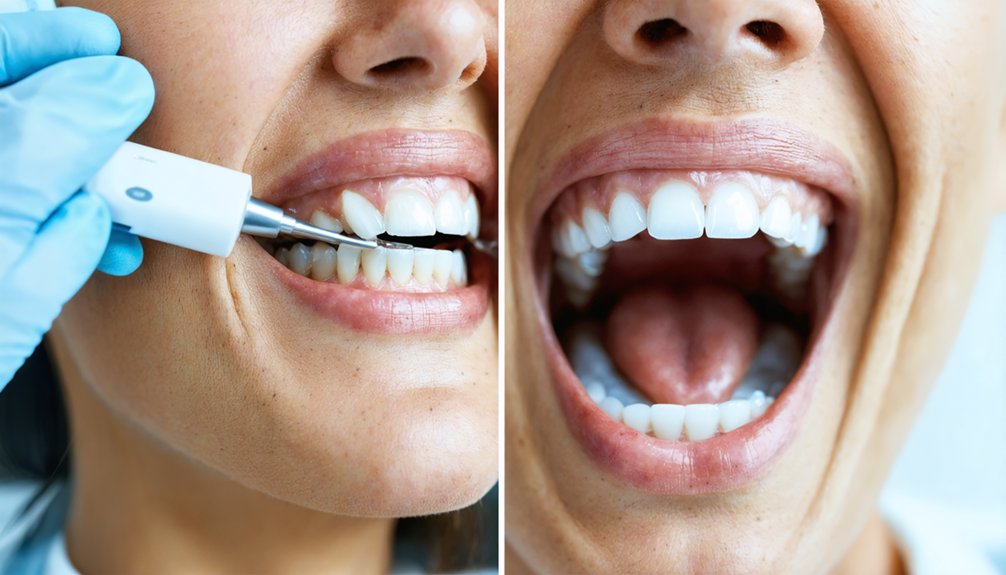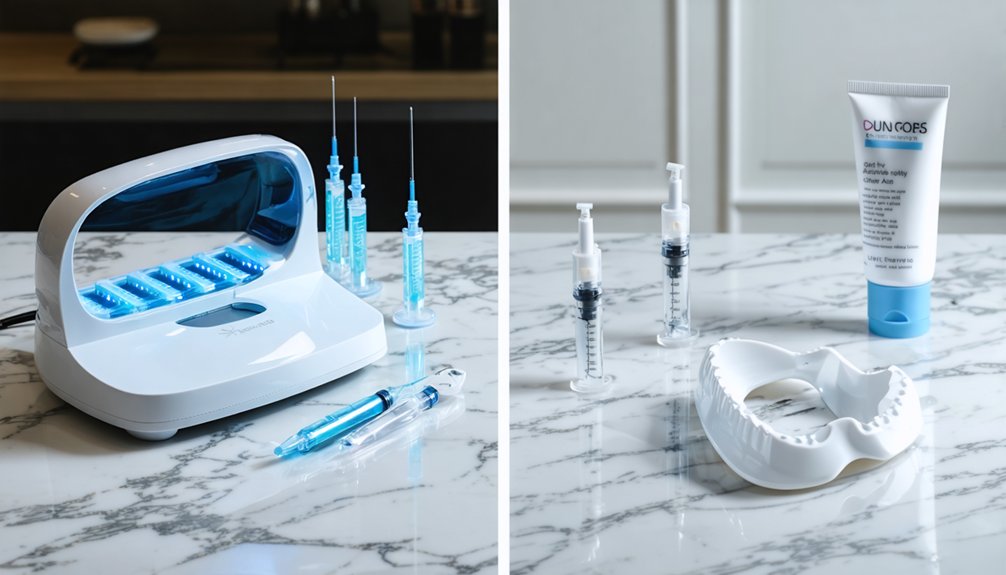
Professional whitening uses 15–43% peroxide concentrations, delivering 3–8 shades of improvement in just one or two visits. At-home kits cap at 20% peroxide, targeting surface stains over several weeks. Professional treatments offer custom-fitted trays, gum protection, and sensitivity management that at-home options simply can’t match. Costs range from $300–$1,000 professionally versus $20–$100 for store-bought kits. Your best choice depends on stain type, budget, and timeline — and each factor is worth understanding fully.
Key Takeaways
- Professional whitening uses 15–43% peroxide concentrations, while at-home products are limited to 3–20%, affecting overall treatment effectiveness.
- Professional treatments deliver 3–8 shade improvements within 1–2 visits, whereas at-home kits require up to six weeks for comparable results.
- Dentist-supervised whitening targets deep intrinsic stains, while at-home kits primarily address surface-level discoloration only.
- Professional results last one to three years, while at-home kits may require repeated purchases to maintain whitening outcomes.
- In-office treatments cost $300–$1,000 per session, while at-home kits range from $20–$100, offering a more budget-friendly alternative.
Professional vs At-Home Teeth Whitening: What Actually Sets Them Apart
When weighing your teeth whitening options, the core distinction comes down to concentration and clinical oversight. Professional treatments use 15–43% peroxide, while at-home products cap at 3–20%, directly impacting which stain types each method can address.
The real difference in teeth whitening starts with concentration — and who’s overseeing the process.
Dentist supervision enables real-time sensitivity adjustment and pain management, reducing risks of enamel damage or gum irritation. Custom trays guarantee precise gel distribution, eliminating the uneven application techniques common with store-bought kits.
Ingredient differences between prescription-grade and retail formulas also affect penetration depth and long-term effects on tooth structure. At-home options suit mild, extrinsic maintenance; professional treatment targets intrinsic discoloration from aging or tobacco.
Understanding these distinctions lets you make an informed, evidence-backed decision that aligns with your whitening goals and risk tolerance.
How Fast Does Each Method Actually Whiten Your Teeth?
If you choose professional whitening, you can expect 3–8 shades of improvement within just one or two visits, with in-office treatments like Zoom completing in a single two-hour appointment.
At-home methods, however, require you to commit 30–60 minutes daily for up to six weeks before you see comparable results.
Your timeline ultimately depends on which method you select, with professional treatment delivering immediate, visible changes and at-home options demanding considerably more patience.
Professional Results Timeline
Most people want faster results, and professional in-office whitening delivers exactly that — achieving 3–8 shades brighter in as little as one 60–120 minute session.
Treatments like Zoom complete within a single two-hour appointment, giving you immediate, measurable changes you can see the same day.
Results consistency is a key advantage here. Your dentist controls concentration levels, exposure time, and application precision — variables that directly determine outcomes.
You’re not guessing or waiting weeks to evaluate progress.
Treatment frequency is minimal compared to at-home alternatives. Most patients require just one to two visits to reach their target shade.
That’s a significant contrast to at-home methods, which demand daily 30–60 minute applications for up to six weeks before delivering comparable improvement.
At-Home Whitening Duration
At-home whitening works, but patience is non-negotiable. You’ll commit 30–60 minutes daily for up to six weeks before achieving noticeable results.
At-home duration varies depending on the product’s peroxide concentration—typically 3–20%—and your specific stain type. Surface stains from coffee or tea respond reasonably well, but don’t expect the dramatic, multi-shade shifts that professional treatments deliver in a single session.
Whitening consistency is your most critical variable. Skipping applications or inconsistent wear times directly undermines your results.
Store-bought kits lack the customization to guarantee even gel distribution, increasing your risk of patchy outcomes. You’re managing the process entirely on your own, which demands discipline.
If you want controlled, predictable progress, at-home treatment can work—but only if you follow the protocol precisely and without interruption.
Why Professional Whitening Is So Much Stronger Than At-Home Kits
When comparing professional and at-home whitening, the difference in strength comes down to one critical factor: peroxide concentration.
Professional treatments use 15–43% peroxide, while at-home kits cap at 3–20%, limiting you to surface stains only.
With dentist supervision, you’re not just getting stronger gel—you’re getting precision. Custom trays guarantee even gel application, eliminating patchy results.
Dentist supervision isn’t just about stronger gel—it’s about precision that eliminates patchy, uneven results.
Professional oversight allows for real-time sensitivity management, protecting your enamel while targeting intrinsic stains caused by aging or tobacco that store-bought products simply can’t reach.
Treatment duration matters too. You’ll see immediate results after a single in-office session, whereas at-home kits demand weeks of consistent use.
When you want control over your outcome, professional whitening delivers measurable, predictable improvements that over-the-counter options can’t match.
Which Teeth Whitening Option Works Better on Deep Stains?
Deep stains don’t respond equally to every whitening method, and understanding why helps you choose the right treatment.
Intrinsic stain treatment requires higher peroxide concentrations that penetrate enamel rather than just surface layers. At-home kits simply can’t deliver that level of deep stain removal.
Professional whitening gives you a decisive advantage through three clinically measurable factors:
- Concentration: In-office agents use 15–43% peroxide, reaching stains embedded from aging or tobacco.
- Precision: Dentists target specific discolored zones, adjusting exposure time and intensity.
- Results: Professional treatments improve up to 8 shades versus 3–6 for at-home options.
If your stains are extrinsic, at-home kits may suffice. For intrinsic discoloration, professional treatment is your only reliable solution.
Is Professional Teeth Whitening Actually Safer?
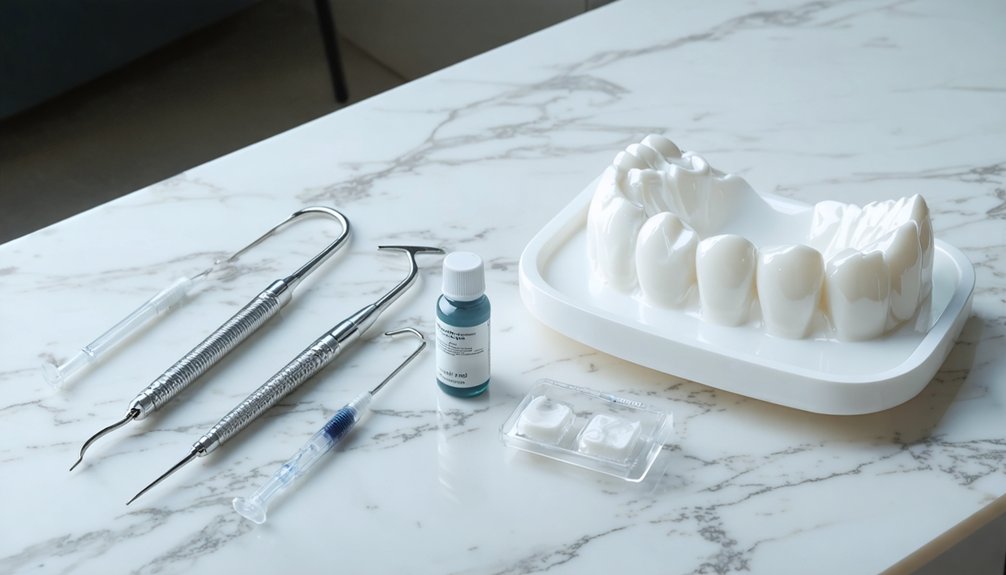
Safety concerns about teeth whitening often come down to one critical difference: supervision. With dentist supervision, you’re not guessing—you’re following a controlled protocol backed by professional oversight.
Your dentist evaluates your oral health before treatment, implements gum protection barriers, and manages sensitivity throughout the process. Treatment monitoring reduces your irritation risk and minimizes user error that commonly occurs with store-bought kits.
At-home options increase enamel safety concerns because ill-fitting trays leak higher-concentration gels onto soft tissue. Professional custom trays guarantee precise gel placement, eliminating uneven application.
Sensitivity management is also proactive—dentists adjust concentration and timing based on your specific response. If you prioritize controlled, evidence-based results, professional safety measures provide you the oversight that unsupervised whitening simply can’t offer.
How Professional Whitening Is Customized to Your Teeth
Unlike one-size-fits-all store-bought kits, professional whitening builds your treatment plan around your specific oral profile. Through a thorough dentist evaluation, you receive customized plans that address your individual needs with precision. This personalized approach guarantees every variable works in your favor.
Your tailored treatment typically addresses three critical factors:
- Specific Stains – Your dentist identifies whether you’re dealing with extrinsic discoloration or deeper intrinsic staining, adjusting concentration accordingly.
- Sensitivity Consideration – Peroxide levels and exposure times are modified to protect your enamel without sacrificing results.
- Targeted Areas – Custom-fitted trays deliver even gel distribution, eliminating the patchy outcomes store-bought products frequently produce.
You’re not guessing. You’re following a clinically designed protocol built entirely around your mouth.
Professional vs At-Home Teeth Whitening: Full Cost Breakdown
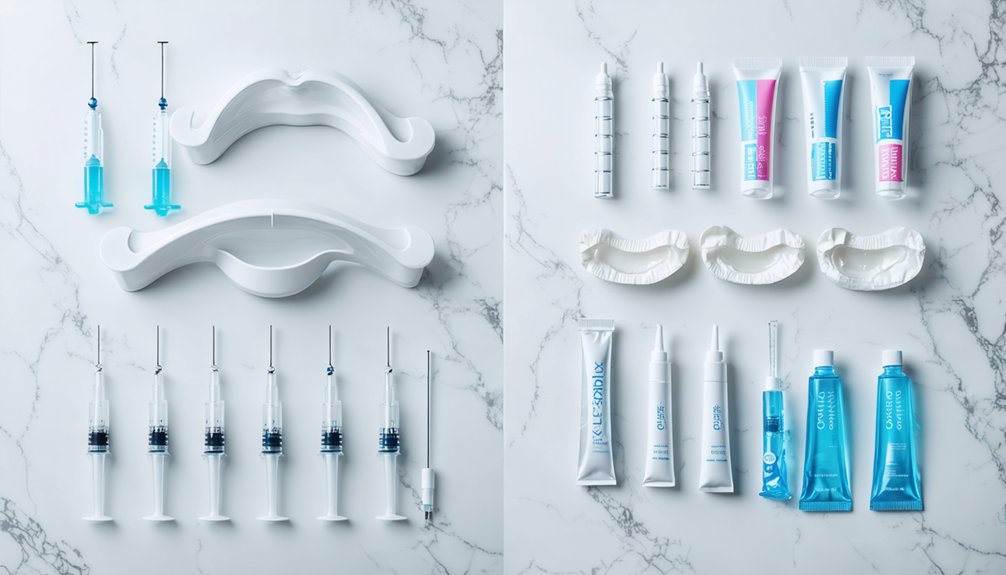
When considering teeth whitening, you’ll face a clear cost divide between professional and at-home options.
Professional in-office treatments typically run between $300 and $1,000 per session, reflecting the clinical expertise, custom protocols, and stronger whitening agents involved.
At-home kits, by contrast, average $20 to $100, making them a far more accessible entry point for budget-conscious patients.
Professional Whitening Cost Ranges
Professional in-office whitening typically costs between $300 and $1,000 per session, depending on the provider, location, and treatment method used. Understanding these ranges helps you make an informed financial decision.
Here’s what you’re paying for with professional whitening techniques:
- Standard in-office treatment — $300–$650, using 15–35% peroxide concentrations for measurable shade improvement.
- Advanced systems like Zoom — $500–$1,000, delivering up to 8 shades brighter in a single 2-hour appointment.
- Professional take-home kits — $200–$400, featuring custom-fitted trays supervised by your dentist for controlled results.
Professional whitening benefits justify the higher upfront investment through deeper stain penetration, dentist supervision, and longer-lasting outcomes.
You’re not just buying whiter teeth — you’re buying precision, safety, and predictable results.
At-Home Whitening Affordability
At-home whitening kits cost considerably less upfront, ranging from $20 to $100 for store-bought options, making them the more accessible choice for budget-conscious individuals.
When weighing budget considerations, you’ll find at-home affordability extends beyond just the lower price point — you’re also eliminating appointment fees and scheduling demands.
However, you should factor in the trade-offs. Lower concentration formulas target only surface stains, often requiring repeated purchases to maintain results.
Over time, those cumulative costs can narrow the price gap between store-bought kits and professional alternatives.
If your stains are mild and your budget is firm, at-home kits provide a practical entry point.
But if you’re prioritizing efficiency and lasting results, the upfront savings may not outweigh the limitations you’ll encounter.
How Long Do Professional Whitening Results Really Last?
How long your professional whitening results last depends largely on your lifestyle habits and oral hygiene routine. Whitening durability typically ranges from one to three years, but you control that timeline.
Follow these maintenance tips to protect your investment:
- Avoid staining agents like coffee, tea, red wine, and tobacco for at least 48 hours post-treatment and minimize long-term consumption.
- Brush twice daily and floss consistently to prevent surface stain accumulation between professional sessions.
- Schedule touch-up treatments every six to twelve months using professional-grade take-home kits to sustain your results.
Deeper peroxide penetration from in-office treatments means your baseline shade improvement outlasts anything at-home kits can deliver, making professional whitening the smarter long-term choice.
When At-Home Whitening Is the Smarter Choice
Despite professional whitening‘s superior results, at-home kits are the smarter choice when your budget, schedule, or dental condition makes clinical treatment impractical.
Affordability considerations matter—store-bought and dentist-dispensed kits range from $20–$100, making them accessible without the $300–$1,000 clinical commitment.
Convenience factors also favor at-home options; you control the timing, applying treatments during your own routine without scheduling appointments.
If you’re managing mild surface stains from coffee or tea, lower-concentration peroxide formulas effectively address those without professional intervention.
At-home kits also suit maintenance between professional sessions, preserving your existing results cost-efficiently.
However, you must use custom-fitted trays to minimize gum irritation and guarantee even gel distribution.
When used consistently, at-home whitening delivers gradual, measurable improvement on your terms.
Frequently Asked Questions
Can Teeth Whitening Damage Existing Dental Work Like Crowns or Veneers?
Whitening won’t damage crowns or veneers, but it won’t lighten them either, creating mismatched shades. You’ll face dental sensitivity risks on surrounding teeth, and whitening longevity differs between natural teeth and existing restorations. Consult your dentist first.
Are There Foods or Drinks to Avoid After a Whitening Treatment?
Think your whitening’s done? It’s just begun. You’ll need strict whitening aftercare: avoid coffee, tea, red wine, and dark sauces. These dietary restrictions protect your results and prevent immediate restaining during your teeth’s vulnerable absorption phase.
How Does Teeth Whitening Affect People With Naturally Sensitive Teeth?
If you’ve got naturally sensitive teeth, you’ll experience heightened discomfort during whitening. A dentist manages your sensitivity management through lower peroxide concentrations and customized timelines, while offering whitening alternatives like desensitizing treatments to keep you in control.
Can Pregnant or Breastfeeding Women Safely Undergo Teeth Whitening Treatments?
Like a ship anchoring in safe harbor, you should pause whitening treatments while pregnant or breastfeeding. Safety guidelines recommend avoiding peroxide exposure during this time. Instead, you’ll find alternative methods like gentle brushing maintain brightness safely.
How Soon After Whitening Can You Expect Permanent Shade Stability?
You won’t achieve permanent shade stability, but professional whitening delivers long term results lasting 1-3 years. You’ll maintain shade maintenance by avoiding staining foods, practicing consistent oral hygiene, and scheduling periodic touch-up treatments as needed.
References
- https://www.veenstradental.com/blog/at-home-vs-professional-teeth-whiteningwhats-the-difference-
- https://www.allinthefamilydental.com/blog/professional-teeth-whitening-vs-at-home/
- https://www.mydentistgrandprairie.com/blog/professional-take-home-kits-vs-store-bought/
- https://www.dentalassociates.com/blog/professional-teeth-whitening-vs-at-home-teeth-whitening
- https://www.yourdentistryguide.com/inoffice-vs-athome/
- https://www.tarheeldentistry.com/2026/04/professional-teeth-whitening-vs-at-home-kits-in-chapel-hill/
- https://www.nationaldentalcare.com.au/blog/at-home-diy-vs-professional-teeth-whitening
- https://smilespanorthjersey.com/2025/10/teeth-whitening-at-home-vs-professional-treatments-pros-and-cons/
- https://www.youtube.com/watch?v=S-TQeElIsAg