Gel stain won’t cure because it relies on oxidation, not evaporation—and anything blocking oxygen exposure keeps it tacky indefinitely. You’re likely dealing with thick coats trapping moisture, high humidity saturating the air, or poor circulation starving the stain of oxygen. Surface residue and premature recoating compound the problem further. Once you understand what’s actually stalling the curing process, you can take precise corrective steps to fix it for good.
Key Takeaways
- Gel stains cure through oxidation, not evaporation, so high humidity restricts oxygen availability and permanently stalls the curing process.
- Applying gel stain in thick layers traps moisture inside, preventing proper penetration and leaving uncured, tacky interiors that resist removal.
- Water-based cleaners cannot break oil-based gel stain bonds; mineral spirits or solvent-based solutions are required for effective stain removal.
- Poor air circulation in enclosed spaces limits oxygen penetration, halting oxidation and causing gel stains to remain persistently sticky.
- Reapplying gel stain too soon seals the surface, trapping moisture beneath and creating stubborn layers that won’t properly cure.
Why Gel Stain Stays Tacky No Matter What You Do
Gel stain stays tacky because it cures through oxidation, not evaporation—and anything that restricts airflow stalls that process indefinitely.
High humidity sabotages the curing process by saturating surrounding air, effectively cutting off the oxygen your gel stain needs.
Humidity doesn’t just slow curing—it suffocates it, starving your gel stain of the oxygen it desperately needs.
Poor application techniques compound the problem—thick layers trap moisture issues beneath the surface, preventing stain penetration from stabilizing.
You’re not giving each coat adequate drying time before adding the next, which creates a layered barrier that resists bonding strength development.
Surface preparation failures make this worse; oils or residue on the substrate weaken adhesion from the start.
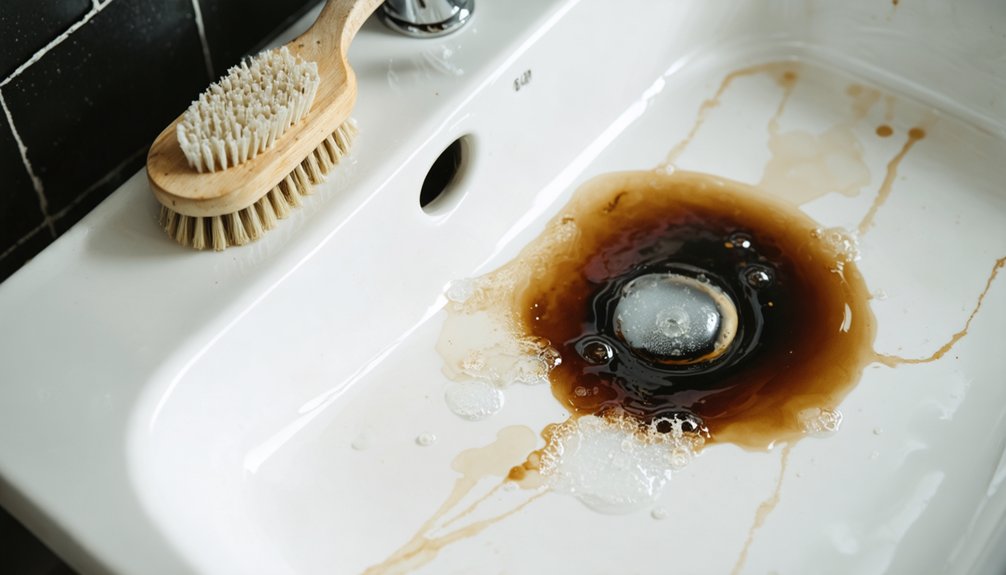
For residue removal, wipe affected areas repeatedly with mineral spirits.
Your cleaning methods must be deliberate—thin coats, controlled humidity, and proper ventilation aren’t optional; they’re non-negotiable for achieving a tack-free finish.
How Humidity Prevents Gel Stain From Curing Correctly
When humidity climbs, it saturates the surrounding air with moisture, directly competing with the oxygen your gel stain needs to oxidize and cure.
High humidity effects create significant curing challenges by displacing the air exposure essential for proper drying. Moisture trapping at the stain’s surface forms an invisible barrier, stalling the oxidation reaction entirely.
Environmental factors like tropical climates or rainy seasons amplify these drying issues considerably.
You can’t simply wait it out—passive application techniques won’t compensate for compromised atmospheric conditions. Instead, control your environment deliberately. Use a dehumidifier, increase ventilation, or postpone application until humidity drops below 50%.
Without managing these variables, your gel stain remains indefinitely tacky, regardless of how precisely you’ve applied it.
Why Thick Coats Create a Stickiness Problem That Won’t Quit
Thick coats trap the problem inside themselves. When you apply gel stain too heavily, the outer layer skins over while the interior remains wet and uncured. That sealed surface blocks air circulation, which oil-based gels require to cure properly.
You’ve fundamentally created an insulated pocket of sticky, unresolved stain.
Mastering gel application techniques means understanding that thin, controlled layers outperform single heavy passes every time. Thick coats don’t accelerate coverage—they guarantee stickiness that persists indefinitely.
Stain removal challenges multiply when you compound the error by applying a second coat before the first cures. You’re stacking moisture traps.
Your corrective path requires wiping the sticky area repeatedly with mineral spirits, removing the uncured material completely before attempting any reapplication. Precision in application prevents this entirely.
How Oil-Based Gel Stain Behaves Differently on Porous Surfaces
Understanding how oil-based gel stain behaves on different surfaces extends beyond fixing application errors—it determines whether your results will be consistent or chaotic from the start.
Gel stain properties create predictable surface compatibility issues across porous materials. Unlike liquid stains, gel stain application sits on the surface rather than penetrating deeply, which directly affects stain penetration depth and curing process challenges.
Three porous surface effects you must control:
- Soft pores absorb unevenly, forcing moisture impact to vary across the grain.
- Air circulation effects diminish inside dense fibers, extending drying time factors considerably.
- Stain removal techniques become harder once gel bonds without full penetration.
Pre-conditioning porous surfaces before application eliminates absorption inconsistencies and gives you precise control over your final outcome.
Which Wood Surfaces Make Gel Stain Harder to Control
When you work with soft, porous woods like pine or alder, gel stain resists uniform absorption because open pores pull product unevenly across the surface.
Dense-grain species such as maple or cherry compound the problem differently—their tight cellular structure limits penetration, causing stain to pool on top rather than bond below.
Uneven surface texture, whether from improper sanding or natural grain variation, further disrupts your control by creating alternating zones of high and low absorption.
Soft Porous Wood Challenges
Soft, porous woods like pine, fir, and alder absorb gel stain unevenly because their open grain structure pulls pigment into low-density areas faster than tighter-grained hardwoods.
Inconsistent stain penetration compromises gel adhesion and undermines finish durability. You can’t skip surface preparation here—it’s non-negotiable.
To control soft wood application techniques effectively:
- Apply a pre-conditioner to equalize absorption across the wood grain before introducing any gel product.
- Use thin, uniform coats to prevent pigment pooling in open pores.
- Maintain stable curing conditions—high humidity disrupts oil-based gel drying, extending tackiness.
Without these steps, you’ll encounter blotchy finishes and weak adhesion.
Soft wood demands deliberate preparation and disciplined execution to achieve predictable, durable results with gel stains.
Dense Grain Absorption Issues
Dense-grained hardwoods like maple, cherry, and birch absorb gel stain poorly because their tight cellular structure limits pigment penetration, leaving most of the product sitting on the surface rather than bonding within the wood.
Grain structure effects directly determine how much control you’ll have over color depth and consistency. When pores are this compact, gel absorption techniques must compensate—you’ll need to apply thinner coats, work in sections, and wipe off excess more aggressively before it settles unevenly.
Without a pre-conditioner, pigment pools in random micro-grooves, producing blotchy, uneven results. Unlike soft porous woods, dense grain gives you less margin for error.
Timing your wipe-off within minutes of application is critical; delay causes the gel to harden into an uneven, difficult-to-correct surface film.
Uneven Surface Texture Problems
Uneven surface texture creates one of the most frustrating control problems when working with gel stain, because irregular profiles force the product to settle at different depths across the same board.
Texture variations between raised grain, mill marks, and sanded zones produce direct absorption differences that no single application technique resolves uniformly. You’ll see darker pooling in recessed areas and lighter coverage across ridges.
Three surface conditions that amplify this problem:
- Mill-glazed sections resist penetration entirely.
- Open-pored recesses hold excess gel, creating blotchy buildup.
- Changeover zones between sanded and unsanded areas straddle two absorption rates simultaneously.
Pre-conditioning matters here. Without it, you’re applying gel stain to a surface that’s chemically inconsistent, guaranteeing uneven results regardless of your application precision.
Why Oil-Based Gel Stain Resists Standard Cleanup Methods
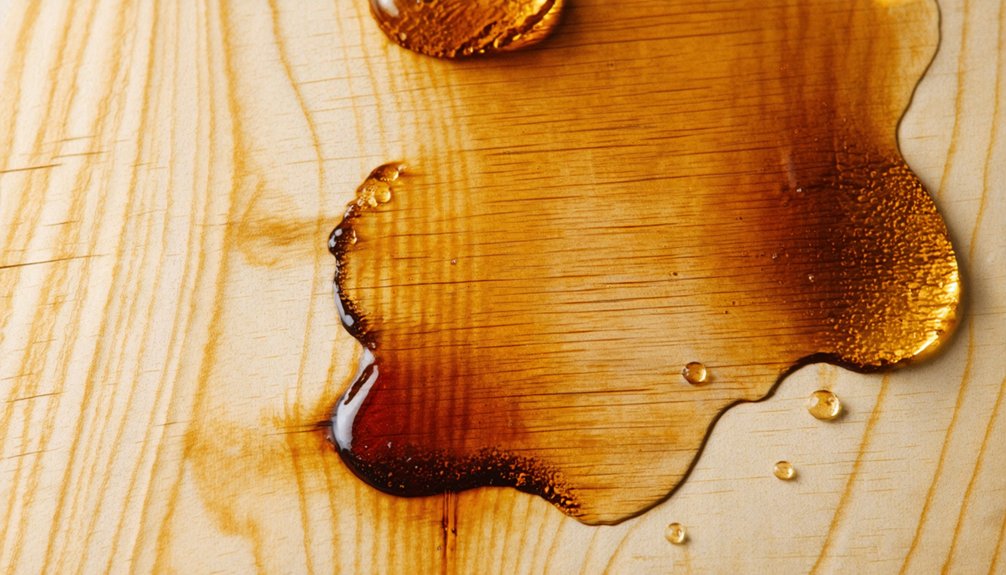
When you try cleaning oil-based gel stain with water or soap, you’re working against basic chemistry—oil molecules actively repel water-based solutions, preventing any meaningful breakdown of the stain.
You’ll need a solvent-based product, such as mineral spirits, to dissolve the oil components and lift the residue from the surface.
Without the correct solvent, you’re simply moving the stain around rather than removing it.
Oil Chemistry Repels Water
Oil-based gel stains resist standard cleanup methods because their molecular structure fundamentally repels water. When you apply water-based cleaners, you’re working against basic oil chemistry—nonpolar molecules reject polar water molecules entirely, leaving stain adhesion intact.
Three factors explain why water-based methods consistently fail:
- Oil molecules bond to wood fibers at a molecular level, making surface wiping ineffective.
- Water-based soaps lack the nonpolar solvents needed to break oil’s chemical bonds.
- Gel stain’s thick consistency increases surface contact time, deepening molecular adhesion.
You need mineral spirits or solvent-based cleaners to match the stain’s nonpolar chemistry. Only like dissolves like. Using water-based products wastes time and potentially sets the stain deeper into porous surfaces.
Solvent-Based Removal Required
Because oil-based gel stain‘s nonpolar molecules bond directly to wood fibers, you’ll need solvent-based cleaners—not water—to break that adhesion. Water simply can’t dissolve nonpolar compounds, making standard soap-and-water removal techniques completely ineffective.
Your solvent selection determines success. Mineral spirits remain the primary option—apply liberally, allow brief dwell time, then wipe firmly with a clean cloth. Repeat this process on sticky residue until the surface no longer transfers onto your cloth.
Naphtha works faster but evaporates quickly, demanding immediate mechanical action.
Avoid rushing reapplication after cleanup. Residual solvent must fully evaporate before introducing additional coats. Inadequate drying between applications traps moisture beneath subsequent layers, compounding adhesion failures.
Control the process methodically—solvent choice, dwell time, and wiping pressure each directly influence your final outcome.
Application Timing Mistakes That Trap Moisture Under the Stain
Timing your gel stain coats incorrectly traps moisture beneath the surface, leaving you with a sticky, uneven finish that won’t cure properly.
Poor application timing accelerates moisture trapping, undermining every coat you apply. Control the process by avoiding these critical errors:
- Applying a second coat before the first fully cures seals in trapped moisture, preventing oxidation.
- Working in high humidity without accounting for extended dry times causes surface-level curing while deeper layers remain wet.
- Applying thick layers instead of thin, controlled coats insulates moisture, blocking necessary air circulation.
Each mistake compounds the next. You must verify complete dryness between coats by testing surface tackiness manually.
Skipping this step guarantees failure regardless of product quality or surface preparation.
How Poor Air Circulation Keeps Gel Stain From Setting
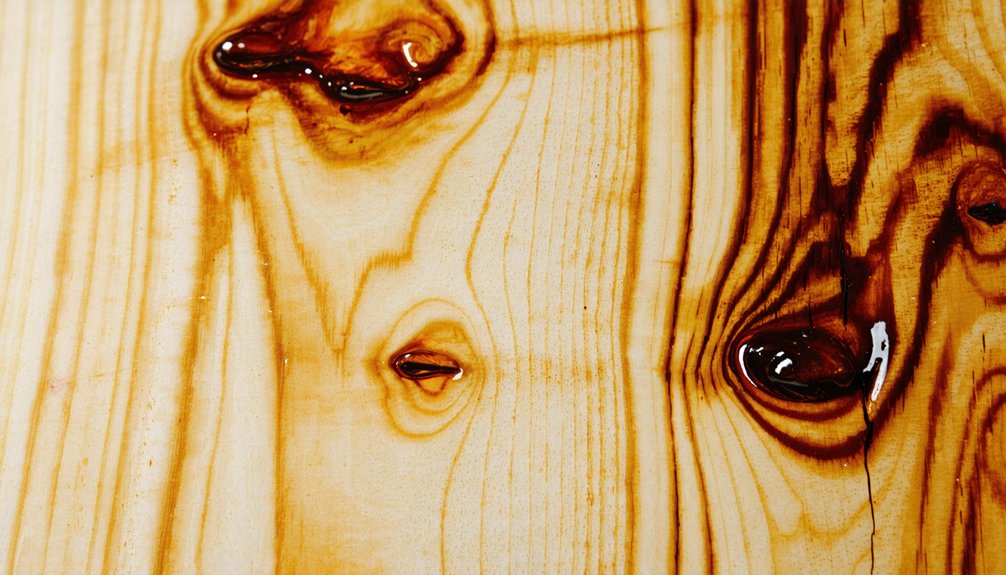
Gel stain’s oil-based chemistry demands consistent air circulation to trigger proper oxidation and curing—without it, the finish stays tacky indefinitely.
When you apply gel in enclosed or humid spaces, oxygen can’t penetrate the surface layer efficiently, stalling the curing reaction entirely. Poor airflow techniques compound existing gel application errors—even correctly thinned coats won’t set if surrounding air remains stagnant.
To correct this, you’ll need to actively manage your environment. Run fans perpendicular to the stained surface, open opposing windows to create cross-ventilation, and monitor humidity levels below 50%.
Avoid working in sealed rooms or during rain events. If tackiness persists despite adequate drying time, the environment—not the product—is likely your primary variable.
Control your workspace conditions before reapplication.
Common Reapplication Errors That Produce Uneven Results
When you apply a second coat of gel stain too soon, you trap moisture from the first coat, producing a tacky, uneven finish that won’t cure correctly.
You also compound the problem when you skip consistent surface preparation—sanding inconsistently or skipping pre-conditioner entirely causes the stain to absorb at different rates across the surface.
Both timing errors and prep inconsistencies work against each other, so you’ll need to address each systematically to achieve uniform results.
Timing Between Coats
One of the most common mistakes you’ll make with gel stain is reapplying too soon, trapping moisture between layers and producing a tacky, uneven finish.
Coat timing directly determines whether your layers cure properly or bond into a sticky, unworkable mass. Layer thickness compounds this problem—thick applications extend drying windows considerably.
Follow these critical timing guidelines:
- Wait a minimum of 2 hours between coats to allow sufficient air circulation.
- Test the first coat’s tackiness before applying subsequent layers.
- Apply thin, controlled coats to reduce drying time and prevent moisture entrapment.
Ignoring these parameters creates insulated layers that resist curing indefinitely, particularly in high-humidity environments.
Precision in both coat timing and layer thickness separates successful applications from frustrating, irreversible failures.
Inconsistent Surface Preparation
Beyond timing errors, surface preparation failures generate equally frustrating inconsistencies that no amount of careful coat scheduling can fix.
If you skip sanding between applications, you’re leaving behind flecks and raised grain that disrupt stain adhesion across the entire surface. Gel stains sit on top rather than penetrating deeply, so any irregularity in your prep becomes immediately visible after application.
You also need to mix liquid stains thoroughly before use. Unmixed pigments settle unevenly, producing blotchy coverage that reapplication won’t correct.
Without a pre-conditioner on soft-pored wood, absorption rates vary dramatically across the surface, creating unpredictable results.
Inconsistent surface preparation compounds every other error you’ve already made, transforming a manageable problem into one requiring complete stripping and restarting from scratch.
How to Fix Sticky Gel Stain Before It Ruins the Finish
Sticky gel stain is a fixable problem if you catch it early, but the window for correction narrows fast.
Applying thick layers or ignoring moisture control creates a sealed, uncured surface that won’t self-correct.
Execute these gel stain techniques immediately:
- Wipe affected areas thoroughly with mineral spirits to strip uncured gel.
- Allow full ventilation for 24 hours before reapplication.
- Reapply using thin, controlled coats, waiting two hours between layers.
Humidity above 70% actively undermines curing—work in climate-controlled conditions when possible.
If mineral spirits don’t resolve the stickiness after repeated application, you’ve got a bonding failure requiring full strip-down and restart.
Don’t overcoat a sticky surface expecting it to cure underneath. It won’t.
Frequently Asked Questions
Can Gel Stain Be Applied Over Previously Painted or Varnished Surfaces?
You can apply gel stain over painted or varnished surfaces, yet adhesion suffers without proper surface preparation. For successful gel stain application, you’ll need to sand thoroughly, ensuring the topcoat grips rather than peels.
Does Gel Stain Work Differently on Outdoor Wood Versus Indoor Furniture?
Yes, gel stain behaves differently outdoors versus indoors. You’ll need rigorous outdoor preparation against humidity and UV exposure, while indoor application demands controlled ventilation and thin coats to prevent sticky, uneven absorption on furniture surfaces.
What Safety Precautions Should Be Taken When Handling Oil-Based Gel Stains?
Like armor shielding your skin, wear gloves and guarantee ventilation when handling oil-based gel stains. You’ll need proper surface preparation and controlled application techniques to safely manage fumes while preventing skin contact throughout the process.
How Long Does Gel Stain Typically Last Before Requiring a Fresh Application?
Gel stain’s application longevity typically spans 2-5 years, depending on surface exposure and maintenance. You’ll maximize stain durability by applying thin coats, recoating every 2 hours, and monitoring environmental humidity to prevent premature breakdown.
Are There Specific Brands of Gel Stain That Perform Better in Humid Climates?
Like armor against moisture’s siege, gel stain brands like General Finishes and Old Masters resist humidity effects best. You’ll want oil-based formulas offering controlled drying, ensuring thin coats cure properly even when tropical air battles your project’s success.
References
- https://www.youtube.com/watch?v=t3wPpAfH90s
- https://signalcleaning.co.uk/blog/how-to-remove-stubborn-stains
- https://www.youtube.com/watch?v=vUgObWw5sHw
- https://www.escapeforum.org/threads/gel-coat-stains.107689/
- https://www.cleaninginstitute.org/cleaning-tips/clothes/stain-removal-guide