Apple cider vinegar’s acetic acid can dissolve some surface stains on your teeth by breaking down organic compounds that cause discoloration. It’s also inexpensive and widely available. However, the same acidity that targets stains also erodes your enamel, increasing sensitivity and decay risk. Clinical evidence doesn’t support it as a reliable whitening method, and results are inconsistent. Keep exploring to understand the full risks, safer alternatives, and what actually works.
Key Takeaways
- Apple cider vinegar contains acetic acid, which has mild bleaching properties that can help dissolve organic compounds causing surface stains.
- ACV breaks down surface deposits and organic residues on teeth, potentially reducing plaque buildup and revealing the natural tooth color.
- It is a low-cost alternative to professional whitening treatments, costing approximately $3–$6 per bottle.
- ACV only addresses superficial stains and cannot penetrate deep enamel or correct intrinsic discoloration.
- Results are modest and inconsistent, with some users seeing minor improvements while others experience no change or increased yellowing.
What Makes Apple Cider Vinegar a Whitening Agent?
Apple cider vinegar (ACV) contains acetic acid, the compound primarily responsible for its mild bleaching properties. This acid breaks down extrinsic stains from coffee, tea, and tobacco while dissolving organic residues on your tooth surface. Its antimicrobial properties also reduce plaque-forming bacteria, supporting broader dental health.
However, you should understand ACV’s limitations before using it as one of your natural remedies. Clinical evidence confirming significant whitening remains sparse, and results vary considerably between individuals. Some users experience brighter teeth within two to four weeks, while others see no improvement or increased yellowing.
ACV can’t penetrate deep tooth structure, restricting its action to superficial stains only. Its acidity, if uncontrolled, risks eroding protective enamel—making cautious, informed application essential for safe use.
How Apple Cider Vinegar Removes Stains From Teeth
When you apply ACV to your teeth, its acetic acid targets extrinsic stains by dissolving the organic compounds—pigments from coffee, tea, wine, and tobacco—that bond to your enamel surface. This natural stain removal process works by breaking down long-chain molecules in surface deposits, allowing them to rinse away with water.
ACV also supports surface cleaning by reducing plaque buildup, which traps discoloration-causing residues against your enamel. Its acidic nature dissolves organic matter before it hardens into tartar, revealing the underlying tooth color beneath accumulated buildup.
However, you should understand that this mechanism only addresses extrinsic stains. ACV doesn’t penetrate deep enamel or correct intrinsic discoloration. Its cleaning action remains superficial, and uncontrolled application risks enamel erosion rather than meaningful whitening improvement.
The Real Risks of Apple Cider Vinegar on Teeth
Despite its appeal as a natural whitening remedy, ACV poses serious risks to your dental health that outweigh its limited cosmetic benefits. Its high acidity directly causes dental erosion, permanently stripping away enamel you can’t regenerate. Once enamel damage occurs, your teeth become more sensitive, more vulnerable to decay, and paradoxically more prone to discoloration.
Regular ACV exposure softens enamel, making it susceptible to abrasion from routine brushing. You’re fundamentally trading a minor surface stain for structural tooth deterioration. Clinical evidence doesn’t support ACV as an effective whitener, yet its erosive effects are well-documented.
If you’re serious about protecting your teeth while achieving whitening results, dentist-approved treatments offer controlled, evidence-based outcomes without the irreversible damage ACV consistently delivers.
Apple Cider Vinegar vs. Commercial Whitening Products
When you compare apple cider vinegar to commercial whitening products, the cost difference is significant — ACV costs a fraction of professional treatments or store-bought whitening strips. However, that affordability comes with trade-offs, as commercial products contain clinically tested concentrations of hydrogen or carbamide peroxide that deliver consistent, evidence-backed results ACV can’t match.
You should weigh the lower price of ACV against its unproven efficacy and documented risks of enamel erosion before choosing it over a dentist-approved whitening option.
Cost and Accessibility Comparison
One of the most practical advantages of apple cider vinegar is its cost, as a standard 16-ounce bottle typically retails for $3–$6 and can support weeks of oral use.
In a direct cost comparison, professional whitening treatments range from $300–$1,000, while over-the-counter strip kits average $30–$60 per cycle.
ACV’s accessibility advantages are equally significant—you’ll find it in most grocery stores without a prescription or dental referral.
However, you should weigh affordability against clinical limitations. ACV lacks the proven efficacy of peroxide-based systems, and cost savings mean little if enamel erosion results from improper use.
If you’re budget-conscious, ACV offers accessible entry-level stain management, but it shouldn’t replace professionally validated whitening options for moderate-to-severe discoloration.
Safety and Efficacy Differences
While apple cider vinegar and commercial whitening products both target surface stains, their safety and efficacy profiles differ considerably. Commercial products undergo clinical testing, delivering consistent, measurable results backed by regulatory approval. ACV lacks this validation.
Its acetic acid can erode enamel with repeated use, particularly if your dietary habits already expose teeth to acidic foods and beverages, compounding cumulative damage.
Commercial whiteners often incorporate fluoride effects through complementary formulations that strengthen enamel during the whitening process. ACV provides no such protective mechanism.
You risk net enamel loss without a corresponding whitening benefit comparable to peroxide-based systems. If you prioritize both safety and proven efficacy, evidence strongly favors clinically tested commercial options over ACV, which remains largely anecdotal in its whitening claims.
How to Use Apple Cider Vinegar Safely for Whitening
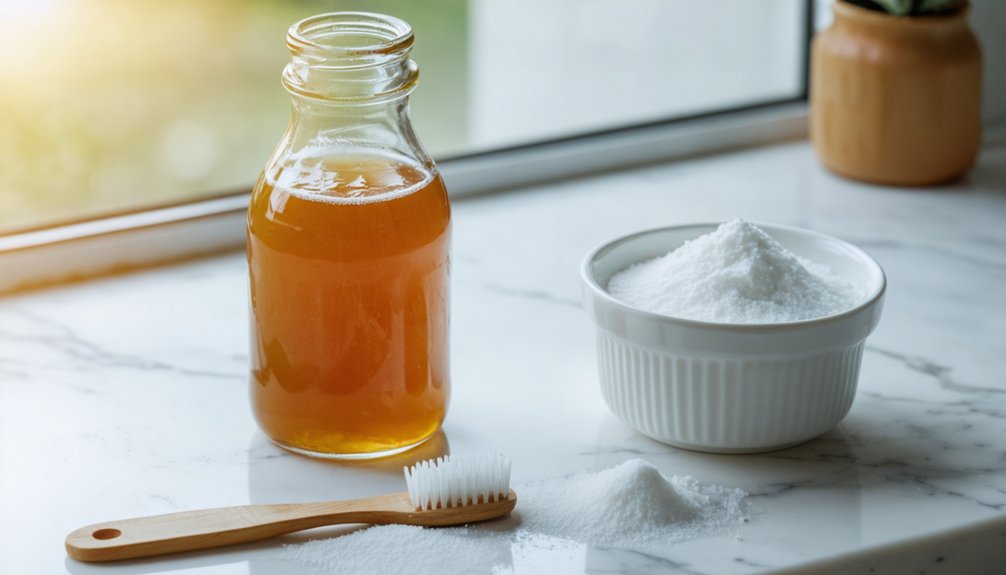
Although apple cider vinegar offers potential whitening benefits, you must use it carefully to avoid enamel erosion and tooth sensitivity. Always dilute ACV with water—typically one part ACV to two parts water—before use. Never apply undiluted ACV directly to your teeth.
Follow these evidence-based guidelines for safer use:
- Limit application to two to three times per week maximum
- Swish for 30 seconds, then rinse thoroughly with plain water
- Wait 30 minutes before brushing to prevent acid-softened enamel damage
- Use a soft-bristled toothbrush to support proper dental hygiene
- Discontinue use if sensitivity or discoloration increases
Natural remedies like ACV require disciplined application protocols.
Consult your dentist before incorporating ACV into your routine, particularly if you have existing enamel wear or sensitivity.
What Results Does Apple Cider Vinegar Actually Deliver?
When you use apple cider vinegar for teeth whitening, the results are modest at best and inconsistent across users. Some report minor aesthetic improvements within two to four weeks, particularly with extrinsic stains from coffee, tea, or tobacco. However, clinical evidence supporting significant whitening remains weak and largely anecdotal.
You may notice natural benefits like reduced plaque and fresher breath, but these don’t equate to reliable whitening outcomes. Results depend heavily on stain type, usage frequency, and individual enamel composition.
Some users experience no visible change, while others report increased yellowing.
ACV lacks the validated efficacy of professional treatments. Before committing to regular use, weigh the limited whitening potential against the documented risk of enamel erosion from prolonged acid exposure.
What to Use Instead of Apple Cider Vinegar for Whiter Teeth

Given ACV’s limited whitening evidence and real enamel risks, you’re better served by options with stronger clinical backing. Fluoride toothpaste with hydrogen peroxide or carbamide peroxide delivers measurable whitening while preserving enamel integrity. ADA-approved whitening strips provide controlled peroxide exposure with documented efficacy.
Professional in-office treatments offer the most reliable results, especially for intrinsic staining.
Beyond whitening agents, your oral hygiene routine matters considerably. Brush twice daily, floss consistently, and schedule regular professional cleanings to prevent surface buildup. Addressing dietary habits is equally critical — reducing coffee, tea, red wine, and tobacco limits new stain formation.
These evidence-based strategies work synergistically, targeting both existing discoloration and future staining. Unlike ACV, they carry measurable clinical support without the documented risk of enamel erosion.
Frequently Asked Questions
Can Apple Cider Vinegar Whiten Teeth With Existing Dental Crowns or Veneers?
ACV won’t whiten dental crowns or veneers—you’re risking damage instead. Dental crown durability and veneer stain resistance can both degrade under ACV’s acidity, compromising your restorations. Consult your dentist before attempting this.
Does the Brand or Type of Apple Cider Vinegar Affect Whitening Results?
Yes, brand consistency and vinegar purity matter. You’ll get more predictable results using raw, unfiltered ACV with 5% acidity. Lower-quality brands may lack active compounds, reducing efficacy and making it harder for you to control outcomes safely.
Can Children or Teenagers Safely Use Apple Cider Vinegar for Whitening?
Carefully consider children’s safety: you shouldn’t let young ones use ACV for whitening. Teenagers advice echoes this—developing enamel’s vulnerable to acid erosion. You’re risking permanent dental damage, as evidence doesn’t support safe whitening use for minors.
Does Apple Cider Vinegar Interact Negatively With Common Prescription Medications?
Yes, ACV can affect drug interactions and medication safety. It may alter how your body absorbs certain prescriptions, including diuretics and insulin. You should consult your doctor before incorporating ACV into your routine.
How Does Apple Cider Vinegar Affect Teeth Sensitivity in Long-Term Users?
Coincidentally, your pursuit of whiter teeth may heighten sensitivity. Long-term ACV use erodes tooth enamel, disrupts pH balance, and exposes dentin. You’ll likely experience increased sensitivity to hot and cold stimuli over time.
References
- https://www.healthline.com/health/apple-cider-vinegar-teeth
- https://smileperfectors.com/blog/does-apple-cider-vinegar-whiten-teeth/
- https://ndscare.com/what-does-apple-cider-vinegar-do-for-your-teeth/
- https://www.journee-mondiale.com/en/apple-cider-vinegar-teeth-whitening-5-expert-tips-for-a-dazzling-smile-naturally/
- https://www.youtube.com/watch?v=dCbWYcmGO68
- https://www.journee-mondiale.com/en/apple-cider-vinegars-hidden-power-7-ways-it-revolutionizes-dental-health/
- https://blog.fieldlaw.com/teeth-whitening-with-apple-cider-vinegar/
- https://www.youtube.com/watch?v=GBXp86Dfot0
- https://jurnal.usk.ac.id/CDJ/article/download/33397/19199
- https://madentalassociates.com/4-proven-home-remedies-to-whiten-teeth/