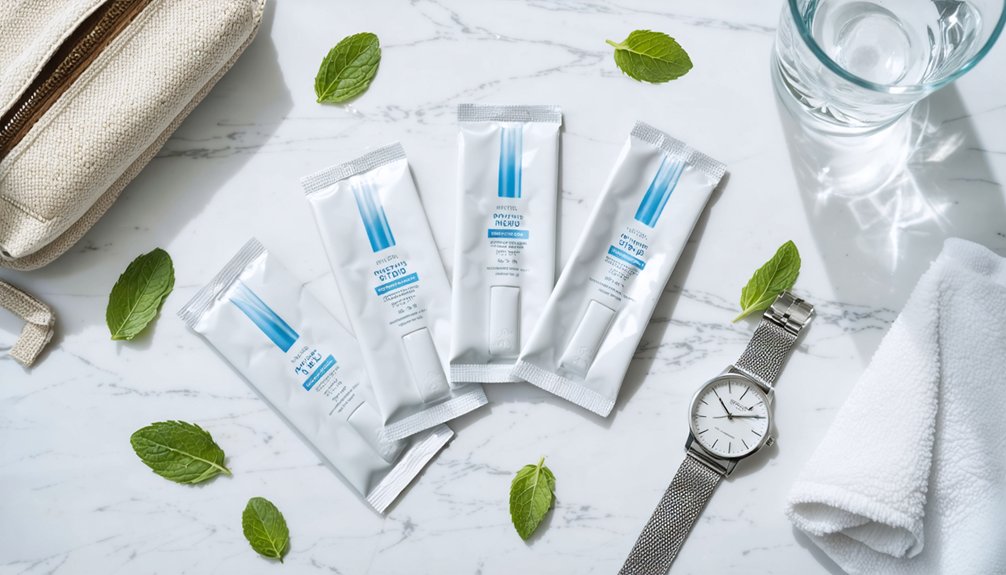
When using FDA-approved whitening strips, you’ll want to choose products carrying the ADA Seal of Acceptance, which confirms peroxide levels stay within the clinically safe 3–10% range. Limit daily application to 30–60 minutes, protect your gums by trimming strips away from the gumline, and discontinue use if sensitivity persists beyond 48 hours. Always purchase from licensed U.S. retailers to avoid dangerously unregulated alternatives. The five safety tips ahead break each precaution down further.
Key Takeaways
- Choose whitening strips bearing the ADA Seal of Acceptance, which ensures controlled peroxide levels between 3–10% for safe enamel protection.
- Limit daily application to 30–60 minutes and complete no more than two full whitening cycles annually to prevent overexposure.
- Remove excess gel with a cotton swab and trim strips to avoid gumline contact, reducing chemical burn risk.
- Stop use immediately if sensitivity persists beyond 48 hours, as prolonged sharp pain may indicate pulp inflammation or enamel damage.
- Purchase whitening strips only from licensed US retailers to avoid unregulated products containing dangerously high peroxide concentrations up to 40%.
Only Use Whitening Strips With the ADA Seal
When choosing whitening strips, you’ll want to look for the American Dental Association (ADA) Seal of Acceptance. This seal confirms independent verification of safety, efficacy, and accurate labeling.
Seal-bearing products use controlled hydrogen peroxide or carbamide peroxide concentrations, typically between 3–10%, minimizing enamel erosion risk.
ADA-seal strips maintain peroxide levels between 3–10%, keeping enamel safe while delivering effective whitening results.
Non-seal products, including many alternative whitening methods marketed as “natural remedies,” frequently exceed safe peroxide thresholds or contain unverified ingredients lacking clinical validation.
Over 200 ADA-approved whitening products currently meet these rigorous standards.
Dental professionals specifically recommend ADA-seal strips for daily users with healthy teeth and gums.
Bypassing this criterion—whether through unbranded kits, online imports, or unregulated natural remedies—transfers significant health risk directly to you, with no regulatory safeguard in place.
Don’t Exceed the Recommended Time or Treatment Cycle
Although whitening strips seem straightforward to use, exceeding the manufacturer’s recommended application time or treatment cycle considerably raises your risk of permanent tooth sensitivity and enamel damage. Overuse risks are clinically documented and preventable when you follow evidence-based guidelines for treatment duration.
Control your whitening protocol by adhering to these three directives:
- Limit daily application to 30–60 minutes; extending sessions increases gum soreness and mucosal irritation.
- Complete one treatment cycle of 14–21 days, then observe a 3–6 month hiatus before repeating.
- Cap annual full cycles at two; restrict touch-up sessions to once monthly.
Rinsing with water immediately after strip removal reduces residual peroxide exposure. If sensitivity persists beyond 48 hours, discontinue use and consult your dentist.
Protect Your Gums While Using Whitening Strips
Gum tissue is highly sensitive to peroxide-based gels, and even brief contact can cause chemical irritation or burns. To ensure effective gum protection, remove any excess gel immediately using a cotton swab before it penetrates soft tissue.
Peroxide gel and gum tissue don’t mix—act fast and remove any excess before irritation sets in.
Trim strips if they overlap your gumline, as prolonged contact raises your chemical burn risk markedly.
If your gums are inflamed, receding, or you have untreated cavities, discontinue use until a dentist clears you. Soft tissue compromise accelerates peroxide absorption, intensifying damage.
Use desensitizing toothpaste containing potassium nitrate or fluoride throughout your treatment cycle to reduce irritation.
If you experience burning, unusual pain, or visible gum blanching during application, stop immediately. Ignoring these signals risks progressing from temporary irritation to lasting soft tissue damage.
Watch for These Sensitivity and Enamel Red Flags
Tooth sensitivity affects up to 75% of whitening strip users, but distinguishing transient discomfort from warning signs of enamel damage is critical. Normal sensitivity resolves within 24–48 hours. Anything beyond that demands attention.
Watch for these three red flags:
- Persistent sharp pain lasting beyond 48 hours signals possible pulp inflammation — discontinue immediately.
- Visible enamel thinning or translucency near tooth edges indicates structural compromise requiring dental evaluation.
- Recurring burning sensations during application suggest concentration levels are exceeding your enamel’s tolerance threshold.
Prioritize enamel preservation by limiting full treatment cycles to twice annually. Use desensitizing toothpaste containing potassium nitrate to support painless application throughout your regimen. Avoid acidic beverages two hours post-treatment.
Schedule regular dental check-ups to monitor enamel integrity proactively.
Only Buy Whitening Strips From Licensed US Retailers
Protecting your enamel from strip-related damage means nothing if the product itself is unsafe from the start. Unlike natural remedies or holistic approaches, regulated whitening strips undergo rigorous safety and efficacy review before reaching consumers.
Non-US products frequently contain unregulated peroxide concentrations reaching 40%, causing severe tissue damage, chemical burns, and irreversible enamel erosion. The FDA issued Advisory No. 2020-1420 specifically warning against unauthorized cosmetic whitening kits lacking proper labeling and quality controls.
Unregulated whitening products can contain dangerously high peroxide levels, risking severe burns and irreversible enamel damage.
You must purchase whitening strips exclusively from licensed US retailers or FDA-compliant verified online pharmacies. Importing overseas products violates consumer safety regulations and eliminates your legal protections.
Maintaining control over your whitening outcomes requires verifying product sourcing before purchase—compromising here undermines every other safety measure you’ve implemented throughout your treatment.
Frequently Asked Questions
Can Whitening Strips Be Used With Dental Braces or Aligners?
You shouldn’t use whitening strips with braces, as brackets block gel contact, compromising whitening effectiveness and causing uneven results. With aligners, remove them first, maintain dental hygiene, then reinsert after rinsing thoroughly.
Do Whitening Strips Work on Crowns, Veneers, or Bonded Teeth?
Over 200 ADA-sealed products exist, yet none whiten crowns, veneers, or bonded teeth. Crown discoloration and veneer whitening don’t respond to peroxide—you’ll only affect surrounding natural enamel, creating uneven, mismatched results. Consult your dentist for alternatives.
Can I Eat or Drink Immediately Before Applying Whitening Strips?
Avoid eating or drinking immediately before applying whitening strips. You’ll maximize gel adhesion and efficacy by waiting 30 minutes post-meal. Follow these diet restrictions and timing considerations to guarantee controlled, even peroxide contact with enamel.
Are Whitening Strips Safe to Use After Recent Tooth Extractions?
You shouldn’t use whitening strips after recent tooth extractions. Post-extraction sensitivity and healing process considerations make peroxide exposure risky—it’s likely to irritate exposed tissue, delay recovery, and worsen discomfort. Consult your dentist before resuming any whitening treatment.
How Do Whitening Strips Interact With Prescription Dental Medications?
You should consult your dentist about medication interactions before using whitening strips, as certain prescription dental medications may affect your dental health considerations, potentially increasing sensitivity or reducing efficacy when combined with peroxide-based whitening agents.
References
- https://dailymed.nlm.nih.gov/dailymed/getFile.cfm?setid=0ade20e9-ae3b-4303-e063-6294a90a637a&type=pdf
- https://www.fda.gov/consumers/skin-facts-what-you-need-know-about-skin-lightening-products/skin-product-safety
- https://www.dentalgroupofamarillo.com/are-teeth-whitening-strips-safe/
- https://www.aspendental.com/dental-care-resources/teeth-whitening-strips/
- https://www.drjosephstandds.com/blog/are-teeth-whitening-strips-safe/
- https://www.youtube.com/watch?v=QCQgZEs_I48
- https://cambridge-dental.com/blog/are-teeth-whitening-strips-safe/
- https://www.medicalnewstoday.com/articles/whitening-strips
- https://gurunanda.com/blogs/oral-care-blogs/whitening-strips-guide
- https://www.webmd.com/oral-health/teeth-whitening