Fluoride stains aren’t like typical surface discoloration — they’re permanent enamel changes requiring treatment matched to their severity. Your options range from at-home whitening kits and remineralizing pastes for mild cases to professional bleaching, enamel microabrasion, and resin infiltration for moderate staining. Severe fluorosis may need veneers for complete coverage. Choosing the wrong approach wastes time and money. Understanding each solution’s clinical evidence and appropriate use case helps you make the right call for your specific situation.
Key Takeaways
- Professional in-office whitening with high-concentration bleaching agents effectively treats mild to moderate fluorosis, delivering visible results within 1-2 weeks.
- Microabrasion mechanically removes superficial fluoride stains with significant reduction seen in 1-3 sessions, preserving natural tooth structure.
- Resin infiltration uses low-viscosity resin to fill porous enamel, blending white spots instantly without removing any tooth structure.
- At-home custom tray whitening offers a cost-effective solution for mild fluoride stains, showing gradual improvement over 2-4 weeks.
- Veneers provide immediate, long-lasting coverage for severe fluorosis cases where microabrasion and whitening treatments prove ineffective.
What Causes Fluoride Stains on Teeth?
Fluoride stains, clinically known as dental fluorosis, develop when you’re exposed to excessive fluoride during tooth development in early childhood. During this critical period, overexposure disrupts enamel-forming cells, causing structural irregularities that appear as white spots, streaks, or brown discoloration on your tooth surfaces.
Sources of excessive fluoride include fluoridated drinking water, high-fluoride toothpaste ingested by young children, and excessive dietary fluoride supplements.
Severity ranges from mild white opacities to severe pitting and brown staining.
Maintaining proper dental hygiene early in life notably reduces fluorosis risk. Once stains develop, however, they’re permanent without clinical stain removal intervention.
Understanding the origin of your fluorosis helps you identify the most effective treatment approach and regain control over your smile’s appearance.
How Bad Are Your Fluoride Stains?
Fluorosis ranges from mild white spots to severe brown discoloration and surface pitting. Identifying where your case falls determines which treatments will work best for you.
If you notice faint white streaks or opaque patches, you’re likely dealing with mild fluorosis.
In contrast, deep brown staining or enamel erosion signals a more advanced condition.
Evaluating your stain type accurately — ideally with a dentist’s evaluation — guarantees you pursue the most effective and appropriate whitening solution.
Identifying Fluorosis Severity
How severe your fluoride stains are directly determines which treatment will work best for you. Mild fluorosis typically presents as faint white spots or streaks, responding well to resin infiltration, microabrasion, or at-home whitening kits.
Moderate fluorosis involves more pronounced discoloration, often requiring professional bleaching or microabrasion combined with bleaching agents.
Severe fluorosis causes significant brown pitting or widespread staining, making veneers the most effective solution.
You’ll also want to evaluate contributing lifestyle factors. Poor oral hygiene routines accelerate stain visibility, while dietary modifications — reducing high-fluoride foods and beverages — help prevent further accumulation.
Accurately identifying your severity level isn’t guesswork; a dental professional can classify your fluorosis using standardized indices, giving you precise, actionable treatment direction rather than trial-and-error approaches.
Mild Versus Severe Stains
Once you’ve identified your fluorosis severity, understanding what distinguishes mild from severe staining helps you set realistic treatment expectations. Mild fluorosis presents as faint white spots, often influenced by dietary influences during enamel development.
Severe cases show brown pitting or widespread discoloration, frequently compounded by genetic factors affecting enamel mineralization.
Your severity level directly determines which interventions will work:
- Mild stains respond well to resin infiltration, microabrasion, or at-home whitening kits.
- Moderate stains typically require professional bleaching or enamel microabrasion combined with bleaching agents.
- Severe stains usually necessitate veneers to achieve meaningful cosmetic correction.
Accurately categorizing your stain severity prevents wasted effort on ineffective treatments and positions you to pursue the most targeted, evidence-supported solution available.
Assessing Your Stain Type
Before choosing any treatment, you’ll need to accurately assess how severe your fluoride stains actually are. Fluorosis ranges from mild white spots to moderate brown patches and severe pitting or discoloration across multiple teeth.
Examine your teeth under natural light and note the stain distribution, depth, and color. Mild cases typically show faint white striations, while severe fluorosis presents with dark brown marks and structural irregularities.
Schedule a dental evaluation to get a clinical diagnosis using the Thylstrup-Fejerskov Index or Dean’s Fluorosis Index. Your dentist will factor in your dental hygiene habits and history of fluoride exposure to determine stain prevention strategies moving forward.
Accurate classification directly determines whether you’ll benefit from conservative options like resin infiltration or require more interventional approaches like veneers.
Professional Teeth Whitening for Fluoride Stains
If your fluorosis is mild to moderate, professional teeth whitening can effectively address your stains through high-concentration bleaching agents that penetrate enamel and break down discoloration.
Your dentist applies custom-fitted trays to distribute the whitening gel evenly, ensuring consistent contact across all tooth surfaces.
You can expect visible results within one to two weeks of consistent treatment sessions, with success rates highest for milder fluorosis cases.
Bleaching Agents Effectiveness
When treating fluoride stains professionally, high-concentration bleaching agents serve as the primary clinical tool for penetrating enamel and targeting discoloration at its source. These agents work by oxidizing pigmented molecules embedded within enamel, directly addressing fluorosis-related staining.
Your dental hygiene routine and enamel health considerably influence treatment outcomes.
Key clinical factors affecting bleaching effectiveness include:
- Fluorosis severity — mild cases respond more predictably to bleaching agents than moderate or severe cases
- Agent concentration — higher-concentration formulas penetrate deeper, accelerating visible stain reduction
- Treatment consistency — completing 1 to 2 weeks of professional sessions maximizes results
Understanding these variables lets you make informed decisions alongside your dentist, ensuring you’re pursuing the most effective, evidence-based approach for your specific fluorosis condition.
Custom Tray Application
Custom-fitted bleaching trays guarantee the whitening gel distributes evenly across your teeth’s surfaces, maximizing contact between the bleaching agent and fluoride-stained enamel. Unlike over-the-counter alternatives, custom trays eliminate uneven gel pooling, ensuring consistent treatment across all affected areas.
Your dentist fabricates these trays from precise dental impressions, creating a snug fit that holds the whitening gel securely against each tooth’s surface. This controlled delivery system minimizes gel exposure to your gums, reducing irritation risk while optimizing bleaching efficiency.
You’ll typically notice measurable results within one to two weeks of consistent sessions. Sensitive tooth protection is integrated into the protocol, allowing you to maintain treatment adherence without unnecessary discomfort.
Custom trays give you structured, predictable control over your fluorosis management outcomes.
At-Home Whitening Kits for Mild Fluoride Stains
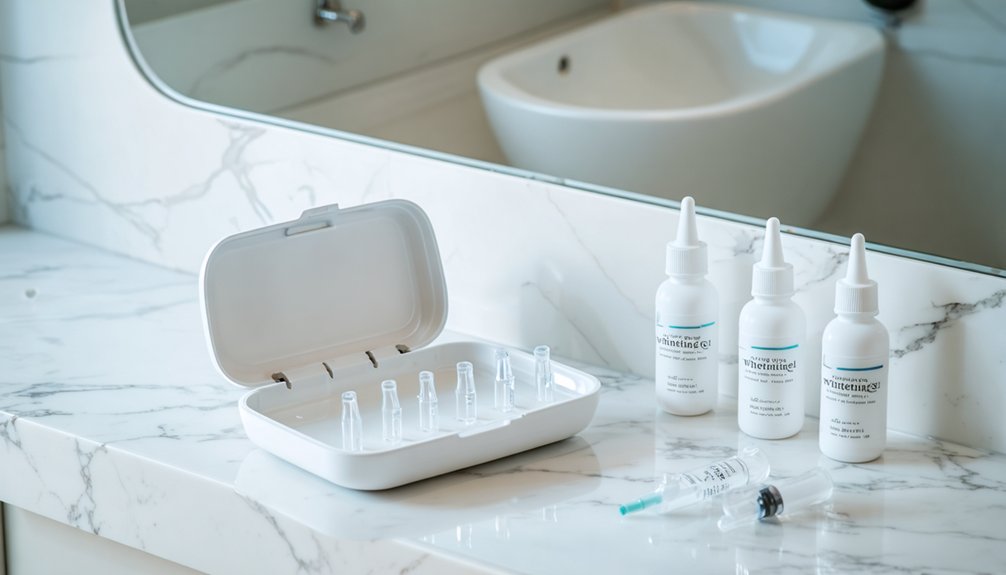
At-home whitening kits offer a practical, cost-effective solution for managing mild fluoride stains, and they’re widely accessible without requiring a clinical visit. You’ll apply lower-concentration bleaching agents through custom-fitted trays consistently over 2 to 4 weeks to achieve gradual, noticeable improvement.
Maintaining strong dental hygiene throughout this process is essential, as plaque buildup can compromise results. Unlike cosmetic bonding, this approach preserves your natural tooth structure entirely.
Key considerations for effective use:
- Follow usage instructions strictly to prevent enamel damage or gum irritation
- Use fluoride-free toothpaste to avoid exacerbating existing fluorosis
- Monitor sensitivity levels and adjust application frequency if discomfort arises
This method works best for mild cases; moderate-to-severe fluorosis typically requires clinical intervention for meaningful results.
How Enamel Microabrasion Removes Fluoride Stains
Enamel microabrasion physically removes a thin, superficial layer of enamel to eliminate fluoride stains at their source, making it a clinically effective option for mild to moderate fluorosis with visible white or brown spots.
By targeting the enamel surface directly, the technique mechanically removes discoloration before stain penetration reaches deeper structural layers. You’ll typically see significant stain reduction within one to three clinical sessions, preserving more natural tooth structure than veneers require.
Dentists often combine microabrasion with bleaching agents to enhance color blending and optimize results. The procedure’s minimally invasive nature gives you a controlled, precise approach to managing fluorosis without extensive enamel sacrifice.
Maintaining consistent oral hygiene afterward ensures lasting outcomes and prevents surface stain reaccumulation.
How Resin Infiltration Fixes White Spot Fluorosis
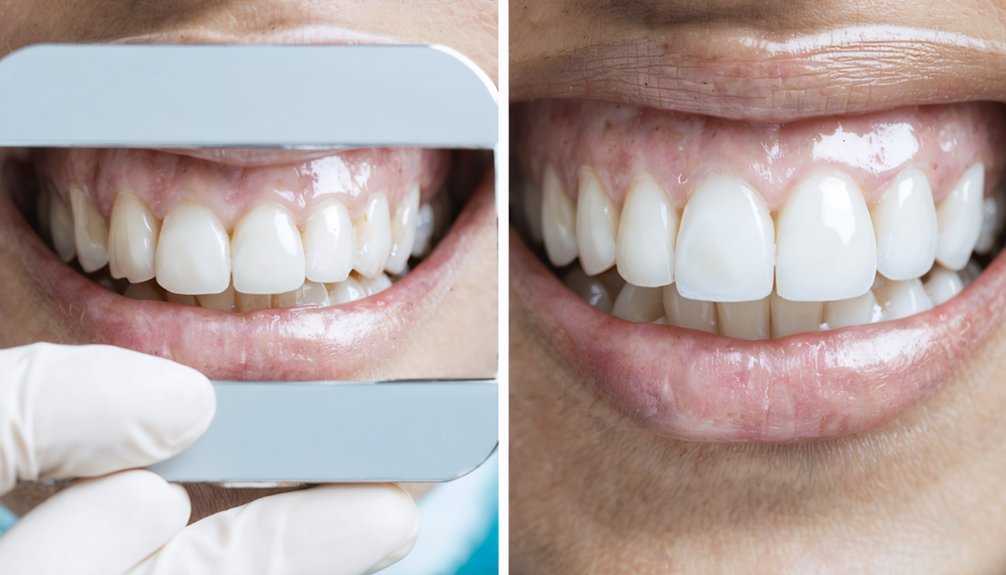
Resin infiltration corrects white spot fluorosis by using low-viscosity resin to penetrate porous enamel, effectively blending opaque lesions with surrounding tooth structure. This non-invasive procedure involves acid etching, controlled drying, and precise resin penetration without enamel removal, giving you immediate visual improvement.
Key advantages of resin infiltration include:
- No enamel sacrifice: You preserve natural tooth structure entirely throughout treatment.
- Immediate results: White spot visibility reduces markedly after a single clinical session.
- Long-term stability: Outcomes remain durable when you maintain proper oral hygiene and limit excessive fluoride intake.
This treatment works best for mild fluorosis presenting with superficial opaque white spots. You’ll achieve predictable, evidence-supported outcomes by selecting this clinically validated approach for targeted fluorosis management.
When Dental Veneers Are Right for Fluoride Stains
When resin infiltration and whitening treatments fall short—typically in moderate to severe fluorosis cases—dental veneers become the clinically appropriate solution. Custom-fabricated porcelain or composite resin shells bond directly to your tooth’s front surface, delivering immediate, uniform coverage over deep discoloration that bleaching can’t correct.
Before placement, your dentist removes a thin enamel layer, applies dental bonding agents, and ensures precise adhesion. Enamel polishing finalizes the surface preparation, optimizing veneer fit and longevity.
Precise preparation—enamel removal, bonding agents, and polishing—ensures your veneers fit flawlessly and last.
You’ll see results immediately—no waiting weeks for gradual improvement.
With proper oral hygiene, veneers last 10 to 15 years, giving you predictable, long-term control over your smile’s appearance. If your fluorosis is severe and other interventions have underperformed, veneers aren’t a last resort—they’re the strategically sound choice.
Natural Remineralization to Reduce Fluoride Stain Visibility

While veneers and professional whitening address existing discoloration structurally, natural remineralization works at the enamel level to reduce white spot visibility through mineral replenishment. You can actively support this process using evidence-backed natural remedies and dietary adjustments that strengthen compromised enamel.
Prioritize these clinically supported strategies:
- Apply remineralizing pastes containing calcium phosphate twice daily to replenish depleted enamel minerals and reduce opaque white spot contrast.
- Switch to fluoride-free toothpaste immediately to prevent further fluoride accumulation that worsens existing fluorosis.
- Make targeted dietary adjustments by incorporating fiber-rich foods like apples and carrots, which mechanically cleanse enamel surfaces while stimulating saliva production.
Consistency determines your results. Natural remineralization won’t eliminate severe fluorosis, but it provides measurable stain reduction for mild cases while preserving your natural tooth structure.
How to Choose the Right Treatment for Your Fluorosis Severity
Matching your treatment to fluorosis severity directly determines how effective and cost-efficient your whitening outcome will be. For mild fluorosis, you’ll achieve strong results using resin infiltration, enamel microabrasion, or at-home whitening kits. These innovative technologies minimize enamel loss while delivering measurable stain reduction.
Moderate fluorosis responds better to professional bleaching combined with microabrasion, accelerating outcomes through clinical-grade precision.
Severe fluorosis typically requires veneers, as bleaching agents yield limited penetration against deep discoloration.
Beyond clinical intervention, your lifestyle habits directly influence treatment longevity. Avoiding excessive fluoride intake, maintaining fluoride-free toothpaste routines, and adopting remineralizing protocols protect your results post-treatment.
Assess your fluorosis classification with your dentist first, then select the intervention that aligns with both your severity level and long-term oral health strategy.
How to Keep Teeth White After Fluoride Stain Treatment
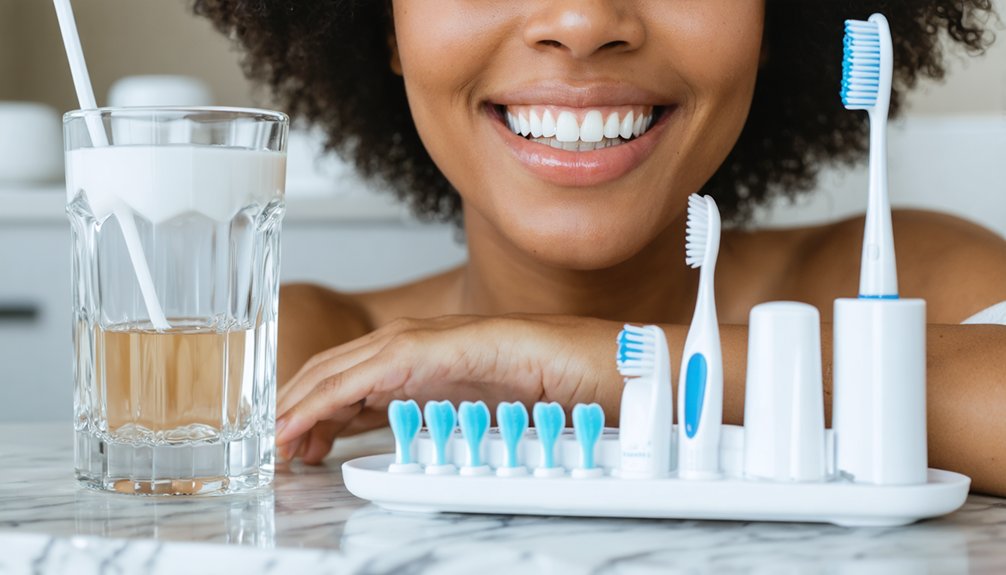
Selecting the right treatment gets your teeth white—keeping them that way requires an equally disciplined post-treatment protocol. Your dental hygiene routine and lifestyle habits directly determine how long your results last.
Maintain post-treatment whiteness by committing to these evidence-backed practices:
- Brush twice daily with fluoride-free, remineralizing toothpaste containing calcium and phosphate to strengthen enamel without reintroducing fluoride.
- Eliminate stain-promoting habits such as consuming coffee, tea, or tobacco, which accelerate discoloration on treated enamel surfaces.
- Schedule regular professional cleanings every six months to remove plaque buildup and monitor any recurrence of fluorosis-related staining.
Resin infiltration and veneer longevity both depend heavily on your compliance. You control the outcome—consistent, targeted maintenance isn’t optional; it’s the protocol that protects your investment.
Frequently Asked Questions
Can Fluoride Stains Affect Children’s Primary Teeth Before Permanent Teeth Emerge?
“Prevention is better than cure.” Yes, fluoride exposure effects can cause primary teeth discoloration in children. You should monitor your child’s fluoride intake early, as excessive exposure damages developing enamel before permanent teeth even emerge.
Are Fluoride Stain Treatments Covered by Dental Insurance Plans?
Most dental insurance plans don’t cover fluoride stain treatments, as they’re considered cosmetic. You’ll need to explore your insurance coverage carefully and discuss affordable treatment options with your dentist to regain control over your smile.
Can Fluoride Stains Reappear After Successful Whitening Treatment Is Completed?
Over 60% of cases see stain recurrence. Yes, fluoride stains can reappear after cosmetic bleaching or natural remedies if you don’t maintain consistent oral hygiene and limit fluoride exposure post-treatment.
Does Drinking Fluoridated Water Worsen Existing Fluoride Stains on Teeth?
Drinking fluoridated water won’t worsen existing fluoride stains, as dental discoloration from fluoride toxicity occurs during tooth development. Once your teeth have fully erupted, additional fluoride exposure doesn’t intensify already-present staining.
How Do Fluoride Stains Differ Visually From Calcium Deposits on Teeth?
You’ll notice fluoride stains create dramatic aesthetic contrast with streaky, brown, or chalky white discoloration patterns embedded deep within enamel, while calcium deposits appear as raised, rough, yellowish-white tartar formations sitting entirely on your tooth’s surface.
References
- https://www.allfitwell.com/dental-fluorosis-teeth-whitening-solutions/
- https://hillcrestdentaltx.com/got-blotchy-teeth-eliminate-fluoride-stains-in-texas-now/
- https://pubmed.ncbi.nlm.nih.gov/30797258/
- https://www.youtube.com/watch?v=Zwrx4d7blyQ
- https://www.hazendentistry.com/blog/3-ways-you-can-treat-fluoride-stains-on-your-teeth.php
- https://www.dentalcare.com/en-us/stannous-fluoride/oral-health/anti-stain-and-whitening
- https://www.magnoliadentistry.com/dental-fluorosis-treatment-from-stains-to-sparkle/
- https://teethwhiteninghochiminh.com/best-fluorosis-teeth-whitening/
- https://drbvreddysdental.com/what-are-the-best-treatment-options-for-fluorosis-affected-teeth/
- https://www.patientconnect365.com/dentalhealthtopics/article/Fix_Those_Fluoride_Stains_Today