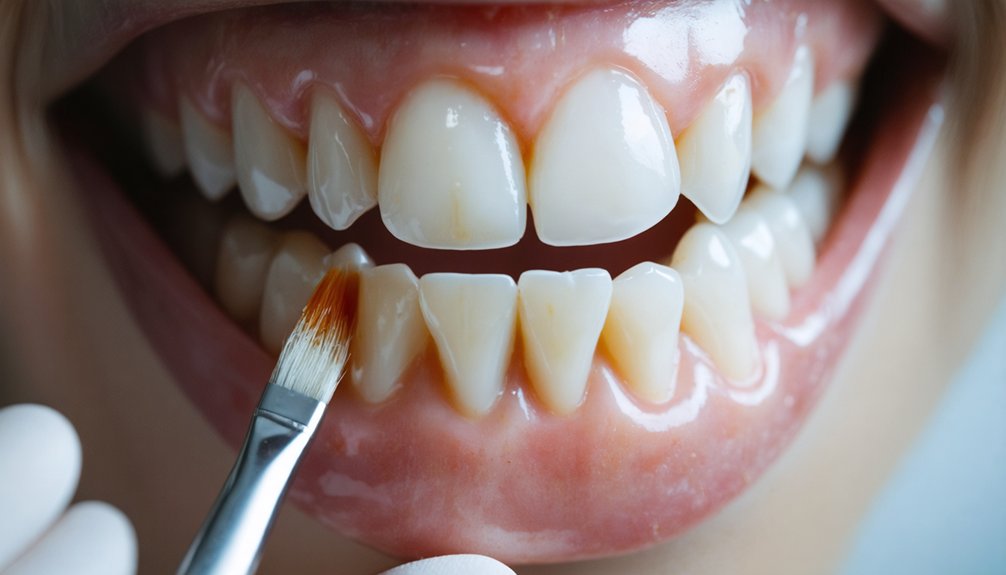
Teeth whitening methods work on tetracycline stains because peroxide-based agents penetrate your enamel and dentin, oxidizing the chromogenic molecules embedded deep within the tooth structure. Unlike surface stains, tetracycline discoloration is intrinsic, meaning it formed during tooth development. Bleaching targets those stubborn pigments at their source, gradually lightening gray and brown hues over time. Results depend on your stain’s severity, depth, and hue — all factors that shape what’s truly possible for your smile.
Key Takeaways
- Tetracycline stains contain chromogenic molecules within enamel and dentin that peroxide-based whitening agents can oxidize and lighten effectively.
- Professional whitening uses stronger peroxide concentrations than over-the-counter products, enabling deeper penetration into stained dentin layers.
- Custom-fitted trays ensure consistent gel contact across all tooth surfaces, maximizing treatment effectiveness for intrinsic staining.
- Extended whitening protocols allow cumulative oxidation effects, gradually lightening even moderate tetracycline banding over several weeks.
- Pre-treatment bleaching reduces overall stain intensity, making restorative options like veneers more effective when whitening alone is insufficient.
Can Whitening Actually Work on Tetracycline-Stained Teeth?
Tetracycline staining is notoriously difficult to treat because the discoloration is intrinsic—pigment becomes embedded within the enamel and dentin during tooth development rather than accumulating on the surface.
Tetracycline staining runs deep—literally embedded within enamel and dentin, not something you can simply brush away.
However, whitening methods can still reduce visible staining by oxidizing the chromogenic molecules within the tooth structure. Essential tooth bleaching is widely recognized as the recommended first-line approach, and some cases show dramatic improvement through conservative treatment alone.
Your results will depend on stain depth, hue, and severity. Lighter yellow or gray discoloration responds more favorably than dark brown or banded staining.
The goal isn’t always complete elimination—it’s meaningful improvement that supports your broader dental health and reduces the need for more invasive restorations.
Strategic, realistic expectations are what drive successful outcomes.
Does Tetracycline Stain Severity Change Your Whitening Results?
How deeply tetracycline has stained your teeth directly shapes how much whitening can realistically achieve. Stain depth and color hue are the two strongest predictors of your outcome.
- Light yellow or gray staining responds most favorably to bleaching protocols.
- Moderate banding shows measurable improvement but requires extended treatment timelines.
- Dark brown discoloration is the most resistant because pigment is embedded deepest within dentin.
- Severe intrinsic staining often needs whitening combined with veneers or restorative coverage.
Understanding where your staining falls on this spectrum lets you set precise, evidence-based expectations.
Your dentist can evaluate stain depth and color hue through clinical examination, then design a targeted protocol that maximizes your aesthetic outcome without overpromising results.
Why Professional Whitening Works Better on Tetracycline-Stained Teeth
Once you understand where your staining falls on the severity spectrum, the next step is choosing a treatment approach with enough strength to actually reach it.
Over-the-counter products use low-concentration whitening agents that rarely penetrate deep enough to address intrinsic tetracycline pigment. Professional systems change that equation entirely.
Your dentist can prescribe stronger whitening agents delivered through custom-fitted trays, ensuring consistent gel contact with every surface.
Extended treatment protocols—often involving nightly wear over several months—allow peroxide to gradually oxidize chromogenic molecules embedded within enamel and dentin.
In-office options may also incorporate high-concentration peroxide or advanced systems like KöR, accelerating penetration into resistant stain layers.
The result is a targeted, controlled process that gives you measurably better outcomes than anything available without professional oversight.
Why Longer Whitening Treatments Get Better Results on Stubborn Stains
The deeper tetracycline pigment sits within your dentin, the more contact time bleaching agents need to oxidize it effectively. Extended protocols outperform shorter treatments because cumulative effects build gradually, reaching pigment that single sessions can’t touch.
Here’s why longer treatment timelines produce superior outcomes:
- Prolonged tray wear increases peroxide penetration into deeper dentin layers.
- Repeated exposure creates cumulative effects that incrementally lighten resistant chromogenic molecules.
- Extended protocols allow gradual color blending across differently stained zones.
- Consistent nightly use compounds results over weeks, achieving what brief treatments cannot.
Compliance is your most powerful variable. Skipping sessions interrupts the oxidation process and stalls progress.
Committing to months of disciplined treatment gives you the greatest control over your final outcome.
When Whitening Alone Is Not Enough for Tetracycline Stains
Even with extended, disciplined bleaching protocols, some tetracycline stains simply won’t respond enough to achieve an acceptable cosmetic outcome.
Staining permanence—particularly with dark gray or brown banding—can exceed what peroxide chemistry alone can correct. When that happens, restorative options become the appropriate next step.
Porcelain veneers remain the most effective solution for masking deeply embedded discoloration that bleaching couldn’t resolve.
When bleaching falls short, porcelain veneers deliver what peroxide cannot—reliable, lasting coverage for deeply embedded stains.
Composite bonding offers a less invasive alternative for selected cases with milder residual staining.
In situations where teeth are also structurally compromised, full crowns may be necessary.
Whitening still plays a valuable role here.
Pre-treatment bleaching lightens the underlying tooth shade, which reduces how much opaque masking material your restorations require—preserving more natural tooth structure during preparation.
Frequently Asked Questions
Can Tetracycline Staining Return After Successful Whitening Treatment Is Completed?
While stain recurrence isn’t common, you’ll want to maintain treatment longevity through periodic touch-ups. Tetracycline pigments don’t typically return once oxidized, but lifestyle factors like diet and habits can gradually re-darken your results over time.
Are There Age Restrictions for Whitening Tetracycline-Stained Teeth Professionally?
You shouldn’t pursue professional whitening techniques until your teeth fully develop, typically after age 16–18. Age considerations matter because younger enamel remains vulnerable. Your dentist’ll assess your readiness to guarantee safe, effective, and aesthetically ideal results.
Does Dental Insurance Ever Cover Whitening Treatments for Tetracycline Discoloration?
Most dental insurance won’t cover whitening for tetracycline discoloration since it’s deemed cosmetic. You’ll want to explore your treatment options carefully, as insurance coverage rarely extends to aesthetic bleaching, even for intrinsic staining cases.
Can Whitening Damage Enamel When Used on Tetracycline-Stained Teeth Long-Term?
Like Icarus flying too close to the sun, overuse risks damage. Long-term effects can include enamel erosion, but professionally supervised whitening minimizes this risk, keeping your treatment both safe and strategically effective.
How Does Tetracycline Staining Differ Visually From Other Types of Tooth Discoloration?
Tetracycline staining presents unique visual characteristics—horizontal gray, brown, or yellow banding embedded within your tooth structure. Unlike surface discoloration types from coffee or aging, you’ll notice these intrinsic bands don’t respond to standard whitening without extended, professionally supervised treatment protocols.
References
- https://en.cnys.com/ask/351760.html
- https://vegassmilesuite.com/how-to-whiten-teeth-with-tetracycline-stains/
- https://www.healthline.com/health/tetracycline-teeth
- https://www.nature.com/articles/s41415-021-3121-x
- https://www.vegastoothdr.com/can-teeth-whitening-fix-tetracycline-stains
- https://www.scrippsdentalcare.com/cosmetic-dentistry/how-can-i-get-rid-of-tetracycline-stains/
- https://www.korwhitening.com/6-things-know-treating-tetracycline-patient-kor-whitening-products/
- https://blog.ultradent.com/transforming-tetracycline-stains-with-opalescence-whitening
- https://pmc.ncbi.nlm.nih.gov/articles/PMC2741196/
- https://www.stanleysmiles.com/blog/how-can-i-whiten-my-tetracycline-stains