Natural teeth whitening methods work because they target extrinsic stains through three core mechanisms: mechanical abrasion, pH modulation, and low-intensity oxidation. Ingredients like baking soda physically dislodge surface deposits from coffee, tea, and tobacco, while an alkaline environment limits acid-driven staining. Dilute hydrogen peroxide breaks down colored compounds on enamel. These approaches deliver gradual, measurable cosmetic improvements rather than dramatic shade changes. Keep exploring to understand exactly what each mechanism does and what results you can realistically expect.
Key Takeaways
- Baking soda’s mild abrasiveness mechanically removes surface stains from coffee, tea, and tobacco through consistent, repeated use.
- Alkaline ingredients reduce bacterial growth and limit acid-driven staining processes, helping maintain a cleaner tooth surface.
- Dilute hydrogen peroxide breaks down colored compounds on enamel through low-intensity oxidation, gradually improving tooth appearance.
- Natural methods effectively target extrinsic stains from pigmented foods, beverages, and tobacco without harsh chemical concentrations.
- Consistent application over weeks produces measurable cosmetic improvements, making natural methods a gradual but viable whitening option.
The Three Mechanisms That Make Natural Whitening Work
Natural teeth whitening methods work through three core mechanisms: surface abrasion, alkaline pH modulation, and low-intensity oxidation. Each targets a distinct aspect of discoloration, giving you a clearer picture of what these approaches can realistically achieve.
Surface abrasion, delivered by ingredients like baking soda, physically dislodges surface stains caused by coffee, tea, and tobacco.
Alkaline pH modulation reduces bacterial growth and limits acid-driven staining processes, creating conditions where surface stains form less readily.
Low-intensity oxidation, primarily through dilute hydrogen peroxide, breaks down colored compounds on enamel through controlled chemical action.
Natural methods don’t replicate the intensity of professional bleaching.
However, understanding these three mechanisms lets you select the right approach, apply it correctly, and set accurate expectations for gradual, measurable cosmetic improvement.
Which Surface Stains Natural Methods Can Actually Remove
When you consume coffee, tea, red wine, or heavily pigmented foods regularly, you accumulate extrinsic stains that natural whitening agents are best positioned to address.
Tobacco use introduces particularly stubborn chromogenic deposits onto enamel surfaces, though abrasive agents like baking soda can gradually lift these discolorations with consistent application.
Understanding which stain types respond to natural methods helps you set realistic expectations and select the most appropriate technique for your specific discoloration pattern.
Common Dietary Stain Sources
What you eat and drink daily plays a direct role in the extrinsic stains that natural whitening methods can realistically address.
Coffee stains, tea discoloration, and wine pigmentation bond to enamel through chromogens, tannins, and acidic compounds. Food acids from citrus, vinegar-based dressings, and carbonated beverages weaken enamel surfaces, making them more susceptible to pigment absorption.
Smoking effects compound this by depositing tar and nicotine directly onto tooth surfaces, creating stubborn yellow-brown discoloration. Poor dietary habits accelerate plaque buildup, which traps pigmented particles against enamel.
Maintaining consistent oral hygiene limits how deeply these stains embed. Natural whitening methods are most effective when your dietary stain sources are identified and managed alongside the whitening intervention itself.
Tobacco Discoloration Removal
Tobacco stains rank among the most stubborn extrinsic discolorations that natural whitening methods attempt to address, largely because tar and nicotine bond aggressively to enamel surfaces over time.
Nicotine effects penetrate the outer enamel layer, creating yellow-to-brown discoloration that resists simple rinsing or brushing.
Natural methods, particularly baking soda’s mild abrasiveness, can mechanically lift some tobacco stains from your enamel surface when you apply consistent, careful technique.
Activated charcoal may assist in absorbing loosened surface deposits.
However, you should understand that deeply embedded tobacco stains often exceed what natural approaches can fully correct.
The longer nicotine exposure continues, the more resistant staining becomes.
Cessation combined with natural methods offers your strongest realistic strategy for gradual, measurable improvement in tooth appearance.
Pigmented Food Deposits
Pigmented foods deposit chromogens—color-producing compounds—directly onto your enamel surface, creating the type of extrinsic staining that natural whitening methods are best equipped to address.
Common pigment sources include berries, soy sauce, balsamic vinegar, and curry—all capable of bonding to enamel pellicle over time.
Baking soda’s mild abrasiveness mechanically lifts these deposits without aggressive chemical intervention. In vitro studies confirm measurable whitening differences after repeated application of baking soda and activated charcoal on chromogen-based stains.
Acidic agents like lemon juice can loosen surface deposits, though enamel safety limits their frequency.
For effective stain prevention, you’ll need consistent technique—gentle brushing, limited contact time, and regular use alongside fluoride toothpaste.
Natural methods address extrinsic pigment accumulation most reliably when integrated into disciplined daily oral hygiene.
Is Hydrogen Peroxide a Natural Whitener or a Chemical Crossover?
Hydrogen peroxide occupies an interesting middle ground: it occurs naturally in small amounts in the human body and even in some foods, yet it’s also synthesized and used as a chemical agent in commercial whitening systems.
Its natural origins don’t diminish its chemical properties—oxidation remains the active mechanism regardless of concentration.
When you use low-concentration hydrogen peroxide at home, you’re leveraging the same whitening comparison principle as professional treatments, just at a reduced intensity.
Clinical evidence confirms that higher concentrations produce faster shade changes, meaning your results depend directly on dosage.
Understanding this distinction helps you make informed decisions—natural doesn’t always mean weaker, and chemical doesn’t always mean unsafe.
Concentration and application method ultimately determine both effectiveness and risk.
How Baking Soda Naturally Removes Stains Without Bleach
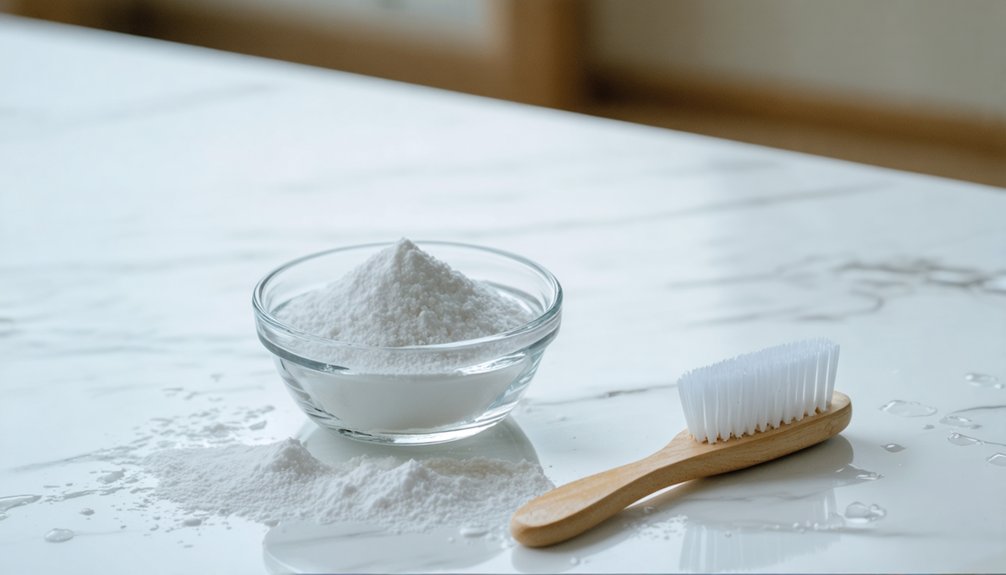
When you brush with baking soda, its mild abrasive texture mechanically lifts surface stains from coffee, tea, and tobacco without relying on chemical bleaching agents.
Sodium bicarbonate also raises your mouth’s pH, creating an alkaline environment that inhibits bacterial growth and reduces acid-driven staining processes.
Together, these two mechanisms make baking soda the most scientifically supported natural whitening ingredient, offering gradual cosmetic improvement through both physical stain removal and stain prevention.
Gentle Abrasion Lifts Stains
Baking soda removes surface stains through gentle mechanical abrasion rather than chemical bleaching. Its fine crystalline structure physically scrubs pigmented deposits from enamel without requiring oxidizing agents.
When you brush with baking soda, the mild abrasive action lifts stains from coffee, tea, wine, and tobacco before they penetrate deeper into tooth structure. In vitro studies confirm measurable whitening differences following repeated application.
Stain lifting occurs gradually, so consistent use produces cumulative results over time. Technique matters considerably—applying gentle pressure with soft circular strokes maximizes effectiveness while protecting enamel integrity. Aggressive scrubbing negates the benefit by risking surface damage.
Because this mechanism targets extrinsic discoloration specifically, baking soda gives you precise, controlled stain removal without the sensitivity risks associated with peroxide-based whitening systems.
Alkaline pH Prevents Discoloration
Beyond its abrasive properties, baking soda offers a second mechanism that works quietly in the background: pH regulation. When you apply baking soda, it shifts your oral environment toward alkaline conditions, delivering meaningful alkaline benefits that extend beyond surface cleaning.
Maintaining proper pH balance matters because an acidic mouth accelerates bacterial growth and enamel erosion, both of which contribute to staining and discoloration. By neutralizing acid, baking soda creates an environment where bacteria struggle to thrive and pigment-producing compounds have less opportunity to adhere.
This mechanism won’t dramatically bleach your teeth, but it actively supports stain prevention over time. You’re not just removing existing discoloration — you’re modifying the conditions that allow discoloration to form, making consistent use more strategically valuable than occasional intensive treatments.
What a More Alkaline Mouth Does to Tooth Stains
Shifting the oral environment toward a more alkaline pH can disrupt the conditions that allow stains to form and persist on tooth surfaces.
When you use baking soda, you’re actively creating alkaline benefits that reduce bacterial activity and limit acid-driven discoloration processes. Lower acidity means less enamel erosion, which helps maintain a cleaner, smoother surface that’s less receptive to pigment adhesion.
This mechanism supports stain prevention rather than dramatic bleaching, making it a practical daily strategy. You’re not reversing deep intrinsic discoloration, but you’re actively interfering with the surface conditions that allow extrinsic stains to accumulate.
Used consistently alongside proper brushing and flossing, alkalizing agents help you maintain a cleaner baseline appearance without relying on aggressive chemical interventions.
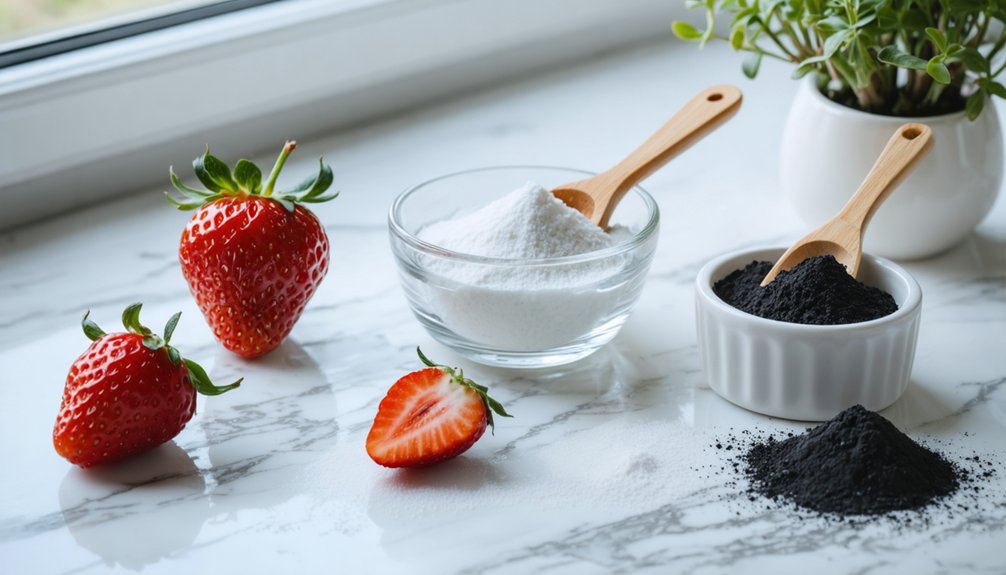
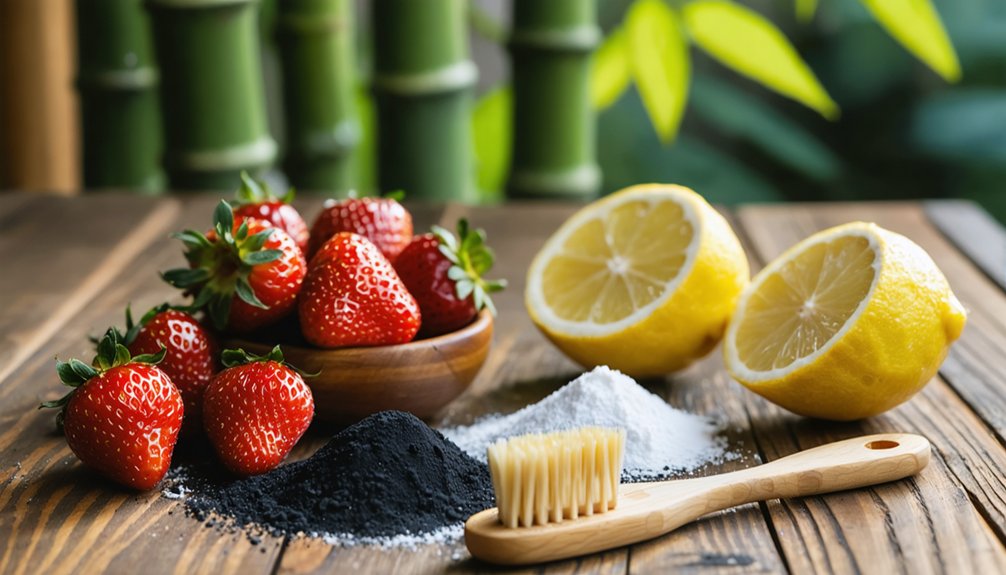
What Studies Actually Show About Baking Soda, Charcoal, and Strawberries
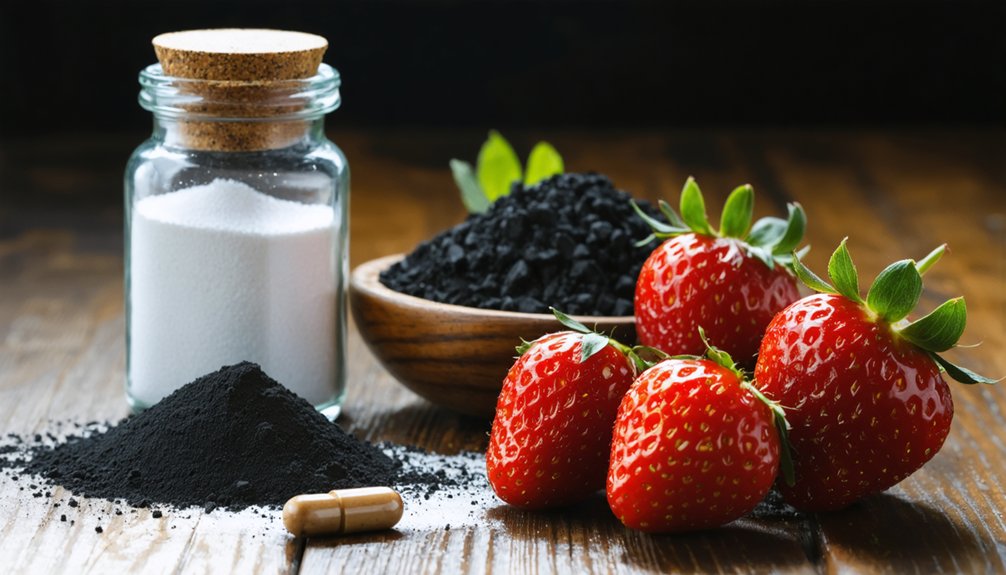
When researchers put natural whitening agents to the test, the results reveal both modest promise and clear limitations. In vitro studies confirm measurable whitening differences with repeated use, but you should interpret these findings carefully.
Key evidence-based takeaways:
- Baking soda effectiveness is the most scientifically supported among natural options, producing gradual surface stain removal through mild abrasion.
- Charcoal safety remains questionable—while it lifts surface discoloration, its abrasive nature risks enamel damage with frequent use.
- Strawberries show statistically significant but mild whitening effects, primarily through acid-loosening of surface deposits.
None of these agents match peroxide-based systems for shade improvement. If you’re pursuing natural whitening, understanding these distinctions helps you make informed, controlled decisions about which methods are worth your consistent effort.
Natural vs. Commercial Whitening: How the Results Compare
When you compare natural whitening methods to commercial systems, the difference in speed and shade change becomes immediately clear.
Commercial peroxide-based treatments, including in-office bleaching and high-concentration take-home kits, can produce several shade improvements within days or weeks, while natural methods typically require weeks to months of consistent use for only mild, incremental results.
You’re fundamentally trading intensity and speed for a lower-risk, more gradual approach when you choose natural alternatives.
Whitening Speed Compared
One of the most practical distinctions between natural and commercial whitening methods is how quickly each produces visible results.
Commercial systems use high-concentration peroxides that penetrate enamel, delivering noticeable changes within days. Natural alternatives work more gradually, targeting surface stains through mild abrasion or low-level oxidation.
Understanding this difference helps you separate realistic expectations from whitening myths:
- Baking soda and activated charcoal may produce measurable brightening after repeated, consistent use over weeks.
- Low-concentration hydrogen peroxide requires roughly 12 weeks of regular application before significant shade changes appear.
- Commercial bleaching achieves faster results but carries higher risks of sensitivity and enamel stress.
You’re not choosing between effective and ineffective — you’re choosing between speed and controlled, lower-risk cosmetic improvement.
Shade Change Intensity
Beyond whitening speed, the degree of shade change you can realistically expect separates natural methods from commercial systems more sharply than any other factor.
Natural approaches — baking soda, activated charcoal, strawberries — produce statistically significant but modest shade variation, typically limited to surface stain reduction rather than structural bleaching. You won’t achieve the dramatic lightening that high-concentration peroxide systems deliver.
Clinical evidence confirms that higher-peroxide toothpastes outperform lower-concentration alternatives over 12 weeks, and professional-grade treatments extend that gap further.
Calibrating your whitening expectations honestly matters here. Natural methods work best when your goal is gradual cosmetic improvement — removing extrinsic discoloration without aggressive chemical exposure.
If you’re targeting intrinsic discoloration or multiple shade jumps, natural options won’t deliver that outcome reliably.
Why Oil Pulling and Probiotics Underdeliver on Natural Whitening
Oil pulling and probiotics attract attention as natural wellness practices, but neither delivers meaningful whitening results when examined against the available evidence. If you’re relying on these methods for visible shade changes, you’re likely to be disappointed.
Consider what the evidence actually shows:
- Oil pulling may support oral cleanliness, but no credible clinical data confirms direct whitening outcomes.
- Probiotic effectiveness targets microbiome shifts that could reduce stain formation, yet measurable color improvement remains undemonstrated.
- Both methods function as adjuncts to hygiene rather than standalone whitening interventions.
Your best strategy treats oil pulling and probiotics as supportive habits while directing your whitening efforts toward baking soda or low-concentration peroxide products, which carry stronger evidence for producing gradual, measurable cosmetic improvement.
How to Use Natural Whitening Methods Without Damaging Enamel
Natural whitening methods carry real benefits, but careless application can erode the enamel you’re trying to brighten. Enamel care depends on how often and how aggressively you apply these treatments.
Limit baking soda use to two or three times weekly, applying it with gentle pressure rather than vigorous scrubbing. Avoid acidic options like lemon juice more than once weekly, and always rinse thoroughly afterward to neutralize residual acidity.
Whitening frequency matters—daily use of abrasive or acidic agents accelerates enamel loss over time. Pair natural methods with fluoride toothpaste to remineralize surfaces between treatments.
You shouldn’t replace your standard brushing routine with these approaches; use them as controlled additions. Monitoring sensitivity is key—increased discomfort signals enamel stress, and you should reduce frequency immediately.
Realistic Results to Expect From Natural Whitening
Protecting enamel through careful technique sets the foundation, but knowing what these methods can realistically deliver helps you set appropriate expectations.
Natural expectations should center on modest, gradual improvements rather than dramatic shade transformations.
Modest, gradual improvement is the realistic target — not a dramatic overnight transformation of your smile’s shade.
Evidence supports these outcomes:
- Surface stain reduction: Baking soda, activated charcoal, and strawberries showed statistically significant whitening in studies, primarily targeting extrinsic discoloration from coffee, tea, and tobacco.
- Slow progression: Shade changes develop over weeks of consistent use, not days, making patience a required variable in your whitening strategy.
- Limited intrinsic impact: Natural methods don’t penetrate enamel deeply enough to alter internal discoloration, unlike clinical peroxide systems.
You’re managing surface appearance, not restructuring tooth composition.
Understanding this distinction keeps your approach both effective and grounded in clinical reality.
Frequently Asked Questions
Can Natural Whitening Methods Help With Tooth Sensitivity Issues?
Natural whitening methods don’t specifically target sensitivity reduction. You’ll find ingredient effectiveness varies, but baking soda’s mild abrasiveness and alkaline properties may indirectly lower irritation by reducing plaque buildup, though they’re not clinically proven sensitivity treatments.
Are Natural Whitening Methods Safe to Use During Pregnancy?
You can generally use mild natural ingredients safely, but always consult your dentist first. Pregnancy oral health needs careful attention, and natural ingredients safety isn’t guaranteed without professional guidance tailored to your specific trimester and condition.
How Long Do Natural Whitening Results Typically Last Before Fading?
Your results from natural ingredients typically last two to four weeks before fading. You’ll maintain them by controlling your whitening frequency, avoiding staining foods, and consistently practicing good oral hygiene alongside your natural whitening routine.
Can Children Safely Use Natural Whitening Methods on Their Teeth?
You shouldn’t use natural whitening methods on children without consulting a dentist first. Children’s dental health requires protecting developing enamel, and even safe ingredients like baking soda can pose risks to primary and changing teeth.
Do Natural Whitening Methods Interact With Dental Crowns or Veneers?
Natural whitening methods don’t alter crown materials or veneers since these resist bleaching agents. You’ll only affect surrounding natural teeth, so practice careful veneer care and consult your dentist before incorporating any whitening routine.
References
- https://www.sciencedirect.com/science/article/abs/pii/S134900792100178X
- https://lustrodental.com/natural-teeth-whitening/
- https://chestnutdental.com/blog/are-natural-teeth-whitening-methods-safe-and-effective/
- https://medicalartsdentistry.com/are-natural-teeth-whitening-methods-effective-and-safe/
- https://pmc.ncbi.nlm.nih.gov/articles/PMC10024105/
- https://www.healthline.com/nutrition/whiten-teeth-naturally
- https://www.smilesofvabeach.com/dental-services/cosmetic/blog/do-natural-teeth-whitening-remedies-really-work
- https://mypenndentist.org/dental-tips/2024/02/29/safe-ways-to-whiten-teeth-naturally/
- https://www.urmc.rochester.edu/news/publications/health-matters/diy-teeth-whitening-too-good-to-be-true
- https://www.northeastdentalarts.com/blog/what-is-the-least-damaging-way-to-whiten-your-teeth/