Tobacco stains penetrate deeper into enamel than standard whitening treatments can reach, so you’ll need more than ordinary toothpaste or drugstore strips to see real results. High-concentration in-office treatments like Zoom or Opalescence Boost are your most effective options, while custom whitening trays help maintain progress between visits. Daily habits, touch-up frequency, and even reducing how much you smoke all influence how white your teeth stay—and there’s a lot more to unpack on each of these fronts.
Key Takeaways
- In-office treatments like Zoom and Opalescence Boost use high-concentration hydrogen peroxide to penetrate deep tobacco stains more effectively than over-the-counter products.
- Schedule a professional cleaning before whitening treatments to remove plaque and tartar buildup, enhancing the effectiveness of stain-removal procedures.
- Active smokers should plan whitening touch-ups every 3–6 months to counter faster stain reaccumulation on treated enamel.
- Brush within 30 minutes after smoking and rinse immediately with water or antibacterial mouthwash to limit tar and nicotine deposits.
- For stains resistant to whitening, cosmetic options like porcelain veneers or composite bonding can effectively cover persistent discoloration.
Why Tobacco Stains Are So Hard to Remove
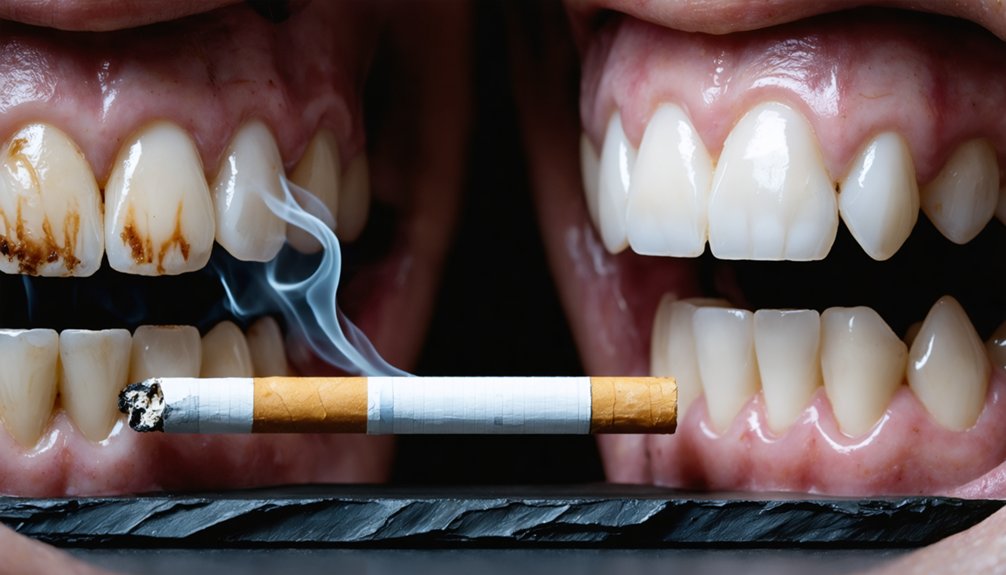
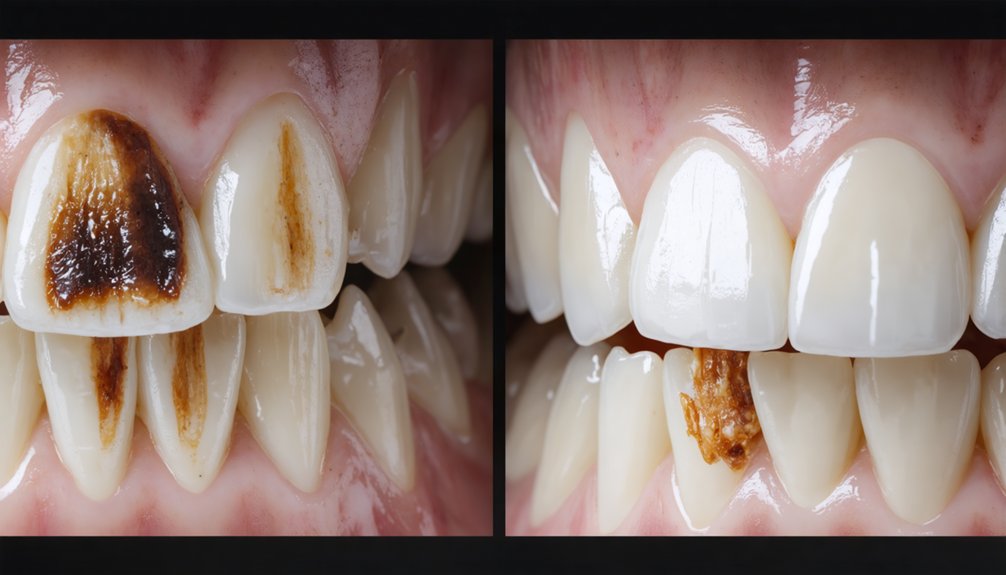
Tobacco smoke leaves behind tar and nicotine that bond directly to tooth enamel, producing discoloration that ranges from dull yellow to deep brown. These compounds don’t just sit on the surface — they penetrate enamel’s microscopic pores, making routine brushing largely ineffective for removal.
Standard toothpaste won’t reach those deeper layers, which is why stain prevention becomes critical before significant buildup occurs.
Because smoking continues to expose your enamel to corrosive chemicals, new stains form rapidly, even after whitening treatments.
Plaque and tartar accumulation further complicates the process, blocking whitening agents from contacting enamel evenly.
Without consistent professional cleanings prioritizing enamel protection, those barriers reduce treatment effectiveness.
Understanding this chemistry helps you make more strategic decisions about which whitening approaches will actually deliver measurable, lasting results.
What Professional Whitening Treatments Work Best for Smokers?
Because tobacco stains penetrate enamel at a deeper level than surface discoloration, over-the-counter products rarely deliver meaningful results for smokers.
Nicotine impacts the molecular structure of enamel, requiring stronger intervention to reverse visible yellowing and browning.
Nicotine alters enamel at the molecular level, making professional-strength whitening essential for reversing deep tobacco discoloration.
In-office treatments like Zoom and Opalescence Boost use high-concentration hydrogen peroxide formulas that break down stubborn tobacco compounds more effectively than standard kits.
Whitening technology advances have made light- and laser-activated systems increasingly efficient at targeting deep discoloration in fewer sessions.
Dental supervision lets your provider adjust concentration levels and manage sensitivity, which is especially important given nicotine impacts on gum tissue.
Custom take-home trays with professional-strength gel can extend your results between office visits, giving you greater control over your long-term whitening outcomes.
Does In-Office Whitening Work for Smokers?
In-office whitening does work for smokers, though results depend on stain depth and continued tobacco use after treatment.
You’ll benefit from high-concentration hydrogen peroxide formulas used in systems like Zoom and Opalescence Boost, which penetrate deeper than over-the-counter alternatives.
The in-office benefits include professional supervision, real-time sensitivity adjustments, and light- or laser-activated application that accelerates breakdown of stubborn tobacco compounds.
Whitening effectiveness improves greatly when you schedule a professional cleaning beforehand, since plaque and tartar can block even gel penetration.
However, if you continue smoking after treatment, stains return faster and touch-ups become necessary sooner.
You’ll maintain results longer by reducing tobacco exposure and following a consistent at-home care routine your dentist recommends post-treatment.
At-Home Whitening Options That Actually Help Smokers
If you’re managing tobacco stains between professional visits, custom-fitted whitening trays prescribed by your dentist deliver professional-strength peroxide gel directly against enamel, offering gradual but meaningful improvement.
Over-the-counter whitening strips and gels can address mild to moderate discoloration, though they’re less effective against the deeper pigmentation smoking typically leaves behind.
Incorporating a whitening toothpaste into your daily routine helps polish away surface buildup and can slow new stain accumulation when used consistently.
Custom Whitening Trays Work
When over-the-counter strips and gels fall short, custom-fitted whitening trays prescribed by your dentist offer a more targeted solution for tobacco stains.
Custom tray benefits include a precise fit that holds professional-strength gel firmly against every tooth surface, maximizing whitening gel effectiveness by minimizing saliva dilution and uneven coverage.
Your dentist calibrates the peroxide concentration to your sensitivity level, giving you control over treatment intensity and duration.
Unlike generic trays, custom versions reduce gum irritation by preventing gel overflow onto soft tissue.
You apply the trays consistently over several weeks, allowing the gel to gradually penetrate tar-saturated enamel that drugstore products can’t adequately reach.
For smokers dealing with moderate to deep discoloration, this dentist-guided approach delivers measurably stronger, longer-lasting results than standard at-home alternatives.
Strips And Gels Help
Whitening strips and gels won’t erase deep tobacco stains the way professional treatments can, but they’re a practical option for smokers dealing with mild to moderate discoloration.
Understanding strips effectiveness and proper gel application helps you get the most from these tools:
- Apply strips consistently — daily use over the full recommended cycle produces more noticeable results than occasional applications.
- Choose higher peroxide concentrations — stronger formulas improve breakdown of surface-level tobacco deposits.
- Follow gel application instructions precisely — overfilling trays causes gum irritation and wastes product.
- Brush before applying — clean enamel allows better contact between the whitening agent and the tooth surface.
Deep stains often persist, so pair these methods with professional care for stronger results.
Daily Whitening Toothpaste Benefits
Daily whitening toothpaste offers smokers a low-effort way to manage surface-level tobacco deposits without adding extra steps to their routine.
Toothpaste effectiveness depends on consistent application, since these formulas rely on mild abrasives and low-concentration peroxide compounds to gradually polish away fresh staining agents before they bond more deeply to enamel.
Integrating whitening toothpaste into your daily routine means you’re actively reducing accumulation between professional treatments rather than waiting for stains to worsen.
However, you should recognize its limitations. Whitening toothpaste won’t reverse deep, long-standing tobacco discoloration on its own. It performs best as a maintenance tool alongside professional whitening, not as a standalone solution.
Used correctly and consistently, it helps extend your results and slows the rate at which new stains develop.
How Often Do Smokers Need Whitening Touch-Ups?
How often you need whitening touch-ups depends largely on whether you continue smoking after your initial treatment. Active smokers typically need more frequent sessions than non-smokers to maintain visible results.
Whitening frequency guidelines based on your situation:
- Active smokers – Touch up timing typically falls every 3–6 months due to accelerated stain redeposit from tar and nicotine.
- Occasional smokers – Every 6–9 months usually maintains acceptable brightness.
- Recent quitters – Annual touch-ups often suffice once smoking stops and new staining slows considerably.
- Post-professional treatment – Custom trays with professional-strength gel allow you to self-manage maintenance between dental visits.
Pairing consistent daily habits with scheduled touch-ups gives you stronger control over long-term whitening durability and minimizes treatment costs over time.
When Whitening Alone Won’t Fix Tobacco Stains
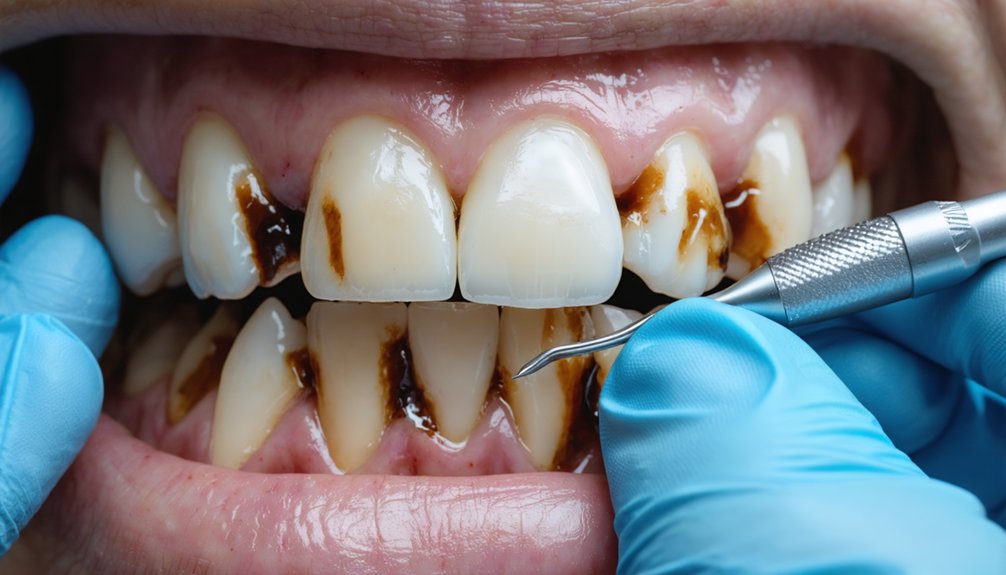
When tobacco stains have penetrated deeply into enamel over years of smoking, whitening agents often can’t fully reverse the discoloration, regardless of concentration or treatment frequency.
You may find that even repeated professional sessions produce diminishing returns, leaving noticeable yellow or brown tones behind.
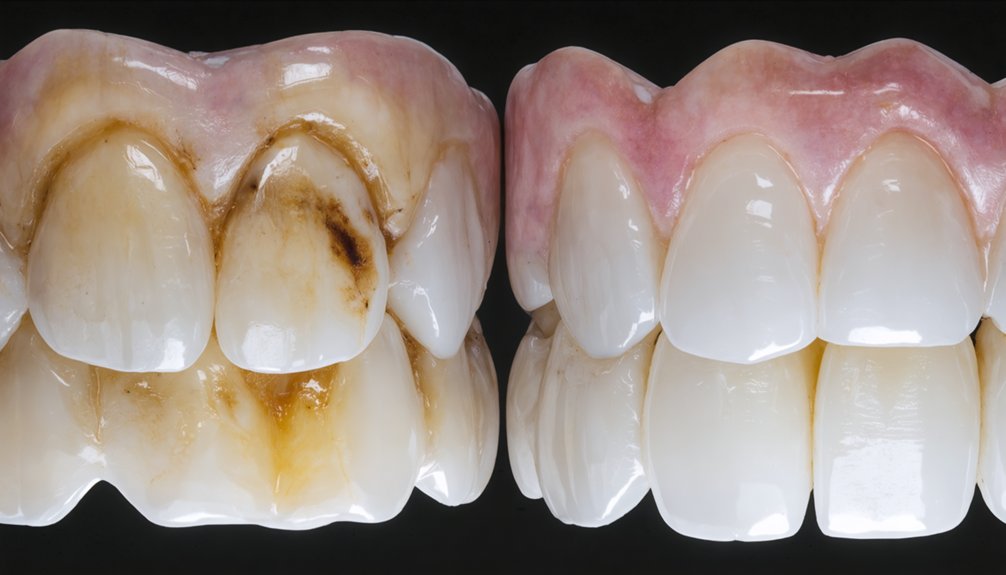
In these cases, cosmetic options such as porcelain veneers or composite bonding offer a more reliable path to a uniform, stain-free appearance.
Persistent Deep Stain Limits
Even with the strongest professional-grade whitening systems, some tobacco stains simply won’t respond the way surface-level discoloration does. Stain persistence increases when tar penetrates deeply into compromised enamel, limiting how far whitening agents can effectively reach.
Enamel damage accelerates this problem by creating microscopic channels where pigment embeds permanently.
Situations where whitening reaches its ceiling include:
- Decade-long tobacco exposure that has saturated dentin beneath the enamel layer
- Intrinsic discoloration that originates inside the tooth structure itself
- Enamel erosion that has thinned the protective surface, reducing whitening agent effectiveness
- Combined staining sources such as tobacco paired with heavy coffee or tea use
In these cases, cosmetic options like veneers may deliver results that whitening treatments simply can’t achieve alone.
Cosmetic Solutions Beyond Whitening
For smokers whose stains fall beyond what whitening can correct, cosmetic dentistry offers structural solutions that address discoloration at the surface rather than through chemical penetration.
Cosmetic veneers bond directly over stained enamel, creating a uniform, resistant outer layer that tobacco residue can’t penetrate as easily.
Tooth bonding applies composite resin to cover localized discoloration at lower cost, though it’s less durable than porcelain.
If tobacco damage has progressed to structural loss, dental implants restore missing teeth while maintaining overall smile symmetry.
Supplementary procedures like gum contouring correct uneven tissue lines that make staining appear more pronounced, while enamel reshaping refines surface irregularities that trap pigment.
These options give you precise control when chemistry-based whitening reaches its clinical ceiling.
Daily Habits That Help Smokers Keep Teeth Whiter Longer
Maintaining whiter teeth as a smoker requires consistent daily habits that limit new stain formation and support the longevity of any whitening treatment you’ve undergone.
Keeping teeth white as a smoker demands daily discipline — the right habits determine how long your results actually last.
Exploring smoking alternatives, like nicotine pouches, reduces direct tar contact with enamel, slowing discoloration markedly.
Prioritize these four enamel protection strategies:
- Brush within 30 minutes after smoking to minimize tar and nicotine adhesion before compounds penetrate enamel.
- Rinse with water or antibacterial mouthwash immediately after smoking to flush residual chemicals from tooth surfaces.
- Limit secondary staining agents — coffee, tea, and red wine compound tobacco discoloration considerably.
- Use a straw when drinking stain-causing beverages to reduce direct enamel contact.
Consistency with these habits meaningfully extends your whitening results and reduces retreatment frequency.
Home Remedies for Tobacco Stains: What Works and What to Skip
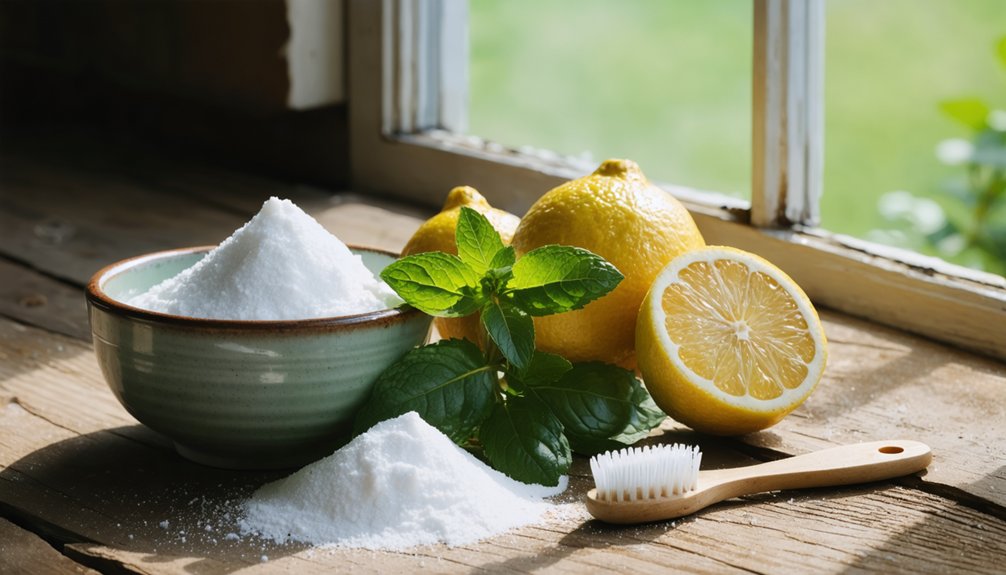
When tobacco stains resist standard brushing, many smokers turn to home remedies—with mixed results.
Baking soda can mildly scrub surface deposits, but overuse erodes enamel, so limit it to occasional use.
Diluted hydrogen peroxide rinses may lighten yellow discoloration when used carefully, though overuse irritates soft tissue.
Activated charcoal ranks among the most persistent whitening myths—it removes some surface debris but doesn’t alter natural tooth color and risks abrasive enamel damage with regular use.
Oil pulling offers only modest benefit against tobacco stains, making it an unreliable standalone solution.
These approaches address surface-level buildup at best; deep tobacco stains require professional intervention.
Use home remedies selectively as supplementary tools, not replacements for dentist-guided treatment, to avoid compounding existing enamel damage.
How Smoking Less Can Make Your Whitening Results Last Longer
Cutting back on smoking directly extends how long your whitening results last, because each cigarette deposits fresh tar and nicotine onto treated enamel and accelerates re-staining.
Smoking cessation—even partial—gives stain prevention strategies a real chance to work. Consider these four evidence-backed steps:
- Reduce daily cigarettes gradually to slow tar accumulation on freshly whitened enamel.
- Schedule touch-up treatments further apart as you smoke less, since re-staining will occur more slowly.
- Track your smoking frequency to identify patterns and consciously cut back during high-risk periods.
- Combine reduced smoking with daily brushing and rinsing to maximize how long your results hold.
Quitting entirely remains the strongest long-term strategy, giving whitening treatments their best chance at lasting results.
Frequently Asked Questions
Can Tobacco Stains Spread or Worsen Damage to Surrounding Gum Tissue?
Like a slow-spreading shadow, tobacco stains don’t directly damage gums, but they signal ongoing chemical exposure that threatens gum health. You’re actively increasing inflammation risks, making stain prevention and regular dental cleanings essential protective steps you control.
Does Smokeless Tobacco Cause the Same Type of Staining as Cigarettes?
Smokeless tobacco causes similar nicotine impact on your enamel, depositing tar and staining compounds directly onto teeth. You’ll need consistent oral hygiene and professional whitening to effectively combat these concentrated, localized stains.
Are Whitening Treatments Safe for Smokers Who Wear Dental Crowns?
Imagine a smoker with a front crown—whitening’s safe, but crown whitening won’t change its shade. Smoking effects may darken surrounding teeth faster, creating visible color mismatches. You’d need your dentist to assess shade compatibility first.
Can Secondhand Smoke Exposure Cause Noticeable Staining on Children’s Teeth?
Yes, secondhand smoke can deposit tar residue onto your child’s tooth enamel, causing noticeable discoloration. Protecting children’s health means minimizing their smoke exposure, as accumulated residue makes stains harder to reverse without professional intervention.
Does Smoking Through a Pipe or Cigar Stain Teeth Differently Than Cigarettes?
Tar’s a relentless architect—pipe smoking and cigar impact your enamel similarly to cigarettes, but prolonged oral contact intensifies staining. You’ll likely face deeper discoloration requiring professional-strength whitening treatments to achieve meaningful, lasting results.
References
- https://parkwaysmiles.com/teeth-whitening-for-smokers/
- https://greenvalleysmilecare.com/blog/remove-tobacco-stains-fast-from-your-teeth/
- https://tysondental.com/teeth-whitening-for-smokers-strategies-and-recommendations/
- https://rontostodds.com/blog/teeth-whitening-for-smokers-addressing-stains-from-tobacco-use/
- https://crest.com/en-us/oral-care-tips/teeth-stains/how-to-remove-nicotine-stains-from-teeth
- https://www.healthline.com/health/how-to-remove-nicotine-stains-from-teeth
- https://www.pittsfordfamilydental.com/blog/teeth-whitening-for-smoking-stains/
- https://clearclub.com/blogs/clearclub/10-effective-ways-to-whiten-teeth-after-smoking-or-taking-medications
- https://www.mondaygrazianidds.com/smoking-coffee-stains-how-to-get-a-lasting-white-smile/
- https://friedmandentalgroup.com/teeth-whitening-for-smokers-solutions-to-remove-tobacco-stains/