For fast fluoride stain removal on skin, saturate gauze with hydrogen peroxide and apply direct pressure to the stained area immediately after exposure. For teeth, whitening toothpastes with silica or hydrogen peroxide work well on mild extrinsic stains with consistent twice-daily use. Stubborn brown stains may require professional microabrasion or remineralizing pastes from your dentist. The right approach depends entirely on your stain’s severity and location—and there’s much more to uncover.
Key Takeaways
- For SDF skin stains, apply hydrogen peroxide with gauze using direct pressure for the fastest and most effective removal.
- Whitening toothpastes with silica or hydrogen peroxide can reduce mild fluoride stains with consistent twice-daily use.
- Whitening strips and trays with higher peroxide concentrations gradually improve mild fluoride stains over several days.
- Act immediately after fluoride exposure on skin, as quick treatment significantly improves stain removal success.
- For stubborn brown stains, microabrasion uses acidic and abrasive compounds to effectively remove deep-set tooth discoloration.
What Causes Fluoride Stains on Teeth and Skin
Fluoride stains develop through two distinct mechanisms depending on whether they affect teeth or skin.
On teeth, excessive fluoride exposure during enamel development disrupts mineralization, producing white spots or brown discoloration called fluorosis. Your primary fluoride sources during this vulnerable period include fluoridated water, toothpaste ingestion, and certain foods. Once enamel matures, these stains become permanent structural changes rather than surface deposits.
Skin stains originate differently. Silver diamine fluoride, a common dental treatment, transfers directly onto skin during application. Unlike tooth fluorosis, these marks don’t involve tissue changes — they’re purely surface contact stains.
You can remove them quickly with the right approach. Understanding each stain type’s origin helps you choose the correct removal method and prevents unnecessary frustration or ineffective treatment attempts.
How to Remove Fluoride Stains From Skin in Seconds
If you’ve got silver diamine fluoride (SDF) on your skin, hydrogen peroxide is your fastest solution, dissolving the stain within seconds to minutes of application.
Soak a gauze pad or makeup remover swab in hydrogen peroxide, then press it firmly against the stained area and watch the discoloration lift almost immediately.
For thicker, drier skin areas, you can also mix water and salt into a slurry and apply it directly to the stain as an effective alternative.
Hydrogen Peroxide Application
When silver diamine fluoride (SDF) contacts your skin, hydrogen peroxide works as an effective solvent to remove the stain within seconds to minutes. Its hydrogen peroxide effectiveness stems from its ability to break down SDF’s chemical bonds, neutralizing discoloration quickly.
To apply it, saturate a gauze pad, makeup remover swab, or paper towel with hydrogen peroxide and press it firmly against the stained area. Among practical skin stain remedies, this method delivers the fastest results with minimal effort.
If you’re working on thicker, drier skin areas like knuckles or fingertips, combine water and salt to create an abrasive slurry before applying hydrogen peroxide. This two-step approach maximizes stain removal efficiency, giving you complete control over the process.
Quick Removal Techniques
Beyond choosing the right solvent, your application technique determines how quickly the stain lifts. Saturate a gauze pad or makeup remover swab with hydrogen peroxide, then press firmly against the stained skin for several seconds before wiping. This direct pressure accelerates solvent contact, lifting most silver diamine fluoride marks within seconds to minutes.
For thicker, drier skin areas, mix water and salt into a slurry and scrub gently. The mild abrasion combined with friction removes residue that liquid solvents alone may miss.
Act immediately after fluoride exposure occurs — delayed treatment makes removal noticeably harder.
Keeping these supplies accessible during dental procedures supports effective stain prevention and guarantees you’re never caught unprepared when accidental skin contact happens.
How Hydrogen Peroxide Removes Fluoride Skin Stains Fast
Hydrogen peroxide works as a fast-acting solvent to break down silver diamine fluoride (SDF) stains on skin, dissolving the compound’s chemical bonds within seconds to minutes of application. Among available skin stain remedies, it’s one of the most accessible and effective options you can use immediately after SDF contact.
Hydrogen peroxide breaks down SDF stains fast, dissolving chemical bonds within seconds of application.
Apply it directly using gauze or a makeup remover swab, pressing firmly against the stained area. Results typically appear within moments.
Regarding peroxide safety, you should use standard 3% hydrogen peroxide concentrations, which are sufficient for stain removal without causing irritation. Higher concentrations aren’t necessary and increase risk.
If you don’t have gauze available, paper towels work as practical substitutes. Act quickly, as fresh stains respond faster than dried, set ones.
Whitening Toothpastes and Silica Products That Reduce Fluoride Stains
While hydrogen peroxide addresses SDF stains on skin, fluoride stains on teeth require a different approach—and whitening toothpastes offer an accessible starting point.
These formulations target extrinsic discoloration through controlled abrasion, giving you measurable whitening effectiveness without professional intervention.
Three active ingredients drive results:
- Silica — micro-abrasive particles polish stained enamel surfaces, making silica alternatives like calcium carbonate less effective for deeper discoloration.
- Aluminum oxides — harder abrasive compounds that tackle stubborn fluoride deposits on enamel.
- Hydrogen peroxide — chemically breaks down stain compounds embedded within enamel structure.
You’ll see the best outcomes using these products consistently twice daily.
However, recognize their limitations—whitening toothpastes address mild-to-moderate extrinsic stains only.
Severe fluorosis requires professional-grade treatments beyond what any over-the-counter product can deliver.
When Whitening Strips and Trays Work for Mild Fluoride Stains
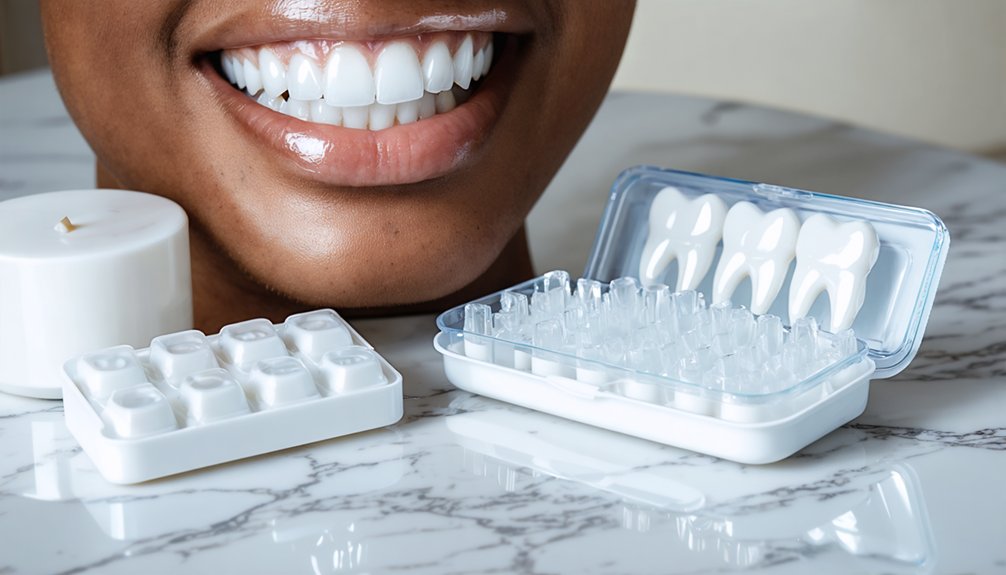
For mild fluoride stains that whitening toothpastes can’t fully resolve, whitening strips and tray treatments deliver a meaningful step up in peroxide concentration and contact time.
Both options use hydrogen peroxide to lift extrinsic discoloration, making whitening effectiveness highest when fluorosis remains superficial rather than deeply embedded in enamel.
Hydrogen peroxide lifts surface stains most effectively when fluorosis stays shallow rather than embedded deep within enamel.
For strip application, you’ll press the peroxide-coated side firmly against clean, dry teeth and hold it in place for the manufacturer’s specified duration.
Tray treatments follow the same principle but allow more precise coverage. You should expect gradual improvement over several days rather than immediate results.
Neither option addresses severe fluorosis, so if stains persist after consistent use, consult your dentist about microabrasion or professional-grade whitening as your next targeted intervention.
Remineralizing Pastes That Fade White Fluoride Spots
If you’re dealing with white fluoride spots, remineralizing pastes offer a non-invasive solution your dentist applies directly to affected enamel.
The paste actively restores mineral content to demineralized areas, reducing the appearance of white staining without removing any tooth structure.
You’ll typically see results quickly, making this approach one of the most efficient options for mild to moderate fluorosis.
Paste Application Benefits
Remineralizing pastes offer a minimally invasive way to fade white fluoride spots by restoring lost mineral content directly to affected enamel. Understanding paste benefits and application techniques helps you achieve precise, measurable results.
A qualified dentist applies these formulations strategically, delivering:
- Targeted mineral restoration — paste penetrates demineralized enamel zones, visibly reducing white spot contrast against surrounding tooth structure.
- Structural reinforcement — active compounds strengthen weakened enamel layers, creating a denser, more uniform surface appearance.
- Progressive color blending — repeated professional applications gradually integrate affected areas into your tooth’s natural shade.
You’re not masking the problem — you’re correcting the underlying mineral deficiency causing discoloration.
This evidence-based approach suits mild-to-moderate fluorosis cases, requires no enamel removal, and delivers noticeable improvements through controlled, professional-grade treatment sessions.
Mineral Restoration Process
When a dentist applies remineralizing paste to fluoride-affected enamel, calcium and phosphate ions penetrate demineralized zones and rebuild the crystalline structure responsible for your tooth’s natural translucency.
These mineral absorption techniques restore compromised enamel by replenishing lost ionic bonds that fluorosis disrupts during early tooth development.
You’ll notice white spot intensity diminishing as treatment progresses, since restored mineral density reduces light scattering within affected enamel layers.
Among available enamel strengthening methods, professional paste application delivers measurable results for mild to moderate fluorosis without requiring enamel removal or invasive procedures.
Your dentist evaluates stain severity before selecting appropriate paste concentrations, ensuring calcium and phosphate ratios match your specific enamel deficiency.
Consistent professional application produces structural improvements that simultaneously address discoloration and reinforce overall tooth resilience.
Resin Injection for Fluoride Stains in Kids as Young as 7

Resin injection is a minimally invasive treatment that can address mild fluoride staining in children as young as 7–8 years old without causing significant enamel damage.
Among its pediatric applications, resin benefits include superior aesthetic outcomes without aggressive intervention.
Your dentist will:
- Apply a porous-making product superficially to your child’s tooth surface, opening demineralized areas.
- Inject resin directly into discolored zones, filling structural gaps causing visible staining.
- Cure and polish the resin, restoring a uniform tooth appearance immediately.
This technique targets the stain’s source rather than masking it.
Since it preserves existing enamel, it’s particularly valuable for young patients whose teeth are still developing, giving you precise control over early intervention.
Professional Microabrasion for Stubborn Brown Fluoride Stains
For stubborn brown fluoride stains that resist gentler treatments, professional enamel microabrasion offers a controlled, highly effective solution. This procedure combines acidic and abrasive compounds—typically pumice-based materials—to methodically remove deep-set discoloration while smoothing surface pitting simultaneously.
Your dentist evaluates stain depth and existing enamel integrity before proceeding, ensuring microabrasion benefits apply specifically to your case. This precision distinguishes it from generic stain removal techniques, making it most appropriate for severe fluorosis where bulk stain elimination is necessary.
Because microabrasion removes actual enamel, dentists often combine it strategically with teeth whitening or veneers for thorough results. You’ll gain measurable aesthetic improvement with minimal invasiveness compared to full restorative alternatives, giving you direct control over how aggressively your fluorosis is addressed.
Which Fluoride Stain Treatment Matches Your Severity?
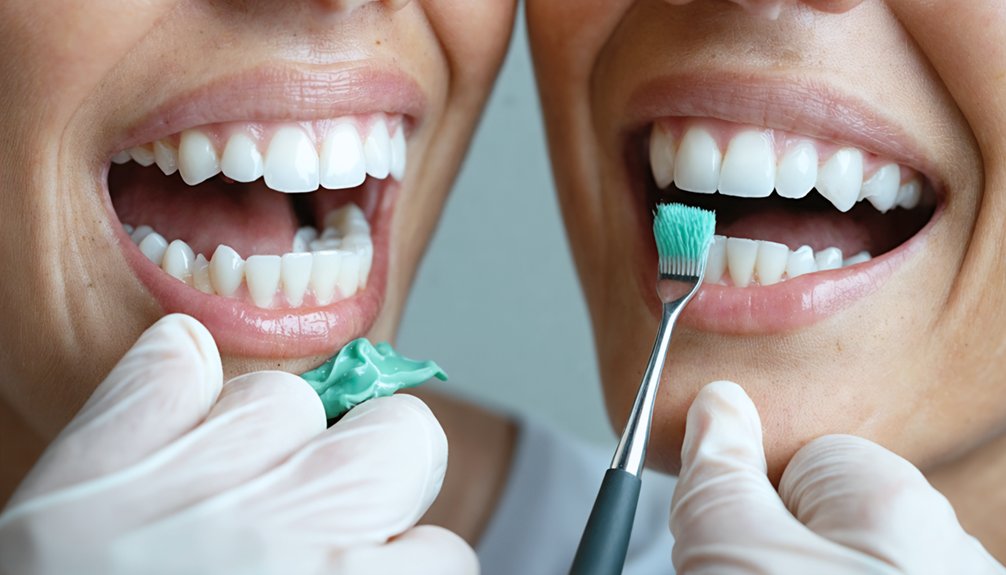
Your treatment path depends directly on how severe your fluoride stains are, so matching the right approach to your specific case is essential for achieving the best outcome.
For mild stains, you can pursue minimally invasive options like remineralizing pastes, resin injection, or professional whitening to restore your tooth’s appearance without removing enamel.
If you’re dealing with severe, deep-set brown stains, your dentist will likely recommend microabrasion, veneers, or a combined approach that addresses both stain depth and overall enamel integrity.
Mild Stains Treatment Options
Mild fluoride stains respond well to several conservative, minimally invasive treatments that preserve your natural enamel.
Your three most effective options include:
- Remineralizing paste — Applied directly by your dentist, this treatment restores mineral content to discolored enamel areas, reducing white stain appearance without removing tooth structure.
- Resin injection — Your dentist applies a porous-making product to the tooth surface, then injects resin into demineralized areas, effectively masking discoloration with superior aesthetic results.
- Professional whitening — Hydrogen peroxide-based agents blend mild fluoride stains into your tooth’s overall color, delivering noticeable improvement for extrinsic discoloration.
Prioritizing stain prevention through proper enamel care — including twice-daily brushing and annual dental check-ups — reduces your likelihood of progressing to more invasive treatments.
Severe Stains Treatment Approaches
When fluoride stains run deep, conservative treatments like remineralizing paste or resin injection won’t deliver adequate results.
Severe fluorosis treatments require more aggressive intervention to restore your tooth’s appearance effectively.
Enamel microabrasion stands as your primary advanced stain solution for heavy, dark brown discoloration. Your dentist uses acidic compounds combined with pumice to systematically file away deep-set staining while smoothing surface pitting.
This controlled removal targets bulk discoloration that lighter treatments simply can’t reach.
For extensive severe cases, your dentist will often combine microabrasion with professional whitening or veneers.
Before proceeding, they’ll assess your existing enamel depth and stain severity to determine the most appropriate approach. This evaluation guarantees you receive targeted treatment without unnecessarily compromising healthy tooth structure.
Daily Habits That Prevent Fluoride Stains Entirely
Preventing fluoride stains starts with keeping your daily fluoride intake within recommended limits, since excessive exposure during early tooth development is the primary driver of fluorosis.
Monitor all fluoride sources, including tap water, supplements, and toothpaste, to avoid accidental overexposure. Strong oral hygiene habits reinforce your defense against staining.
Follow these three daily practices:
- Brush twice daily for two minutes using age-appropriate fluoride toothpaste amounts, preventing buildup from accumulating on developing enamel.
- Schedule annual dental check-ups so your dentist detects early fluorosis signs before stains deepen.
- Reduce sugary drink consumption while maintaining a balanced diet, supporting healthy enamel mineralization throughout childhood development.
These consistent habits give you direct control over fluorosis risk before irreversible discoloration develops.
Frequently Asked Questions
Can Fluoride Stains on Teeth Ever Reverse Themselves Naturally Over Time?
Fluoride stains don’t reverse naturally on their own. You can support natural remineralization and enamel health through remineralizing pastes, but professional treatment remains your most reliable, evidence-based option for effectively reducing visible fluorosis discoloration.
Are Fluoride Stains on Skin Harmful or Just Cosmetically Unpleasant?
Ironically, those alarming dark marks signal no real danger — fluoride exposure merely stains your skin cosmetically. You’ll find they’re not harmful. Simply apply hydrogen peroxide to address skin sensitivity concerns and remove stains within seconds.
Does Drinking Filtered Water Completely Eliminate the Risk of Fluorosis?
Drinking filtered water doesn’t completely eliminate your fluorosis risk. You still encounter fluoride through food, toothpaste, and dental treatments. Managing filtered water intake helps reduce exposure, but you’ll need thorough fluoride monitoring to effectively minimize fluorosis risk.
Can Fluoride Stains Spread to Adjacent Teeth if Left Untreated?
Like islands in a sea, fluoride stains don’t spread to adjacent teeth. They’re fixed where excessive fluoride exposure occurred during enamel health development. You can treat each affected tooth independently without worrying about stain migration.
Are Fluoride Stain Treatments Covered by Dental Insurance Plans Typically?
Most dental insurance plans don’t cover cosmetic fluoride stain treatments. You’ll typically need to pay out-of-pocket, so prioritizing fluoride stain prevention early reduces your long-term costs and minimizes your need for dental insurance coverage on aesthetic procedures.
References
- https://www.youtube.com/watch?v=FDE7Zj5Nwho
- https://dentiste-enfant.com/en/remove-stain-fluor-teeth/
- https://www.facebook.com/groups/swapdental/posts/1063265667079513/
- https://www.hazendentistry.com/blog/3-ways-you-can-treat-fluoride-stains-on-your-teeth.php
- https://auraglow.com/blogs/articles/teeth-stain-removal
- https://alignedonpearl.com/what-is-the-best-way-to-remove-stains-from-teeth/
- https://www.jacksonavedental.com/post/how-to-remove-stannous-fluoride-stains-from-teeth
- https://www.instagram.com/reel/DT_agj9Ej_W/
- https://www.smilesforlifeoralhealth.org/topic/cleanup-after-sdf-application/
- https://www.trysnow.com/blogs/news/how-to-get-rid-of-fluoride-stains-on-teeth