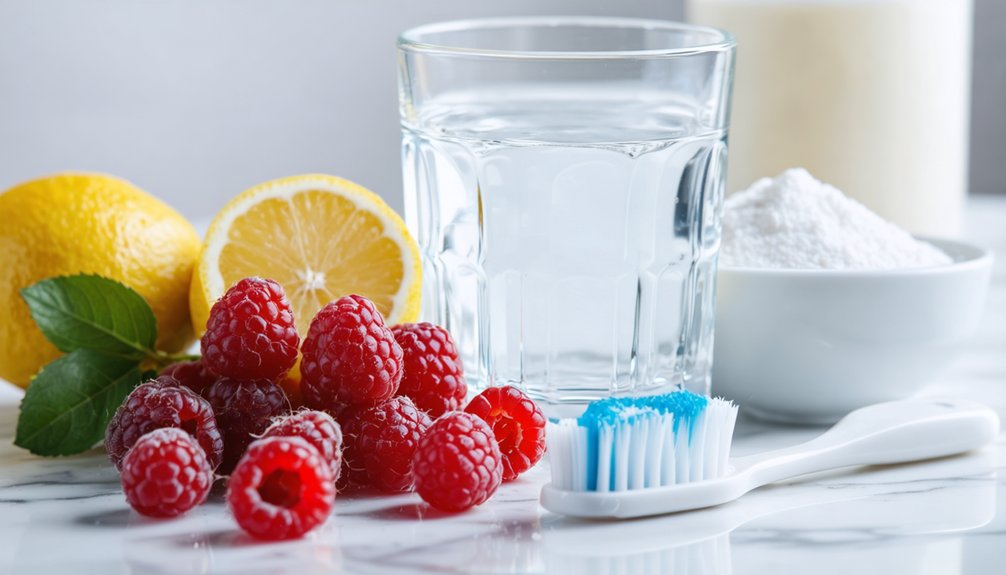
Raspberries stain your teeth faster than most fruits because their anthocyanins, tannins, and chromogens bond pigment directly onto acid-softened enamel. You can fight this by rinsing immediately after eating, using a straw, diluting raspberry juice, and pairing raspberries with dairy products. Waiting 30 minutes before brushing protects your softened enamel from further damage. For tougher stains, whitening toothpaste, strips, and professional treatments offer reliable solutions — and each strategy works even better when you know exactly how to apply it.
Key Takeaways
- Rinse your mouth vigorously with water for at least 30 seconds immediately after eating raspberries to dislodge staining pigments.
- Wait 30 minutes before brushing teeth, as raspberry acidity temporarily softens enamel, making it vulnerable to abrasion.
- Use a straw when drinking raspberry juice or smoothies to minimize direct contact with tooth enamel.
- Pair raspberries with dairy products like cheese or yogurt, as casein proteins and calcium help protect enamel.
- Use whitening toothpaste containing hydrogen peroxide or baking soda 2-3 times weekly to effectively combat raspberry stains.
Why Raspberries Stain Your Teeth in the First Place
Raspberries are delicious, but their deep pigmentation comes at a cost to your teeth. The raspberry pigments responsible for that vibrant red color are called anthocyanins, and they bond directly to your enamel’s surface proteins, causing discoloration over time.
Compounding this, raspberries are highly acidic, which temporarily softens your enamel, making it more vulnerable to stain penetration. Tannins in raspberries behave similarly to those found in red wine, further accelerating the staining process. Chromogens also contribute by adhering stubbornly to weakened enamel surfaces.
Understanding these mechanisms puts you in control of protecting your enamel health. Once you know what’s working against your teeth, you can make smarter choices about when and how you consume raspberries to minimize long-term damage.
Rinse Your Mouth Right After Eating Raspberries
One of the simplest yet most effective defenses against raspberry staining is rinsing your mouth immediately after eating them. Raspberries deposit chromogens and tannins onto your enamel fast, so acting quickly with proper rinse techniques makes a real difference in stain prevention.
Swish water vigorously for at least 30 seconds to dislodge loose pigments before they bond to your enamel. Multiple rinses outperform a single pass, so repeat the process if you’ve consumed a larger portion.
Swish water vigorously for 30 seconds — and repeat if needed — to flush pigments before they bond.
Don’t brush right away, though — raspberries’ high acidity temporarily softens enamel, making it vulnerable to abrasion. Rinsing first lets saliva begin neutralizing those acids naturally.
This simple habit costs nothing and takes under a minute, yet it greatly reduces how much pigment takes hold on your teeth.
Use a Straw to Limit Raspberry Teeth Staining
Switching to a straw when drinking raspberry smoothies or juices is a straightforward way to keep pigments away from your most visible teeth. The straw benefits go beyond convenience — positioning the straw toward the back of your mouth lets liquid bypass your front enamel almost entirely.
When practicing smarter drinking techniques, you’ll also want to avoid letting raspberry juice linger in your mouth before swallowing. Diluting your raspberry drinks with water or sparkling water further reduces pigment concentration, lowering staining risk with every sip.
Cold raspberry beverages through a straw offer an added advantage, since lower temperatures reduce acid-related enamel softening compared to room-temperature drinks. These small adjustments in how you consume raspberries can greatly protect your smile over time.
Dilute Raspberry Juice to Reduce Pigment Concentration
When drinking raspberry juice, you’ll reduce staining risk considerably by diluting it with water or sparkling water at a 1:1 ratio, which lowers pigment concentration before it contacts your enamel.
Plain water, coconut water, and sparkling water all serve as effective diluting liquids without introducing additional acids or sugars that could compound damage.
Optimal Dilution Ratios
Diluting raspberry juice with water is one of the simplest ways to reduce pigment concentration and protect your enamel from staining. For ideal dilution, aim for a 1:1 ratio of raspberry juice to water, cutting chromogen levels considerably without sacrificing flavor.
If you prefer raspberry smoothies, add extra water or milk to thin the consistency and reduce pigment density per sip. You can also experiment with a 1:2 ratio—one part juice to two parts water—for even greater protection.
Sparkling water works equally well and adds a revitalizing texture. Remember, the more concentrated the juice, the higher your staining risk.
Controlling your dilution ratio is a straightforward, proactive strategy that significantly limits how much pigment contacts your tooth surfaces daily.
Best Diluting Liquids
Choosing the right liquid to mix with raspberry juice makes a meaningful difference in how much pigment reaches your enamel. Your diluting liquids and beverage choices directly influence stain risk, so selecting wisely gives you greater control over outcomes.
Water remains the most practical option, reducing pigment concentration without introducing additional acids or sugars. Sparkling water works equally well while adding a cleansing effervescent effect against tooth surfaces.
Pairing raspberry juice with milk offers added protection, since casein proteins actively prevent chromogens from bonding to enamel.
Avoid acidic mixers like lemonade or citrus juices, as they compound enamel softening rather than reduce it.
Green tea, despite its mild tannins, contains compounds that can neutralize some raspberry acids, making it a functional secondary option.
Pigment Reduction Benefits
Reducing pigment concentration through dilution directly lowers the amount of chromogens that reach your enamel during consumption.
When you mix raspberry juice with water or sparkling water, you’re actively controlling pigment absorption before it begins. Fewer chromogens mean fewer opportunities for anthocyanins to bond with enamel proteins, giving your teeth a measurable advantage against discoloration.
Dilution also reduces acidity levels, which directly supports enamel protection.
Less acidic exposure means your enamel remains harder and less permeable to stain penetration throughout consumption. You’re not just weakening the pigment load — you’re also preserving the structural integrity that keeps stains from taking hold.
This straightforward adjustment requires no special products or timing protocols, making it one of the most practical preventive strategies you can apply consistently.
Pair Raspberries With Dairy to Protect Your Enamel
Pairing raspberries with dairy products like cheese or yogurt is one of the smartest protective strategies you can adopt for your enamel. The dairy benefits extend beyond simple nutrition — casein protein in dairy creates a protective film over your enamel, preventing pigments from bonding to tooth surfaces.
This layer actively shields against the chromogens and tannins raspberries release during consumption. The calcium in dairy also strengthens enamel resistance, making your teeth less susceptible to stain penetration.
Yogurt’s neutralizing properties counteract raspberry acids, reducing the softening effect that makes enamel vulnerable. For maximum enamel protection, consume cheese or yogurt alongside raspberries rather than afterward.
This timing guarantees the protective film forms before pigment exposure occurs, giving you direct control over staining prevention.
Eat Crunchy Vegetables After Raspberries to Scrub Stains Away
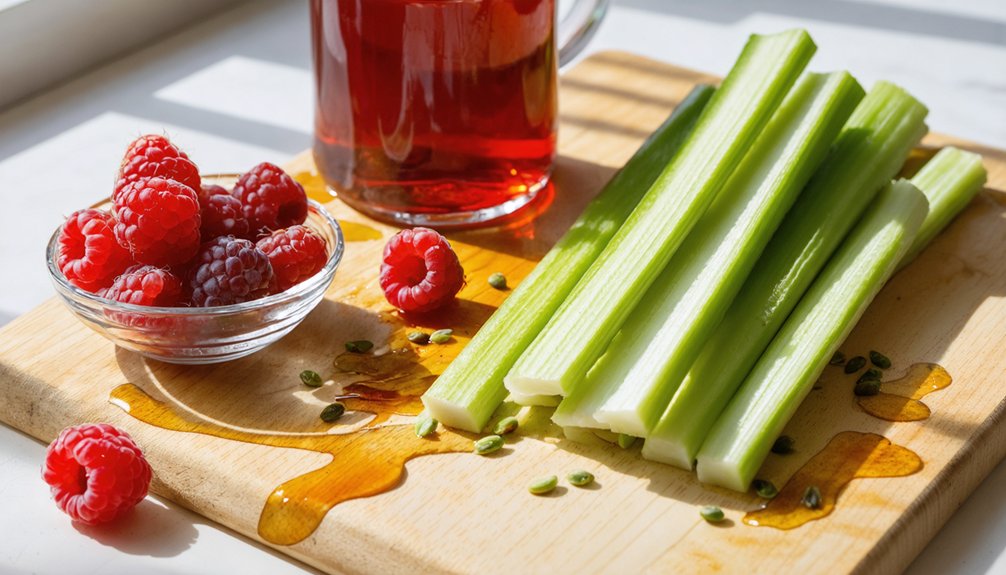
After eating raspberries, reach for crunchy vegetables like celery, carrots, or cucumber, as their fibrous textures act as natural scrubbers that mechanically lift residual pigments from your enamel.
You’ll want to eat these vegetables immediately after your raspberries, since the sooner you introduce that scrubbing action, the less time chromogens have to bond with your tooth surfaces.
Making this pairing a consistent habit gives you an effortless, food-based defense against staining that requires no additional tools or products.
Natural Mechanical Scrubbing Action
Crunchy vegetables like celery and carrots work as natural toothbrushes when eaten immediately after raspberries. Their fibrous texture provides natural scrubbing action against tooth surfaces, physically dislodging raspberry pigments before they bond with enamel proteins. This mechanical removal reduces your reliance on chemical whitening interventions later.
Beyond surface cleaning, these vegetables stimulate saliva production, which neutralizes residual raspberry acids and supports enamel protection by remineralizing softened surfaces.
Celery’s stringy fibers reach interdental spaces where raspberry pigments accumulate, while carrots’ dense texture creates consistent friction across broader enamel areas.
You’re fundamentally using food strategically against food. Keep celery sticks or carrot slices accessible during raspberry consumption so you can act immediately.
Timing matters here — the sooner you eat them, the less pigment adheres permanently.
Best Vegetables to Choose
While celery and carrots lead the pack, several other vegetables offer comparable scrubbing benefits worth incorporating into your post-raspberry routine. Cucumber slices, bell peppers, and radishes rank among the best crunchy options for mechanically lifting surface pigments before they bond to enamel. Their firm textures act as natural abrasives, clearing residual chromogens from tooth surfaces efficiently.
Don’t overlook the best leafy vegetables either. Raw spinach and kale require substantial chewing, generating friction that sweeps stain particles away. These nutrient-rich choices simultaneously strengthen enamel through their calcium and vitamin K content, giving you dual protective benefits.
Rotate these vegetables strategically after raspberry consumption rather than relying on a single option. Variety guarantees broader coverage across different tooth surfaces, maximizing your stain-prevention results consistently.
Optimal Consumption Timing
Timing your vegetable consumption strategically makes all the difference in preventing raspberry stains from bonding to enamel. Your consumption habits directly determine how effectively you neutralize pigment adhesion before it becomes problematic.
After finishing raspberries, reach immediately for crunchy vegetables like celery, carrots, or cucumber slices. These foods act as natural mechanical scrubbers, physically dislodging chromogens and raspberry residue from tooth surfaces before they penetrate enamel.
Your timing strategies should treat crunchy vegetables as the final step in every raspberry-eating session. Don’t let time pass between finishing raspberries and consuming your vegetables, since anthocyanins bond quickly to softened enamel.
This deliberate sequencing gives you active control over stain prevention, reducing your dependence on corrective treatments later.
Wait 30 Minutes Before Brushing After Eating Raspberries
Although it may seem counterintuitive, you shouldn’t brush your teeth immediately after eating raspberries. Their high acidity temporarily softens your enamel, making it vulnerable to abrasion. Applying brushing techniques during this window causes irreversible enamel damage rather than protection.
Instead, wait 30 minutes before reaching for your toothbrush. During this interval, your saliva naturally neutralizes residual acids and begins restoring enamel health. Rinsing with water immediately after consumption helps flush away loose pigments without compromising your enamel structure.
Once the waiting period ends, brush using gentle, circular motions to safely remove remaining stain particles. This disciplined timing approach lets you protect your teeth from both raspberry pigmentation and acid-related erosion simultaneously, giving you meaningful control over your long-term oral health outcomes.
Choose the Right Whitening Toothpaste for Raspberry Stains
When tackling raspberry stains, you’ll want to reach for a whitening toothpaste containing hydrogen peroxide, which actively breaks down surface chromogens bonded to your enamel.
Baking soda formulas offer a gentler abrasive alternative, lifting pigment deposits without harsh chemical exposure.
Use either option two to three times weekly to remove stains effectively while protecting your enamel from overuse damage.
Hydrogen Peroxide Toothpaste Benefits
Hydrogen peroxide toothpaste works as one of your most accessible defenses against raspberry-related staining, breaking down chromogens that bond to enamel proteins.
Its whitening effectiveness comes from releasing oxygen molecules that penetrate enamel surfaces, lifting pigments before they become permanent. When evaluating toothpaste ingredients, look for formulations containing 1-3% hydrogen peroxide concentrations, which balance stain removal with enamel safety.
Use hydrogen peroxide toothpaste 2-3 times weekly rather than daily to prevent sensitivity while maintaining consistent stain control.
You’ll maximize results by applying it after the 30-minute post-raspberry waiting period, when your enamel has rehardened and acids have neutralized.
Combining this targeted brushing approach with regular rinsing protocols creates a thorough defense against raspberry pigments accumulating on your tooth surfaces over time.
Baking Soda Stain Removal
Baking soda toothpaste offers a complementary stain-removal approach by using mild abrasion rather than chemical oxidation to lift raspberry pigments from enamel surfaces. Its gentle crystalline structure physically scrubs chromogens and tannin deposits without the aggressive wear associated with harsher abrasives.
You’ll want to use baking soda toothpaste two to three times weekly rather than daily, since overuse can gradually compromise enamel integrity. It’s particularly effective against fresh raspberry stains when applied within the 30-minute post-consumption waiting window.
Baking soda also creates an alkaline oral environment that neutralizes residual raspberry acids, reducing further enamel vulnerability. When you alternate baking soda formulas with hydrogen peroxide toothpaste, you’re addressing stain removal through two distinct mechanisms, maximizing your overall protection against persistent raspberry discoloration.
Whitening Frequency Recommendations
Choosing the right whitening toothpaste frequency matters as much as the product itself, since overuse can erode enamel while underuse leaves raspberry pigments to bond more permanently with tooth surfaces.
For effective stain prevention, use whitening products containing hydrogen peroxide or baking soda two to three times weekly. On remaining days, switch to a fluoride-based toothpaste that strengthens enamel without abrasive whitening agents.
If you consume raspberries regularly, schedule your whitening sessions the evening after heavy consumption, allowing the mandatory 30-minute post-eating interval first.
Monitor your enamel sensitivity as your guide — increased sensitivity signals overuse and requires reducing frequency immediately.
Consistent, measured application of whitening products outperforms aggressive daily use, protecting your enamel while systematically eliminating raspberry-related discoloration before it penetrates deeper tooth layers.
Use Whitening Strips to Tackle Moderate Raspberry Staining
Whitening strips offer an accessible, over-the-counter solution when raspberry consumption has left moderate staining on your teeth. These strips contain hydrogen peroxide, which penetrates enamel to break down chromogen bonds formed by raspberry pigments.
For ideal whitening effectiveness, apply strips two to three times weekly rather than daily, preventing enamel sensitivity while maintaining consistent stain prevention progress.
You’ll want to apply strips to clean, dry teeth for maximum adhesion and ingredient penetration. Avoid consuming raspberries or other pigment-rich foods immediately after treatment, since freshly treated enamel absorbs stains more readily.
Track your results over two to four weeks, as moderate raspberry staining typically responds well within this timeframe. If discoloration persists beyond this period, consult your dentist about professional-grade alternatives.
Book a Professional Whitening Treatment for Stubborn Raspberry Stains
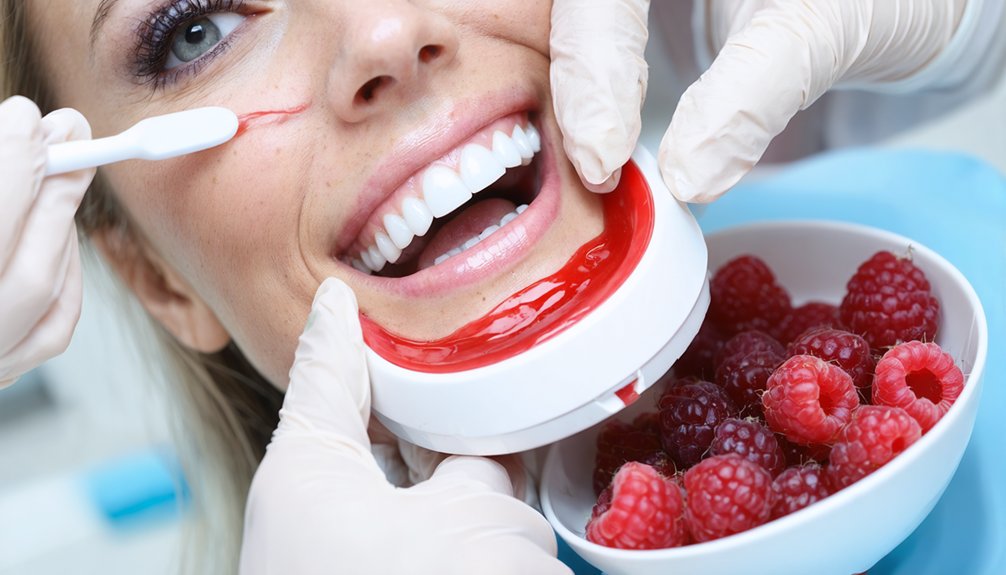
When whitening strips fail to clear persistent raspberry stains after a consistent treatment cycle, professional whitening becomes your most effective next step.
Dentists apply high-concentration hydrogen peroxide gels activated by specialized light sources, targeting deep chromogen bonds that consumer products can’t break. These advanced whitening techniques deliver measurable results in a single session rather than weeks of gradual treatment.
Schedule professional consultations early if you regularly consume raspberries, since extrinsic stains become increasingly resistant the longer they remain untreated.
Your dentist will assess stain depth, recommend appropriate treatment intensity, and monitor enamel health throughout the process. For stains that have penetrated beyond surface enamel, they may suggest veneers as a permanent solution.
Acting promptly gives you the strongest outcome.
Frequently Asked Questions
Can Raspberry Staining Affect Dental Implants or Veneers Differently Than Natural Teeth?
Yes, raspberry staining affects implants and veneers differently than natural teeth. You’ll find these materials resist deep pigmentation, but surface staining still occurs. Prioritize consistent dental care and timely stain removal to maintain their appearance effectively.
Are Children’s Teeth More Vulnerable to Raspberry Staining Than Adult Teeth?
Like soft clay, your child’s developing enamel is more vulnerable to raspberry staining than adult teeth. Prioritize child dental hygiene and set raspberry consumption limits to protect their softer, more porous enamel effectively.
Does Freezing Raspberries Reduce Their Staining Potential Compared to Fresh Ones?
Freezing methods don’t markedly reduce raspberry staining potential in a stain comparison. You’ll still encounter the same anthocyanins and tannins whether fresh or frozen, so maintain your standard protective oral care routine regardless.
How Long Does It Typically Take for Raspberry Stains to Become Permanent?
Raspberry stains aren’t truly “permanent” immediately—you’ve got a window of hours to days before they deeply penetrate enamel. Without preventive measures, stain removal becomes considerably harder, like a patient who neglected rinsing for weeks.
Can Certain Medications Increase Susceptibility to Raspberry-Related Tooth Discoloration?
Yes, certain medication types can increase your susceptibility. Antihistamines, antidepressants, and diuretics reduce saliva production, compromising your enamel health and leaving teeth more vulnerable to raspberry pigment absorption and discoloration. Consult your dentist proactively.
References
- https://dentistryforyouwoodbridge.com/top-10-tooth-staining-foods-drinks-prevention-tips/
- https://drtopping.com/top-teeth-staining-foods-how-to-fight-back/
- https://www.bupa.co.uk/newsroom/ourviews/teeth-staining-foods
- https://www.lasvegasaestheticdentistry.com/blog/teeth-staining
- https://www.bbc.co.uk/food/articles/c4glpdle5dlo
- https://newarkdentalohio.com/foods-and-drinks-that-can-stain-your-teeth-and-what-to-do-about-it/
- https://behnerdental.com/foods-and-drinks-that-stain-your-teeth-how-to-minimize-discoloration/
- https://spencerdds.com/blog/berries-what-to-know-about-tooth-staining/
- https://www.youtube.com/watch?v=jTwljM7Kqeo
- https://familydentistottawa.com/7-foods-staining-teeth/