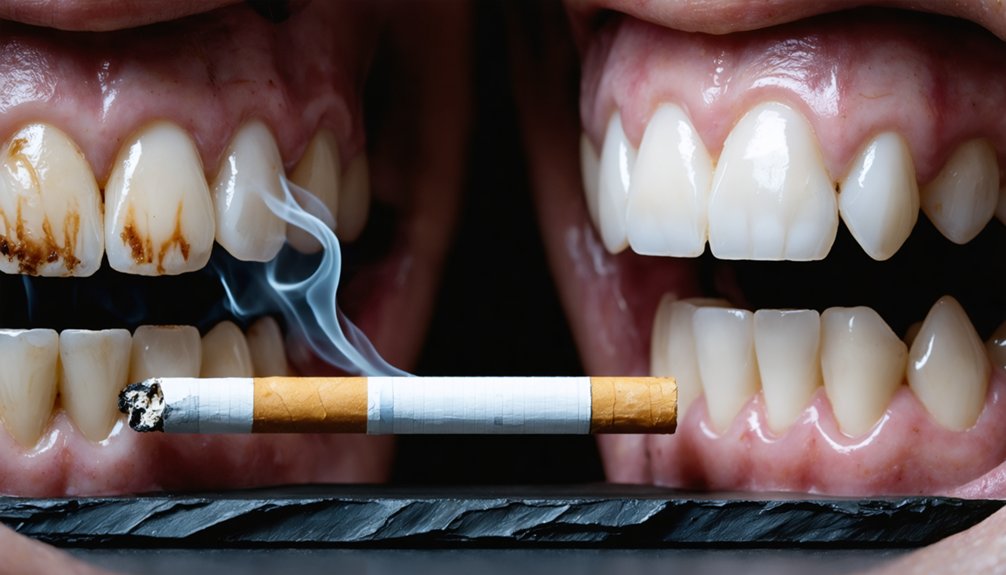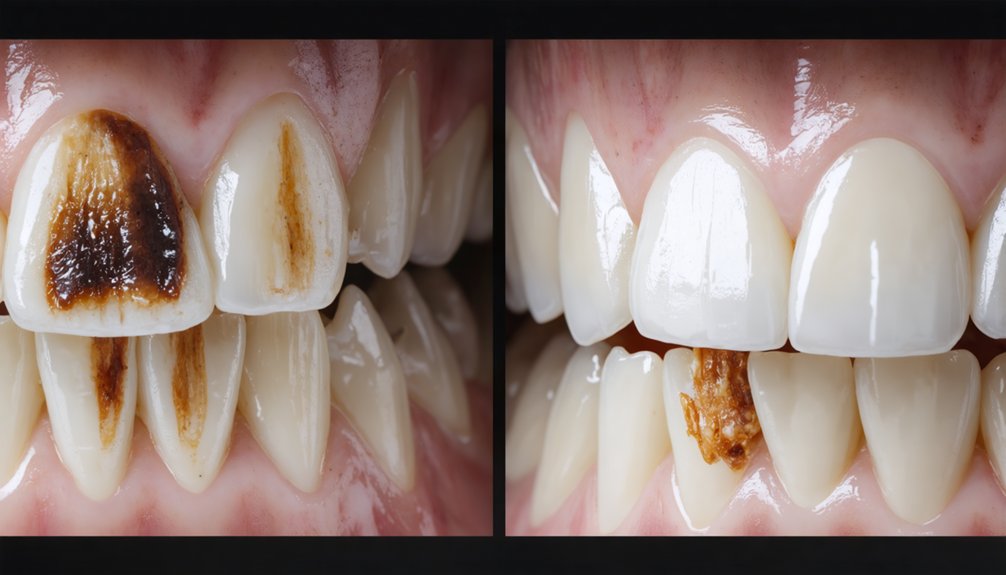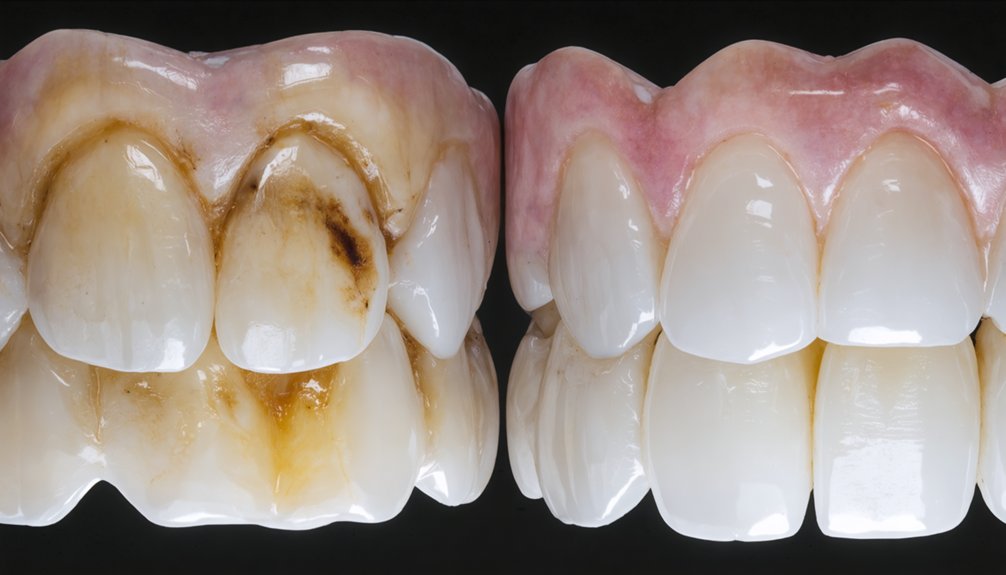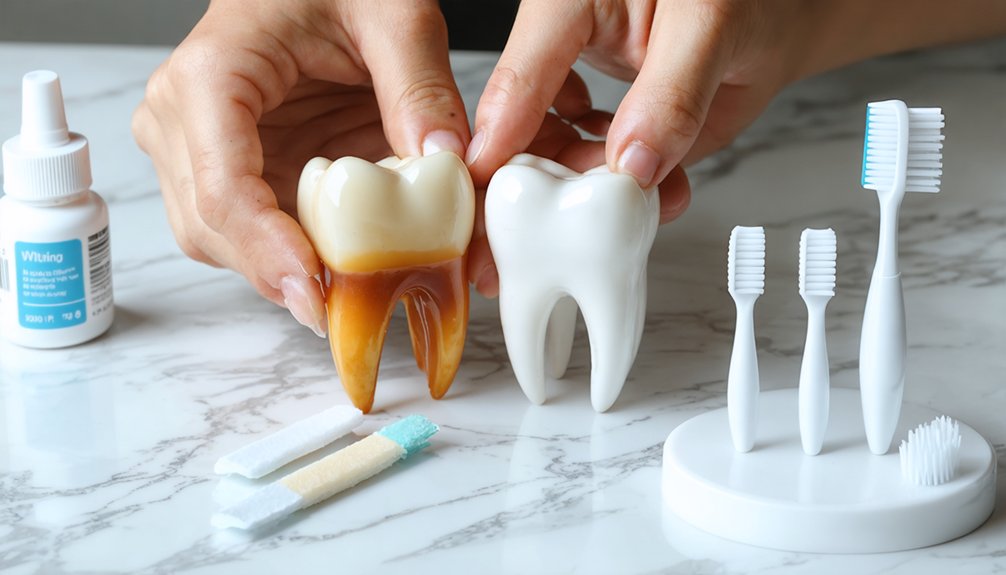
Whitening smoker’s teeth is harder because tar and nicotine penetrate deep into enamel, forming calcified stains that standard products can’t reach. You’ll need professional cleaning first to remove embedded deposits before any whitening agent can work effectively. From there, your options range from in-office power whitening and laser treatments to dentist-prescribed take-home kits. Each approach targets tobacco stains differently, and knowing which one fits your situation makes all the difference.
Key Takeaways
- Professional cleaning removes tar and nicotine deposits before whitening, ensuring peroxide gel contacts tooth surfaces evenly for consistent results.
- In-office laser whitening delivers fast, deep stain removal using high-strength hydrogen peroxide, with visible results within one appointment.
- Dentist-prescribed take-home kits use custom trays and higher peroxide concentrations, offering effective gradual whitening over 10 to 14 days.
- OTC products lack sufficient peroxide strength to penetrate years-old nicotine stains, making them ineffective for heavy smoker discoloration.
- Scheduling professional cleanings every six months and annual whitening touch-ups helps maintain results despite continued smoking exposure.
Why Smoker’s Teeth Are Harder to Whiten
Tobacco smoke contains tar and nicotine compounds that penetrate beyond the enamel’s surface, embedding deeply into the tooth’s porous structure. Unlike food or beverage stains, these pigments bond chemically with enamel proteins, making standard whitening approaches largely ineffective.
Your smoker’s habits accelerate this process. Repeated exposure compounds discoloration with each session, allowing stains to calcify over time into resistant layers that surface-level treatments can’t reach.
Each smoking session compounds discoloration, calcifying stains into resistant layers that surface-level treatments simply cannot reach.
Enamel health deteriorates simultaneously, as tobacco chemicals erode the protective mineral matrix, increasing porosity and making teeth more susceptible to deeper staining cycles.
This combination—chemical bonding, cumulative exposure, and compromised enamel integrity—explains why conventional over-the-counter products fail.
Effectively reversing tobacco discoloration requires higher-concentration agents and professional techniques capable of targeting intrinsic stains embedded beneath the enamel’s outermost layer.
Start With a Professional Cleaning Before Whitening
Before you pursue any whitening treatment, you’ll need a professional cleaning to clear the tar residue, chemical deposits, and extrinsic stains embedded in your enamel.
Without this critical first step, surface tobacco debris blocks the whitening gel from penetrating evenly, leaving you with patchy, inconsistent results.
Once your teeth are thoroughly cleaned, the active agents in professional-grade gels can work directly against the discoloration rather than fighting through a layer of accumulated debris.
Why Cleaning Comes First
Whether you’re pursuing in-office power whitening or a dentist-prescribed take-home kit, a professional cleaning must come first.
Skipping this step is one of the most common whitening myths—that whitening gel alone handles everything. It doesn’t. Surface tar, extrinsic stains, and chemical debris block gel penetration, producing uneven results regardless of concentration strength.
Proper cleaning techniques clear the path for active agents to work effectively.
Here’s what professional cleaning addresses before whitening begins:
- Removes tar and nicotine deposits embedded in enamel
- Eliminates surface debris blocking peroxide gel contact
- Prevents uneven whitening caused by residual stain layers
- Guarantees custom trays seat properly against clean tooth surfaces
Without this foundation, even the strongest professional-grade gel delivers compromised outcomes.
Removing Surface Tobacco Debris
Three layers of surface debris stand between your teeth and effective whitening results: tar deposits, nicotine residue, and extrinsic stain buildup embedded directly into enamel.
These compounds block whitening gel from penetrating evenly, producing patchy, inconsistent outcomes regardless of which treatment you choose.
Professional surface cleaning techniques eliminate this barrier before whitening begins. Your dentist uses ultrasonic scaling and polishing instruments to execute precise tobacco stain removal, stripping chemical residue and extrinsic discoloration that brushing can’t reach.
This process clears the enamel surface, allowing peroxide-based agents to contact tooth structure directly.
Skipping this step compromises every subsequent treatment. Without prior debris removal, even high-concentration professional gels deliver diminished results.
Schedule your cleaning first—it’s not optional preparation; it’s the foundation your whitening protocol depends on.
Ensuring Even Gel Penetration
Clearing surface debris solves only part of the preparation problem—what happens next determines whether your whitening gel actually works.
Uneven gel application techniques produce patchy results because residual buildup blocks active peroxide agents from penetrating enamel uniformly. A professional cleaning before whitening eliminates this barrier entirely.
Follow these gel application techniques to maximize penetration:
- Apply gel only after professional cleaning confirms clean enamel surfaces
- Use custom-fitted trays to distribute gel evenly across every tooth
- Follow whitening frequency recommendations—typically every 6 months—to prevent stain re-accumulation
- Confirm no surface debris remains before each application session
Controlling these variables directly controls your outcome.
Skipping professional cleaning before whitening doesn’t just reduce effectiveness—it guarantees uneven results that waste time and money.
In-Office Power Whitening: The Fastest Fix for Tobacco Stains
For smokers dealing with years of deep-set tobacco stains, in-office power whitening delivers the fastest and most dramatic results available. Among all in office techniques, this approach uses peroxide gel concentrations up to 40%, activated by specialized LED or laser light sources to accelerate stain breakdown directly within the enamel.
Whitening timelines are greatly compressed compared to take-home alternatives. You can expect visible, dramatic results within a single one-hour appointment, even when addressing 15 years of set-in nicotine discoloration. No other method matches that speed.
Before treatment begins, your dentist must complete a professional cleaning to remove surface debris, ensuring the gel penetrates evenly.
Without that preparatory step, active agents can’t reach stained enamel uniformly, compromising your final outcome.
Is Laser Whitening Worth It for Stubborn Tobacco Stains?
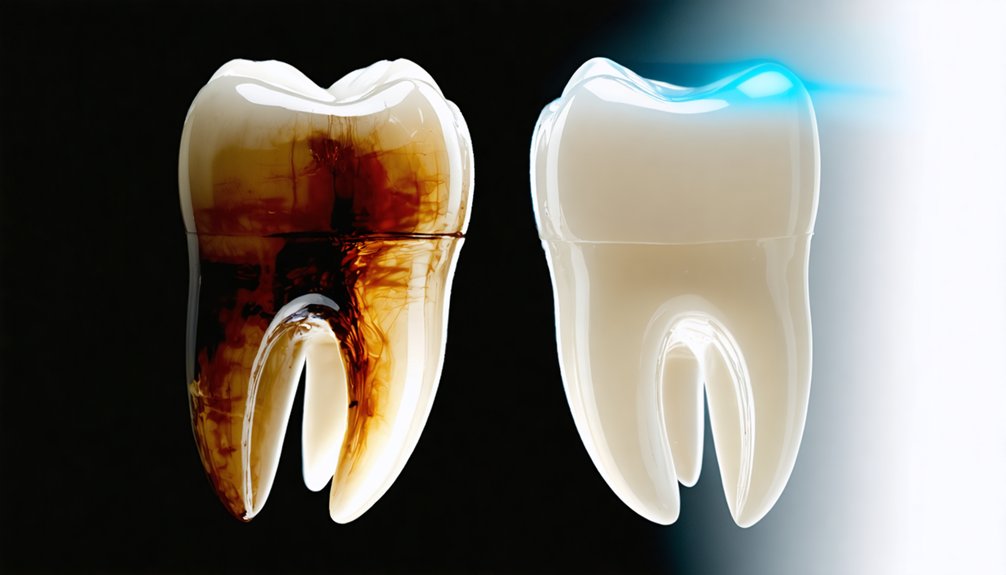
If you’re dealing with stubborn, deep-set tobacco stains, laser whitening delivers results that standard treatments can’t match. It uses high-strength hydrogen peroxide gel activated by focused light to break down resistant discoloration at the enamel level.
You’ll typically see dramatic improvement in a single session, making it the most efficient clinical option for heavy smokers with years of accumulated staining.
The trade-off, however, is cost—laser whitening ranks as the most expensive professional option, so you’ll need to weigh that investment against the severity of your discoloration and how quickly you need results.
Laser Whitening Effectiveness Explained
Laser whitening stands out as one of the most effective clinical interventions available when tobacco stains have resisted conventional treatments.
Laser technology accelerates hydrogen peroxide gel breakdown, forcing active agents deeper into compromised enamel than strips or trays can reach.
Don’t let whitening myths convince you that OTC alternatives deliver comparable results—they don’t for heavy smokers.
Here’s what laser whitening actually delivers:
- High-concentration peroxide gel applied directly to enamel surfaces
- LED or laser activation that intensifies and accelerates the bleaching reaction
- Visible dramatic improvement within a single one-hour appointment
- Superior enamel penetration targeting deep, years-old nicotine discoloration
You’re choosing a clinically controlled process that outperforms every retail option when stubborn tobacco stains require serious, fast intervention.
Cost Versus Results Compared
When tobacco stains have resisted every OTC product you’ve tried, the cost-versus-results calculation for laser whitening shifts considerably in its favor. A single in-office session typically costs $500–$1,000, but it delivers what months of strip applications can’t: deep stain removal in one hour.
Cost effectiveness becomes clear when you factor in cumulative OTC spending against a single professional result. Strips, gels, and rinses require continuous purchasing with minimal payoff on heavy tobacco discoloration.
Treatment longevity further strengthens the case. With annual touch-ups and post-treatment care restrictions in place—avoiding smoking for 48 hours and limiting dark foods—your results can last 12–18 months.
You’re not just paying for whitening; you’re investing in durability that OTC alternatives simply can’t match.
Dentist-Prescribed Take-Home Kits That Outperform OTC Options
Dentist-prescribed take-home kits offer a compelling middle ground between over-the-counter products and in-office treatments, making them particularly effective for moderate-to-severe tobacco staining.
Following dentist recommendations guarantees you’re using professional-strength gels that greatly outperform retail alternatives. The take-home advantages extend beyond concentration alone—custom-fitted trays deliver even gel coverage while protecting your gums from irritation.
Professional-strength gels and custom-fitted trays outperform anything available over the counter.
Here’s what distinguishes these kits:
- Higher peroxide concentration than any OTC strip or tray system
- Custom-molded trays prevent gel leakage and guarantee consistent enamel contact
- Gradual 10-to-14-day protocol reduces sensitivity risks while targeting deep nicotine discoloration
- Professional monitoring allows dosage adjustments based on your stain severity
You’ll see measurable results where drugstore products fail, without committing to repeated in-office sessions.
Can Over-the-Counter Products Handle Smoker’s Stains?

While dentist-prescribed kits deliver measurable results for moderate-to-severe staining, you might wonder whether a trip to the drugstore could accomplish the same thing at a fraction of the cost.
In any smoker’s stain comparison, over-the-counter products consistently fall short. Strips, gels, and whitening toothpastes contain lower peroxide concentrations than professional formulations, limiting their penetration into enamel where tobacco discoloration embeds most deeply.
Over the counter efficacy works best for light, superficial stains or maintaining results you’ve already achieved through professional treatment.
Years-old nicotine discoloration requires higher-strength agents and custom tray delivery that OTC products simply can’t replicate. If you’re managing minor new stains or supplementing post-treatment care, drugstore options are practical.
For deep, resistant tobacco staining, they won’t provide the intervention you need.
Natural Remedies: What Actually Works on Tobacco Stains
Natural remedies like baking soda, activated charcoal, and coconut oil attract plenty of attention as affordable alternatives to professional whitening, but their effectiveness against tobacco stains is limited.
These natural ingredients and DIY techniques address only superficial discoloration, not the deep staining tobacco deposits into enamel over years.
Here’s what each option realistically delivers:
- Baking soda and hydrogen peroxide paste – Gently polishes surface stains; ineffective against set-in nicotine discoloration.
- Activated charcoal – Removes extrinsic debris but risks enamel abrasion with repeated use.
- Coconut oil pulling – Reduces surface bacteria but produces negligible whitening results.
- Turmeric toothpaste – Minimal stain-lifting capacity; unsuitable for moderate-to-severe tobacco staining.
For heavy smoker discoloration, you’ll need professional intervention beyond what any natural remedy can provide.
How to Maintain Whitening Results When You Still Smoke
Keeping your teeth white while continuing to smoke requires a structured maintenance routine built around professional care and targeted at-home products.
Schedule professional cleanings every six months to remove tar and nicotine deposits before they penetrate enamel deeply. Annual in-office whitening touch-ups regulate your whitening frequency, preventing significant discoloration from accumulating between sessions.
Regular professional cleanings every six months remove tar and nicotine deposits before discoloration permanently sets into enamel.
Use prescription-strength take-home kits between appointments to maintain results when occasional smoking continues. Apply whitening toothpaste daily to lift surface stains before they set.
Avoid dark foods and beverages for 48 hours post-treatment to protect vulnerable enamel. For sensitivity management, use dentist-recommended desensitizing gels or toothpastes formulated with potassium nitrate.
Consistent product use combined with professional intervention gives you the greatest control over long-term whitening outcomes despite continued tobacco exposure.
Frequently Asked Questions
Does Teeth Whitening Affect Dental Crowns, Veneers, or Bonded Restorations?
Whitening agents don’t alter crowns, veneers, or bonded restorations. You’ll notice uneven color results since these materials resist bleaching. Consider restoration longevity and teeth sensitivity before treatment, and consult your dentist to manage mismatched shading effectively.
How Much Does Professional Smoker’s Teeth Whitening Typically Cost Without Insurance?
Brace yourself—professional smoker’s whitening runs $300–$1,000+ out-of-pocket. You’ll spend less combining home remedies with maintenance tips, but in-office laser treatments deliver the fastest, deepest stain removal results you’re after.
Can Whitening Treatments Worsen Existing Gum Disease Caused by Smoking?
Yes, whitening treatments can worsen existing gum disease. Smoking effects compromise your gum health, making peroxide gels cause increased irritation and sensitivity. You should consult your dentist before pursuing any whitening procedure if gum disease is present.
How Long Does Professional Whitening Last Before Results Visibly Fade?
Your professional whitening results typically last six to twelve months before visibly fading. You’ll manage teeth sensitivity by controlling whitening frequency with annual touch-ups and cleanings, maintaining brightness while preventing enamel vulnerability from over-treatment.
Are Whitening Treatments Safe for Smokers Currently Undergoing Cancer Treatment?
Coincidentally, your whitening curiosity aligns with critical cancer treatment precautions. You shouldn’t pursue whitening treatment efficacy during cancer therapy—consult your oncologist first, as treatments can interfere with medications, compromise healing, and heighten sensitivity risks considerably.
References
- https://sunbit.com/knowledge-center/dental/dental-tips/smokers-teeth-whitening/
- https://www.smileviewclinic.com/articles/teeth-whitening-for-smokers-what-works-and-what-doesnt
- https://whiterockdental.in/blog/teeth-whitening-solutions-for-heavy-smokers/
- https://www.amazon.com/teeth-whitening-smokers/s?k=teeth+whitening+for+smokers
- https://dentalhealthsociety.com/teeth-whitening/teeth-whitening-for-smokers/
- https://whitehorsedental.com.au/ultimate-guide-smokers-teeth-whitening-journey/
- https://teethcare360.co.uk/whitening-for-smokers-teeth-uk/
- https://www.healthline.com/health/how-to-remove-nicotine-stains-from-teeth
- https://pearldentalgroup.ca/best-teeth-whitening-for-smokers/
- https://www.dawsondental.ca/site/blog/2025/08/26/how-to-whiten-teeth-smokers-vapers