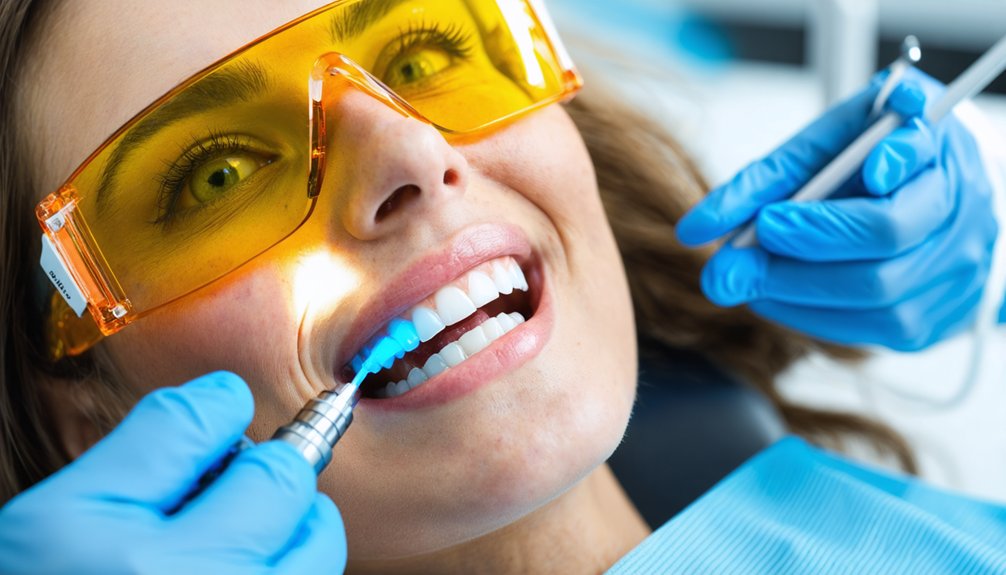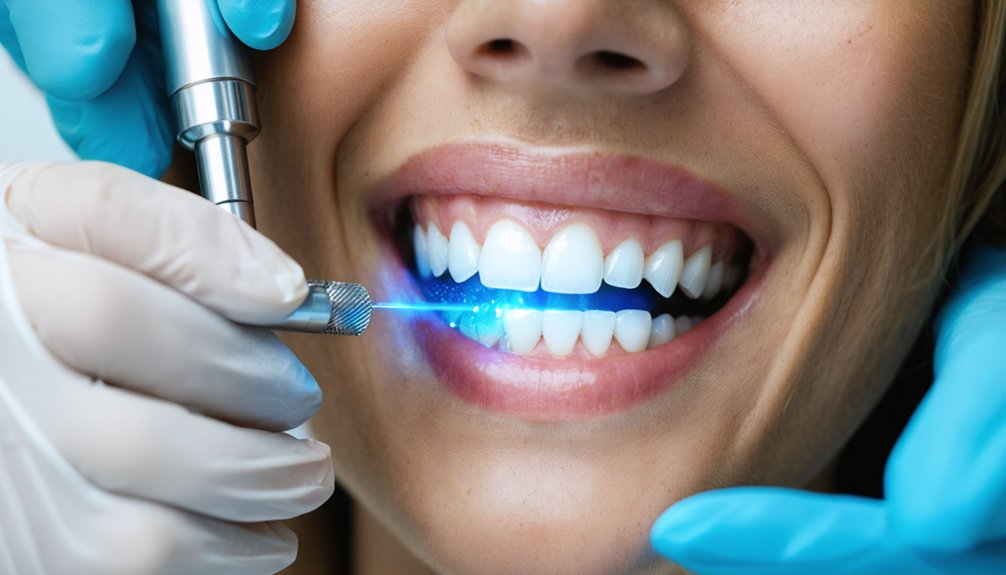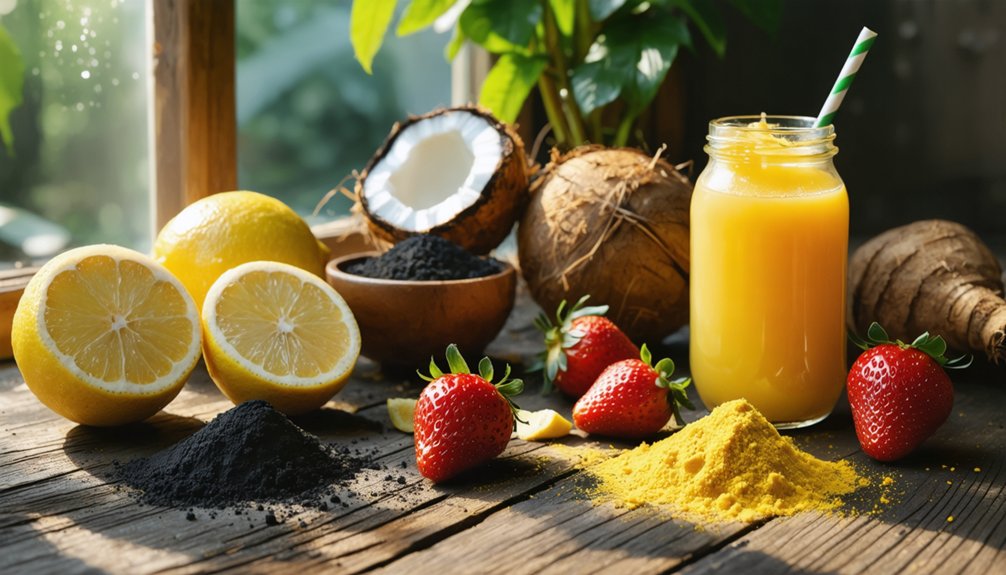
Baking soda, hydrogen peroxide, and papaya and pineapple enzymes are among the most clinically supported natural ingredients for extending your laser whitening results. Baking soda gently removes surface stains, while diluted hydrogen peroxide breaks down deeper chromogens. Papain and bromelain enzymes target protein-based discoloration without damaging enamel. You’ll also want to avoid harmful ingredients like lemon juice and activated charcoal. Keep exploring to discover exactly how each ingredient works and when to use it.
Key Takeaways
- Baking soda removes surface stains effectively as a mild abrasive, safe for use two to three times weekly without damaging enamel.
- Hydrogen peroxide at 1.5%–3% concentration penetrates enamel to break down deep stains when used as a mouthwash.
- Papain and bromelain enzymes from papaya and pineapple dissolve protein-based stains and reduce chromogen adhesion to enamel surfaces.
- Calcium-rich foods like milk, cheese, and yogurt support enamel remineralization and help preserve laser whitening results long-term.
- Avoid lemon juice, apple cider vinegar, and activated charcoal, as these ingredients erode or scratch enamel, reversing whitening outcomes.
How Natural Ingredients Extend Your Laser Whitening Results
Once your laser whitening treatment is complete, the natural ingredients you incorporate into your daily routine can meaningfully extend those results.
You’ll maintain brightness longer by making strategic dietary adjustments that reduce chromogen exposure—limiting coffee, tea, and red wine directly decreases stain reformation.
Calcium-rich foods like milk and cheese reinforce enamel integrity, protecting the whitened surface from acid-induced erosion.
Crunchy vegetables such as carrots and celery mechanically disrupt plaque before it bonds.
For natural whitening support, applying baking soda paste two to three times weekly removes surface deposits without compromising enamel.
Pineapple and papaya enzymes assist in breaking down protein-based stains between professional sessions.
These targeted choices don’t replace clinical care—they protect and preserve the investment you’ve already made.
Best Natural Ingredients Proven to Whiten Teeth
When choosing natural ingredients that actually work, you’ll find baking soda and hydrogen peroxide consistently supported by clinical evidence.
Baking soda acts as a mild abrasive that removes surface stains without damaging your enamel, making it safe for use two to three times weekly.
Hydrogen peroxide penetrates your enamel directly, breaking down deep chromogens through oxidation for more thorough whitening results.
Baking Soda Benefits
Baking soda ranks among the most clinically supported natural agents for surface stain removal, and its mild abrasive properties allow it to scrub discoloration from enamel without causing structural damage.
When you apply a baking soda paste, it mechanically lifts chromogens deposited by coffee, tea, and red wine. Its alkaline pH also neutralizes acids that accelerate enamel degradation, giving you a dual protective benefit.
To maintain efficacy without overuse, limit application to two or three times weekly. Exceeding this frequency risks gradual enamel wear, which counteracts your whitening goals.
Combine baking soda with consistent daily brushing and flossing to reinforce stain removal results. Used correctly, it’s a cost-effective, evidence-backed tool you can integrate into a structured oral care protocol.
Hydrogen Peroxide Efficacy
While baking soda targets surface-level stains, hydrogen peroxide works at a deeper level by penetrating enamel and breaking down chromogens through oxidation. This mechanism makes it one of the most effective natural whitening agents available.
To maintain hydrogen peroxide safety, you’ll want to use a mouthwash formulation between 1.5% and 3% concentration. Exceeding that hydrogen peroxide concentration increases your risk of gum irritation and temporary dentin exposure, both of which heighten tooth sensitivity post-treatment.
You should apply it consistently but strategically — not as a daily rinse, but as a targeted intervention within your broader whitening protocol.
When used correctly, hydrogen peroxide delivers clinically supported results that surface-level abrasives simply can’t achieve on their own.
How Baking Soda Prepares Teeth for Laser Whitening
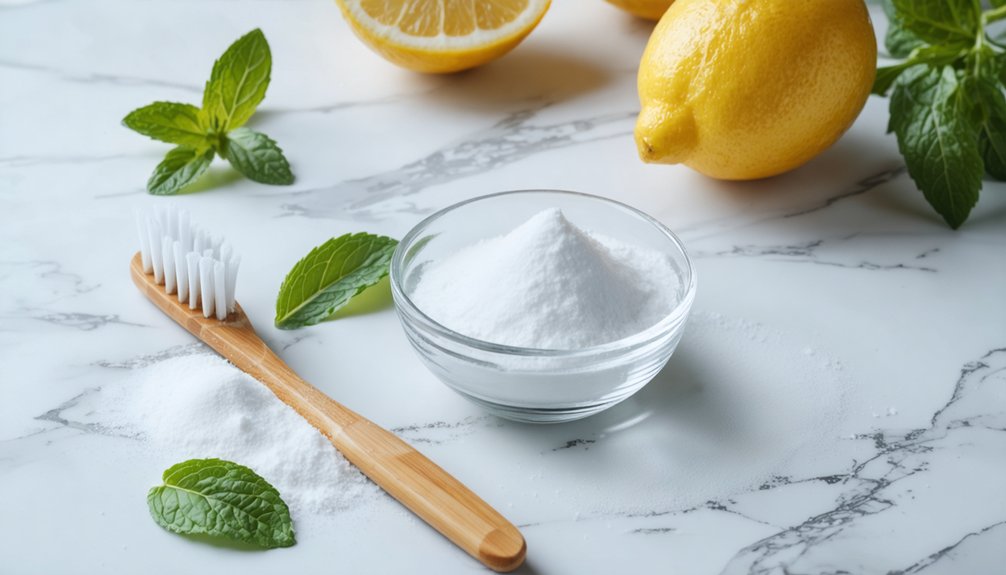
When you use baking soda as a pre-treatment, its mild abrasive properties mechanically lift surface stains, clearing chromogenic deposits that could otherwise interfere with laser whitening penetration.
You’re effectively preparing a cleaner enamel surface, allowing the laser’s energy to target deeper discoloration more precisely.
Applied 2–3 times weekly, baking soda removes debris without compromising enamel integrity, making it a clinically sound preparatory step.
Mild Abrasive Stain Removal
Among the most accessible natural whitening agents, baking soda works as a mild abrasive that removes surface stains without damaging your enamel. Its fine crystalline structure targets extrinsic stain types—those caused by coffee, tea, and red wine—through mechanical abrasive techniques that lift chromogenic deposits from your tooth surface.
To apply it correctly, mix a small amount with water to form a paste and brush gently for two minutes, two to three times weekly.
Exceeding this frequency risks gradual enamel wear, so you’ll want to stay disciplined with scheduling.
Safe Enamel Preparation
Before undergoing laser whitening, baking soda can help prepare your enamel by clearing surface-level chromogenic deposits that would otherwise interfere with light penetration and bleaching agent absorption.
Its mild alkalinity neutralizes acidic residues, creating a cleaner substrate for the laser to target effectively.
Maintaining enamel health during preparation requires strict frequency control. You’ll want to limit baking soda application to 2–3 times weekly, as excessive use introduces unnecessary abrasive stress on mineralized surfaces.
One of the persistent whitening myths is that aggressive pre-treatment yields faster results. It doesn’t. Over-preparation compromises enamel integrity, ultimately reducing laser efficacy rather than enhancing it.
Your goal is a structurally sound, debris-free surface — not a stripped one. Disciplined, protocol-driven preparation produces consistently superior outcomes.
Can Papaya and Pineapple Enzymes Actually Remove Teeth Stains?
How well do fruit enzymes actually work against teeth stains? Both papaya benefits and pineapple efficacy stem from specific proteolytic enzymes that target protein-based stain compounds.
Papain from papaya and bromelain from pineapple mechanically break down organic debris adhering to enamel surfaces. Here’s what the evidence supports:
Papain and bromelain enzymatically dissolve organic debris clinging to enamel, offering evidence-backed surface stain reduction.
- Papain disrupts protein bonds within surface stains, reducing discoloration through enzymatic abrasion.
- Bromelain breaks down protein-based film layers, limiting chromogen adhesion to enamel.
- Combined application may enhance mechanical stain removal without compromising enamel integrity.
You’re working with mild biological agents here—not aggressive bleaching compounds.
These enzymes support surface-level stain reduction but won’t replace peroxide-based treatments for deeper chromogenic deposits.
Is Hydrogen Peroxide a Natural-Enough Option for Laser Whitening?
Whether hydrogen peroxide qualifies as “natural enough” depends on the concentration you’re using and what outcome you’re targeting.
At 1.5%–3%, it’s a clinically supported natural whitening agent that penetrates enamel and breaks down deep chromogens through oxidation. You’ll find this concentration effective without triggering significant gum irritation or sensitivity.
Higher concentrations accelerate results but increase your risk of dentin exposure and soft tissue damage.
If you’re incorporating hydrogen peroxide into a laser whitening protocol, precision matters. Use it as a mouthwash, limit frequency, and monitor for sensitivity after each session.
It’s not extracted from a plant, but its mechanism is well-documented and its safety profile at low concentrations is validated.
For controlled, evidence-based natural whitening, hydrogen peroxide remains a defensible choice.
How Often to Use Natural Remedies Between Laser Whitening Sessions
Spacing your natural remedies correctly between laser whitening sessions protects your results and prevents enamel degradation.
Managing natural remedies frequency requires discipline and evidence-based scheduling to maintain laser whitening intervals effectively.
Discipline and evidence-based scheduling are essential to managing natural remedy frequency and protecting laser whitening results.
Follow these clinically supported usage guidelines:
- Baking soda paste — Apply 2–3 times weekly; exceeding this frequency accelerates enamel wear and undermines your whitening investment.
- Hydrogen peroxide mouthwash — Use at 1.5%–3% concentration; limit sessions to avoid gum irritation and heightened tooth sensitivity.
- Enzyme-based aids (papain, pineapple) — Incorporate occasionally, not daily, to support stain breakdown without overworking enamel surfaces.
You should also wait 60 minutes after consuming chromogenic foods before applying any remedy.
Consistent daily brushing and flossing remain your primary defense against discoloration between professional treatments.
Which Natural Ingredients Damage Enamel Over Time?
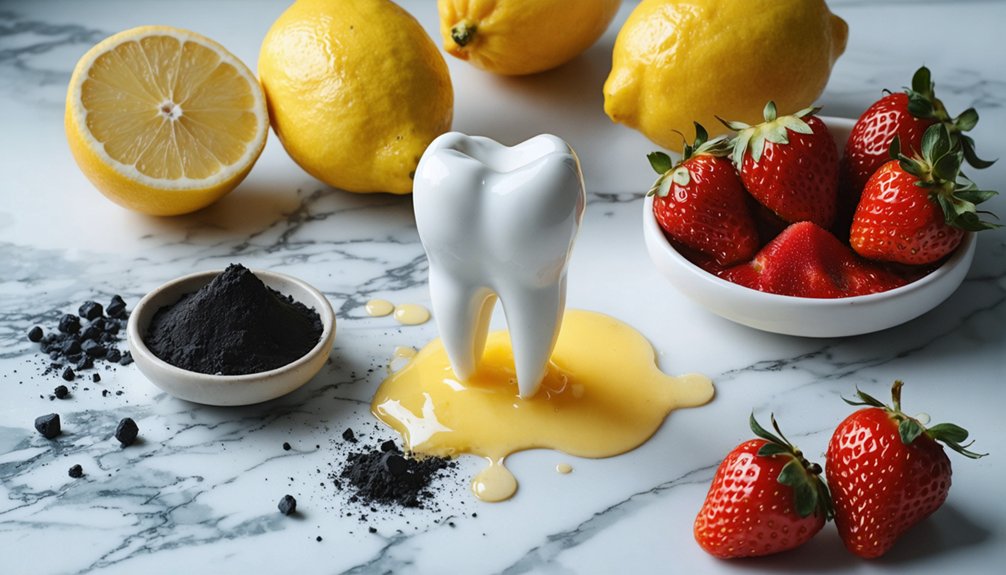
While timing your natural remedies correctly preserves your results, choosing the wrong ingredients entirely can undo them. Some commonly promoted whitening agents actively compromise enamel preservation through repeated natural acid effects.
Lemon juice and apple cider vinegar are the primary offenders. Both deliver acidic compounds that soften enamel on contact. Frequent application accelerates structural loss that you can’t reverse. Vinegar, even diluted, poses long-term erosion risk and offers no validated whitening benefit.
Activated charcoal presents a different concern. Its abrasive particle size mechanically strips enamel without ADA safety validation. You’re trading surface stains for structural damage.
Stick to ingredients with documented safety profiles—baking soda at controlled frequency, diluted hydrogen peroxide within recommended concentrations.
Anything outside those boundaries puts your enamel at measurable, cumulative risk.
What Not to Mix With Laser Whitening Treatments
Protecting your laser whitening results means knowing which natural alternatives actively interfere with treatment outcomes. Certain ingredients counteract professional teeth whitening by eroding enamel or destabilizing peroxide activity.
Knowing which natural ingredients sabotage your whitening results is as essential as the treatment itself.
Avoid combining laser whitening with:
- Lemon juice or apple cider vinegar — Both acids soften enamel post-treatment, accelerating structural damage during peak sensitivity windows.
- Activated charcoal — Its abrasive particles scratch enamel already temporarily compromised by laser exposure, worsening surface degradation.
- Turmeric pastes — Residual pigmentation deposits resist professional-grade oxidation, potentially staining freshly opened enamel tubules.
You’ll protect your investment by spacing any natural alternatives at least 48 hours from your laser session.
Prioritize evidence-backed protocols over unverified remedies during your post-treatment recovery period.
Calcium-Rich Foods That Shield Enamel After Laser Whitening
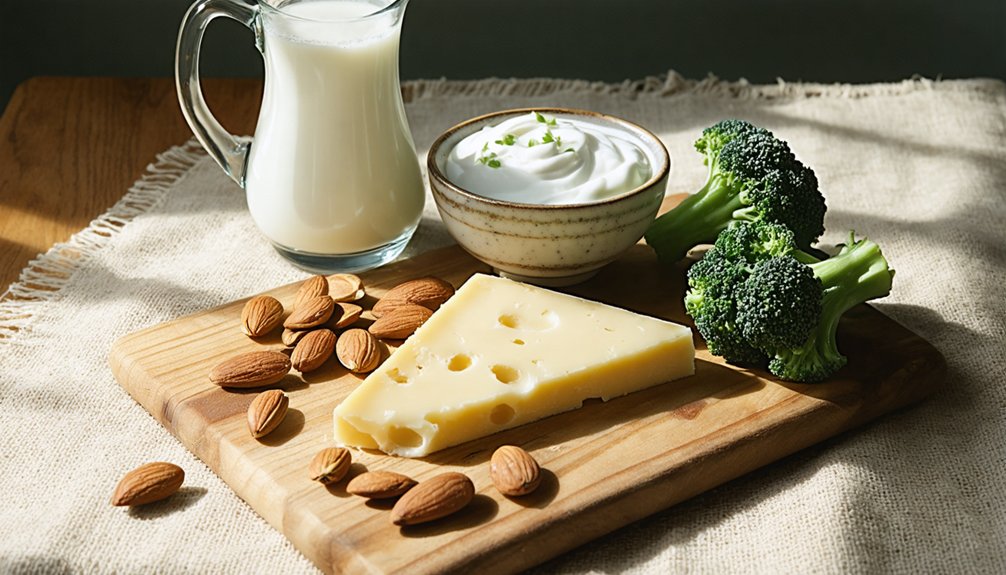
After ruling out what harms your enamel post-treatment, it’s worth focusing on what actively rebuilds and shields it. Calcium sources like milk, cheese, and yogurt deliver the minerals your enamel needs to resist acid-induced erosion following laser whitening.
You’re reinforcing structural integrity at the microscopic level when you consistently incorporate these foods into your diet.
Cheese, specifically, neutralizes oral acidity and stimulates saliva production, creating a buffering environment that supports enamel protection.
Milk provides both calcium and phosphate, two compounds clinically linked to remineralization. You don’t need supplements when whole-food calcium sources accomplish this effectively.
Prioritize these foods within hours of your whitening session. They don’t reverse damage—they prevent it.
Strategic dietary control post-treatment is how you extend and protect your results.
Frequently Asked Questions
Can Strawberry Malic Acid Replace Professional Laser Whitening Treatments Entirely?
You can’t replace professional laser whitening with strawberry benefits alone. While malic acid effectiveness removes surface stains, it doesn’t penetrate enamel like laser treatments do, so you’ll need professional intervention for deeper discoloration.
Does Drinking Hydrogenated Water After Laser Whitening Prevent New Stain Formation?
You might think hydrogenated water benefits go beyond hydration, but it won’t prevent stains. You’ll find stain prevention methods like limiting coffee and rinsing after meals deliver clinically supported, controlled results instead.
Are Banana Peel Extracts Safe for Children Undergoing Natural Teeth Whitening?
Banana peel benefits include mild enzymatic stain reduction, but you shouldn’t apply them to children without consulting a pediatric dentist first. Children’s safety requires professional guidance, as clinical evidence supporting their whitening efficacy remains limited.
Can Turmeric Stain Teeth Yellow if Used Before Laser Whitening Sessions?
Like a double-edged sword, turmeric benefits include antioxidants, yet turmeric precautions matter: you should avoid applying it before laser sessions, as its intense pigmentation can temporarily stain your enamel yellow, compromising treatment outcomes.
Does Coconut Oil Pulling Interfere With Laser Whitening Gel Absorption?
Coconut oil pulling techniques don’t proven to interfere with laser whitening gel absorption, but you shouldn’t use it immediately before treatment. Coconut oil benefits oral health, yet it leaves a residue that may reduce gel contact.
References
- https://pmc.ncbi.nlm.nih.gov/articles/PMC10024105/
- https://globalresearchonline.net/ijpsrr/v79-2/16.pdf
- https://www.sciencedirect.com/science/article/abs/pii/S134900792100178X
- https://mypenndentist.org/dental-tips/2024/02/29/safe-ways-to-whiten-teeth-naturally/
- https://www.medicalnewstoday.com/articles/322421
- https://www.dentalcareofmidfl.com/six-simple-ways-whiten-teeth-naturally/
- https://rjptonline.org/HTML_Papers/Research Journal of Pharmacy and Technology__PID__2021-14-7-26.html
- https://www.ruidosodentist.com/natural-teeth-whitening-remedies/
- https://jpharmsci.com/article/natural-agents-for-teeth-whitening
- https://www.mouthhealthy.org/all-topics-a-z/natural-teeth-whitening