Fast-acting whitening gel delivers measurable results in as little as 5 to 7 days when you use a 6% hydrogen peroxide formula consistently. Lower 3% concentrations take 10 to 14 days for visible change. You can realistically expect 2 to 3 shade improvements within the first two weeks and up to 6 shades by day 28. Matching concentration to your sensitivity threshold keeps enamel protected throughout treatment. The full breakdown ahead covers everything you need to maximize your results safely.
Key Takeaways
- 6% hydrogen peroxide whitening gels deliver visible results within 5–7 days, while 3% formulations require 10–14 days for noticeable changes.
- Most users achieve 2–3 shade improvements within the first two weeks, with 3–6 shades possible after four weeks.
- Active peroxide compounds penetrate enamel, breaking down chromogenic molecules through oxidation to lighten tooth color effectively.
- Daily application should be limited to 30–60 minutes, with treatment cycles not exceeding 28 days to avoid diminishing returns.
- Results typically last 6 months to 3 years, depending on oral hygiene habits, staining avoidance, and periodic touch-up applications.
How Fast-Acting Whitening Gel Actually Works?
When you apply a fast-acting whitening gel, the active peroxide compound penetrates the enamel and breaks down chromogenic molecules responsible for discoloration through an oxidation reaction.
Higher concentrations, such as 6% hydrogen peroxide, produce perceptible changes within 5 to 7 days, while 3% formulations require 10 to 14 days for visible results.
Proper gel application techniques directly influence efficacy — even coverage guarantees consistent oxidation across all tooth surfaces, preventing patchy outcomes.
Whitening gel safety depends on concentration control; exceeding recommended usage beyond 28 days yields diminishing returns rather than accelerated results.
You’re effectively leveraging chemistry, so precision matters.
Following manufacturer guidelines protects enamel integrity while maximizing shade improvement, allowing you to achieve a 2 to 3 shade lift within the first two weeks of consistent use.
What to Expect Day by Day With Whitening Gel?
Within the first two to three days of consistent use, you’ll notice early visible changes as the gel begins lifting surface stains.
By the end of week one, you can expect a measurable two to three shade improvement, particularly with formulations containing six percent hydrogen peroxide or higher.
Over the full three to four week treatment course, you’ll achieve maximum whitening of four to seven shades, after which extending use beyond twenty-eight days yields diminishing returns.
Early Days Visible Changes
During the early days of whitening gel treatment, your results unfold on a predictable timeline tied directly to the product’s peroxide concentration.
Initial color changes emerge as early as day 2 or 3, with user experience feedback confirming subtle brightness shifts by day 5 for most formulations.
- Days 1–2: Higher peroxide concentrations (10%+) may show visible change within 24 hours
- Day 3: Most users notice initial color changes under consistent daily application
- Day 5: Majority of users confirm perceptible brightness with 6% hydrogen peroxide formulas
- Days 7–10: 3% peroxide gels begin showing clear, measurable shade differences
- Days 10–14: Over-the-counter lower-concentration gels reach first confirmed visible outcomes
You’re tracking real, concentration-driven progress—not guesswork.
Week One Shade Progress
By day 3, most users record their first measurable shade shift—a clinical marker confirming the gel’s peroxide is actively oxidizing surface chromogens.
With consistent daily application, you’ll typically advance 2 to 3 shades within the first week.
That’s a quantifiable, trackable outcome you can verify through shade assessment using a standard dental shade guide.
Full Treatment Timeline Results
Most users move through four distinct phases across a 3 to 4 week treatment course, each marked by measurable clinical changes.
Your user care protocol directly controls how efficiently you advance through each phase.
- Days 1–3: Initial surface stain breakdown begins
- Days 4–7: Subtle shade shifts become visible; user feedback confirms 2–3 shade gains
- Days 8–14: Significant 2–3 shade improvement solidifies; color stability increases
- Days 15–28: Maximum 3–6 shade improvement achieved; treatment plateaus
- Post-treatment: Maintenance tips—avoid staining foods, maintain daily brushing—extend results 1–3 years
Extending treatment beyond 28 days yields diminishing returns.
You’ve reached peak efficacy.
Consistent post-treatment maintenance tips preserve color stability and protect your investment long-term.
Does Peroxide Strength Change How Fast You See Results?
Yes, peroxide strength directly determines how fast you’ll see whitening results. Higher concentrations deliver faster outcomes — some users notice changes within a single day. Understanding peroxide benefits helps you select the right formulation for your timeline.
With 6% hydrogen peroxide, you’ll typically see perceptible changes within 5 to 7 days. Drop to 3%, and you’re looking at 10 to 14 days before clear results emerge. Over-the-counter gels with lower concentrations generally require 1 to 2 weeks for visible improvement.
Refining your application techniques maximizes whatever concentration you’re using. Consistent daily application guarantees the active ingredient maintains adequate contact time with enamel surfaces.
Choosing a higher peroxide formulation gives you measurable control over your whitening speed and shade improvement trajectory.
Which Whitening Gel Concentration Is Right for You?
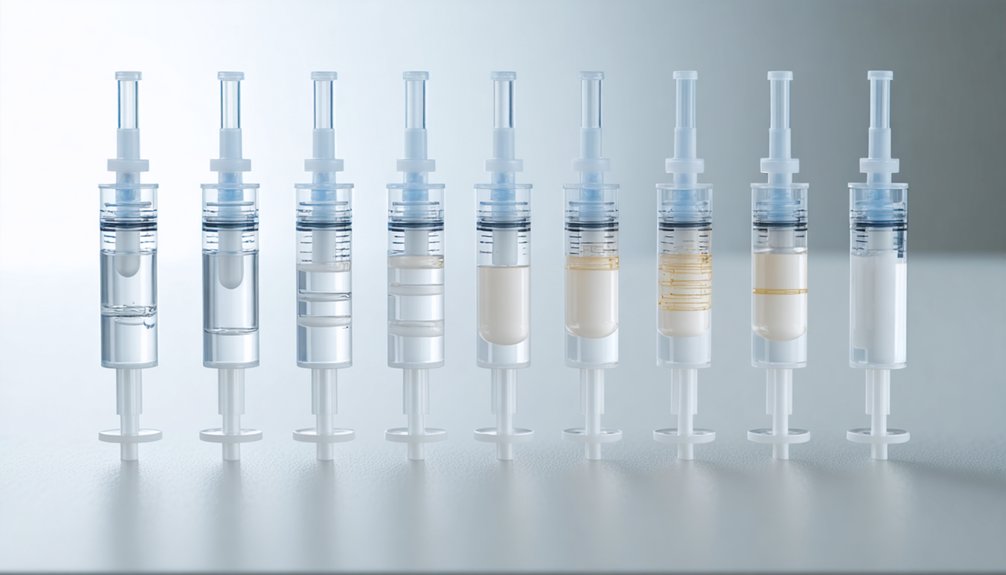
Choosing the right peroxide concentration means balancing whitening speed against your sensitivity threshold.
If you have minimal sensitivity, a 6% hydrogen peroxide gel delivers visible changes in 5 to 7 days, while a 3% formulation suits those prone to discomfort, requiring 10 to 14 days for clear results.
You should match concentration to your tolerance level rather than defaulting to the highest strength available.
Understanding Peroxide Concentration Levels
When selecting a whitening gel, peroxide concentration directly determines both how fast you’ll see results and how much sensitivity you may experience. Understanding gel formulations helps you choose the right strength while maintaining peroxide safety.
- 3% hydrogen peroxide requires 10–14 days for clear, visible results.
- 6% hydrogen peroxide produces perceptible changes within 5–7 days.
- Higher concentrations deliver results in as little as 1 day.
- PAP-enhanced alternatives need 10–14 days but reduce sensitivity risk.
- Lower concentrations minimize peroxide safety concerns while still whitening effectively.
Matching concentration to your sensitivity threshold and timeline gives you precise control over outcomes.
Higher isn’t always better—your enamel condition, stain depth, and tolerance all factor into which gel formulation delivers the best results without compromising comfort or safety.
Matching Strength To Sensitivity
Knowing your concentration options is only half the equation—how your teeth and gums respond to peroxide determines which strength you should actually use.
If you experience sensitivity, start with a 3% hydrogen peroxide formulation, which requires 10 to 14 days for visible results but minimizes discomfort.
Moderate sensitivity levels respond well to 6% formulations, delivering perceptible changes within 5 to 7 days.
If you’ve got minimal sensitivity, higher concentrations accelerate results, sometimes within a single day.
Product recommendations should align with your baseline tolerance, not just your timeline goals.
Pushing beyond your sensitivity threshold won’t accelerate results—it’ll trigger inflammation and force you to stop treatment entirely, extending your overall timeline and undermining the consistency that drives measurable shade improvement.
Whitening Gel vs. Strips, Rinses, and In-Office Treatments
Selecting the right whitening method depends on how quickly you need results and what level of intervention you’re comfortable with.
The right whitening method comes down to your timeline and how much intervention you’re willing to commit to.
A whitening effectiveness comparison reveals clear performance tiers across available options, and a treatment cost analysis helps you prioritize accordingly.
- In-office treatments: Deliver dramatic results in a single 60–90 minute session.
- Whitening gels (tray-based): Produce visible changes within 2–3 days; full results in 3–4 weeks.
- Take-home professional kits: Show first changes between day 3 and day 5.
- Whitening strips (6% peroxide): Match gel speed, delivering changes in 5–7 days.
- Rinses and toothpastes: Require one month to several months for noticeable results.
Gel trays outperform strips but remain slower than professional procedures.
How Many Shades Whiter Can You Realistically Get?
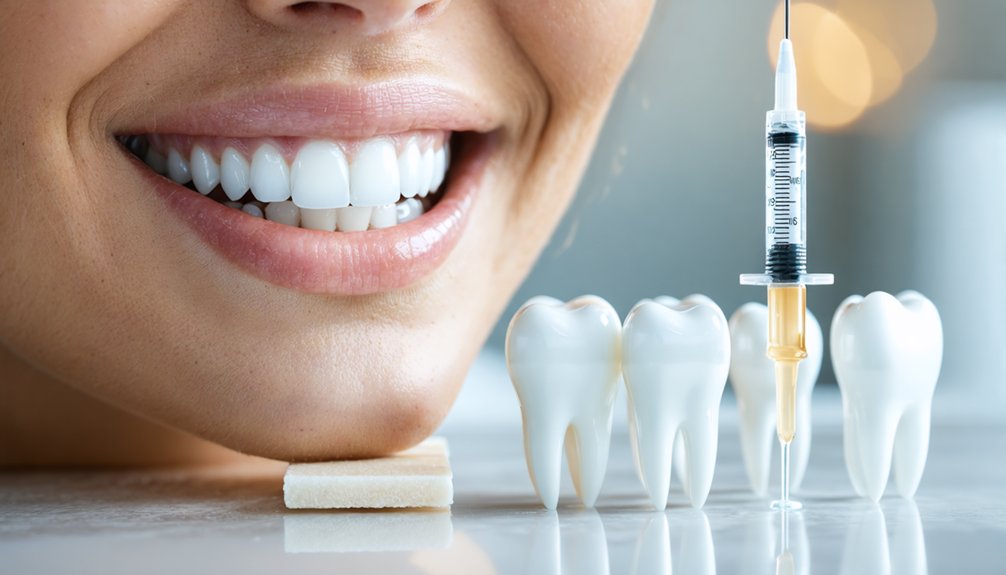
How much whiter your smile gets depends on the gel’s peroxide concentration, your stain type, and how consistently you apply it. Within one to two weeks, you can expect a two to three shade improvement.
After two to four weeks of consistent use, that range extends to three to six shades. Over a full treatment course, most users achieve four to seven shades of lightening.
Setting realistic expectations matters. Deep or stubborn stains may extend your timeline beyond the standard four weeks. Surface stains from coffee, tea, or tobacco respond faster than intrinsic discoloration.
Higher peroxide concentrations accelerate shade improvement, while lower concentrations demand more time. Consistent daily application is the single most controllable variable in your results. Skipping applications directly delays measurable progress.
How Long Whitening Gel Results Last After Treatment
Once you complete a whitening gel treatment, results typically last six months to one year with standard oral hygiene.
Applying consistent maintenance tips and safety precautions extends longevity considerably.
- Persistent oral hygiene routines can extend brightness up to 2–3 years
- Avoiding staining foods and beverages preserves results beyond one year
- Occasional touch-up applications maintain ideal shade for up to 3 years
- Dentist-supervised at-home trays deliver results lasting one year or longer
- Extending active treatment beyond 28 days produces diminishing returns
You control how long your results last by managing daily habits strategically.
Brush consistently, limit staining substances, and schedule periodic touch-ups.
Treating maintenance as an ongoing protocol rather than an afterthought keeps your shade improvement intact and maximizes your original investment in treatment.
How to Use Whitening Gel Without Going Too Far
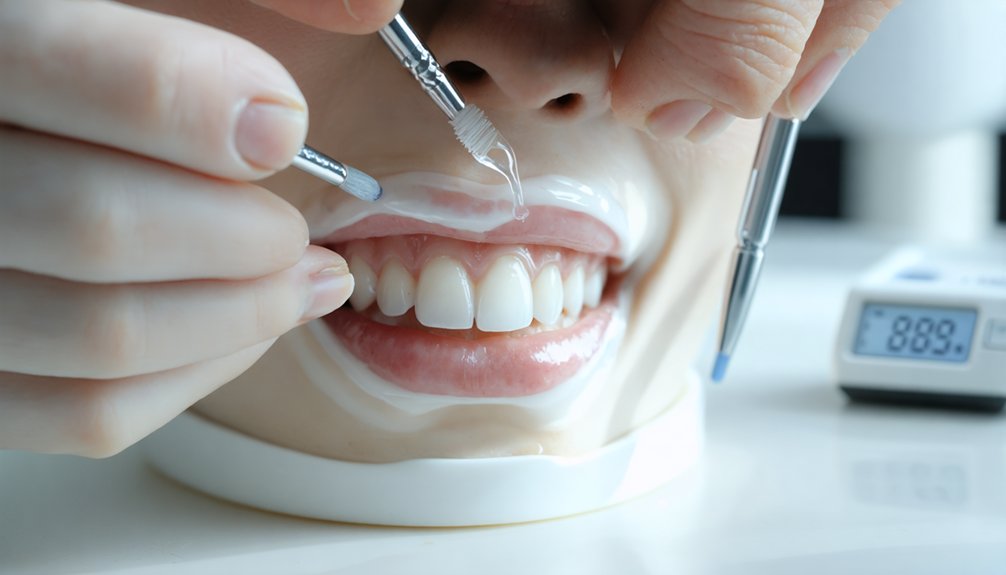
Staying within safe usage boundaries is straightforward when you follow evidence-based guidelines from the start. Limit daily application to the recommended duration—typically 30 to 60 minutes—and don’t exceed a 28-day treatment cycle.
Diminishing returns occur beyond that threshold regardless of concentration, so extending use doesn’t improve outcomes.
For application techniques, apply a thin, even layer directly to enamel surfaces, avoiding gum contact to minimize irritation.
Sensitivity management requires attention: if discomfort develops, reduce application frequency to every other day rather than discontinuing entirely.
Formulas with lower peroxide concentrations—around 3% to 6%—are better suited for users with reactive teeth.
Consistent, controlled use over 3 to 4 weeks delivers ideal shade improvement without compromising enamel integrity or triggering unnecessary sensitivity responses.
Frequently Asked Questions
Can Whitening Gel Still Work on Crowns, Veneers, or Dental Implants?
Whitening gel won’t lighten crowns, veneers, or implants—it only works on natural enamel. For crown whitening, veneer care, and implant maintenance, you’ll need professional stain removal treatments to match your desired shade effectively.
Is Whitening Gel Safe to Use During Pregnancy or While Breastfeeding?
You shouldn’t use whitening gel during pregnancy or breastfeeding. Safety concerns arise from limited research on peroxide absorption. An ingredient analysis reveals potential risks, so you’ll want to consult your healthcare provider before proceeding with any whitening treatment.
Should Whitening Gel Be Applied Before or After Brushing Your Teeth?
Apply whitening gel after brushing your teeth. You’ll remove plaque first, allowing gel types to penetrate enamel more effectively. Proper application techniques guarantee you’re maximizing contact time and accelerating your shade improvement results.
Can Whitening Gel Cause Permanent Damage to Tooth Enamel Over Time?
When used correctly, whitening gel won’t cause permanent enamel erosion. You’ll minimize long-term effects by following dosage guidelines. Ingredient safety is well-documented, and sensitivity issues remain temporary, resolving after you complete your 3–4 week treatment cycle.
Does Diet or Smoking Affect How Quickly Whitening Gel Shows Results?
Yes, dietary impacts from staining foods and smoking effects from nicotine actively counteract whitening gel’s efficacy, slowing your visible results. You’ll extend your timeline beyond the standard 5–14 days if you don’t minimize these exposures consistently.
References
- https://www.padmel.com/archives/39023
- https://stormdental.com/how-quickly-does-tooth-whitening-show-results/
- https://www.dentistsanfrancisco.com/teeth-whitening-gel-ultimate-guide/
- https://www.healthline.com/health/how-long-does-teeth-whitening-last
- https://torreyhillsdental.com/how-long-do-teeth-whitening-results-last/
- https://www.glutamart.com/blog/how-long-does-it-take-to-see-results-from-skin-whitening-creams
- https://www.coppertopdental.com/blog/what-timeline-can-you-expect-for-teeth-whitening
- https://localdentalsa.com/before-and-after-teeth-whitening-timeline-week-by-week-results/
- https://www.restonyc.com/how-long-does-it-take-for-peroxide-to-whiten-your-teeth/
- https://whiteningbright.com/articles/how-long-do-whitening-strips-actually-take-to-work