Yellowing teeth with braces happens because brackets trap plaque and staining agents that your toothbrush can’t fully reach. Your safest whitening options include braces-compatible gels, foams, and low-concentration hydrogen peroxide toothpastes that work around brackets without disrupting bonding. You should avoid whitening strips and prefabricated trays since they cause uneven coverage and potential gum irritation. The sections below break down every effective option so you can choose what works best for your treatment stage.
Key Takeaways
- Whitening gels and foams are safe with braces, applying directly to exposed tooth surfaces to lift stains without disrupting brackets.
- Whitening toothpaste with mild abrasives and low-concentration hydrogen peroxide gently brightens teeth without damaging enamel or brackets.
- Avoid whitening strips and prefabricated trays, as they cause uneven coverage and potential bracket bonding issues.
- Dentists can provide professional cleanings and orthodontic-friendly whitening treatments tailored to work around braces limitations.
- Brushing after every meal, flossing daily, and eliminating staining beverages like coffee and soda prevents yellowing during treatment.
Why Teeth Turn Yellow With Braces
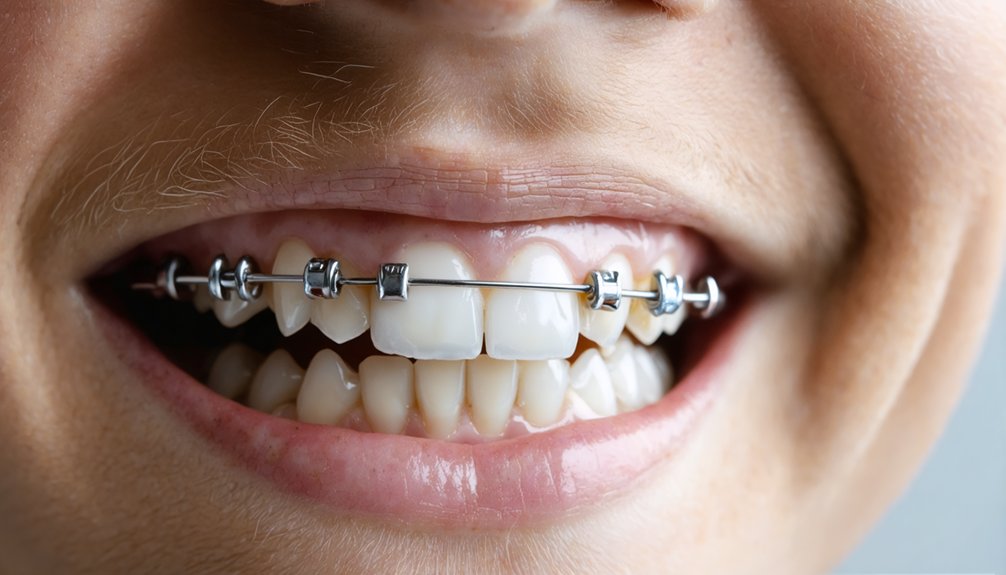
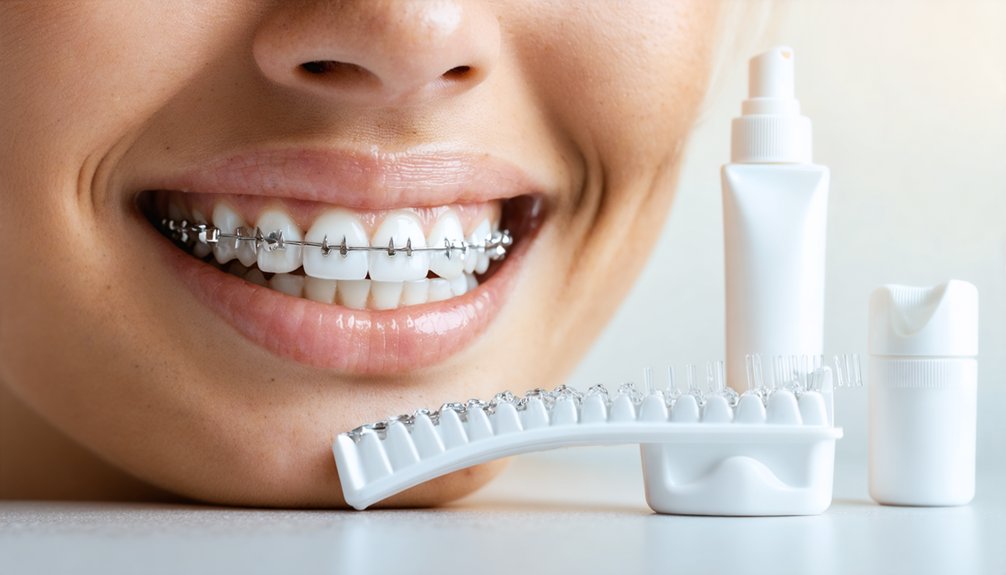
Braces create numerous hard-to-reach spaces where plaque accumulates around brackets, wires, and bands. When you don’t remove plaque consistently, bacteria metabolize sugars and release acids that causes discoloration by penetrating the enamel surface.
Over time, this bacterial activity leads to enamel damage, weakening your tooth structure and creating visible white spots or yellow patches.
Your dietary habits accelerate this process. Consuming staining agents like coffee, tea, or dark sauces deposits chromogens directly onto compromised enamel, intensifying yellowing.
Orthodontic appliances physically obstruct standard brushing angles, making complete plaque removal difficult without specialized tools.
Saliva flow also decreases around bracket contact points, reducing your mouth’s natural acid-neutralizing capacity.
Understanding these contributing factors allows you to implement targeted hygiene strategies that directly counteract discoloration during your orthodontic treatment.
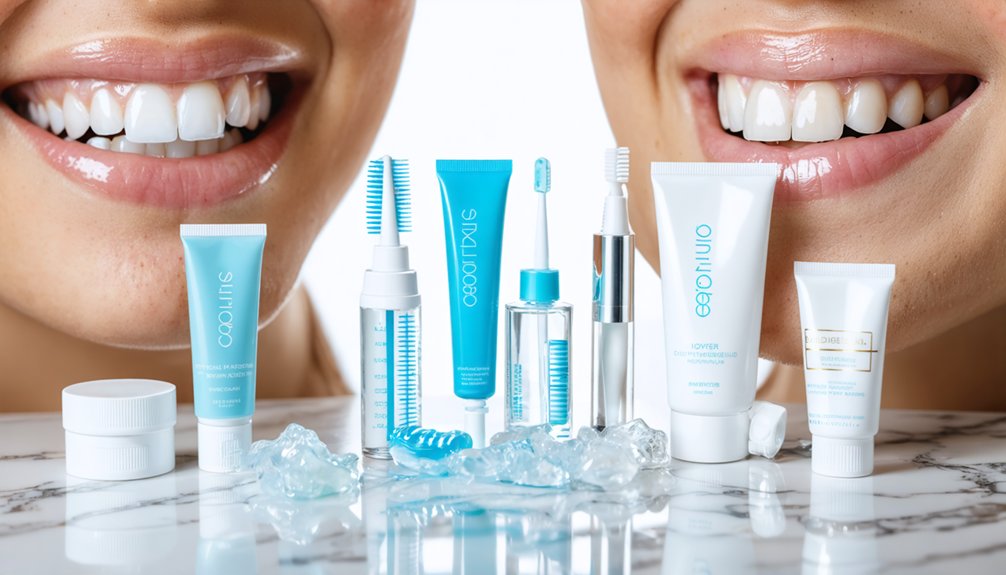
Whitening Gels and Foams Safe to Use With Braces
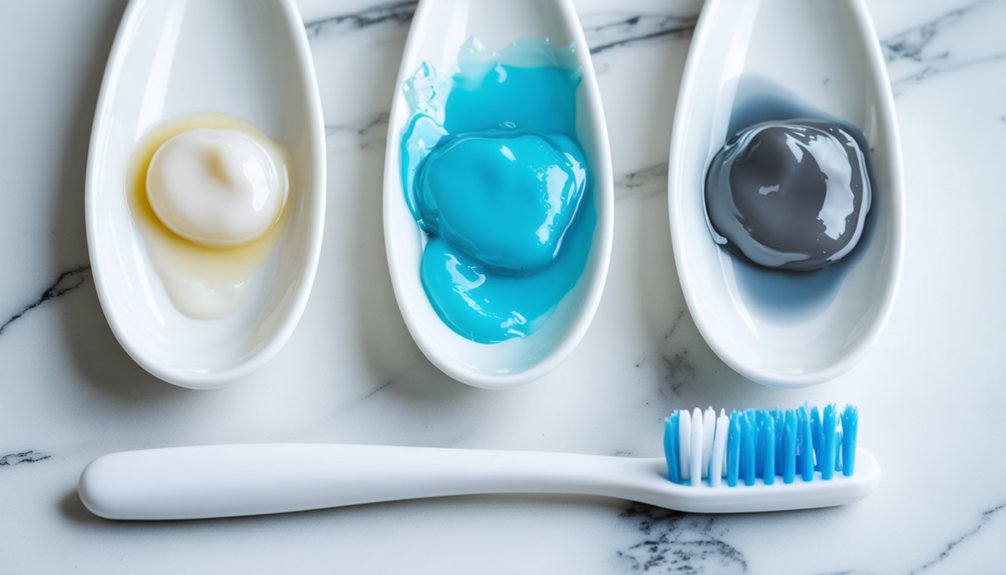
While strips and trays can’t effectively reach beneath brackets, whitening gels and foams offer a practical alternative you can incorporate into your existing orthodontic hygiene routine. Whitening foam applies directly to exposed tooth surfaces, targeting accessible enamel without disrupting bracket adhesion or wire placement.
Whitening gels and foams reach exposed enamel safely, offering a practical alternative when strips and trays fall short.
You apply it during your regular brushing cycle, allowing active ingredients to lift surface stains incrementally over several weeks.
Orthodontic gel functions similarly, using a small brush to deliver low-concentration hydrogen peroxide to specific stained areas. Both options avoid harsh abrasives that compromise enamel integrity.
Select formulations explicitly labeled safe for braces, as standard whitening products may contain chemical concentrations that irritate gum tissue. Consistent, strategic application of these targeted products helps you manage discoloration effectively throughout your entire treatment period.
Best Whitening Toothpaste for Braces
Choosing the right whitening toothpaste while wearing braces requires selecting formulas with mild abrasives that lift surface stains without damaging enamel or bracket adhesives.
You’ll want to look for low-concentration hydrogen peroxide options, as these gradually brighten exposed tooth surfaces during active orthodontic treatment.
Braces-safe whitening ingredients, such as baking soda and enzymatic compounds, effectively target discoloration while remaining gentle on wires, brackets, and surrounding gum tissue.
Mild Abrasive Toothpaste Benefits
Mild abrasive whitening toothpaste offers a practical solution for managing surface stains while wearing braces. You’ll benefit from mild abrasives that mechanically lift discoloration without compromising enamel integrity.
Toothpaste effectiveness depends on consistent application and formulation quality.
Key mild abrasives benefits include:
- Controlled polishing action — removes surface stains on exposed tooth areas without damaging bracket adhesive or enamel structure
- Low-concentration hydrogen peroxide — gradually brightens accessible tooth surfaces over several weeks of disciplined daily use
- Reduced sensitivity risk — gentler abrasive compounds minimize gum irritation compared to stronger whitening formulations
Select toothpaste specifically engineered for orthodontic patients to maintain bracket integrity.
Daily use optimizes toothpaste effectiveness by preventing stain accumulation, giving you measurable control over discoloration throughout your entire treatment period.
Hydrogen Peroxide Toothpaste Options
Beyond mechanical abrasion, low-concentration hydrogen peroxide toothpaste delivers a chemical whitening mechanism that targets chromogens embedded in enamel. These formulations typically contain 1–3% hydrogen peroxide, oxidizing stain-causing compounds without compromising bracket adhesion or irritating periodontal tissue.
Understanding hydrogen peroxide benefits helps you make precise product selections. The oxidative reaction penetrates enamel’s outer layer, breaking molecular bonds responsible for yellow discoloration. When used consistently, you’ll lift surface stains gradually over several weeks while maintaining structural enamel integrity.
As safe whitening alternatives, these toothpastes outperform aggressive bleaching agents that risk enamel erosion or gum sensitivity during orthodontic treatment. Select formulations explicitly labeled for braces compatibility, ensuring chemical concentrations remain within clinically acceptable thresholds.
Daily incorporation into your brushing routine optimizes results without disrupting active orthodontic mechanics.
Braces-Safe Whitening Ingredients
When selecting whitening toothpaste compatible with braces, you’ll want to prioritize formulations containing clinically validated ingredients that lift stains without compromising bracket adhesion or enamel integrity.
Effective braces maintenance depends on choosing compounds that target discoloration while preserving underlying tooth structure.
Prioritize these clinically supported ingredients for ideal enamel protection:
- Mild abrasives (hydrated silica or calcium carbonate) — mechanically removes surface stains without abrading enamel
- Low-concentration hydrogen peroxide — penetrates superficial stain layers while remaining gentle on bracket bonding agents
- Fluoride — actively remineralizes enamel, counteracting acid exposure and strengthening tooth surfaces during treatment
Avoid formulations containing high-percentage peroxide concentrations or aggressive abrasive compounds.
These destabilize enamel and potentially weaken adhesive bonds anchoring your brackets, undermining your orthodontic investment and producing unintended clinical complications.
Whitening Products to Avoid During Treatment
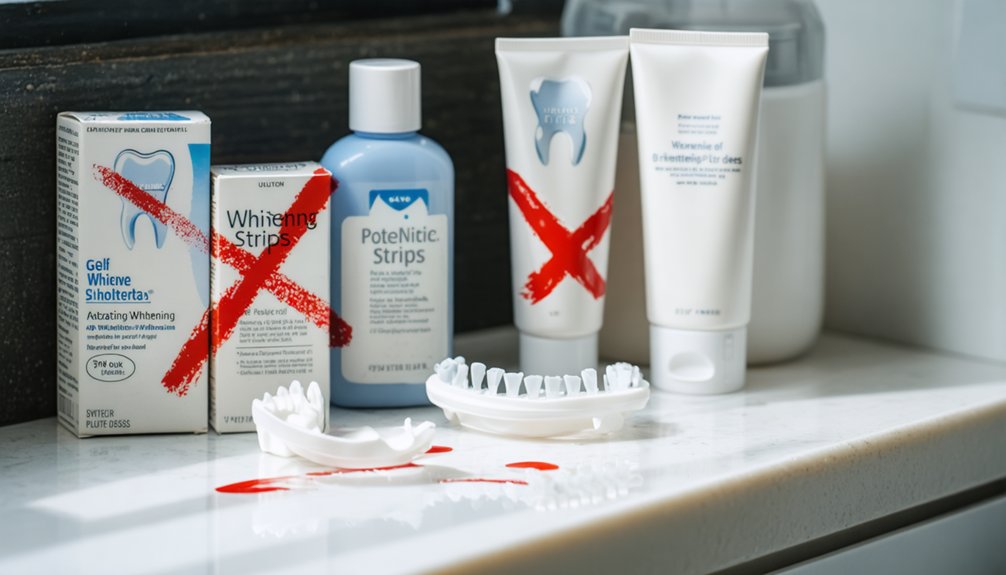
When wearing braces, you’ll need to avoid whitening strips, as they can’t cover the tooth surfaces hidden beneath metal brackets, resulting in uneven whitening.
You should also skip prefabricated whitening trays, since their generic fit prevents proper alignment with your bracketed teeth, rendering them ineffective and potentially irritating.
Additionally, cut acidic beverages like soda and sports drinks from your routine, as they weaken enamel and accelerate discoloration during treatment.
Whitening Strips To Avoid
Although whitening strips are a popular at-home treatment, they’re not compatible with traditional metal braces. Their flat adhesive design can’t conform to bracket surfaces, compromising whitening efficacy and producing uneven pigmentation post-treatment.
Avoid these specific strip-related issues during braces maintenance:
- Uneven coverage: Strips adhere only to exposed enamel, leaving darker patches beneath brackets once removed.
- Adhesive interference: Strip adhesive can weaken bracket bonding, disrupting orthodontic appliance integrity.
- Inconsistent concentration: Peroxide compounds penetrate unevenly, creating unpredictable discoloration patterns across tooth surfaces.
Your best strategy is postponing strip application until after orthodontic treatment concludes and your enamel has adequately recovered.
This approach guarantees uniform peroxide distribution across all tooth surfaces, delivering precise, consistent brightening results without compromising your overall orthodontic outcome.
Problematic Prefabricated Whitening Trays
Prefabricated whitening trays present similar compatibility problems as strips when used with traditional metal braces.
These one-size-fits-all trays can’t conform precisely to bracket contours, leaving significant gaps where whitening gel fails to contact tooth surfaces uniformly. The result is inconsistent bleaching exposure across your dentition, creating patchy discoloration once your orthodontist removes your appliances.
Additionally, prefabricated trays often position gel against your gum tissue rather than tooth enamel, increasing irritation risk without delivering meaningful whitening results.
You’re fundamentally accepting gum sensitivity with minimal cosmetic benefit.
Custom whitening trays, fabricated from precise dental impressions, offer a viable alternative for patients with lingual braces or Invisalign.
Schedule a dental consultation to determine whether custom-fitted options align with your current orthodontic treatment plan.
Harmful Acidic Beverages
Beyond product-based pitfalls, your beverage choices directly undermine enamel integrity during orthodontic treatment. Harmful beverages introduce acid compounds that weaken enamel, accelerating discoloration and structural vulnerability around brackets.
You’ll compound existing staining risks by consuming acidic drinks regularly.
Eliminate these harmful beverages to prevent enamel damage:
- Soda: Phosphoric and citric acids erode enamel surfaces, creating microscopic grooves that trap pigment.
- Sports drinks: Electrolyte formulas carry high acidity levels that soften enamel between bracket edges.
- Acidic juices: Citrus-based beverages deliver prolonged acid exposure, particularly dangerous around wire contact points.
Replacing these with water maintains neutral oral pH and prevents progressive enamel degradation.
You control discoloration outcomes by eliminating acidic exposure before it compromises your whitening trajectory.
Can You Use Whitening Strips With Braces?
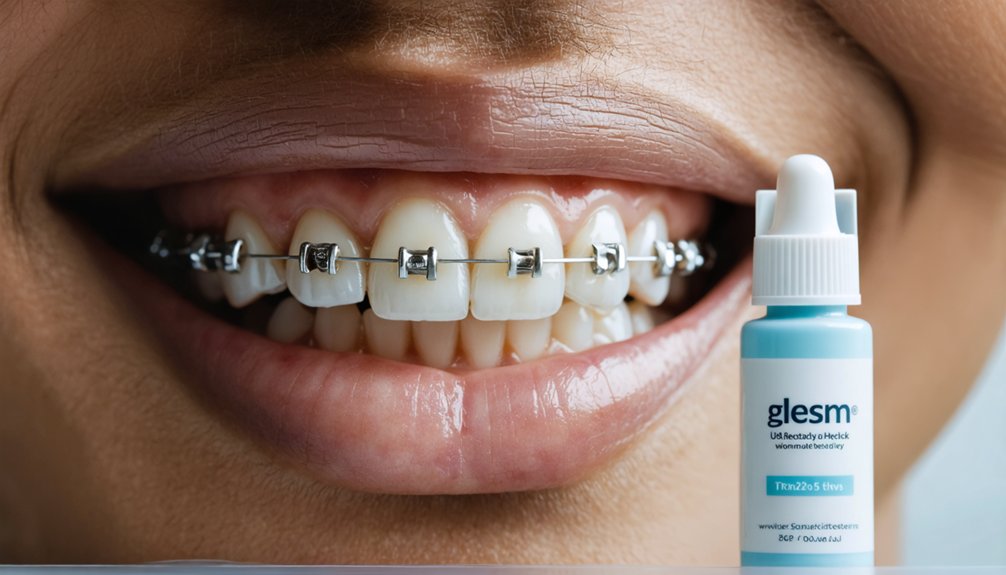
Whitening strips aren’t compatible with traditional metal braces because they can’t adhere to or cover the surfaces blocked by brackets and wires.
This limitation directly compromises whitening effectiveness, leaving unprotected enamel lighter than the areas concealed beneath brackets. Once your braces are removed, you’ll notice uneven, patchy discoloration across your teeth.
During active braces maintenance, strips also risk gum irritation due to peroxide exposure on sensitive tissue.
The hydrogen peroxide concentration in most strips isn’t calibrated for partial tooth coverage, making controlled application impossible.
Your best strategy is to delay strip usage until after your orthodontist removes your brackets and your enamel stabilizes.
At that point, strips become a precise, effective tool for achieving uniform whitening across all fully exposed tooth surfaces.
How Your Dentist Can Help Whiten Teeth With Braces
Your dentist offers targeted solutions that work around braces limitations more effectively than over-the-counter products. Through whitening consultations, you gain access to clinically validated protocols tailored to your orthodontic situation.
Dentist recommendations typically include:
- Professional cleanings that remove surface stains and plaque buildup inaccessible to standard brushing
- Orthodontic-friendly whitening foam or gel applied precisely to exposed tooth surfaces without disturbing brackets or wires
- Custom-fitted whitening trays designed specifically for lingual braces or Invisalign aligners, ensuring uniform product contact
Your dentist also advises strategic timing, confirming that intensive bleaching treatments should begin only after brace removal and the short healing period that follows.
This approach prevents uneven pigmentation and maximizes color consistency across all tooth surfaces.
Dentist-Approved Whitening Products for Braces Wearers
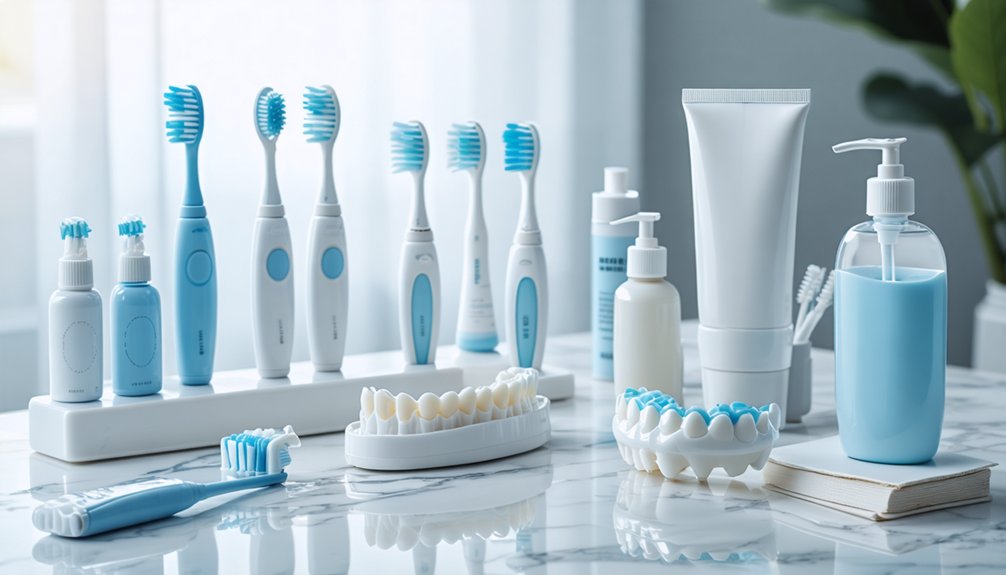
When selecting whitening products compatible with braces, dentist-approved options narrow to a few clinically validated categories that won’t compromise brackets, wires, or enamel integrity.
Low-concentration hydrogen peroxide toothpaste and mild-abrasive formulas remain the safest daily-use orthodontic products for stain prevention during active treatment.
Low-concentration hydrogen peroxide toothpaste remains the safest daily whitening option for patients undergoing active orthodontic treatment.
Dental offices also offer whitening foam specifically engineered to target exposed tooth surfaces without disturbing bracket adhesion or wire placement.
Orthodontic-friendly mouthwash provides supplemental stain prevention without alcohol concentrations that irritate bracket-adjacent gingival tissue.
Custom-fitted whitening gel trays, prescribed exclusively for lingual braces or Invisalign users, deliver controlled bleaching to precise surfaces.
You should avoid over-the-counter strips, prefabricated trays, and whitening pens, as these orthodontic products fail to reach sub-bracket surfaces and produce uneven post-treatment pigmentation.
Daily Habits That Prevent Yellow Teeth With Braces
Consistent daily oral hygiene directly determines whether braces wearers develop yellow staining during orthodontic treatment. Mastering proper brushing techniques and understanding flossing importance gives you direct control over discoloration prevention.
Follow these three non-negotiable daily protocols:
- Brush after every meal using a soft-bristled toothbrush, waiting 20–30 minutes post-eating to protect enamel integrity.
- Double-brush bracket areas methodically, angling bristles around wires to eliminate plaque accumulation at attachment points.
- Floss daily using a floss threader or water flosser, clearing interproximal debris that standard brushing can’t reach.
Additionally, eliminate staining agents including coffee, tea, and soda from your routine. These substances accelerate surface discoloration and weaken enamel.
Disciplined adherence to these habits minimizes yellowing throughout your entire orthodontic treatment period.
When to Start Whitening After Braces Come Off
Timing your whitening regimen correctly after brace removal directly determines whether you achieve uniform results. Your enamel and gum tissue experience mild trauma during debonding, requiring a recovery window before you introduce bleaching agents.
Whitening timing matters because applying strong peroxide formulations too early irritates sensitive tissue and weakens recently exposed enamel.
Applying peroxide too soon after brace removal irritates healing tissue and compromises vulnerable enamel integrity.
As part of disciplined post brace care, wait three to seven days after removal before beginning any whitening protocol. During that window, use fluoride toothpaste exclusively to remineralize enamel.
After the healing period, you can introduce whitening strips, custom trays, or schedule an in-office bleaching session. Professional treatments deliver the most uniform correction across previously bracketed surfaces.
You’ll control the outcome more precisely when you follow this structured, clinically supported timeline.
Frequently Asked Questions
Can Yellow Teeth From Braces Permanently Affect Your Smile Long-Term?
Yellow teeth from braces won’t permanently affect your smile’s long-term smile effects if you act promptly. You can reverse teeth discoloration causes through consistent oral hygiene, professional cleanings, and post-treatment whitening once your orthodontist removes your braces.
Does Teeth Whitening Interfere With Orthodontic Treatment Progress or Timeline?
Most whitening methods won’t derail your entire orthodontic timeline. You’ll maintain orthodontic safety by avoiding strips and harsh gels under brackets. Gentle whitening toothpaste and dental foam work effectively without disrupting wire tension or treatment progress.
Are There Age Restrictions for Whitening Treatments While Wearing Braces?
Age restrictions apply to whitening safety, as dentists typically don’t recommend treatments for patients under 16. You’ll achieve better treatment effectiveness by consulting your orthodontist, who’ll assess your enamel maturity and prescribe age-appropriate whitening protocols accordingly.
Can Certain Medications Cause Additional Yellowing in Braces Wearers?
Like a storm darkening skies, certain medication types—antibiotics, antihistamines, and blood pressure drugs—can intensify yellowing in braces wearers. You’ll need to reinforce your oral hygiene routine diligently to counteract these compounding discoloration effects.
Does the Type of Braces Material Affect How Teeth Yellow Overall?
Yes, braces materials influence yellowing causes differently. Metal brackets don’t stain, but ceramic ones absorb pigments faster. You’ll find clear elastics yellowing quickly, so you’ve got to monitor your diet and oral hygiene to maintain control.
References
- https://www.webmd.com/oral-health/whiten-teeth-wearing-braces
- https://painlessdentistryimplants.com/blog/how-to-whiten-teeth-with-braces/
- https://www.cdhp.org/how-can-i-whiten-my-teeth-with-braces/
- https://www.dentistsanfrancisco.com/ultimate-teeth-whitening-after-braces/
- https://dentistinmanvel.com/say-goodbye-to-yellow-teeth-how-to-brighten-your-smile-while-wearing-braces/
- https://www.healthline.com/health/whitening-with-braces
- https://www.blueridgeorthodontics.com/whiten-teeth-after-braces/
- https://www.cincoranchfamilydentistry.com/why-braces-make-your-teeth-yellow-3-effective-ways-to-whiten-teeth/
- https://oralb.com/en-us/oral-health/life-stages/kids/how-to-whiten-teeth-with-braces/
- https://www.ultradent.com/resources/articles/article?articleTitle=How+to+Whiten+Teeth+With+Braces