The safest enamel-friendly whitening treatments include dentist-supervised in-office procedures, custom-fitted trays with low-concentration carbamide peroxide, and ADA-approved whitening strips that follow controlled application guidelines. What protects your enamel isn’t avoiding whitening altogether—it’s managing peroxide concentration, contact time, and frequency. You should also address existing cavities or compromised enamel before starting any treatment. The right method depends on your sensitivity levels and whitening goals, and each option carries distinct advantages worth understanding.
Key Takeaways
- In-office whitening with professional oversight delivers fast, dramatic results while minimizing enamel damage through controlled peroxide application and real-time monitoring.
- Custom-fitted trays using 10–16% carbamide peroxide gel limit gum contact, reduce sensitivity, and preserve enamel during at-home whitening.
- Whitening strips and gels with lower peroxide concentrations effectively reduce discoloration while minimizing sensitivity and gum irritation.
- ADA-approved whitening toothpastes containing fluoride and potassium nitrate safely maintain whitening results while supporting enamel health and managing sensitivity.
- Avoiding unproven remedies like activated charcoal and baking soda prevents abrasive enamel damage, as these lack clinical evidence supporting safe whitening.
How Whitening Damages Enamel: and What Actually Prevents It
Whitening treatments can brighten your smile, but misuse is the primary driver of enamel and soft tissue damage. High-peroxide concentrations, excessive application frequency, and prolonged contact time are the leading contributors to enamel erosion and acid wear. These factors weaken the mineralized surface layer, increase dentin exposure, and heighten sensitivity over time.
Misuse — not whitening itself — is what erodes enamel, exposes dentin, and drives long-term sensitivity.
What actually prevents damage is controlled use. Lower-concentration peroxide formulas, custom-fitted trays that limit gel-to-gum contact, and dentist-supervised protocols markedly reduce your risk.
Pre-treatment evaluation also matters — active cavities, gingivitis, or compromised enamel require resolution before any whitening begins. Following manufacturer directions or your dentist’s guidance isn’t optional; it’s your primary defense against irreversible structural damage.
Precision in application frequency and concentration is what separates safe whitening from harmful overuse.
In-Office Whitening: The Fastest Enamel-Safe Option
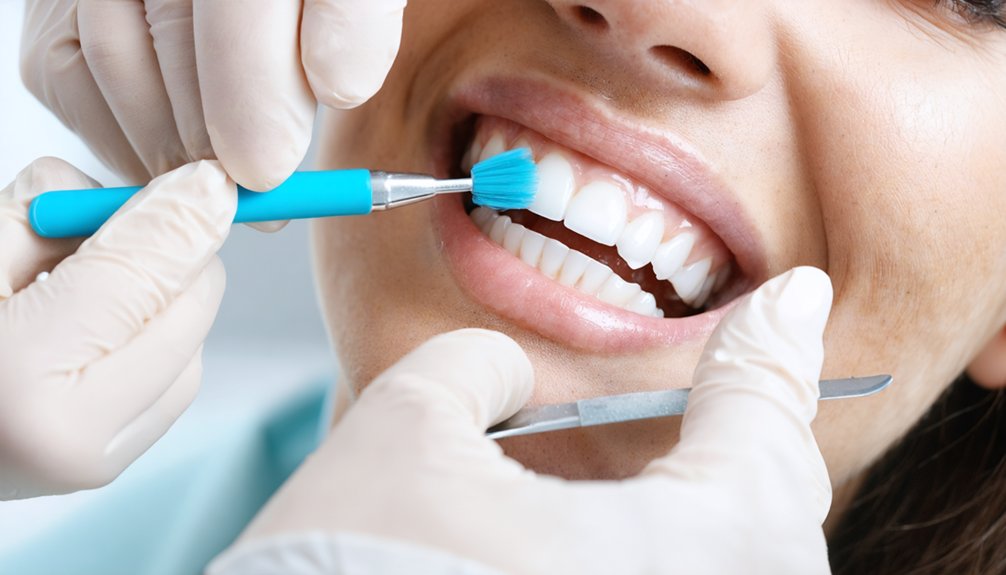
For patients who want faster, more dramatic results without sacrificing enamel safety, in-office whitening is the most clinically reliable option available. Your dentist evaluates your baseline dental shade, identifies contraindications like cavities or gingivitis, and applies gum protection before treatment begins. That pre-treatment protocol is what separates professional whitening from unsupervised alternatives.
During treatment, your dentist monitors the whitening duration in real time, adjusting exposure to prevent enamel and soft tissue damage. Blue LED systems deliver rapid, controlled results within a single appointment.
Because a licensed professional oversees every stage, the risk of misuse—the primary driver of sensitivity and enamel erosion—drops significantly. If you want the most effective and safest whitening outcome, in-office treatment gives you the highest level of precision and control.
Custom Whitening Trays for Sensitive Teeth
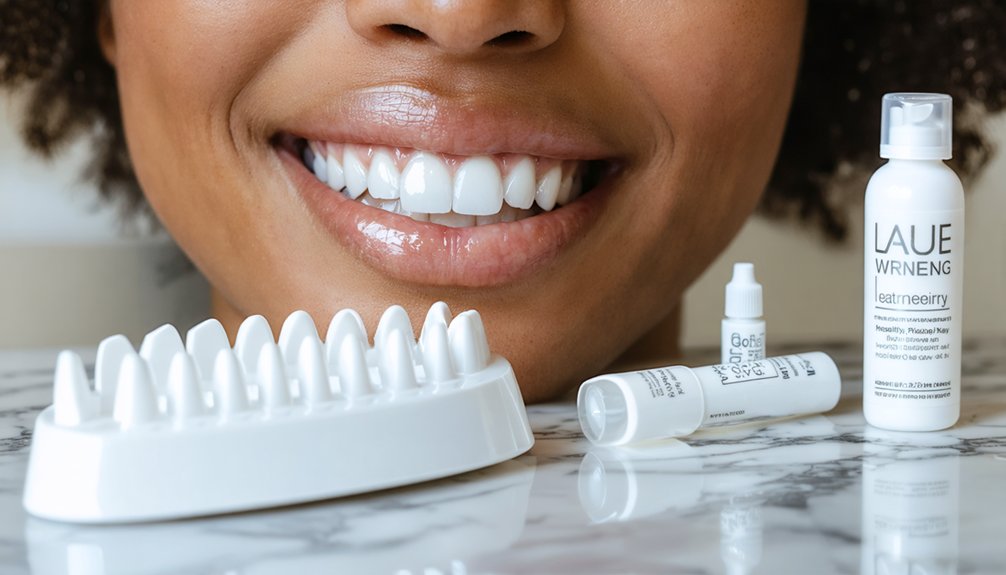
If you experience sensitivity, custom whitening trays made by your dentist offer a more controlled fit than over-the-counter alternatives, reducing gel contact with your gums and lowering irritation risk.
You’ll typically use a carbamide peroxide gel—most commonly at 10–16% concentration—which is generally well-tolerated and effective for at-home treatment without compromising enamel integrity.
This lower-concentration approach lets you manage sensitivity more effectively while still achieving meaningful whitening results over time.
Custom Tray Fit Benefits
Custom-fitted whitening trays offer a meaningful advantage over one-size-fits-all products: they’re designed to match the exact contours of your teeth, which limits gel contact with your gums and reduces irritation risk. A precise tray fit means the carbamide peroxide gel stays where it’s intended — on your enamel — rather than migrating onto soft tissue.
This targeted application matters clinically. Gum exposure to peroxide-based gels is a primary driver of sensitivity and tissue inflammation. When you control where the gel contacts your teeth, you reduce both discomfort and the likelihood of misuse.
Dentist-made trays give you that control with consistency across every session, making them a reliable foundation for a sensitivity-conscious whitening protocol you can manage at home.
Carbamide Peroxide Gel Safety
Carbamide peroxide gel is generally well-tolerated when used in custom trays, particularly at concentrations between 10–16%. At this range, you’re getting effective whitening stain removal while supporting enamel preservation, since lower concentrations reduce the risk of structural breakdown over time.
Carbamide peroxide releases hydrogen peroxide gradually, which means slower but steadier penetration into stained enamel. This controlled release minimizes sudden sensitivity spikes that higher-strength formulas often trigger.
Because your trays are custom-fitted, gel stays precisely where it’s needed and away from gum tissue, further reducing irritation risk.
If you have pre-existing sensitivity, starting at 10% and extending treatment duration is a clinically sound approach. You maintain whitening efficacy without compromising enamel integrity or tolerability throughout the process.
Managing Sensitivity Effectively
Managing sensitivity with custom whitening trays starts with concentration control. Your dentist fits trays precisely to limit gel contact with gum tissue, reducing irritation at the source. Choosing 10–16% carbamide peroxide delivers effective stain removal while staying gentler on enamel than higher-strength hydrogen peroxide alternatives.
Ignore teeth whitening myths suggesting natural remedies like activated charcoal or oil pulling provide comparable results — they don’t, and some actively damage enamel. If sensitivity persists, your dentist may recommend a sensitivity-focused gel containing potassium nitrate or fluoride, both of which support comfort without compromising outcomes.
You control the protocol: wear duration, application frequency, and concentration are all adjustable variables. That level of precision makes custom trays the most clinically reliable sensitivity-management strategy available for at-home whitening.
Enamel-Safe Whitening Strips and Gels That Minimize Sensitivity
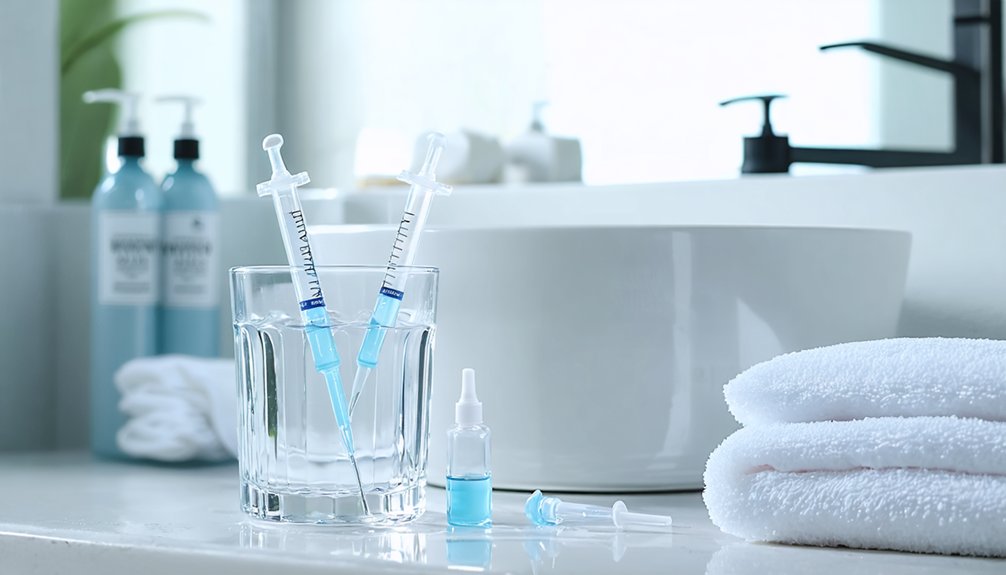
Whitening strips and peroxide-based gels offer a practical middle-ground option for at-home stain reduction, but enamel safety depends heavily on peroxide concentration and how consistently you follow product directions. Lower-strength formulas reduce sensitivity and minimize gum irritation, making them a smarter choice than high-concentration alternatives.
If you use strips, don’t exceed the recommended wear time—overexposure increases discomfort and enamel risk. Peroxide-based gels and pens allow targeted application for localized discoloration, giving you precise control over treatment areas.
Unlike unverified natural remedies, clinically supported low-peroxide products deliver measurable results. Pairing your whitening routine with smart dietary habits—limiting stain-causing foods and beverages—extends your results and reduces how frequently you need to reapply, lowering your cumulative exposure to peroxide over time.
Whitening Toothpastes That Protect Enamel Between Treatments
Between whitening treatments, ADA-approved whitening toothpastes give you a practical, low-cost way to manage surface stains without increasing enamel risk. These formulas work more slowly than trays or in-office systems, but they deliver consistent maintenance when used correctly.
Look for options that include fluoride for cavity protection and potassium nitrate to help manage sensitivity. Choosing a low-abrasion formula matters because excessive abrasivity gradually wears enamel, exposing the yellower dentin beneath.
It’s also worth addressing whitening myths that elevate natural remedies like activated charcoal or baking soda scrubs as safe alternatives. Evidence doesn’t support those claims, and abrasive natural remedies can accelerate enamel erosion.
Staying with ADA-approved toothpastes keeps your maintenance routine clinically grounded, protecting the enamel integrity you’ve worked to preserve.
How to Choose the Right Enamel-Safe Whitening Method
Choosing the right whitening method starts with an honest assessment of your sensitivity level, since higher peroxide concentrations and prolonged contact times increase the risk of enamel irritation and discomfort.
If you experience sensitivity easily, lower-concentration carbamide peroxide in custom trays or sensitivity-formulated strips are better-tolerated options than high-strength in-office treatments.
Once you’ve identified your sensitivity threshold, you can match your whitening goals—whether gradual maintenance or rapid results—to the method most likely to deliver them without compromising enamel integrity.
Assessing Your Sensitivity Level
Before selecting a whitening method, you need to honestly assess your current sensitivity level, since this single factor shapes which treatments are appropriate and which carry real risk of discomfort or enamel harm.
Start by reviewing your oral hygiene routine and dietary habits—frequent acidic food consumption and inconsistent brushing can compromise enamel integrity, making high-concentration peroxide treatments genuinely risky.
If you experience sharp responses to cold, heat, or pressure, your enamel may already be compromised. In that case, low-concentration carbamide peroxide in custom trays or sensitivity-focused peroxide-free formulas are your safest starting points.
If sensitivity is minimal, you have broader options, including whitening strips or in-office treatment.
Honest self-evaluation prevents unnecessary damage and helps you match the method to your actual clinical needs.
Matching Goals To Methods
Once you’ve assessed your sensitivity level, your whitening goals determine which method delivers the right balance of efficacy, safety, and convenience.
For rapid, dramatic results, in-office professional whitening provides supervised treatment with immediate outcomes.
For gradual improvement with flexibility, custom-fitted trays with low-concentration carbamide peroxide offer a controlled, evidence-based approach.
ADA-approved whitening toothpastes with fluoride and potassium nitrate suit maintenance goals without compromising enamel integrity.
Lower-peroxide strips work well as a practical middle-ground option.
Dismiss whitening myths suggesting natural remedies like charcoal or oil pulling deliver comparable results—evidence doesn’t support these claims, and charcoal specifically risks enamel erosion.
Matching your method to your goals means prioritizing clinically validated options, appropriate concentration levels, and professional guidance when sensitivity or underlying dental conditions are present.
Frequently Asked Questions
Can Whitening Treatments Worsen Existing Cavities or Tooth Decay?
Yes, whitening treatments can worsen cavities — peroxide penetrates compromised enamel, accelerating tooth enamel erosion and triggering dental sensitivity. You should address active decay before whitening to maintain control over your oral health outcomes.
How Long Do Teeth Whitening Results Typically Last Before Fading?
Your whitening results typically last six months to two years. At-home kits and natural remedies vary widely, so you’ll maintain results longer by avoiding staining foods, following clinical protocols, and scheduling periodic touch-up treatments as needed.
Are Whitening Treatments Safe to Use During Pregnancy or Breastfeeding?
While evidence remains limited, most dentists advise you to avoid whitening treatments due to pregnancy safety concerns and breastfeeding considerations. You should postpone peroxide-based treatments until after breastfeeding, keeping your risk exposure firmly under your control.
Can Children or Teenagers Safely Use Enamel-Safe Whitening Products?
You should consult a pediatric dental professional before pursuing teen whitening safety protocols, as developing enamel and unerupted teeth increase risk. Evidence doesn’t support unsupervised whitening for children; dentist guidance guarantees you’re protecting still-maturing dental structures effectively.
Does Teeth Whitening Work on Crowns, Veneers, or Dental Implants?
Like a coat of paint on plastic, whitening won’t penetrate crowns or veneers. Crown discoloration and veneer staining don’t respond to peroxide. You’ll need replacement or professional cleaning to match your natural, freshly whitened teeth.
References
- https://www.forbes.com/sites/forbes-personal-shopper/article/best-teeth-whitening-kit/
- https://www.goodrx.com/conditions/dental-care/is-teeth-whitening-safe
- https://www.amazon.com/Best-Sellers-Teeth-Whitening-Products/zgbs/hpc/3778441
- https://www.health.com/beauty/best-whitening-products-sensitive-teeth
- https://ddadental.com/blog/best-and-safe-teeth-whitening-methods-products/
- https://www.amazon.com/Enamel-Safe-Teeth-Whitening/s?k=Enamel+Safe+Teeth+Whitening
- https://clubwhitesmile.com/top-enamel-safe-teeth-whitening-products/
- https://toothfairystale.com/vetted/best-enamel-safe-teeth-whitening/
- https://www.bestiepaws.com/lounge/best-enamel-toothpaste-to-whiten-teeth/