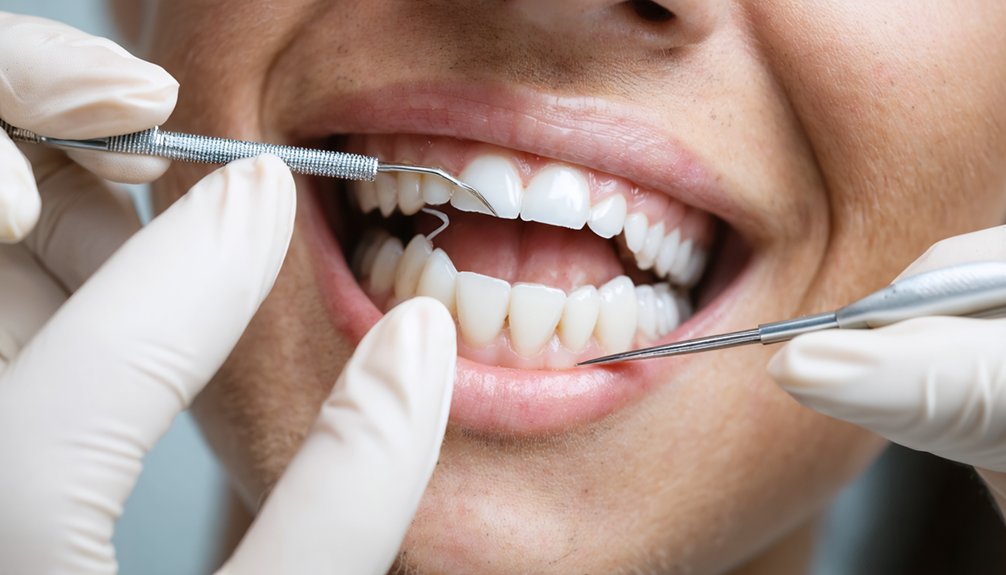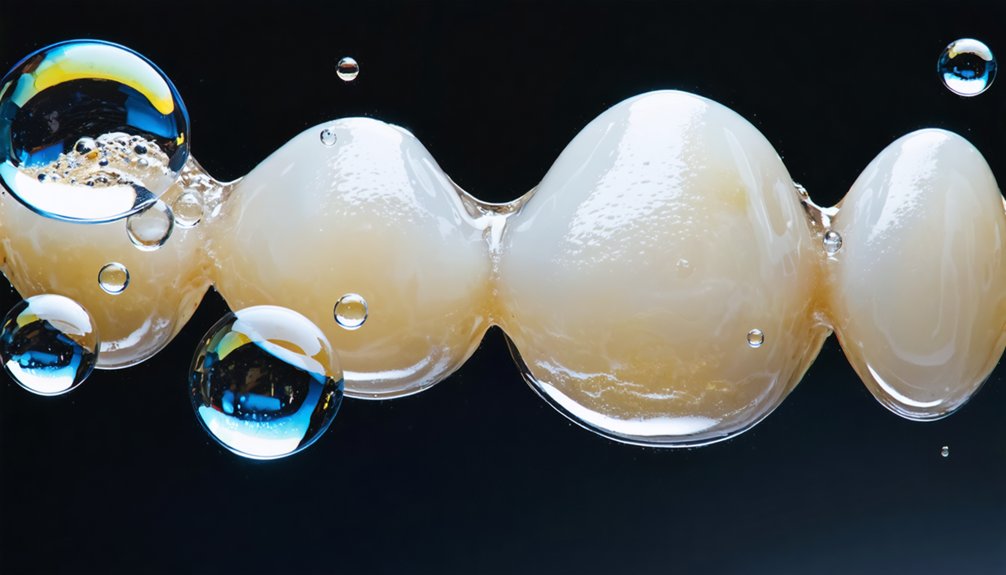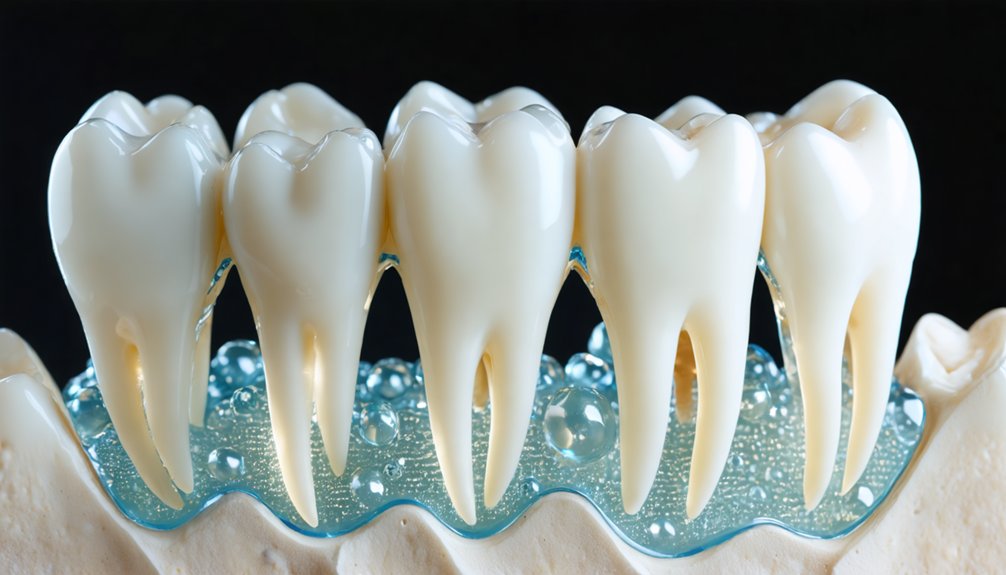
Teeth whitening gel penetrates your enamel through microscopic interprismatic spaces and crystalline microchannels that naturally exist within its structure. Peroxide molecules follow concentration gradients, moving inward from the gel surface toward dentin within as little as five minutes. They don’t dissolve enamel—they diffuse through it. Factors like your enamel’s porosity, pH, temperature, and contact time all influence how deep penetration reaches, and there’s considerably more to understand about what’s actually happening at each stage.
Key Takeaways
- Whitening gels enter enamel through microscopic pores and interprismatic spaces, not by dissolving or eroding the enamel structure itself.
- Peroxide molecules follow concentration gradients, diffusing inward from the gel surface and reaching dentin within 5 to 15 minutes.
- Demineralized or hypomineralized enamel accelerates peroxide penetration due to structurally weakened zones offering less resistance.
- Dentin tubules further accelerate peroxide migration toward the pulp, increasing both whitening depth and sensitivity risk.
- Factors like concentration, contact time, temperature, and pH directly control how deeply peroxide penetrates enamel.
Why Whitening Gel Can Penetrate Into Enamel
Enamel isn’t the solid, impenetrable barrier it might appear to be — it’s a porous crystalline structure containing microscopic channels and interprismatic spaces that allow small molecules to move inward.
Enamel composition directly determines how readily whitening gel penetrates your tooth. Peroxide molecules diffuse through these structural gaps rather than dissolving enamel itself, traveling inward via concentration gradients from the gel surface toward deeper tissue layers.
Areas of demineralization or hypomineralization accelerate this process, as weakened zones offer less resistance.
Once peroxide reaches the dentin, you may experience tooth sensitivity, since the pulp lies in close proximity and can respond to chemical stimulation.
Understanding this mechanism gives you precise insight into why contact time, gel concentration, and enamel integrity all critically influence whitening outcomes.
How Whitening Gel Moves From the Surface Into the Tooth
When you apply whitening gel, the peroxide enters enamel through microscopic pores and interprismatic spaces rather than dissolving the surface.
Diffusion then drives the peroxide molecules inward along concentration gradients, moving from the high-concentration gel at the surface toward lower-concentration deeper tissues.
Within 5 to 15 minutes, the whitening agent can reach dentin and pulp, which is why peroxide-based products can address intrinsic discoloration located beneath the enamel layer.
Gel Enters Enamel Pores
Once whitening gel contacts your tooth’s surface, it doesn’t simply sit on the enamel — it moves through it. Enamel porosity enables peroxide molecules to enter interprismatic spaces and microchannels formation within the crystalline structure. These microscopic pathways act as diffusion routes, not barriers.
Key penetration dynamics you should understand:
- Hydrogen peroxide molecules are small enough to pass through enamel’s porous crystalline matrix without dissolving it
- Microchannels formation accelerates in areas of demineralization, allowing faster and deeper gel diffusion
- Enamel porosity varies across tooth surfaces, meaning penetration depth isn’t uniform
Diffusion begins within minutes of application. The gel follows concentration gradients inward, targeting organic chromophores embedded in deeper enamel and dentin — the actual sources of intrinsic discoloration.
Diffusion Drives Deeper Penetration
Diffusion governs how whitening gel advances from the tooth surface into deeper structural layers. As peroxide concentration at the enamel surface exceeds that within the tooth, a gradient forms, driving molecules inward through interprismatic spaces and microscopic channels. This process requires no mechanical disruption—peroxide simply moves from high to low concentration until equilibrium approaches.
Gel can reach dentin and pulp within 5 to 15 minutes, which means you’re exposing deeper tissue faster than most users anticipate. Enamel mineralization directly influences penetration speed; lower mineral density accelerates diffusion. You should account for this when evaluating treatment frequency and duration.
Post-treatment fluoride reinforcement helps stabilize the enamel matrix, countering the mild demineralization that sustained peroxide exposure can produce during active whitening cycles.
Reaching Dentin and Pulp
Whitening gel doesn’t stop at the enamel surface—it advances inward rapidly, reaching dentin and pulp within 5 to 15 minutes of application. Because dentin houses intrinsic chromophores, this penetration depth is necessary for meaningful color change. However, it’s also the primary driver of tooth sensitivity.
Key penetration dynamics you should understand:
- Dentin tubules accelerate peroxide migration toward the pulp, intensifying sensitivity risk during treatment
- Demineralized zones offer less resistance, allowing faster, less controlled peroxide advancement
- Enamel remineralization protocols after whitening help restore surface integrity and reduce long-term vulnerability
You’re not dealing with a surface-level reaction—peroxide actively travels through your tooth’s architecture. Controlling contact time and concentration directly determines how deep the oxidation cascade reaches and how much sensitivity you experience.
The Chemistry Behind How Peroxide Breaks Down Tooth Stains
When peroxide contacts your tooth structure, it breaks down into reactive oxygen molecules and free radicals that initiate an oxidation reaction within the enamel and dentin.
These free radicals target organic chromophores—the colored compounds responsible for staining—by attacking their chemical double bonds. Once those bonds break, the stain molecules become smaller, structurally altered, and color-neutral, producing the visible whitening effect you’re after.
Peroxide Oxidizes Stain Molecules
Once peroxide penetrates the tooth structure, it breaks down into reactive oxygen molecules and free radicals that drive the actual whitening reaction. These radicals target organic chromophores—the compounds responsible for discoloration—primarily within dentin. Oxidation cleaves their chemical double bonds, converting large, pigmented molecules into smaller, color-neutral fragments.
Key mechanisms you should understand:
- Bond disruption: Free radicals systematically break conjugated double bonds in stain molecules, eliminating their light-absorbing properties
- Saliva buffering: Your saliva neutralizes acidic byproducts post-treatment, limiting prolonged enamel exposure
- Enamel remineralization: Minerals reintegrate into enamel after whitening, partially restoring surface integrity
This process relies entirely on chemical oxidation within the tooth—not structural removal of enamel. Controlling application time and concentration directly influences how thoroughly chromophores are oxidized.
Breaking Down Chromophore Bonds
The oxidation process that neutralizes chromophores operates through a precise sequence of bond-breaking chemistry. Free radicals released by peroxide target conjugated double bonds within chromophore molecules — the specific molecular structures responsible for light absorption and visible color. When peroxide severs these bonds, the chromophore loses its capacity to reflect particular wavelengths, rendering stain compounds colorless or markedly lighter.
Stain variability directly influences how effectively this process works. Extrinsic chromophores break down faster than deeply embedded intrinsic stains lodged within dentin. You’ll achieve more predictable results by recognizing that enamel resilience — its porosity, mineralization density, and structural integrity — controls how efficiently peroxide diffuses inward to access those resistant intrinsic compounds.
Denser, well-mineralized enamel slows diffusion, extending the time required for complete chromophore oxidation.
Which Stains Can Whitening Products Actually Reach?
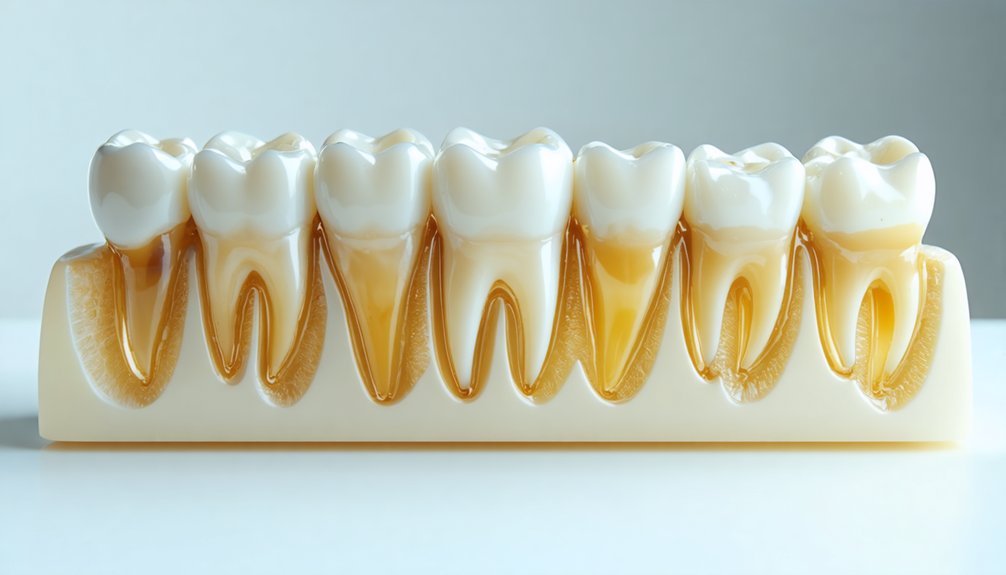
Teeth whitening products target two distinct stain categories, and their effectiveness depends almost entirely on where those stains are located within the tooth structure. Extrinsic stains sit on the enamel surface, while intrinsic stains embed within dentin.
Peroxide-based agents penetrate interprismatic spaces to reach intrinsic discoloration, though you’ll experience trade-offs:
- Extrinsic stains respond quickly to surface-level oxidation without significant enamel erosion risk
- Intrinsic stains require deeper diffusion into dentin, increasing tooth sensitivity exposure duration
- Demineralized or cracked enamel accelerates penetration but raises enamel erosion vulnerability
Surface-only products like whitening toothpastes don’t affect intrinsic discoloration.
If your staining originates in dentin, you need peroxide concentrations sufficient to diffuse beyond the enamel layer entirely.
How pH, Temperature, and Contact Time Affect Whitening Depth
How deeply whitening agents penetrate your enamel isn’t fixed—pH, temperature, and contact time each modulate the diffusion rate and oxidative efficiency of peroxide-based gels.
A lower pH balance accelerates peroxide breakdown, generating free radicals faster but also increasing hydrogen ion concentration, which can attack enamel crystals and promote demineralization.
Higher temperatures elevate molecular kinetic energy, intensifying temperature effects on diffusion speed and oxidative reactions.
Extended contact time allows peroxide to move further through interprismatic spaces, reaching dentin where intrinsic chromophores reside.
However, longer exposure amplifies demineralization risk, particularly in weakened or hypomineralized enamel.
You can optimize outcomes by controlling these three variables deliberately—matching concentration, application duration, and environmental conditions to your specific enamel integrity rather than defaulting to maximum exposure parameters.
What Whitening Gel Actually Does to Enamel Structure
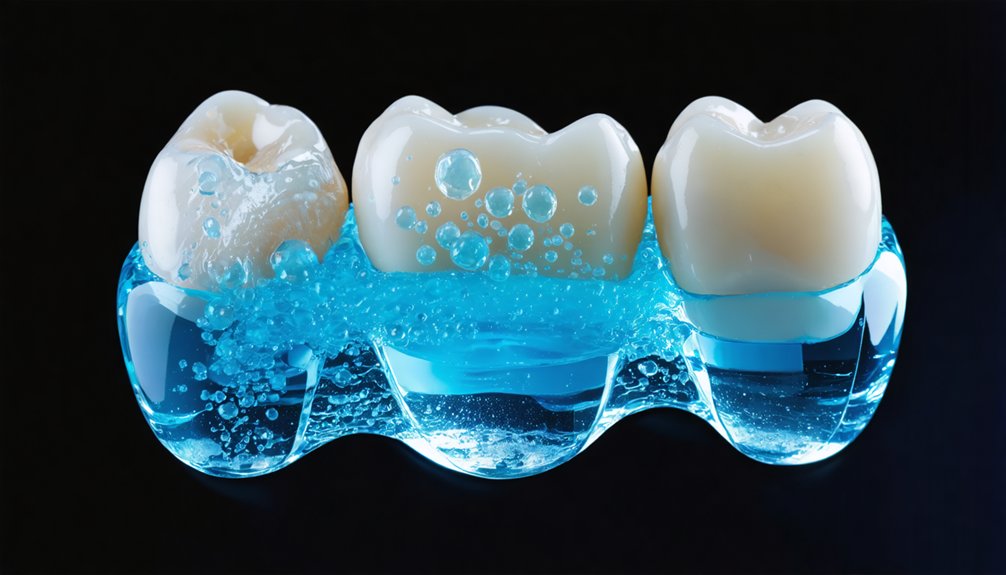
Despite common misconceptions, whitening gel doesn’t strip or erode your enamel—it penetrates it. Peroxide molecules diffuse through interprismatic spaces, targeting organic chromophores via oxidation. The chemistry breaks double bonds in stain molecules, not enamel crystals themselves.
Whitening gel doesn’t strip enamel—it penetrates it, breaking stain molecules through oxidation, not enamel crystals.
However, the process does carry measurable structural consequences you should understand:
- Enamel mineralization can temporarily decline during treatment, as hydrogen ions interact with crystalline structures and increase surface acidity.
- Tooth surface integrity faces greater risk with home-based systems, which research links to higher demineralization rates than office-supervised protocols.
Weakened or hypomineralized enamel allows faster peroxide diffusion, compounding structural vulnerability if contact time isn’t controlled.
Understanding these mechanisms lets you make precise decisions about concentration, duration, and professional oversight—variables that directly determine whether whitening strengthens or compromises your enamel long-term.
Frequently Asked Questions
Can Whitening Gel Penetrate Through Dental Crowns or Veneers?
Whitening gel can’t penetrate a dental crown or affect veneer permeability because these restorations are composed of ceramic or composite materials that don’t absorb peroxide, leaving them unresponsive to oxidative bleaching chemistry you’re applying.
Does Teeth Whitening Work Differently on Children’s Teeth Than Adults’?
Yes, whitening works differently on you depending on age. Child enamel is thinner and more porous than adult enamel, so peroxide penetrates faster, increasing sensitivity risk and making professional supervision essential before proceeding.
How Long Do Whitening Results Typically Last After Treatment Ends?
Your smile’s brightness fades like morning light—results typically last 6–24 months. Durability factors include diet and habits. You’ll extend outcomes with consistent maintenance tips: avoid staining foods, use whitening toothpaste, and schedule periodic touch-ups.
Can Whitening Agents Penetrate Teeth With Existing Fillings or Bonding?
Whitening agents don’t penetrate dental bonding or composite fillings, so you’ll notice uneven tooth discoloration post-treatment. They work only on natural enamel, meaning restorations retain their original shade while surrounding teeth lighten.
Does Drinking Water During Treatment Affect How Whitening Gel Penetrates?
If you rinse mid-treatment, you’re diluting the gel’s concentration. Water influence directly reduces hydration impact on peroxide diffusion—like a patient who rinsed after five minutes and achieved noticeably weaker whitening results than expected.
References
- https://pmc.ncbi.nlm.nih.gov/articles/PMC4058574/
- https://www.ada.org/resources/ada-library/oral-health-topics/whitening
- https://www.drhooper.com/teeth-whitening-myths-exposed/
- https://dreamworksdentalirving.com/how-does-teeth-whitening-work
- https://bridgedentalcharleston.com/does-teeth-whitening-damage-enamel/
- https://pocketdentistry.com/the-science-of-tooth-whitening/
- https://www.teethwhitening.london/blog/how-does-whitening-gel-pass-through-tooth-enamel
- https://sandlakedental.com/blog/understanding-the-science-behind-teeth-whitening/
- https://www.youtube.com/watch?v=HV9eIdrX2LQ
- https://www.ashleyburnsdds.com/blog/the-science-behind-modern-teeth-whitening-solutions