Your teeth aren’t naturally pure white — they’re a translucent enamel shell layered over yellow dentin. How yellow your teeth appear depends on how thick and mineralized your enamel is, which genetics largely controls. Thinner enamel lets more of that yellow dentin show through. Aging, habits, and certain medications can intensify the effect. If you want to understand exactly what’s driving your tooth color, there’s quite a bit more to unpack.
Key Takeaways
- Genetics determines enamel thickness and mineralization, with thinner enamel revealing more of the yellow dentin beneath.
- Enamel is translucent, so light passes through it and reflects off the naturally yellow dentin underneath.
- Some people inherit naturally thinner or less mineralized enamel, making teeth appear yellower from the moment they erupt.
- Aging gradually wears down enamel, increasing translucency and exposing more of the dentin’s yellow hue.
- Medical factors like tetracycline use during development or fluorosis can cause intrinsic staining unrelated to hygiene habits.
Why Teeth Are Never Naturally Pure White
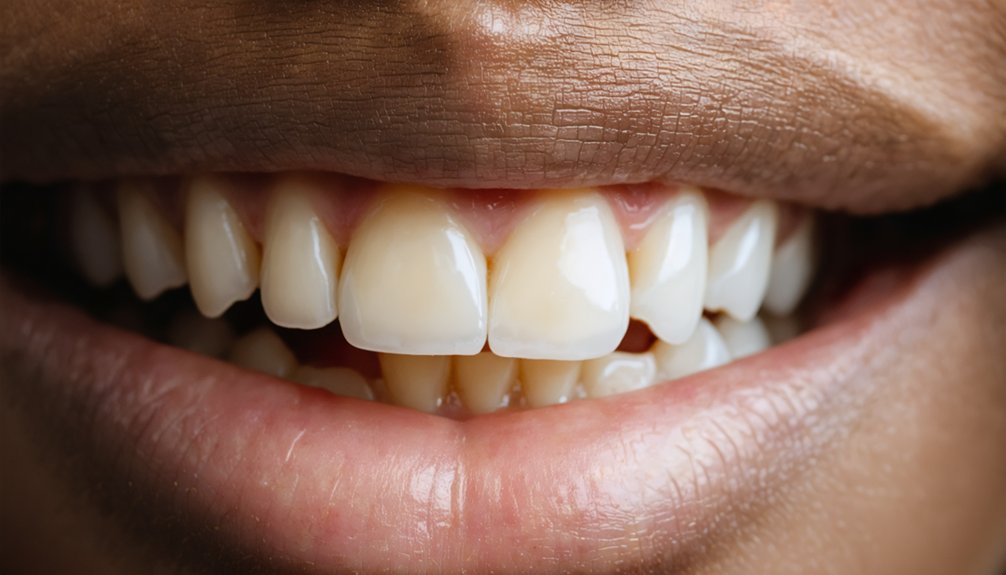
Teeth are never truly white because enamel, the hard outer layer covering each tooth, is naturally translucent rather than opaque. Light passes through dental enamel and reflects off the dentin beneath, which carries a yellow-to-gray hue. That underlying color determines what you actually see when you look at your teeth.
Thinner or more translucent enamel allows more dentin color to show through, producing a noticeably yellower appearance even when your oral hygiene is excellent. Genetic inheritance plays a direct role here — you may have been born with enamel that’s thinner or less mineralized than average, making your baseline tooth shade naturally darker.
This isn’t a hygiene failure or a disease; it’s structural anatomy shaped before your permanent teeth ever erupted.
What Your Genes Have to Do With Yellow Teeth
Much of what determines your baseline tooth shade is already coded into your DNA before your first tooth erupts. Genetic traits govern how thick or mineralized your enamel develops, directly influencing how much yellow dentin shows through.
If you inherited thinner enamel, light penetrates more easily, making your dentin’s yellow hue more visible regardless of your hygiene habits. Conversely, thicker, more densely mineralized enamel scatters light more effectively, producing a brighter appearance.
These structural differences exist from eruption, meaning discoloration isn’t always a consequence of lifestyle choices. Understanding that enamel thickness is largely genetically predetermined helps clarify why two people with identical oral hygiene routines can display noticeably different tooth shades.
Your genes establish the foundation; external factors only modify what’s already structurally present.
How Aging Gradually Makes Teeth More Yellow
As you age, your enamel naturally thins through years of chewing, abrasion, and normal mechanical wear, progressively exposing more of the yellow dentin beneath. Increased enamel translucency means light penetrates deeper into the tooth structure, reflecting the dentin’s yellow hue outward rather than the brighter enamel surface.
This process accelerates if you grind your teeth, a condition affecting 8–10% of adults, which rapidly erodes enamel thickness.
Dentin exposure isn’t purely cosmetic—it signals structural change that compounds over time. Unlike surface staining, age-related yellowing originates from within the tooth itself, making it resistant to standard whitening protocols.
Understanding this mechanism helps you set realistic expectations and pursue targeted interventions, such as professional treatments designed to address intrinsic discoloration rather than surface-level deposits.
Habits and Lifestyle Choices That Yellow Teeth Faster
While aging works against your teeth from the inside out, your daily habits can accelerate discoloration far beyond what biology alone would produce. Tobacco use deposits tar and nicotine directly onto enamel, creating stubborn yellow and brown stains.
Coffee, tea, red wine, and cola contain tannins and pigments that bind to enamel surfaces with repeated exposure.
Poor dental hygiene allows plaque to accumulate and harden into tartar, compounding surface discoloration.
Paradoxically, aggressive brushing erodes enamel thickness over time, exposing more yellow dentin beneath.
Frequent consumption of acidic foods and drinks softens enamel, accelerating that same thinning process.
You control these variables directly. Reducing staining agents, maintaining consistent dental hygiene, and brushing with appropriate pressure all slow the progression well within your ability to manage.
Foods and Drinks That Turn Teeth Yellow Over Time
Certain foods and drinks discolor teeth through a consistent mechanism: tannins and pigments bind to enamel surfaces and accumulate with repeated exposure. Dietary pigments in coffee, tea, red wine, cola, and dark berries are primary contributors. Tannins act as adhesive compounds, allowing beverage staining to penetrate and bond to enamel more effectively than pigment alone would permit.
Soy sauce, balsamic vinegar, tomato-based sauces, and dark chocolate also introduce staining compounds over time. The discoloration isn’t immediate—it builds through frequency and volume of exposure. If you consume these items daily without thorough brushing afterward, pigment accumulation accelerates.
You can reduce staining by using a straw, rinsing with water post-consumption, and maintaining consistent mechanical plaque removal to limit surface adherence.
Medical Conditions That Cause Yellow Teeth
Diet and lifestyle account for a significant share of tooth discoloration, but internal medical factors can produce yellowing that no amount of brushing will reverse.
Genetic inheritance determines your baseline enamel thickness and dentin visibility before any external factor intervenes. Thinner inherited enamel allows more yellow dentin to show through permanently.
Tetracycline or doxycycline exposure during childhood embeds pigment directly into developing tooth structure, producing intrinsic staining. Excess fluoride during development causes fluorosis, resulting in yellow or brown spots.
Dental trauma can disrupt blood supply or nerve tissue, triggering internal discoloration within a single tooth.
Systemic conditions, including liver disease, celiac disease, and calcium deficiency, also compromise enamel integrity.
Certain antihistamines, blood pressure medications, and silver amalgam fillings contribute additional discoloration you can’t control through hygiene alone.
How to Know If Your Tooth Color Is Actually a Problem
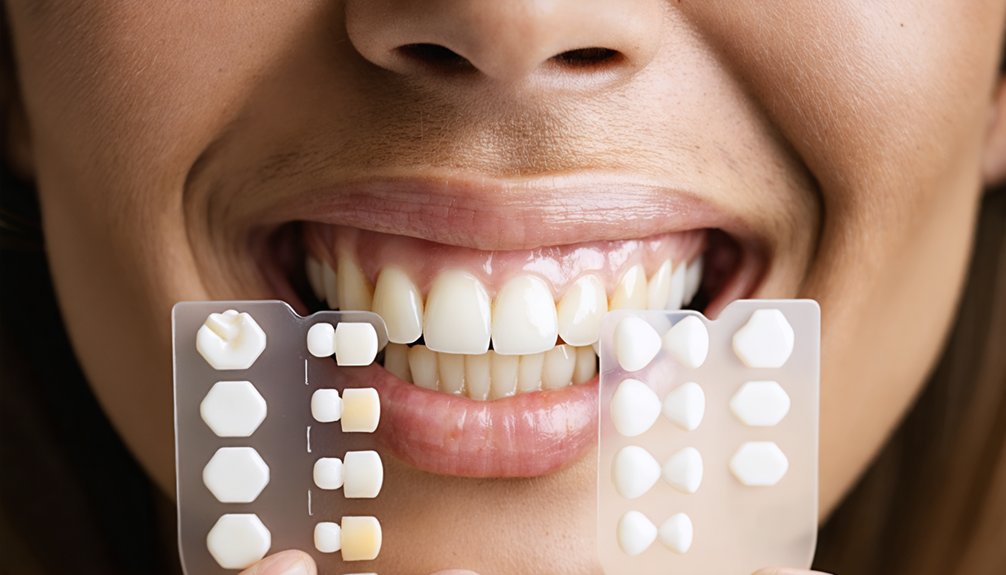
Tooth color exists on a spectrum, and not every shade of yellow signals a clinical problem. Distinguishing cosmetic versus natural teeth variation helps you respond appropriately rather than reactively. Dental whitening myths often frame any yellow as pathological, but genetics, enamel thickness, and aging can all produce yellow tones without underlying disease.
Consult a dentist if you notice:
- Sudden or rapid color change, which may indicate trauma, infection, or systemic disease
- Uneven discoloration or spots, suggesting fluorosis, enamel hypoplasia, or decay
- Color accompanied by sensitivity or pain, pointing to structural compromise rather than surface staining
If your shade is stable, consistent across teeth, and pain-free, it likely reflects your natural baseline. Yellowing alone isn’t a diagnosis.
Frequently Asked Questions
Can Yellow Teeth Ever Naturally Whiten on Their Own Without Treatment?
Your teeth can’t naturally whiten on their own. Genetic factors determine your baseline shade, and dietary habits deepen staining over time. Without active intervention, enamel continues thinning, making yellow dentin progressively more visible.
Do Baby Teeth Tend to Appear Whiter or Yellower Than Adult Teeth?
As a rule of thumb, baby teeth appear whiter. Their enamel transparency is lower, and tooth mineralization differs from adult teeth, giving you a brighter, less yellow appearance compared to permanent teeth’s thinner, more translucent enamel.
Is Teeth Whitening Safe for People With Naturally Thin Enamel?
If you’ve got naturally thin enamel due to genetic factors, you should approach whitening cautiously. Aggressive treatments can worsen enamel thickness loss, increasing sensitivity. Consult your dentist to identify enamel-safe protocols that minimize structural risk.
Can Stress Directly Cause Teeth to Become More Yellow Over Time?
Like a slow-acting acid, stress doesn’t directly yellow your teeth, but its stress effects trigger bruxism, accelerating enamel erosion—thinning your protective layer and exposing yellower dentin underneath, compounding discoloration over time.
Do Certain Ethnicities Tend to Have Naturally Different Tooth Shades?
Yes, genetic factors influence your natural tooth shade across different populations. You’ll find enamel thickness and translucency vary inherited traits. Cultural influences on diet and hygiene practices can further affect how your baseline tooth color presents.
References
- https://my.clevelandclinic.org/health/symptoms/10958-tooth-discoloration
- https://www.stlouiscosmeticdentist.com/blog/are-teeth-naturally-yellow
- https://adelhannadds.com/blog/why-are-my-teeth-yellow-common-causes-for-discoloration
- https://www.theorthodontists.com.au/blog/4-causes-for-yellow-teeth-and-how-to-avoid-them
- https://drstonedds.com/teeth-naturally-yellow/
- https://www.allure.com/story/why-are-my-teeth-yellow
- https://www.dentaly.org/us/yellow-teeth/
- https://www.medicinenet.com/why_do_i_have_yellow_teeth/article.htm
- https://www.reddit.com/r/explainlikeimfive/comments/29ooqs/eli5_were_our_teeth_naturally_supposed_to_be/
- https://www.colgate.com/en-us/oral-health/adult-oral-care/ten-causes-of-yellow-teeth-and-how-to-avoid-them